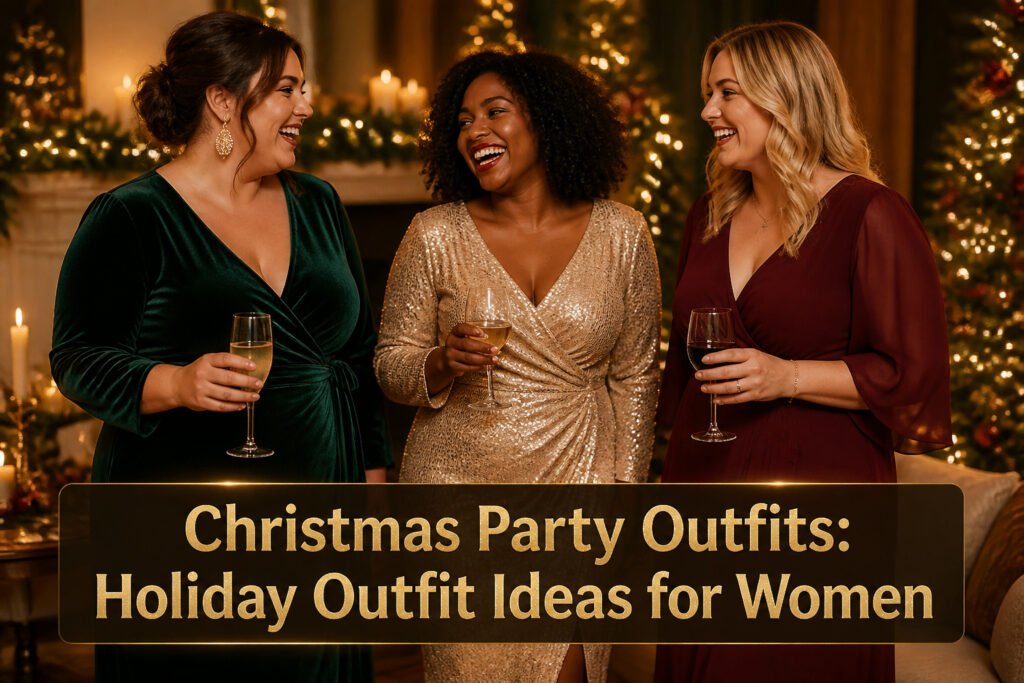
Christmas party outfits are the pieces you choose when every invitation lands in the same week and nothing in your closet feels right for all three rooms.
The difference between looking dressed up and looking like you tried too hard usually comes down to whether the velvet catches candlelight or the sequins outshine the tree, and whether you can still reach for your wine glass at hour four.
A wrap silhouette that balances a pear shape will read completely different on an athletic frame, which is why most guides that skip body shape leave you with a dress you wear once and forget.
What Christmas Party Outfits Mean Now
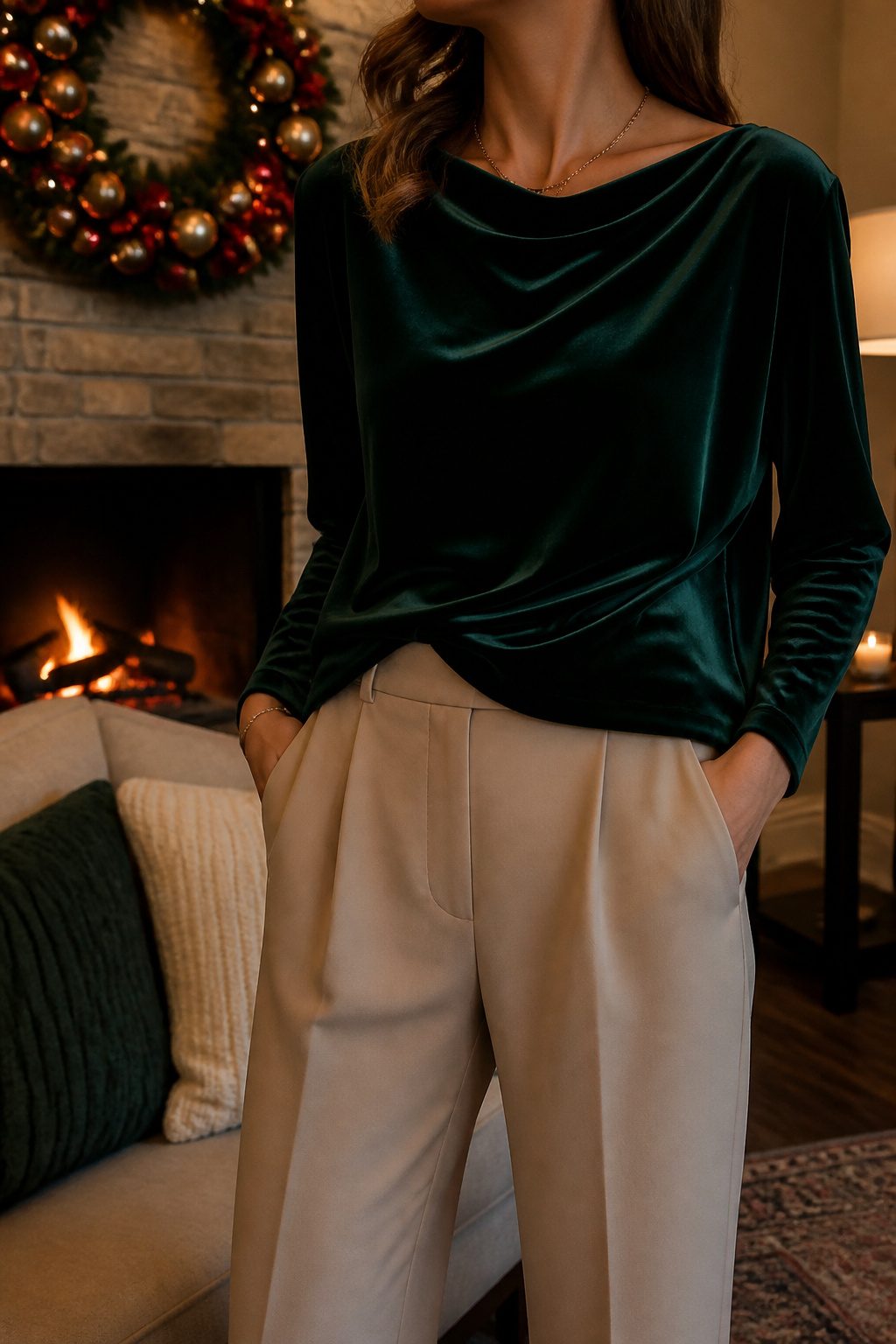
The old approach meant a new dress for every party, worn once, then pushed to the back of the closet.
That math stopped working for most of you around the same time the invitations started overlapping: office party Tuesday, your sister’s dinner Wednesday, the friend group gathering Friday where someone always shows up looking ready for a magazine shoot.
You need one or two pieces that cross all three rooms without looking like you gave up.
Most guides skip the body-shape part entirely. They show a dress on a model and call it universal.
It is not. A wrap silhouette that balances a pear shape will read completely different on an athletic frame, and a fitted sheath that works for straight lines can fight every curve you have.
The right christmas party outfits start with knowing whether you need structure, drape, or waist definition to feel like yourself when someone hands you a glass of wine.
This is what the shift to quality actually looks like.
Not buying less for the sake of it, but buying so the velvet top from last February works under the coat you already own, and the only new purchase is the thing that makes both feel current.
Velvet Dresses
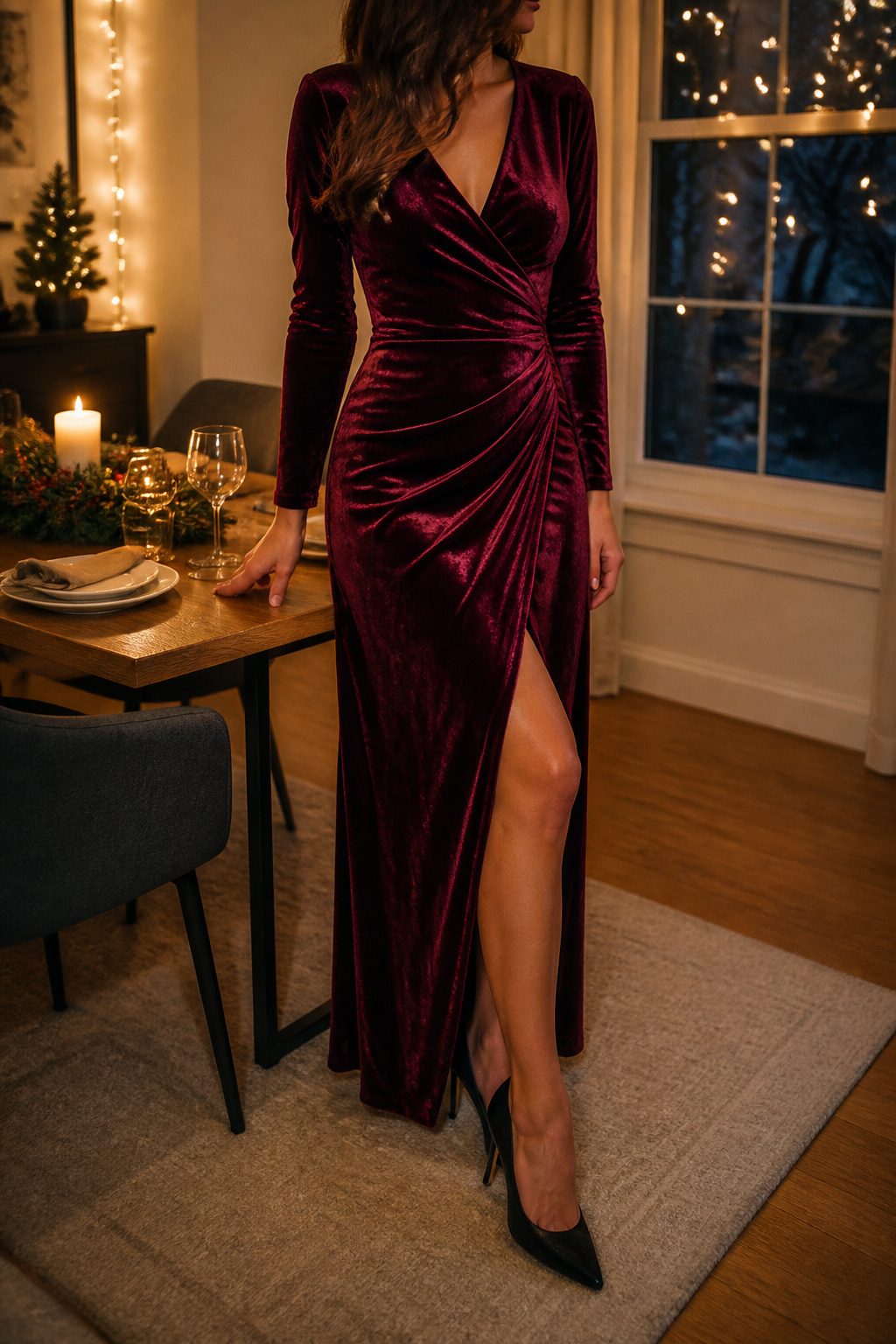
Velvet is the fabric four out of five party guides lead with for holiday dressing, and there is a reason: it catches candlelight without the hazard of looking like you are wearing a costume.
Crushed velvet reads heavier and works better on narrow hips, where the texture adds volume you actually want, while stretch velvet sits closer to the body and suits broader shoulders because the give keeps the line clean rather than boxy.
A boat neck on stretch velvet will widen you; a V-neck in crushed velvet will balance you. The shoe mistake that undoes the whole investment is anything with a platform or heavy buckle.
Velvet already carries weight visually. Pair it with a slim heel, something that lets the fabric be the statement, or the look tips from festive to rental tuxedo at prom.
Sequin Dresses
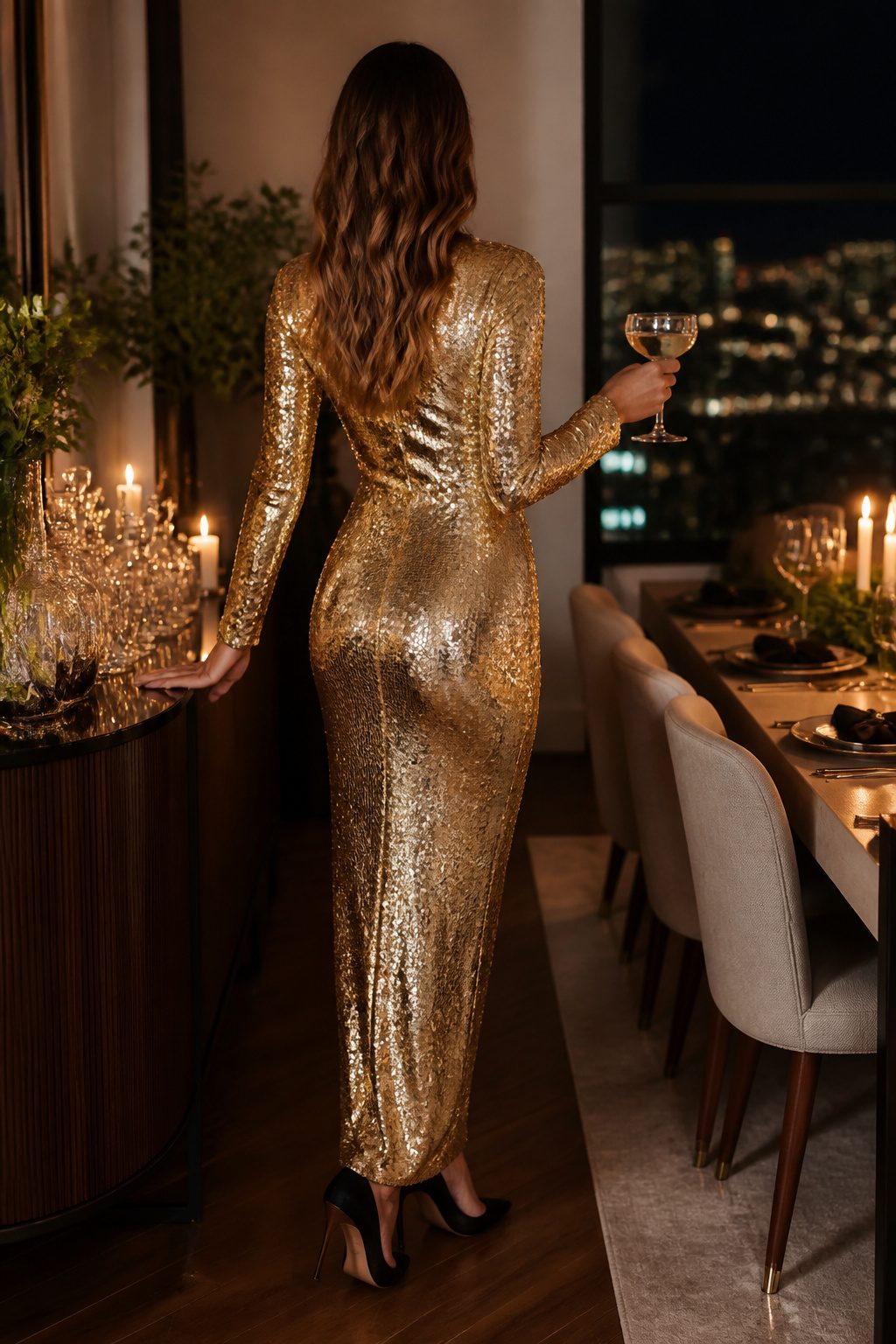
Sequin dresses split cleanly into two camps, and the difference matters once you sit down.
Full sequin coverage catches light from every angle, the kind of piece that outshines even the Christmas tree, while sequin panels or delicate accents keep the drama concentrated where you want eyes to land.
Both read festive, but they behave differently through a long night.
For a dinner where you will be seated for hours, the underlayer is what determines whether you last three hours or six.
A scratchy mesh backing turns a cocktail party into a standing-only affair; the dresses that move effortlessly through festive occasions are the ones with lining that lets you breathe.
Princess Polly’s sequin mini dresses radiate that party energy, but the cut itself leans toward standing room.
Ann Taylor’s midi and maxi lengths, tailored for clean lines, give you the shape that works when you are not on your feet the whole time.
If you are choosing between them, ask which half of the evening matters more: the arrival or the dessert course.
Sweater Dresses
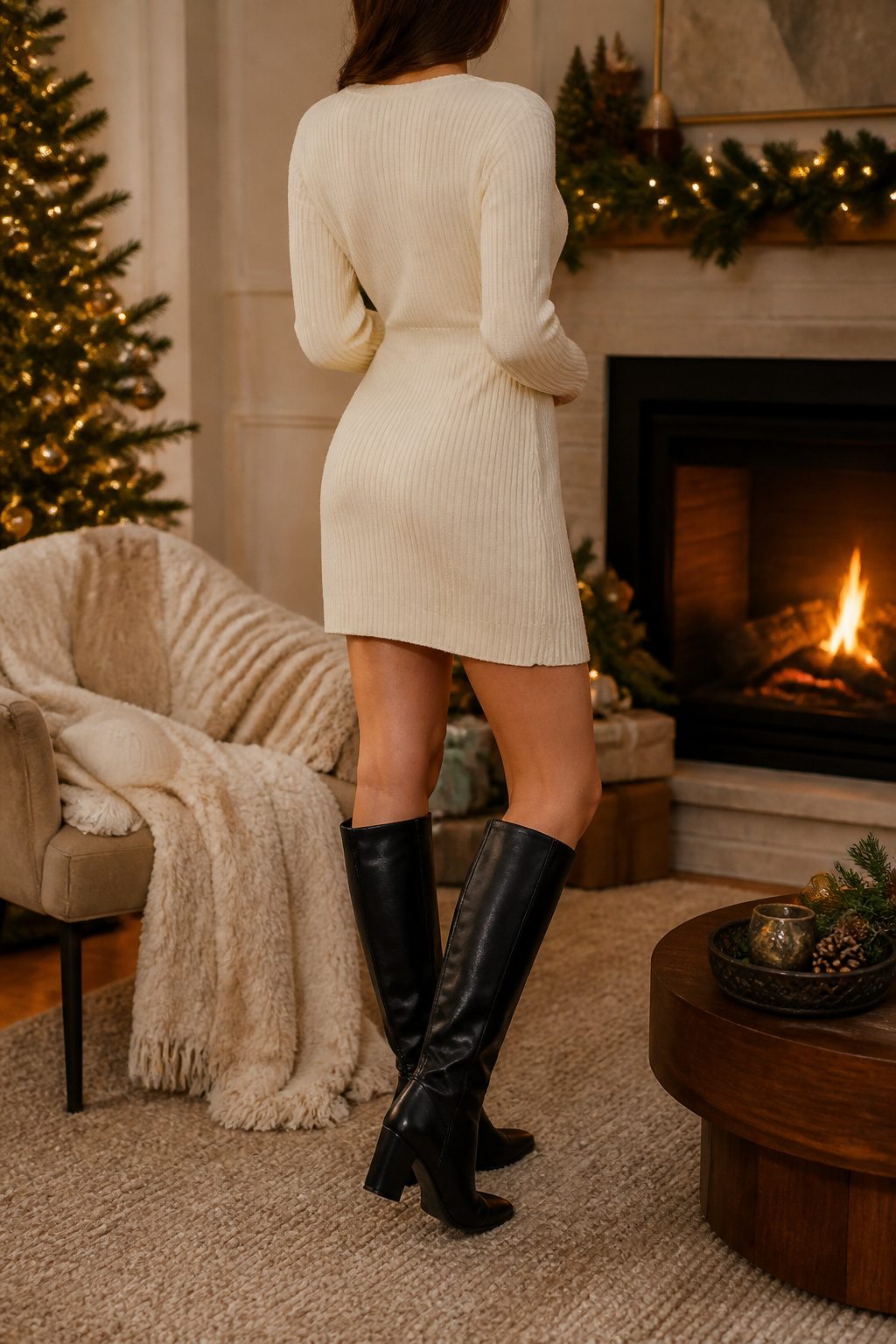
Ribbed knit reads leaner than cable knit, which adds bulk that can work in your favor if you are narrow through the shoulders and want balance.
The real shaping decision is the belt: wear it at your natural waist to lengthen legs, or drop it to the low hip to shorten a long torso.
Either way, the sweater dress hem hits mid-thigh more often than other dress types, so boot height becomes the proportion fix you cannot skip.
An ankle boot cuts the leg line at its worst point; a knee-high or over-the-knee boot keeps the visual sweep continuous.
Fabric weight is what separates the party version from the errand version. The sources note holiday sweaters use "soft knits" with "subtle textures or shimmer," while everyday versions read flat and thin.
Look for the metallic thread or a denser gauge that holds its shape; anything you can see through under a window is not making it past the coat check.
Maxi Dresses
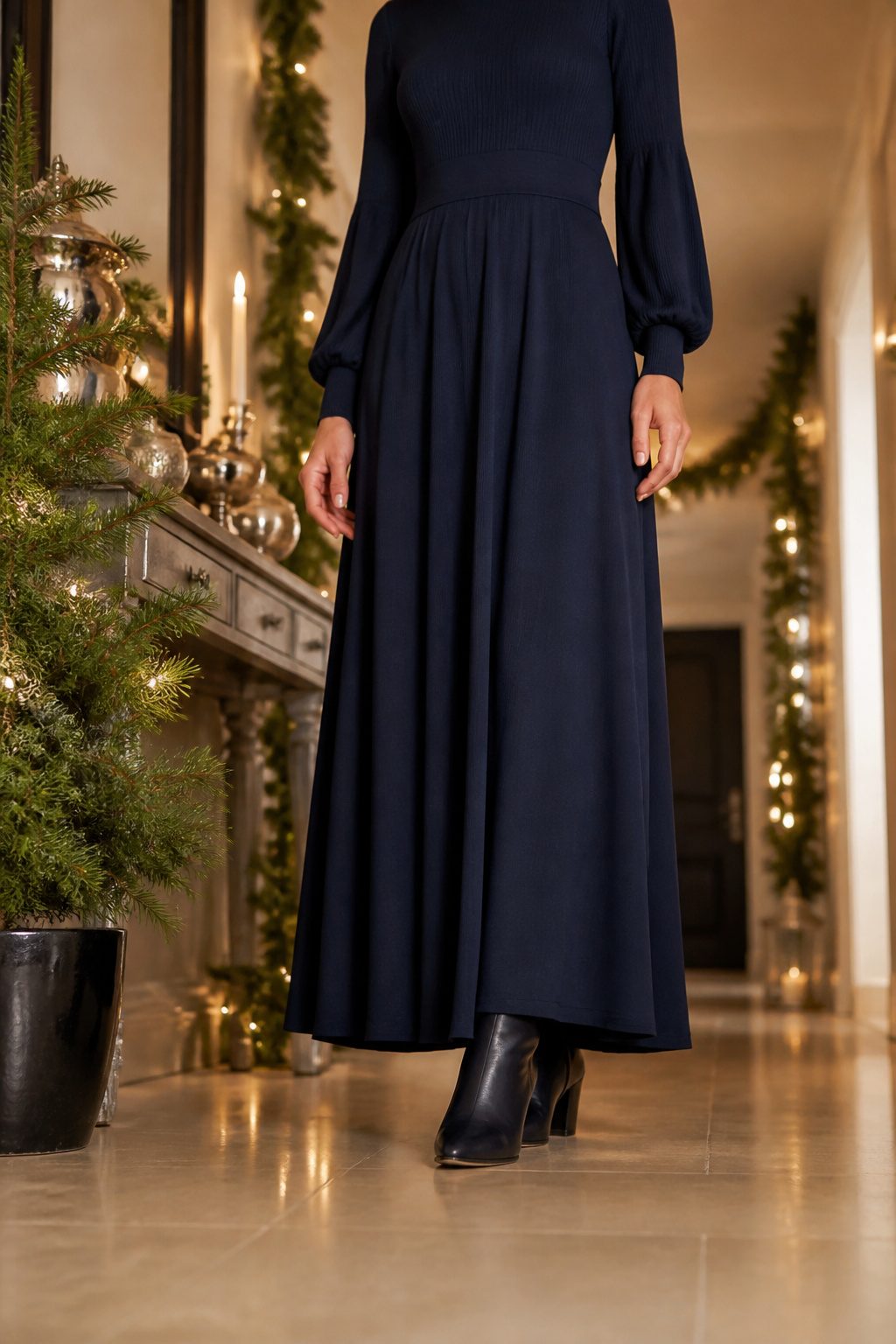
A maxi dress reads holiday when the print is dark or dense enough to look intentional against winter light.
Navy grounds the look immediately; the Rhapsody Long Sleeve Knit Maxi Dress in that shade works because the long sleeves and knit weight signal season, not beach.
For petites, the hem should skim the top of your foot, not pool, or the line collapses. Tall frames can carry a true floor-sweeping length, but only if the shoe underneath has enough height to keep the hem from dragging.
Backless cutouts and halter necks from Princess Polly’s range shift the same silhouette toward cocktail. The jacket that finishes it is longline, hitting mid-thigh or lower: anything cropped fights the vertical line and chops the figure.
A trench in wool or a structured coat worn open keeps the dress visible while adding the warmth the season demands. Skip anything that reads tropical or watercolor; those register as summer leftover no matter the fabric weight.
Jumpsuits
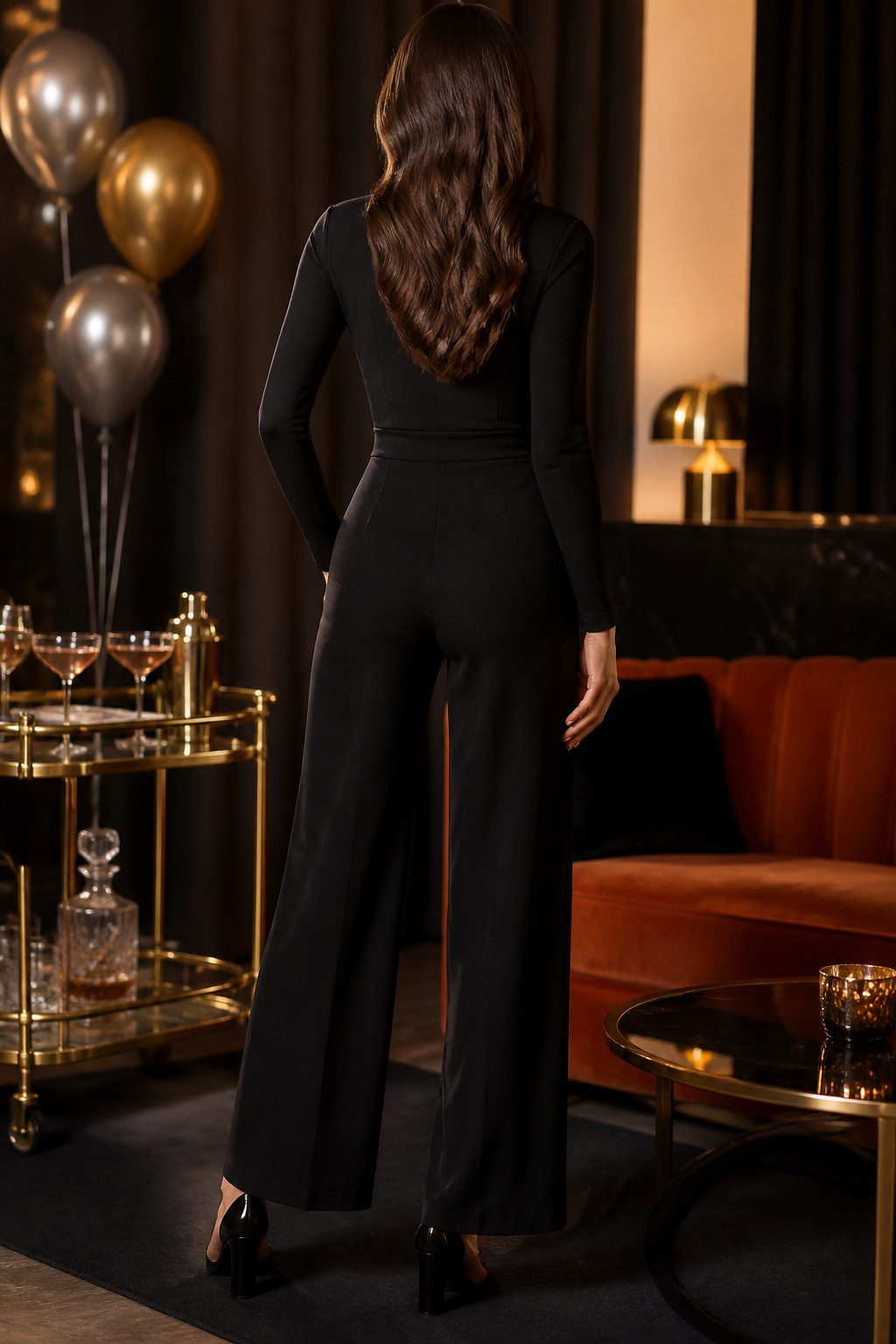
A jumpsuit only works at a Christmas party if the waist seam hits you at the right spot.
For a short torso, look for an empire or raised waist that sits above your natural waistline; for a long torso, a seam that drops closer to the hip keeps proportions from looking stretched.
Try the full routine before you buy: sit, reach for a drink, and walk a hallway.
Most importantly, scope out the bathroom. A back zipper or complicated closure turns a two-minute break into a production, and you will not enjoy the evening if you need a helper.
For shoes, a heel between two and three inches balances the long vertical line without looking like you are trying to dress up a workwear piece.
A block heel in satin or velvet reads party-appropriate and stays stable on uneven floors; anything over four inches starts to compete with the jumpsuit’s own drama.
Flat sandals work only if the leg is cut slim and cropped, and even then the overall effect leans brunch, not holiday party.
Party Tops
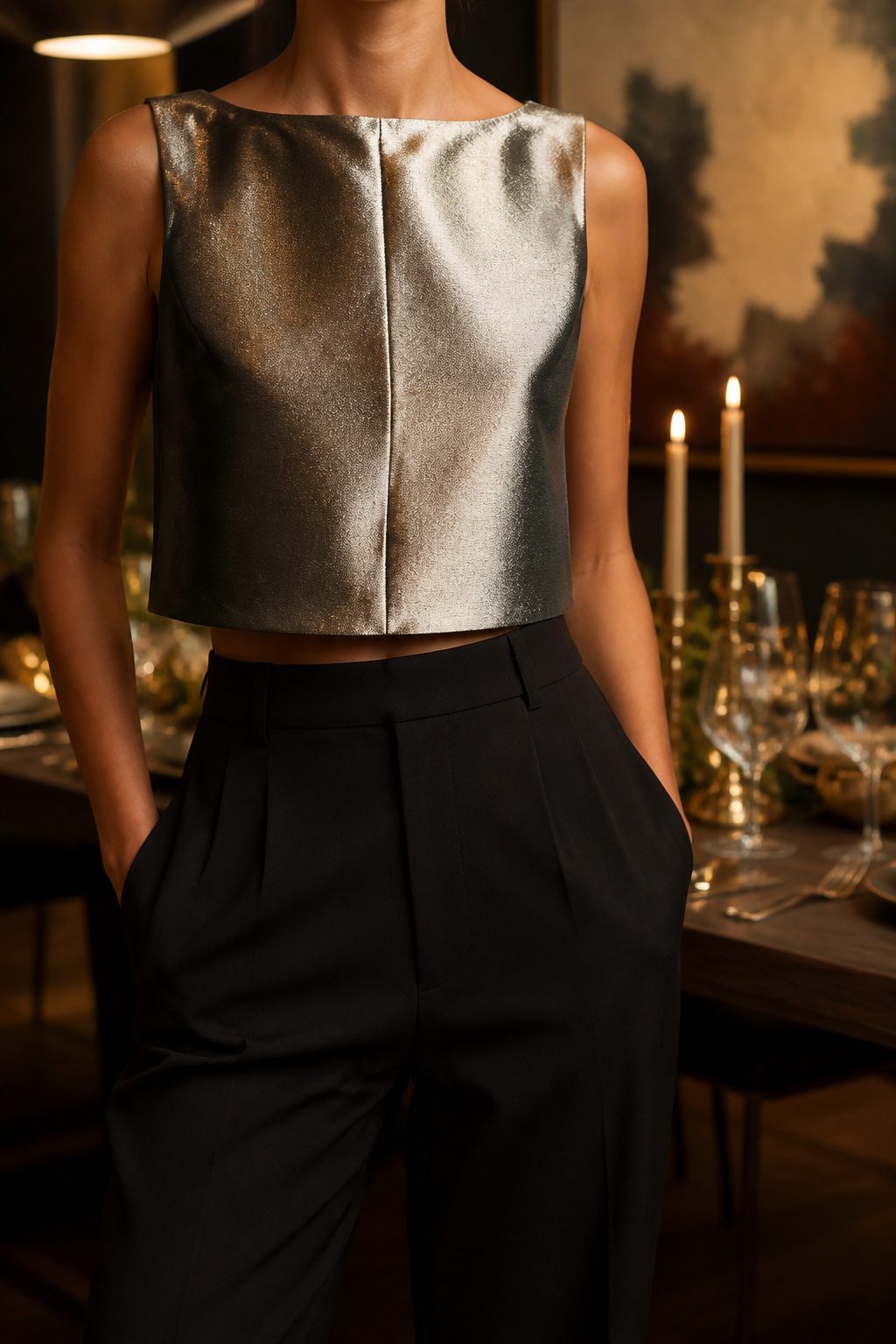
The best party tops fall into two camps, and mixing them up is how you end up with nothing to wear.
Tops with structure, cropped hems or peplum waists, need the right bottom half.
A peplum that flares at the hip wants a slim pant or pencil skirt; anything wide throws the proportions off. Cropped lengths only work with high-rise waists, so factor in whether you own those or are willing to buy them.
Then there are the tops that drop straight onto whatever tailored piece you already have. A fluid silk or lightweight satin blouse tucks into a mid-rise trouser without adding bulk at the waistband.
Jersey with a bit of weight does the same. What you want to avoid is anything too heavy or too stiff, a thick crepe or bonded knit that sits on top of the band instead of sliding in.
If you are buying one piece to stretch across three parties, pick the top that works with the black pants or midi skirt you already own.
The specialized silhouette looks great in the store, but you will wear the versatile one five times as often.
Tailored Pants
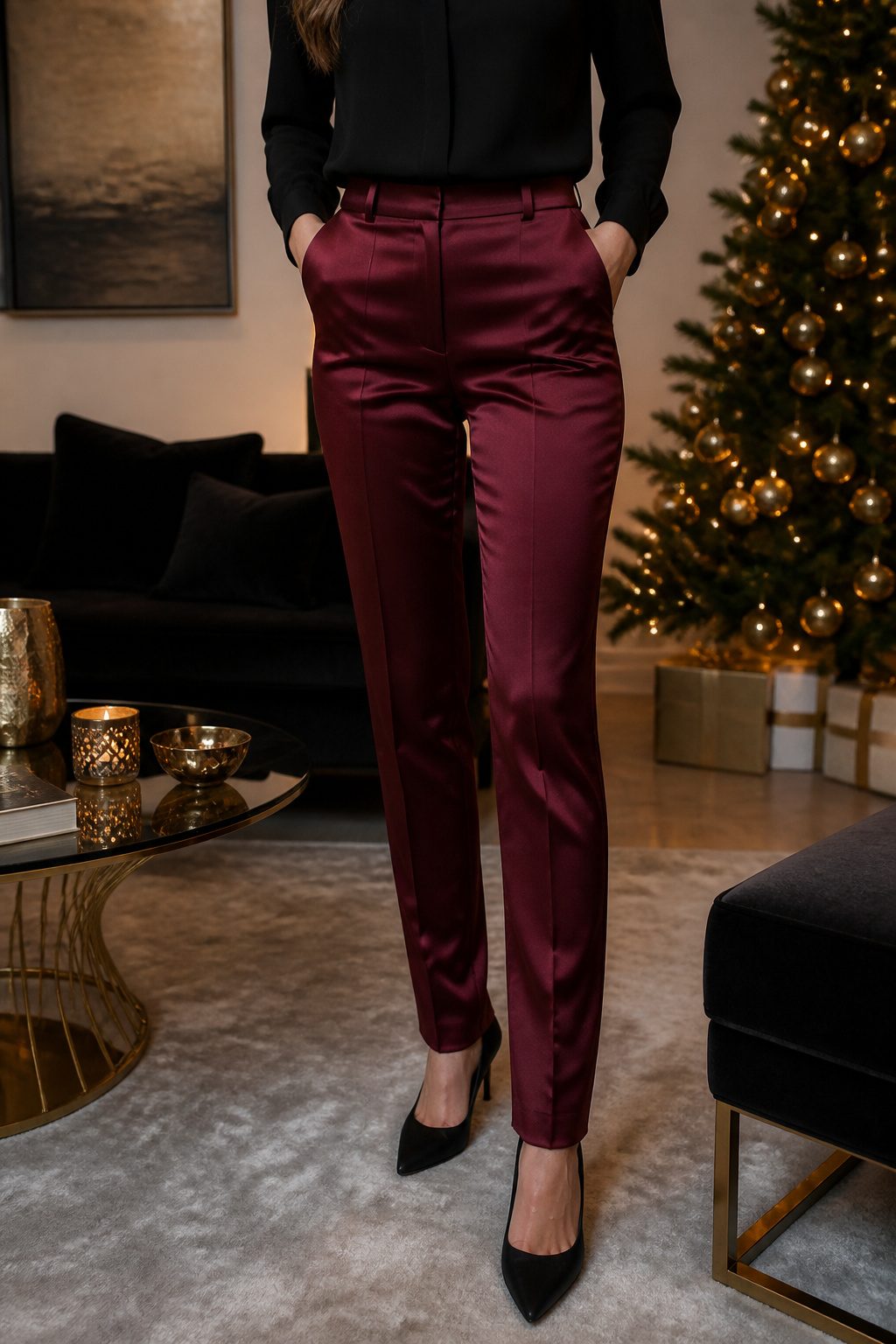
Tailored pants let you build a christmas party outfit from pieces you probably already own, but the cut decides whether you look dressed up or dressed for a desk.
Slim, full-length trousers in a structured fabric need heels to keep the hem from breaking at the shoe, which drags the whole silhouette down.
A cropped or wide-leg cut that hits at the ankle works with flats because the line stays clean without lift.
Rise matters with the party tops stacked in your closet.
A high waist tucks in a silk blouse or a cropped velvet piece without gapping. Mid-rise pairs better with longer, untucked shapes that skim the hip.
The fabric is what moves the look from 9-to-5 to after-dark. Satin, velvet, or a metallic weave reads evening; standard wool or basic crepe stays office-bound even in a festive color.
Sequins or a slit front add the celebratory edge that makes tailored pants feel like a deliberate choice for a party rather than a fallback.
Coats

A coat can make or break the walk from the car to the door, and the length rule is what separates polished from sloppy.
Your coat hem should fall at least two inches longer than your dress hem underneath. Anything shorter and you get a bulky line at the hip; anything exactly even looks like you planned neither piece.
For a long navy maxi dress, that means a sleek trench or longline coat that skims past the knee, not a cropped jacket that chops you in half.
December in Minnesota is not December in Houston.
In northern climates, a statement coat in a heavier fabric plus a pashmina layer is the actual outfit for half the night; choose something that reads as intentional because people will see it.
In southern states, the coat is a ten-second prop for the parking lot walk, so a lighter longline layer works fine and you can skip the scarf entirely.
The mistake is buying one coat for both scenarios and being uncomfortable in at least one of them.
Comfortable Boots
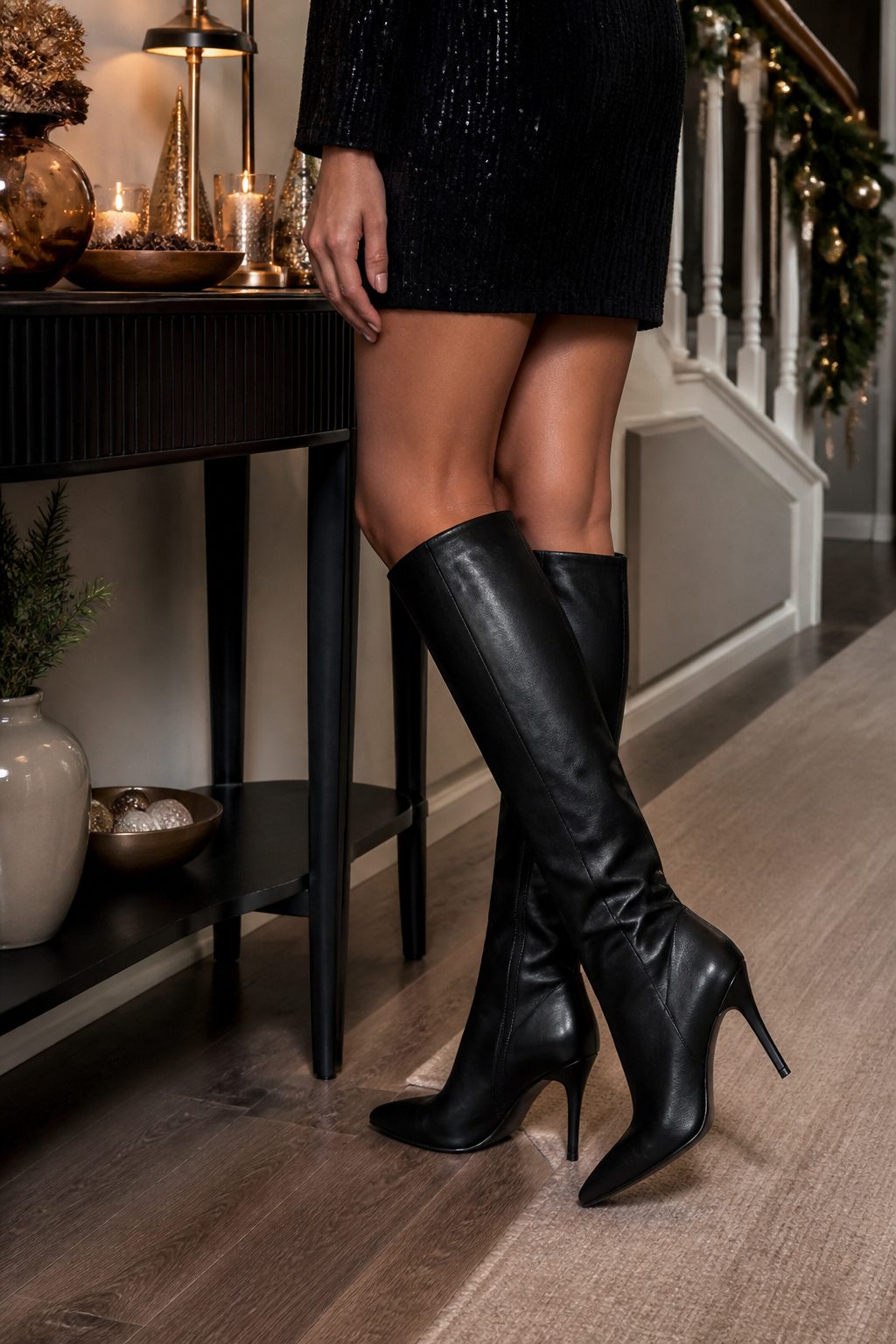
Boots that carry a dress outfit are not the same boots that work with pants, and the difference is shaft height against your hemline.
With a mini or midi dress, knee-high boots keep the line clean and your legs warm without the visual break of skin or tights. The shaft should sit just below the hem, not fight it.
With tailored pants, you want the boot to disappear or declare itself completely: a slim ankle boot tucks under a wide leg, while a taller shaft needs a cropped pant to show it off.
What separates the boots you keep on through dessert from the ones you leave early in is the insole. The swap that matters is a thin, high-density memory foam insole over whatever the manufacturer glued in.
It takes up almost no room in the toe box, so your boots still fit, but it redistributes pressure across the ball of your foot. Without it, a three-hour party becomes a two-hour party fast.
Metallics, bows, or rhinestones let your boots double as the statement piece, which means you can keep the rest simple.
Silver bags and stacked bangles pull the same trick. If the boots are doing the work, let them.
Subtle Shimmer
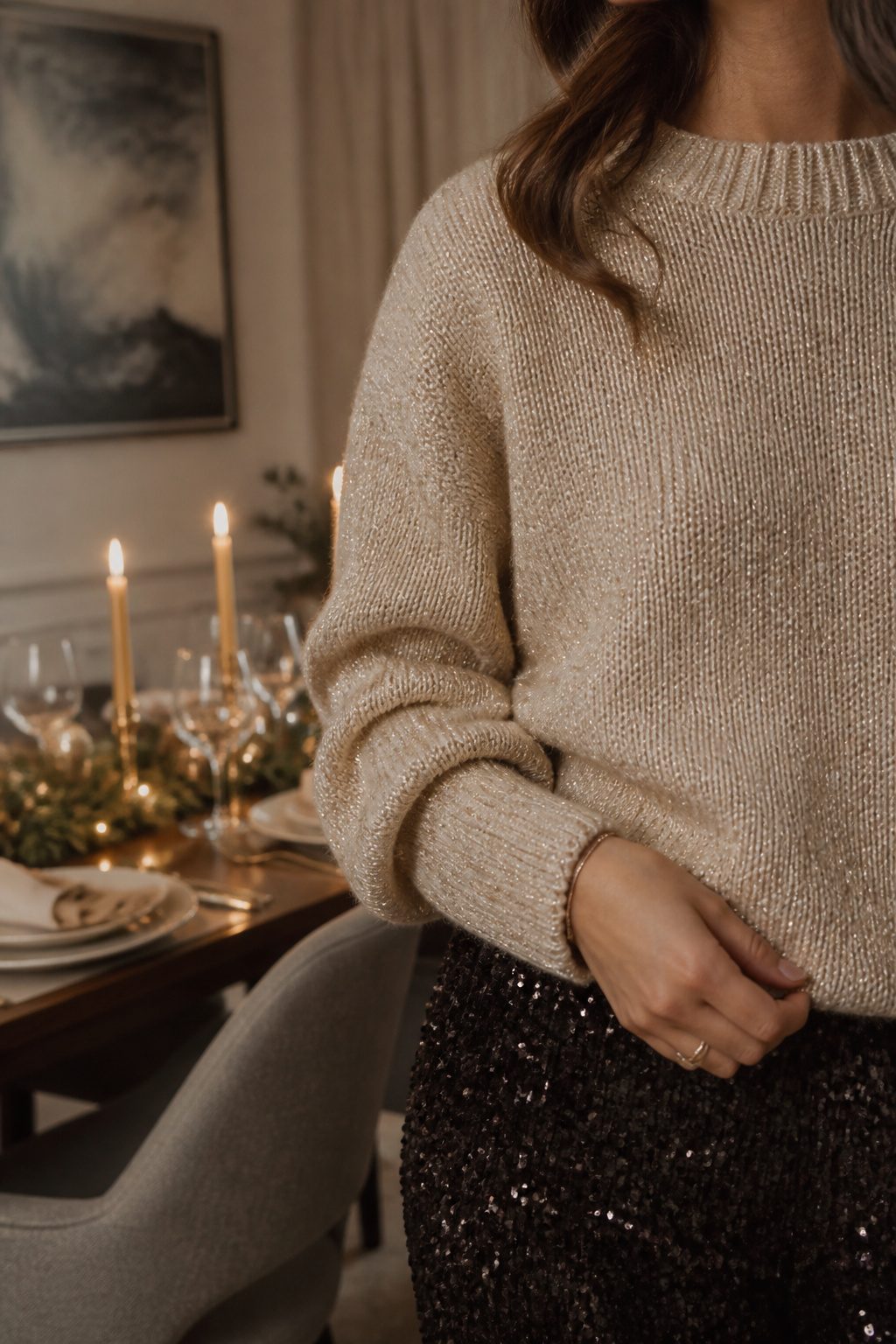
Fine metallic threads woven into wool blends or soft cotton knits give you the shimmer without the costume effect.
The difference sits in the thread count: a few strands per inch catches candlelight, while all-over foil print turns you into a walking disco ball under overhead fluorescents.
Cable-knit and ribbed textures help here, breaking up the reflection so the sparkle reads as depth rather than glare.
Shimmer shows best where you want eyes to land and worst where you do not.
A fine metallic thread across the shoulders or down a sleeve draws attention up and out. The same treatment across the midsection or hips does the opposite work, broadcasting exactly where the light hits widest.
Before you commit, stand in your bathroom with the overhead on and your phone flashlight at chest height.
Move it in a slow arc. If you see individual flashes of light rather than a soft glow, that piece is for a darker room or a different night.
The pieces that pass this test layer beautifully with skirts, dresses, or trousers and still feel dressed up when you step back into ordinary light.
Festive Colors
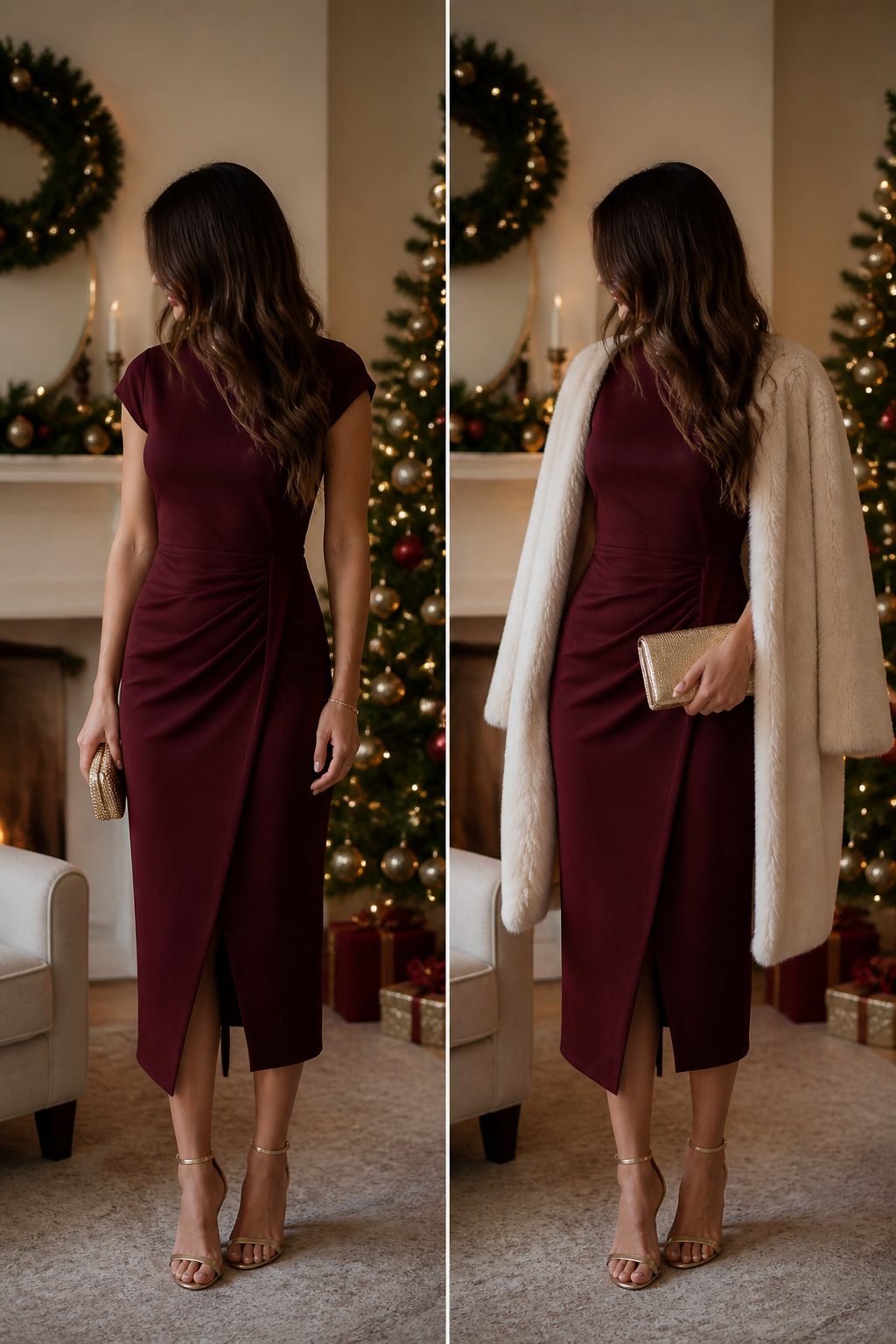
Red and green read Christmas fast, but they also read costume if the cut or fabric slips.
Burgundy, cream, chocolate brown, and navy do the same seasonal work without that risk. Burgundy carries the warmth of red into something you can wear to a dinner in March without comment.
Chocolate brown and cream pair back to camel, ivory, and the neutrals already in your closet; navy blurs the line between office and party so completely that one well-cut piece works for both.
The real test is what you reach for on January 2. Navy and cream repeat year-round; burgundy and chocolate brown tend to hibernate.
If you are buying something specific for one night, that is fine. If you want a holiday outfit that earns its rack space, weight your purchase toward the colors that still look right when the tree is down.
Silver Bags and Stacked Bangles
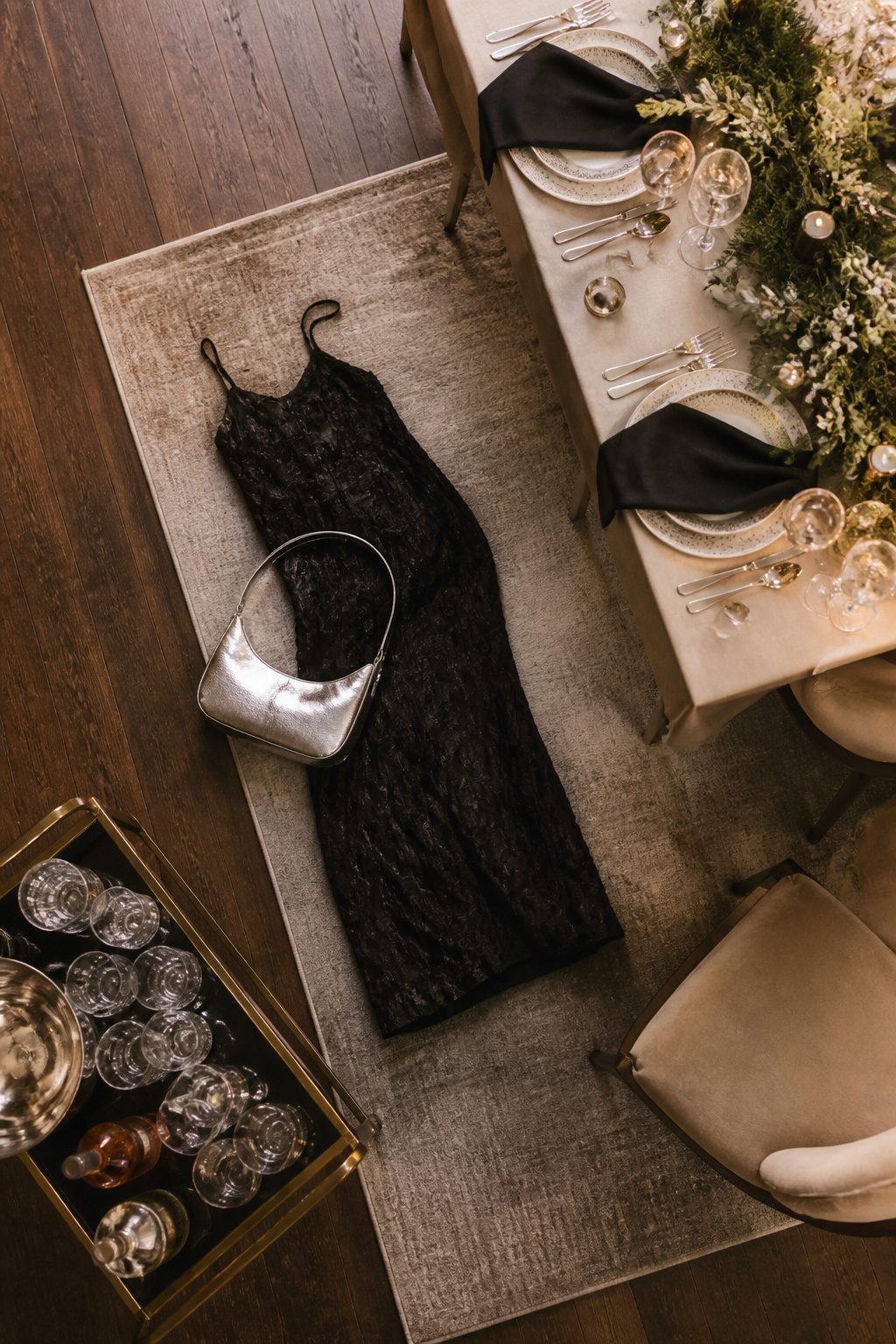
A silver bag and stacked bangles are the two accessories that come up most often for Christmas party outfits, and the pairing matters more than most people think.
If your dress is already doing the work, a small shimmery silver bag is enough to bring the festive energy without fighting for attention.
The Penelope Shimmer Bag in silver is the kind of piece that earns its place this way, a single metallic accent against something minimal.
Where this tips over is when the outfit itself is plain. A simple black dress or a bare neckline needs the bangle stack to balance the look, otherwise the silver bag sits alone and the whole thing reads unfinished.
Gold and silver both work here, and rhinestones or gem accents add extra sparkle, but the real choice is how much noise you want.
That noise is the part sources skip.
Stacked bangles clink against each other and against glassware all night. If you are heading to a dinner where you will be holding a wine stem or resting your arm on a table, the sound adds up fast.
One or two slim pieces keep the look without the percussion, or you save the full stack for standing-room parties where your hands stay free.
What Festive Attire Actually Means
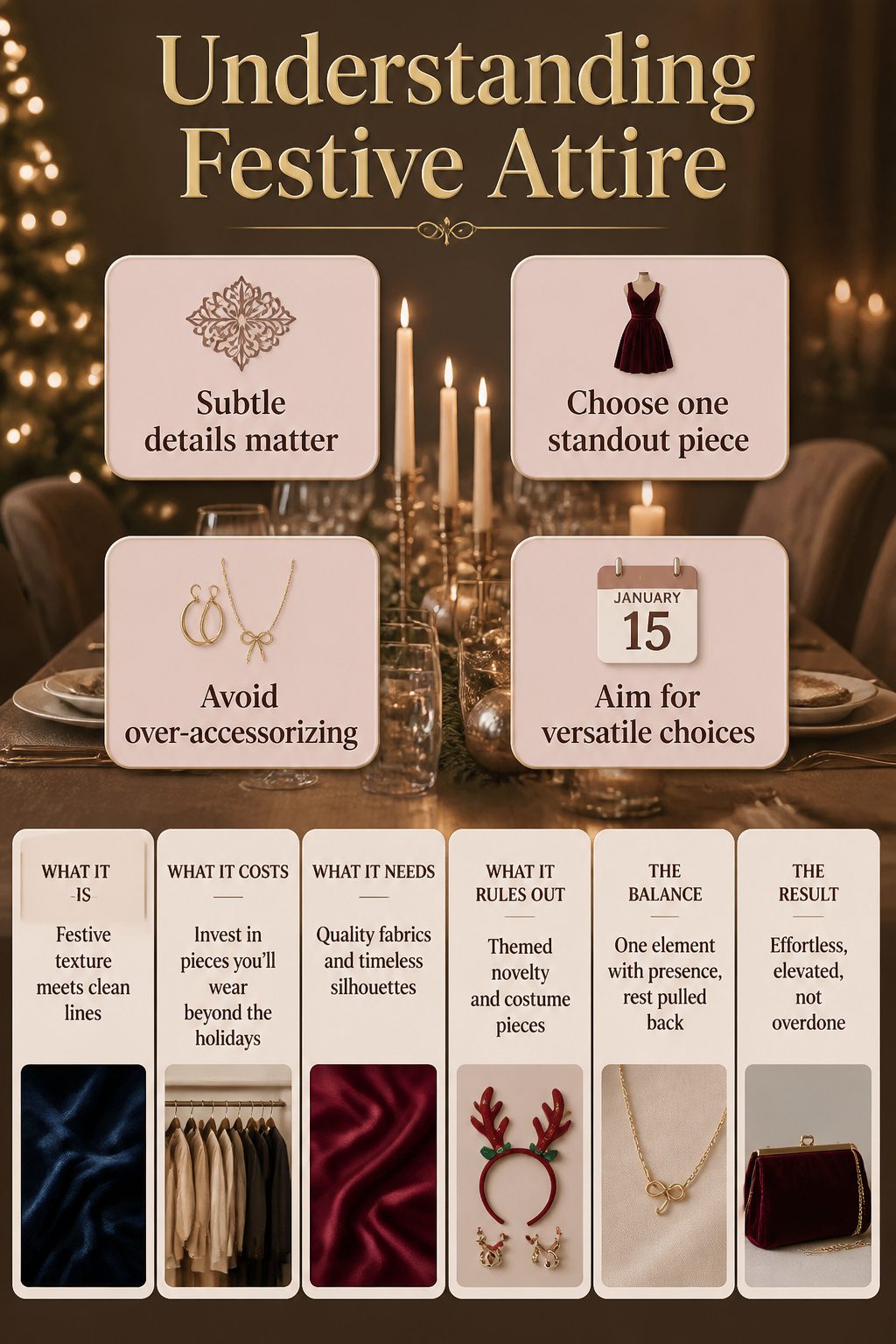
Festive dressing works through quiet signals, not full costume.
A velvet dress with a hint of shimmer in the fabric reads holiday-ready. The same dress with reindeer earrings reads like you are wearing a joke.
Subtle details carry the whole message. Lace trims, a metallic finish, a jewel tone like navy or deep red, these do the work without shouting.
Sources agree on this: the pieces you reach for should still make sense on January 15. That is the test.
A sleek midi cut in velvet moves through a dinner party without demanding attention. Add rhinestone everything and you have locked yourself into one night only.
Jewelry follows the same rule. Gold or silver, a knotted chain, a small bow detail, these bring the celebratory note.
Stacked sparkle fights the outfit instead of finishing it. The balance you want is festive texture against clean lines: one element with presence, the rest pulled back.
Think of it as color contrast working in your favor. A metallic finish catches candlelight; a metallic finish plus gem accents plus shimmer fabric plus statement shoes and you have crossed into costume.
The mistake is adding instead of choosing. Start with one piece that holds the holiday mood, a velvet dress, a satin top, a single item with depth in the fabric.
Build quiet around it. That is what festive attire actually means.
Black at Christmas Parties
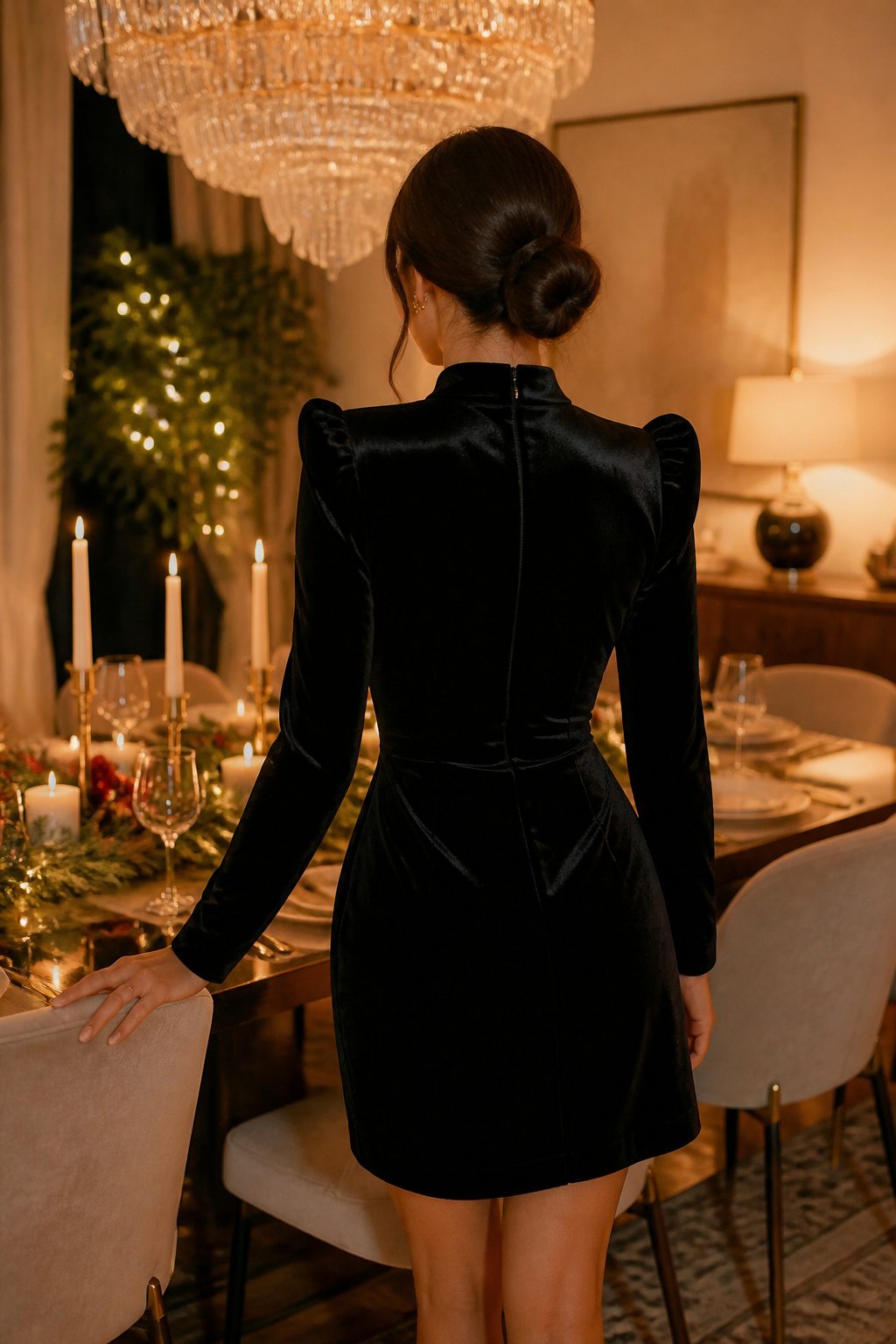
Black at a Christmas party is not the absence of holiday effort.
It is the choice to let texture and cut do the celebrating instead of leaning on color. Three separate lines now treat black as a preferred base, which tells you how far the old rule has faded.
The fabric is what separates party from funeral.
Velvet, satin, and metallic jacquard read seasonal and intentional; matte crepe or unstructured jersey in flat light does not. A black velvet dress or a satin blouse with tailored trousers carries the holiday feel without needing red or green nearby.
Structured cuts matter here more than with brighter colors, because black hides less of the silhouette and shows less forgiveness in a shapeless cut.
The single accessory that signals you understood the occasion is the one that adds the texture your fabric lacks.
Pair a sleek satin dress with a lace detail at the collar or sleeve, or add a metallic clutch to velvet trousers.
That contrast, not the black itself, is what makes the outfit read as a Christmas party choice rather than a default.
Building From What You Own
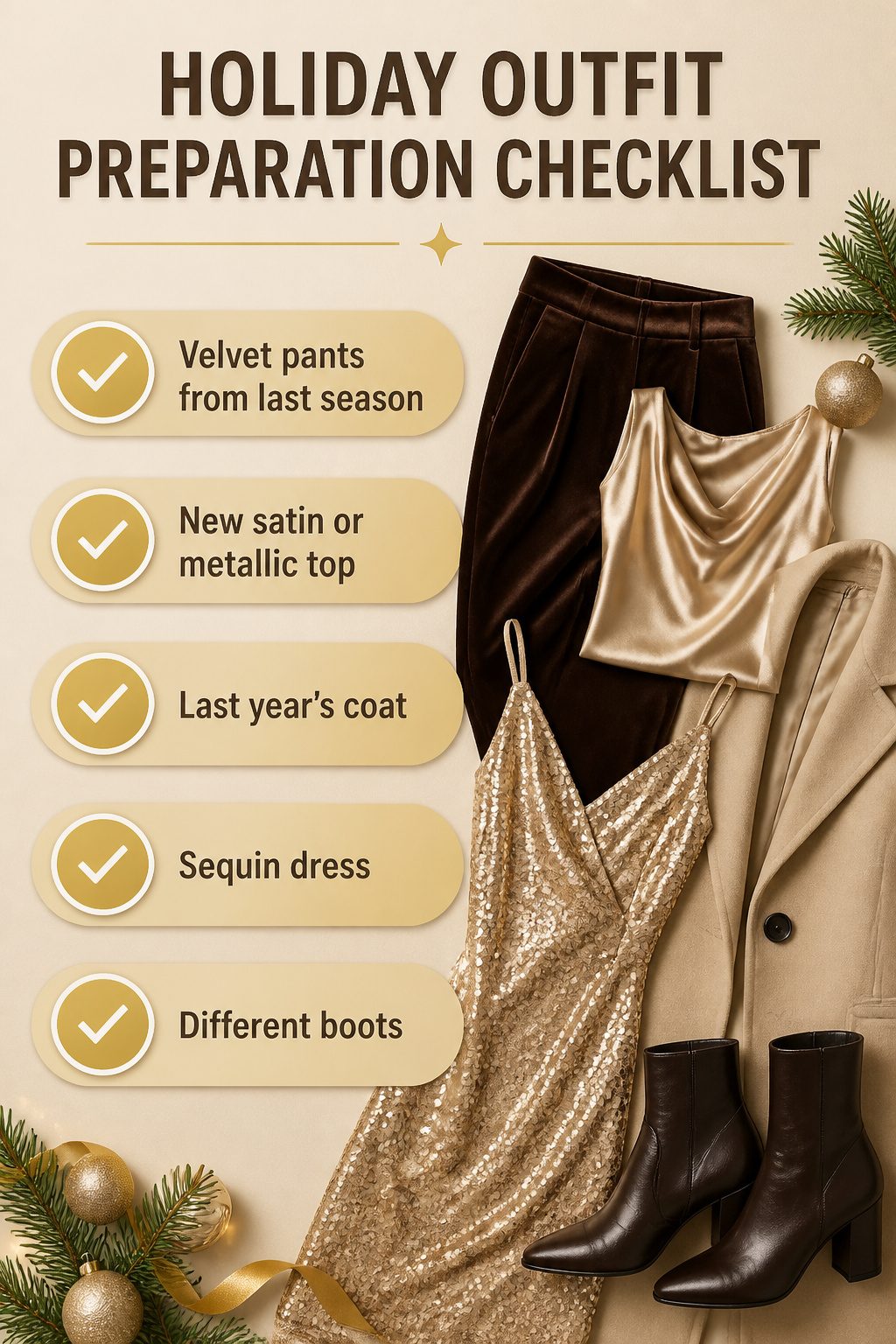
You probably already own the hardest piece to get right. Those velvet pants from last season, the ones that felt too bold for everyday wear, are exactly what holiday dressing needs.
Pair them with a new party top in satin or metallic jacquard and the balance shifts: structured below, festive above, no full outfit required.
The same math works with last year’s coat over a sequin dress. The coat gives structure and coverage for the drive over; the dress does the work once you are inside.
Swap in different boots, maybe ones with a lower heel than you wore last year, and the outfit reads as intentional rather than repeated.
Balancing texture, color, and proportion is what makes this look cohesive rather than cobbled together.
Velvet against satin, a structured coat over something fluid, metallic accents kept minimal so they stay refined. Each piece should earn its place because it fits well and feels right on your body, not because it is new.
Frequently Asked Questions
What should you wear to a Christmas party?
Pick something elevated that still feels easy to move in. One or two quality pieces, like a velvet dress or a satin top with tailored pants, can carry you through multiple parties without looking repeated.
The fabric matters more than the color: velvet, satin, and metallic weaves read festive, while flat matte fabrics stay office-bound even in holiday shades.
What is festive attire for a Christmas party?
Festive attire means quiet signals, not costume. A velvet dress with a hint of shimmer, lace trim, or a jewel tone like navy or deep red does the holiday work without shouting.
One element carries the mood; everything else stays clean and pulled back. The pieces you choose should still make sense on January 15.
Is it OK to wear a black dress to a Christmas party?
Yes, black works perfectly when the fabric and cut do the celebrating.
Velvet, satin, and metallic jacquard read seasonal and intentional; matte crepe or shapeless jersey does not. Add one textural contrast, like a metallic clutch or lace detail, so the outfit reads as a deliberate choice rather than a default.
What colors are best to wear to a Christmas party?
Burgundy, cream, chocolate brown, and navy carry the warmth and depth of classic holiday shades without the costume risk of bright red and green.
Navy and cream repeat year-round; burgundy and chocolate brown tend to hibernate after January. Weight your purchase toward the colors that still look right when the tree is down.