
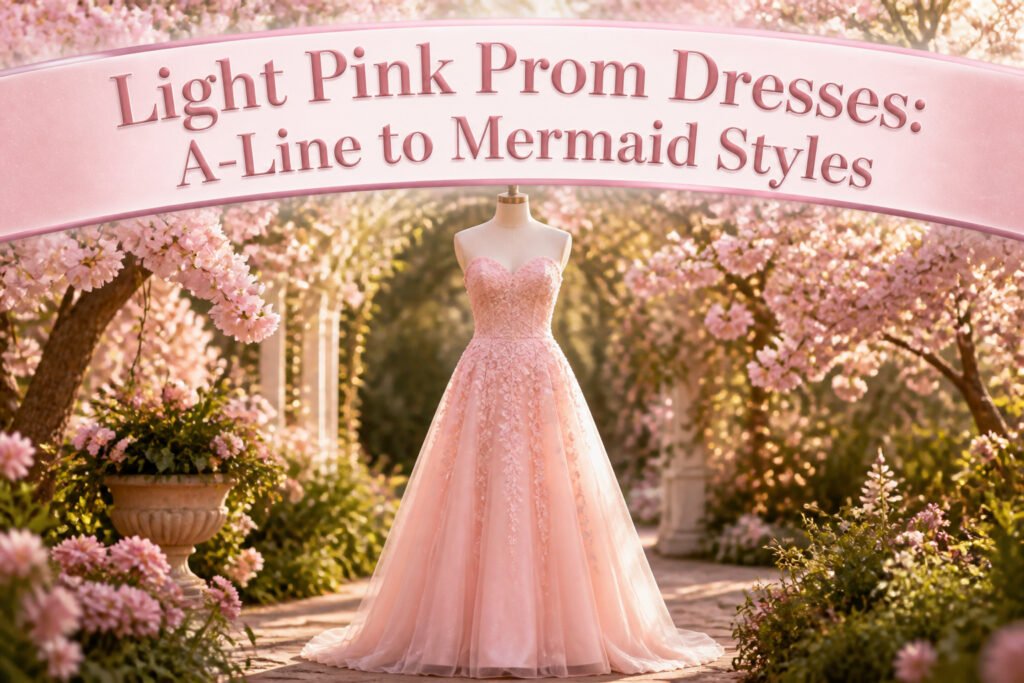
A light pink prom dress is any floor-length gown in pale pink, from A-line to mermaid, that reads formal rather than costume.
The color does the heavy lifting: it softens a body-conscious cut or keeps a ball gown from looking like a pageant prop.
What separates a $400 gown from a $900 one is usually hand-beading or fabric that needs specialist handling, not the silhouette itself.
The Sherri Hill 58005, at $698, sits in the middle of that range and gives you a useful benchmark for what construction that holds its shape through dinner actually costs.
A-Line Light Pink Prom Dresses
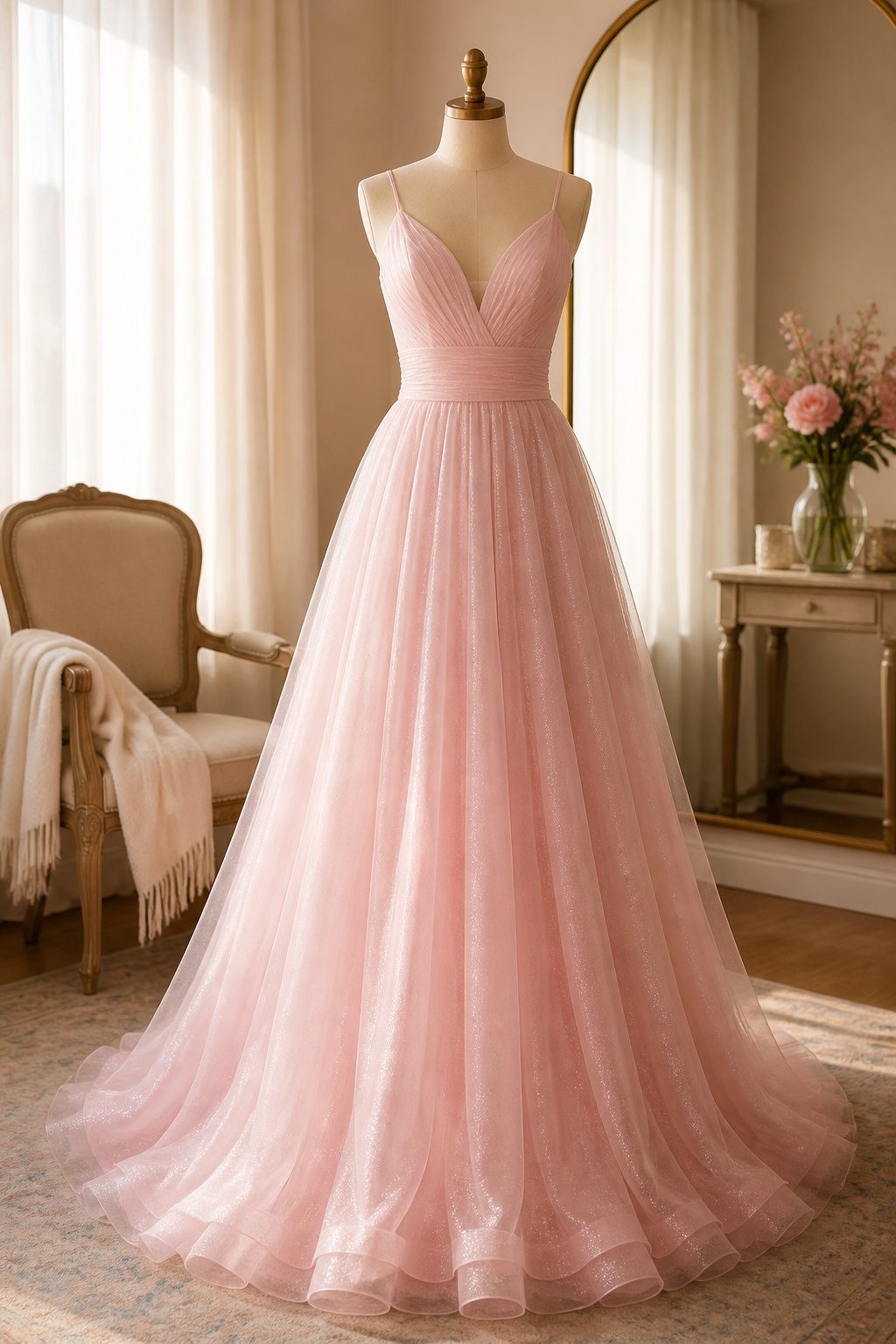
An A-line light pink prom dress lands at the natural waist and flares out to the hem, which means it works for most body types without needing to be the main event.
The cut gives you room to sit, eat, and actually twirl on the dance floor instead of shuffling side to side.
In light pink, that soft color keeps the whole look from tipping into costume territory; it reads as intentional rather than trying too hard.
You will typically spend $400 to $900 for a quality gown in this style. A hem is the most common alteration you will need, and sometimes the bodice takes minor tweaking for a perfect fit.
The combination of practical movement and that particular shade makes this the silhouette to beat if you want one dress that handles the whole night without a wardrobe crisis.
Fitted Light Pink Prom Dresses
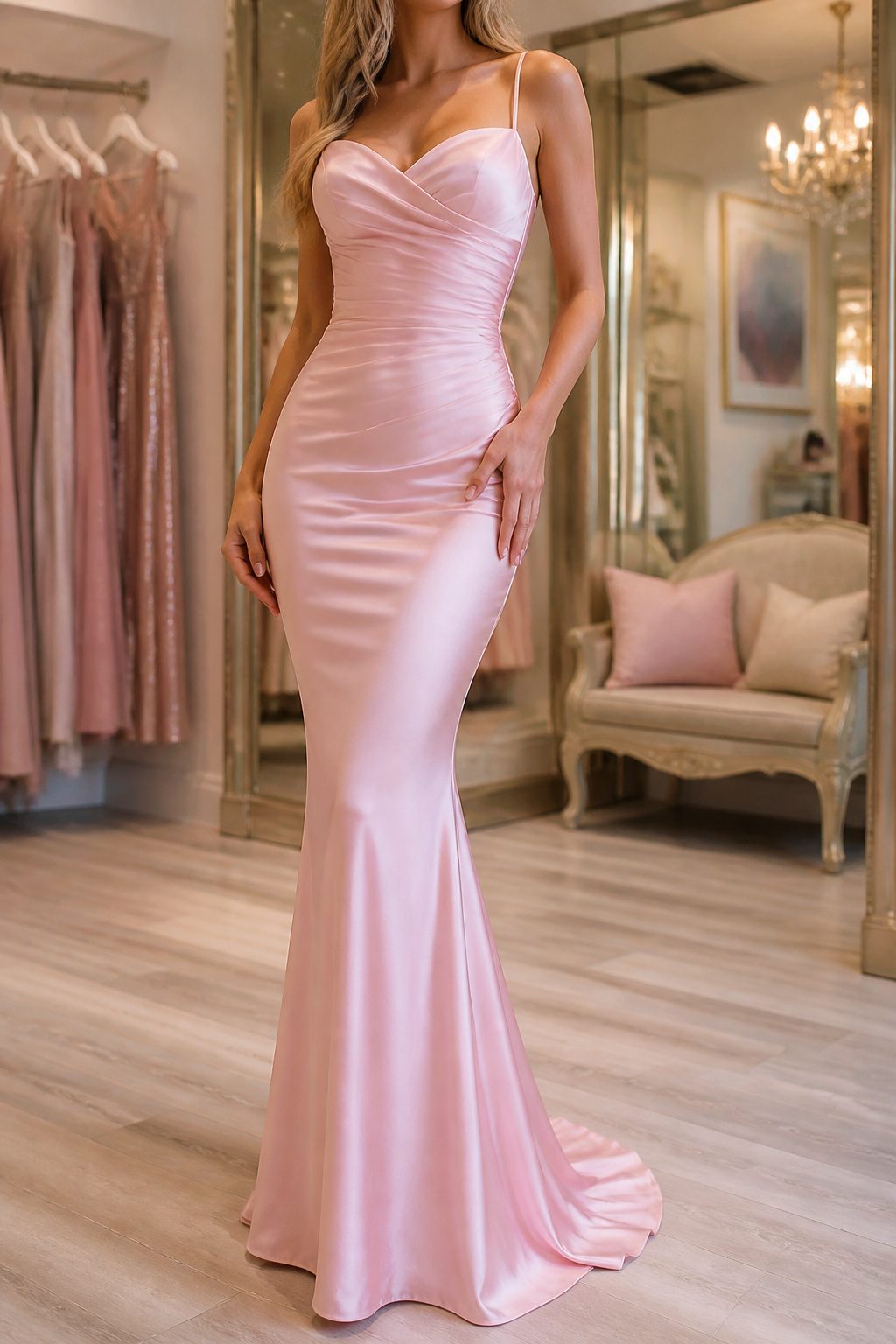
A fitted light pink prom dress hugs your shape from shoulder to hem without the stiffness that locks your knees together.
The color does real work here: pale pink softens the body-conscious cut so the silhouette reads refined rather than club-ready. You get the curve emphasis without the overtness a scarlet or black version would carry.
Stretch satin, crepe, or jersey are the fabrics that make this work. They skim and move with you, whereas heavy brocade in light pink would look like upholstery and fight the body instead of following it.
Stretch satin gives the most polish under dance-floor lights, crepe stays matte and modern, and jersey forgives if you size slightly wrong.
The wrong fabric turns the dress into a costume; the right one lets you sit, breathe, and actually enjoy the night.
Ball Gowns in Light Pink
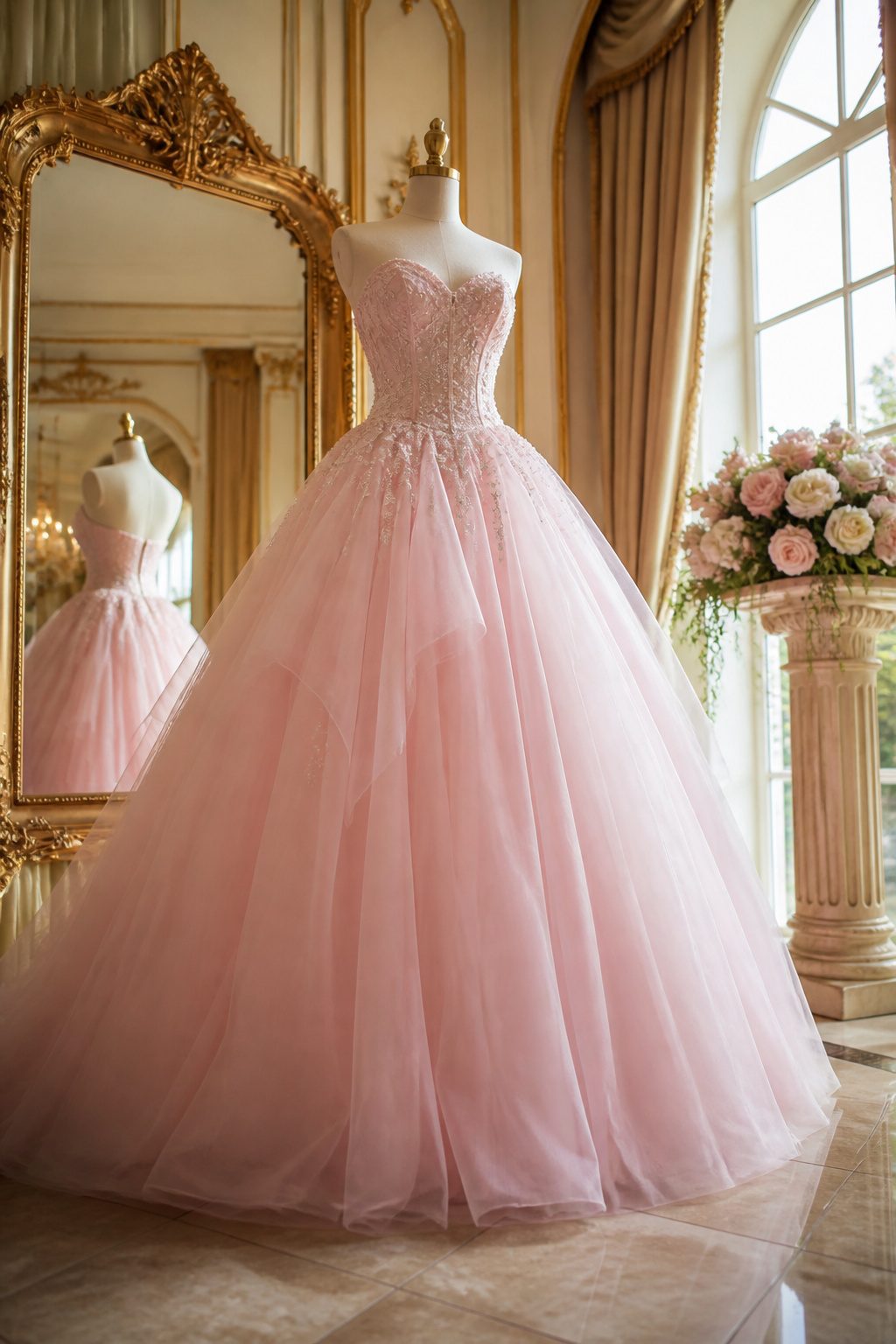
A ball gown lives or dies on its architecture: the bodice stays structured and close to the body while the skirt explodes outward from the natural waist.
In light pink, that contrast reads romantic rather than costume, but only if the volume is built from layers of soft tulle instead of one heavy slab of fabric.
Multiple sheer layers keep the color airy and let it shift in the light, so the dress never turns into a solid bubblegum mass.
This is also the silhouette where designers go heaviest on embellishment. Three-dimensional floral appliqués, scattered beadwork, and shimmering sequin details all sit naturally on a skirt this size; the proportions can handle the extra texture without looking busy.
The investment reflects that labor. Ball gowns in light pink typically land at the upper end of the $400–$900 range, and the most common alteration you will need is a hem.
The bodice may need minor adjustments for a perfect fit, but the structure is forgiving enough that you are unlikely to face major tailoring.
Mermaid Light Pink Prom Dresses
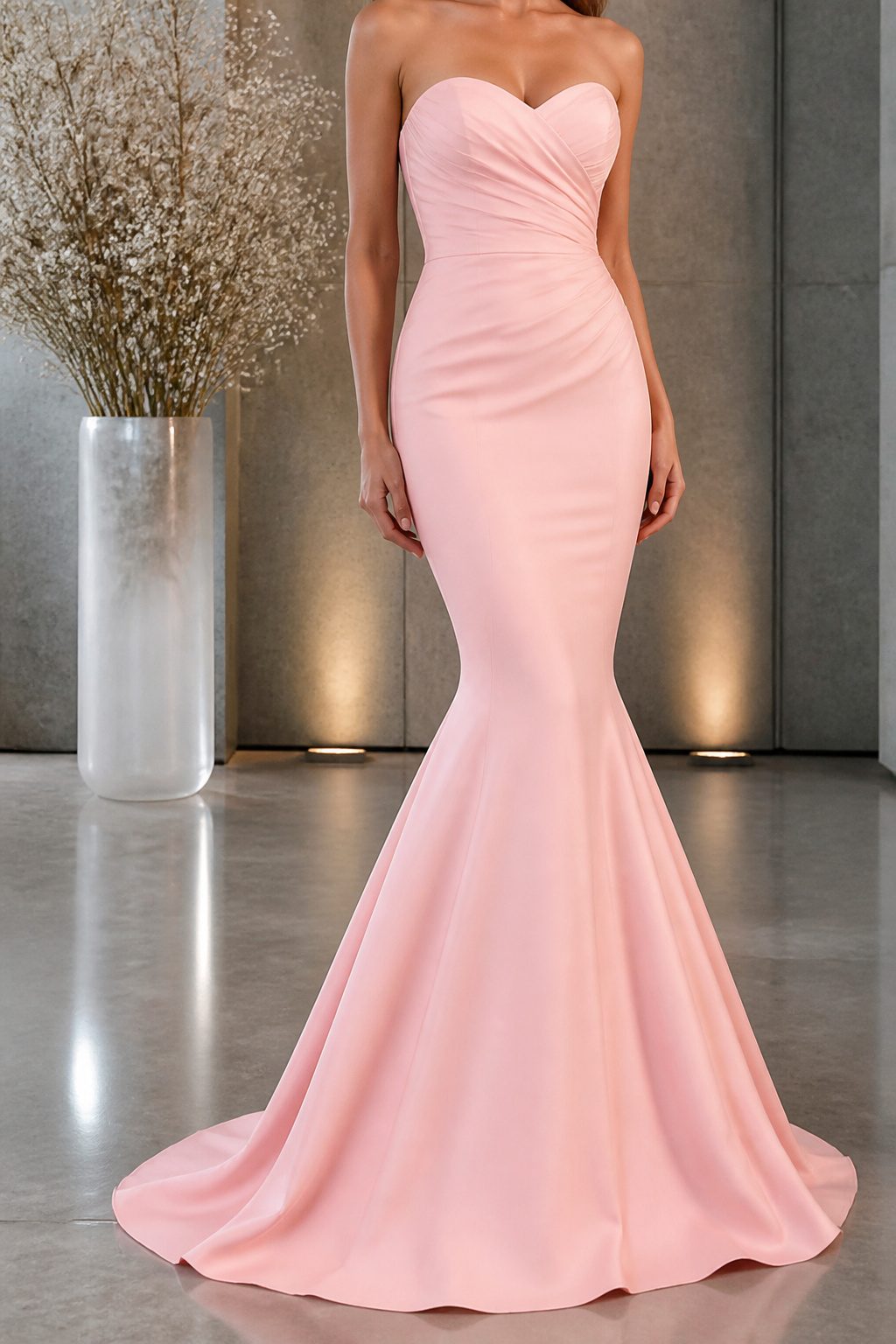
A mermaid light pink prom dress flares at or below the knee, and where exactly it flares changes who it works for.
Flare at the knee and the skirt kicks out like an old-Hollywood wave; the leg looks longer but the hip reads wider, so this placement suits straighter figures.
Flare below the knee and the fitted line travels farther down the leg, which balances fuller thighs and draws the eye to the calf instead.
Light pink softens the silhouette so it does not scan as pageant costume. The color reads young and photographs well, though the drama is still there in the shape.
Expect to alter this one more than an A-line.
The hem is almost always too long, and the flare placement may need to shift an inch or two to hit your leg at the right point. These gowns typically run $400 to $900, with alteration costs on top.
Two-Piece Light Pink Prom Dresses
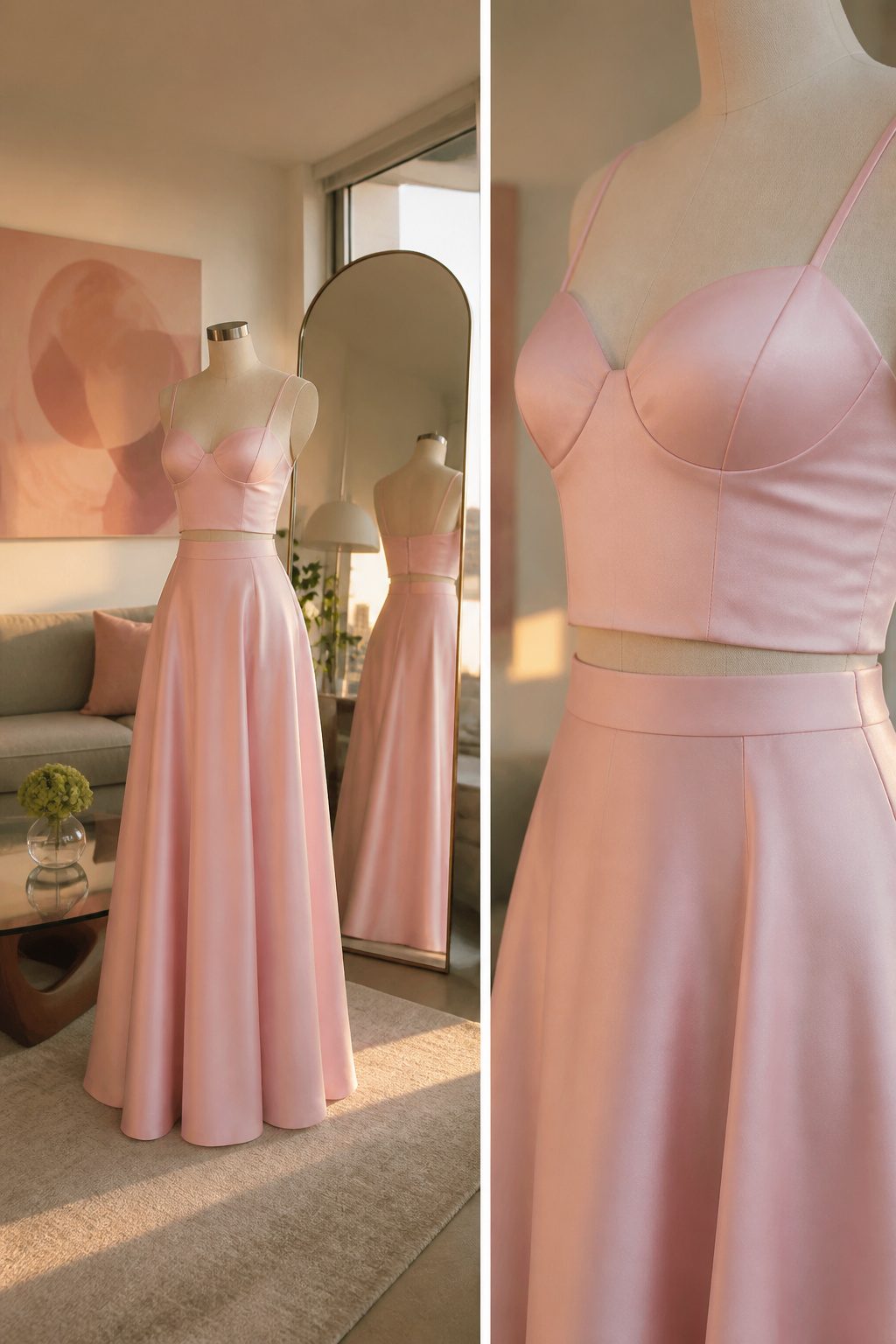
A two-piece light pink prom dress lets you adjust the proportions between top and bottom until the ratio flatters your torso length.
The gap between waistband and hemline ranges from a barely-there sliver to a deliberate four or five inches of midriff, and that distance is what shifts the look from formal toward cocktail.
Keep the gap narrow, maybe an inch, and the outfit stays firmly in prom territory. Open it up and you risk looking like you dressed for two different events.
Light pink saves the style from reading as mismatched separates. The color unifies top and bottom so cleanly that they photograph as one continuous gown, which matters when you are splitting the cost of a photographer with friends.
You also gain a practical edge: buy the skirt in one size and the top in another if your proportions run that way, or re-wear either piece later without the other.
The coordination is built in by the color, not by identical fabric or trim, so you have more room to play with texture, satin against tulle or crepe against beaded mesh, without breaking the visual line.
Jumpsuits and Rompers
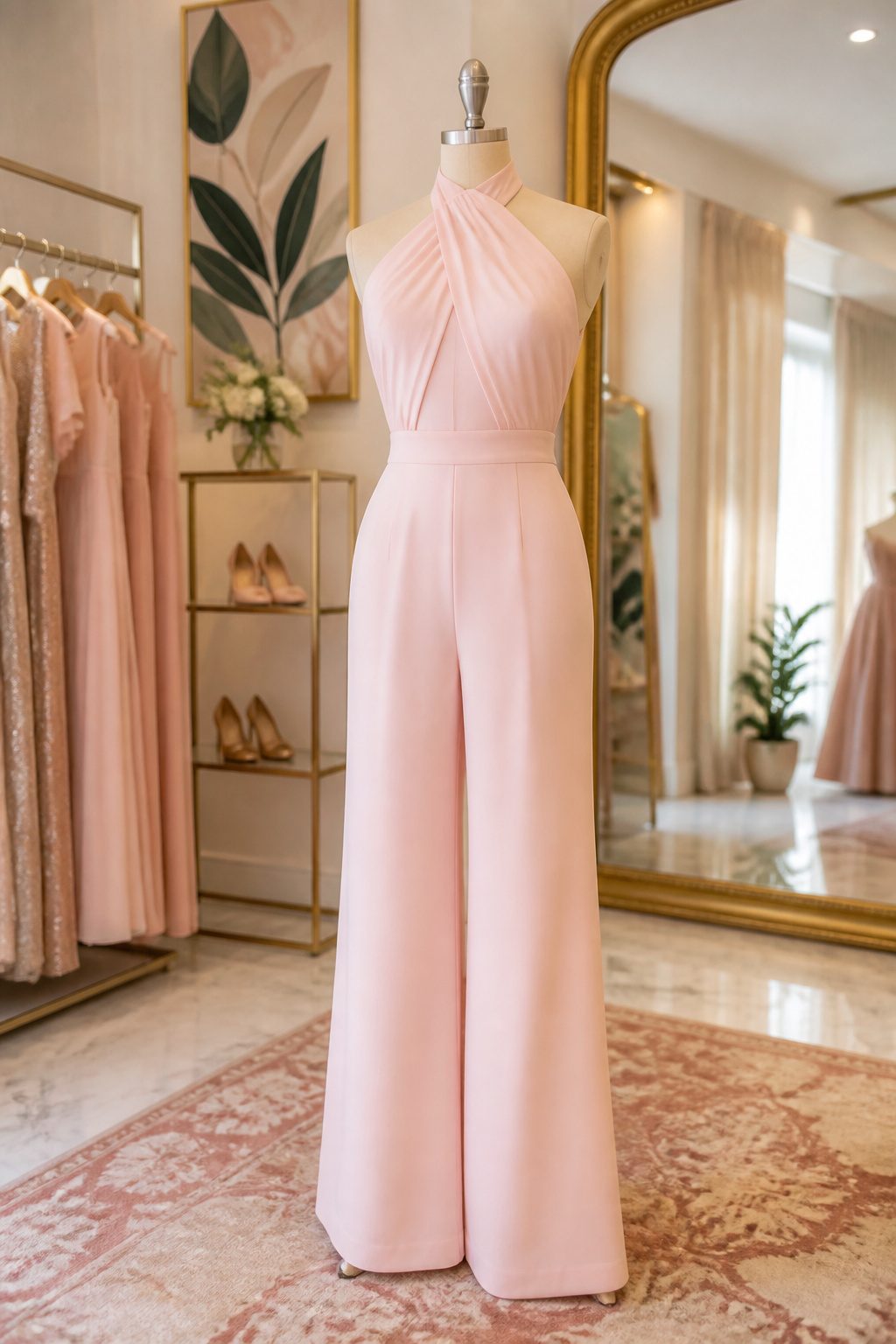
A light pink prom dress search usually means you want something that reads formal in photos, and a jumpsuit can do that if you choose the fabric and fit with intent.
Satin or crepe in blush keeps the look prom-specific rather than drifting toward cocktail hour. The color signals occasion; the cut is what keeps it from looking like you came from brunch.
Inseam length matters here as much as a skirt hem would. Too short and the line breaks at the ankle, which photographs stubby.
Too long and you are walking on fabric all night. You want the pant to skim the top of your heel with your shoes on, so bring those shoes to the fitting.
Waist definition is the detail that separates prom from after-party. A jumpsuit without a clear waist seam, a tied belt, or structured darts reads relaxed, which is fine for later but not for the main event.
Look for where the waist sits: natural waist lengthens the leg, empire waist softens the torso. Either works, but the absence of that definition does not.
Plus-Size Light Pink Prom Dresses
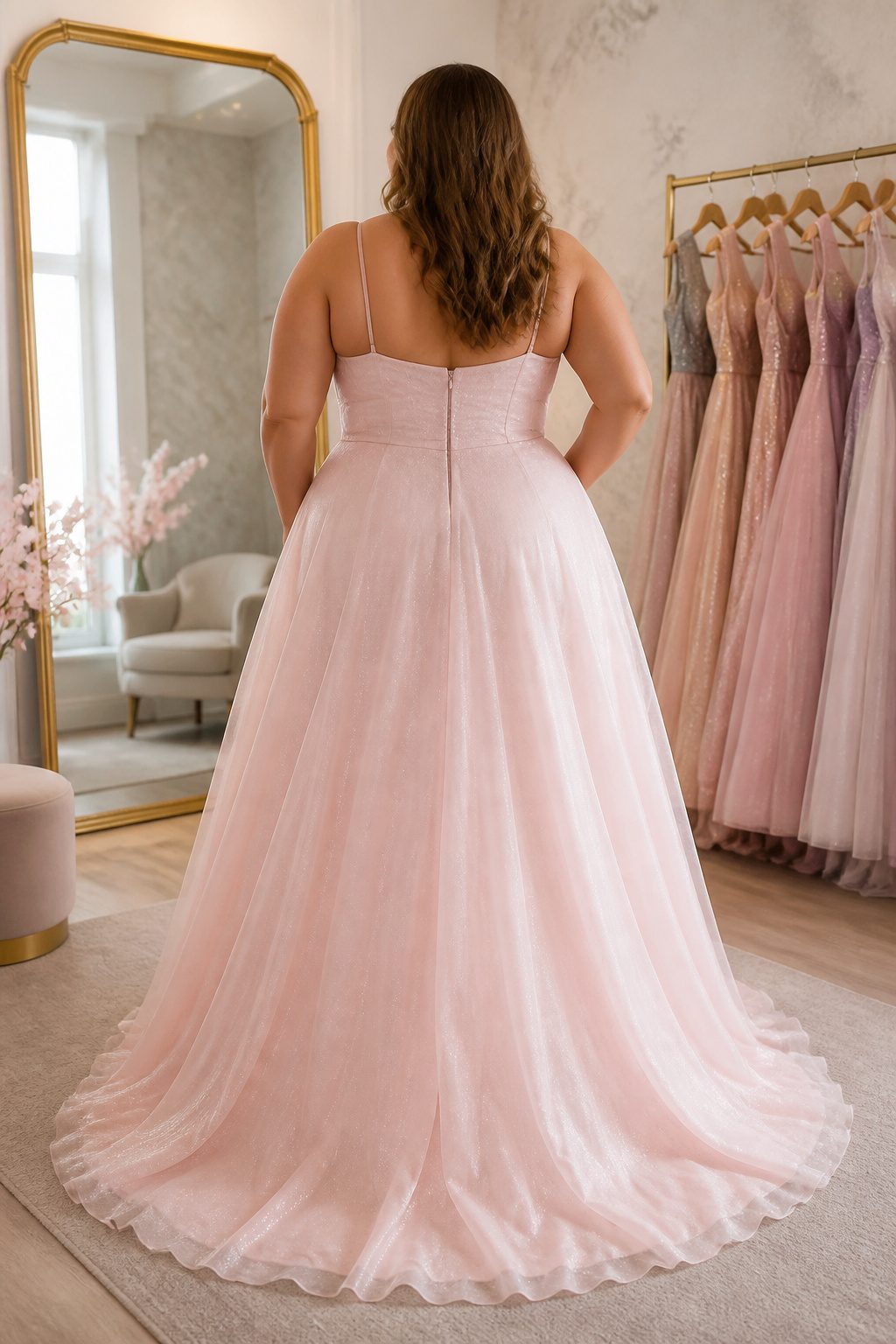
Light pink prom dress options in extended sizing use the same silhouettes you see in straight sizes, but the construction has to work harder for support.
Boning placed at the side seams and center back, not just the bust, keeps an A-line from collapsing at the waist when the skirt gains volume.
Straps need real width, at least an inch, to carry weight without cutting in, and designers who know this often build them into the bodice rather than attaching them as afterthoughts.
A mermaid cut in extended sizing lives or dies by how the skirt weight gets handled.
If the flare starts at mid-thigh and the fabric is heavy satin or layered tulle, all that pull drags the waistline down by the end of the night.
Better versions line the skirt with lighter material and save the drama for the outer layer, so the structure does not fight itself.
Fit verification before shipping catches what standard sizing misses: the three-inch difference between your waist and the size chart’s waist that a twelve and a fourteen both claim to cover.
Some retailers offer this as a service where you submit measurements and a fitter flags whether the dress you ordered matches your body.
Light pink runs across every cut, ball gown to sheath, so you are not limited to whatever silhouette a brand decided to offer in your size.
Fabric and Color Depth
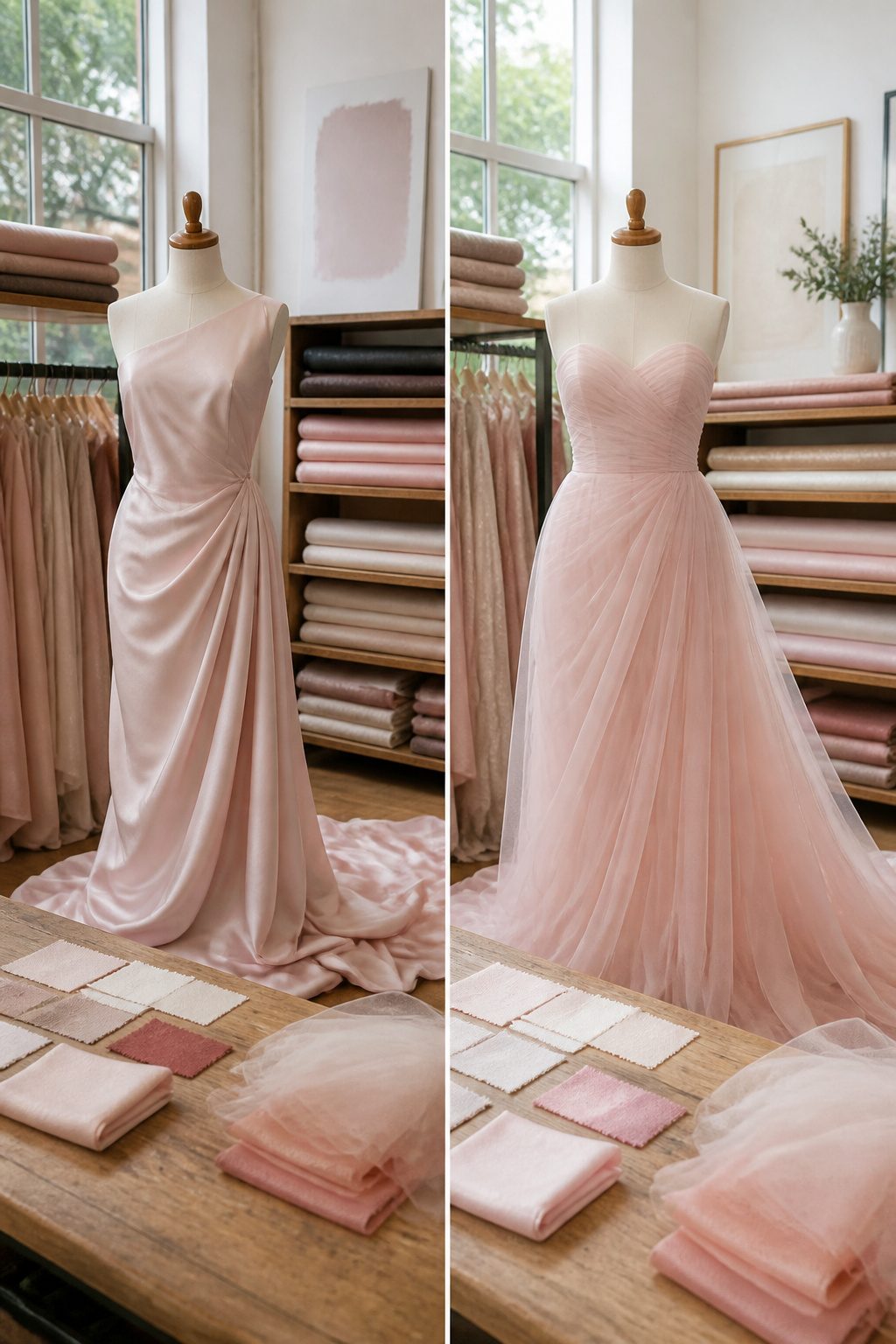
The same light pink reads completely different depending on what it is built from. Chiffon pulls the color toward blush, softening it into something that disappears in photos if the flash hits wrong.
Satin does the opposite: it catches light and throws it back at you, so a pale pink suddenly looks like it has something to say.
Sequins push that further, amplifying the color until it is nearly living, though you pay for that in weight and in every scratch against your arms at dinner.
Tulle gets layered to solve a problem you notice only when you try the dress on in real light.
One layer reads as costume, too sheer to trust. Three to four layers give you opacity without the bulk of a single heavy fabric, and the air between them is what makes the skirt move when you walk.
What sits underneath matters just as much. A nude underlay keeps the pink true; white turns it cooler and sometimes chalky; ivory warms it toward peach.
The sample you see online rarely shows you which one they used, so ordering from a shop that lists the underlay color saves you the return.
Shoes and Jewelry That Work
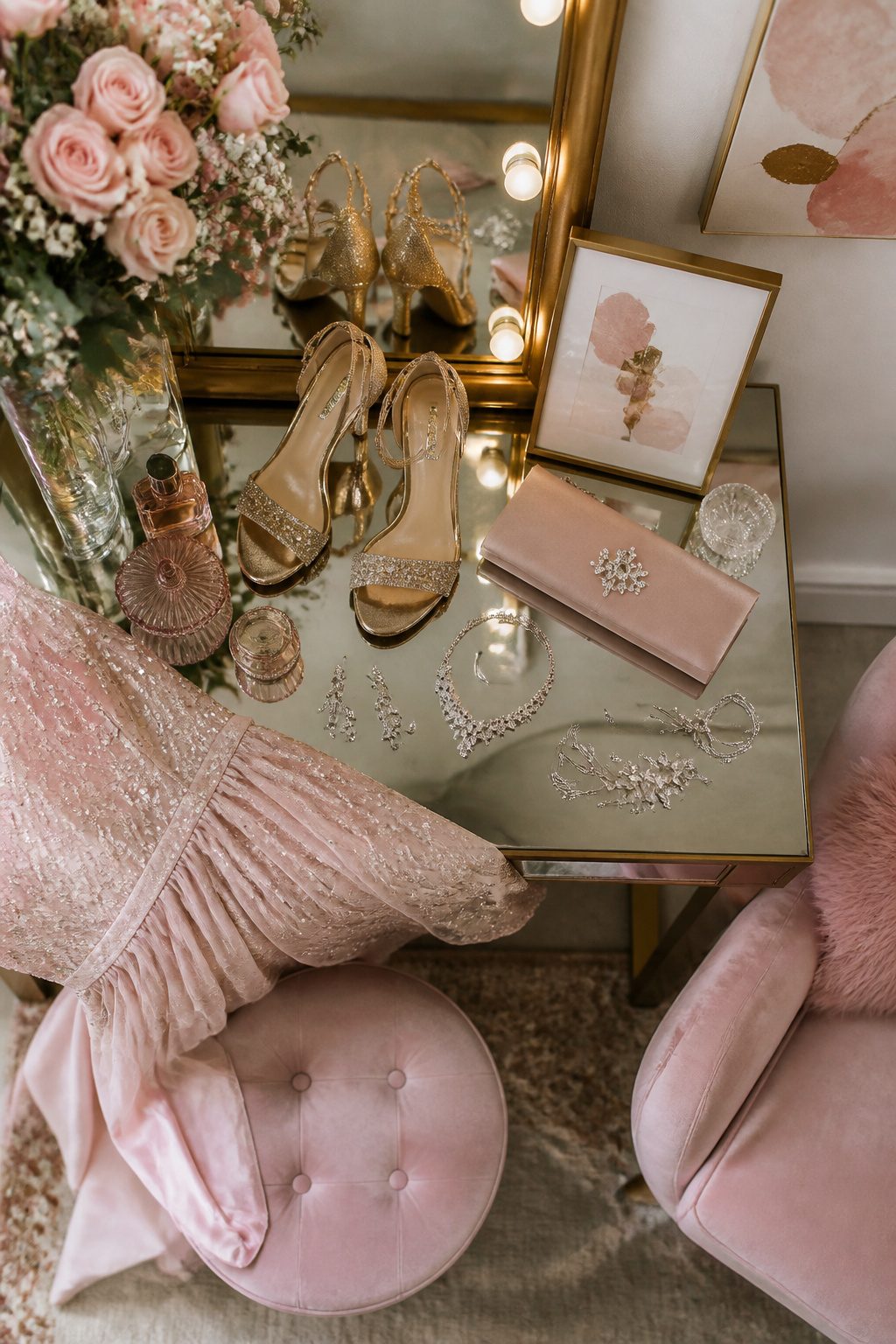
Silver or gold metallics are the right shoes for a light pink prom dress, and the metal you pick should match the hardware or beading already on the dress.
If the gown has silver crystal accents, silver shoes keep the look unified.
If the beading leans warm or rose-toned, gold is the better choice. Nude works when you want the dress to do all the talking.
For jewelry, the neckline decides.
A strapless or deep V light pink prom dress can carry a statement necklace without crowding the frame. A high neck, halter, or detailed bodice should stand alone.
You asked whether a long pink dress means you should go big on accessories.
It does not. The length already creates presence, so one bold piece is enough: sparkling statement earrings, a shimmering clutch, or a hair accessory, but not all three.
A long skirt plus competing statement pieces turns the look busy rather than intentional. Pick your single accent and let the rest stay quiet.
What You Actually Pay
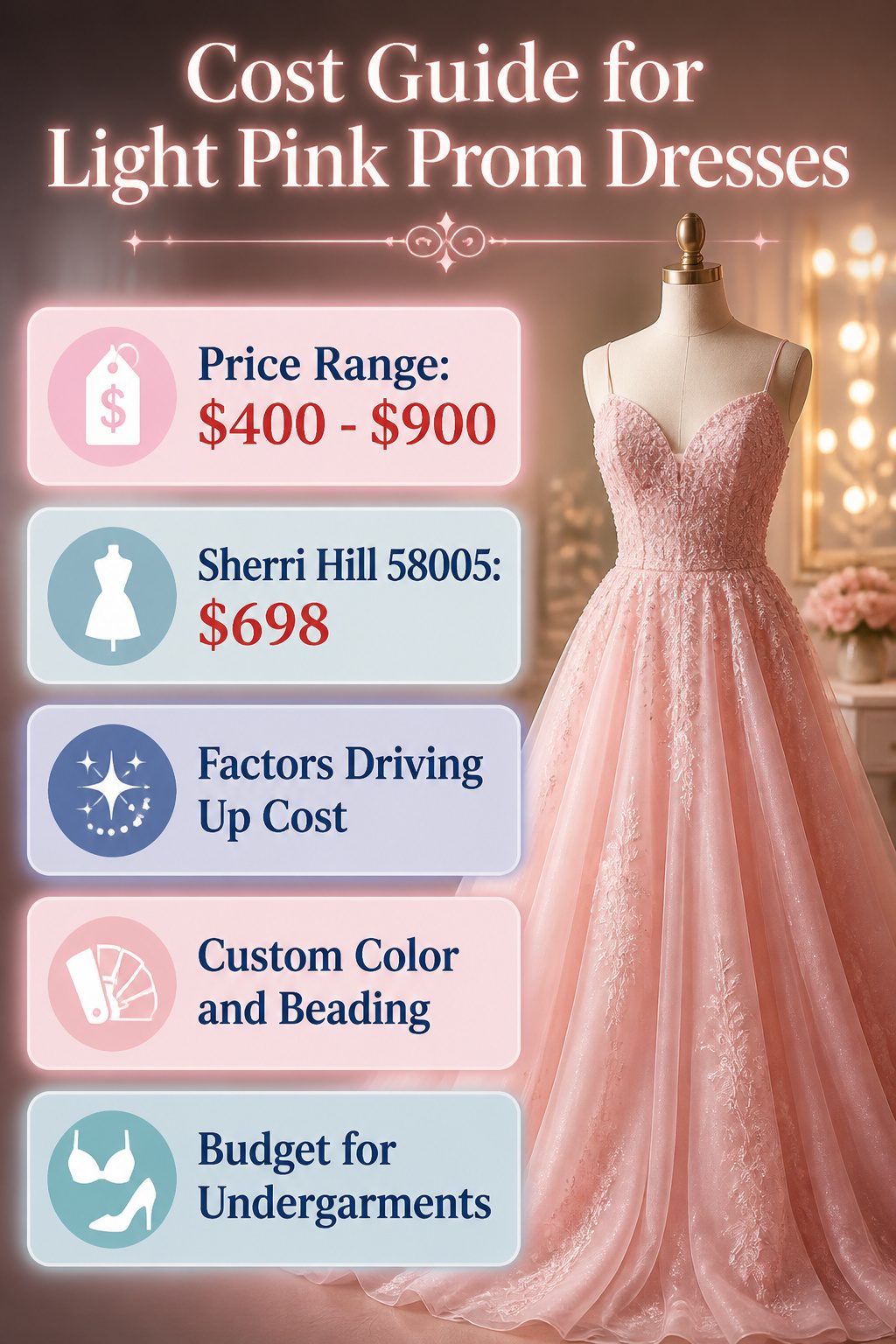
You will spend between $400 and $900 for a light pink prom dress that holds up through the night without looking mass-produced.
The Sherri Hill 58005 sits right in the middle at $698, which is useful context: at that price you are paying for the label and for construction that keeps its shape after sitting through dinner.
What pushes a dress toward the top of the range is hand-beading, a custom color order, or fabric that needs specialist handling.
What keeps it nearer $400 is simpler construction and a stock color. Either way, the tag price is not the total.
You will need undergarments that work with the neckline, shoes that do not compete with the hem, and almost every buyer needs a hem adjustment. Budget for that separately.
A bodice tweak is common too. Skip the shoes and undergarments in your planning and you will wear the dress with whatever you already own, which rarely works.
Frequently Asked Questions
What shoes should I wear with a light pink prom dress?
Silver or gold metallic shoes are the right choice, and you should match the metal to any hardware or beading already on the dress.
Silver pairs with silver crystal accents; gold works better when the beading leans warm or rose-toned. Nude shoes are the option when you want the dress itself to dominate the look.
Can I wear a pink prom dress with sleeves?
Yes, a long-sleeve light pink prom dress is an elegant option, and short sleeves read as chic and playful instead.
Sleeves add sophistication or fun depending on the style, though the article focuses on sleeveless and strapless necklines for most silhouettes.
If your dress has a detailed bodice or high neck, skip the necklace and let the sleeve and neckline detail stand alone.
What accessories go best with a long pink prom dress?
You do not need to go big on accessories. The length already creates presence, so one bold piece is enough: sparkling statement earrings, a shimmering clutch, or a hair accessory, but not all three.
Multiple competing statement pieces turn the look busy rather than intentional, so pick your single accent and keep everything else quiet.