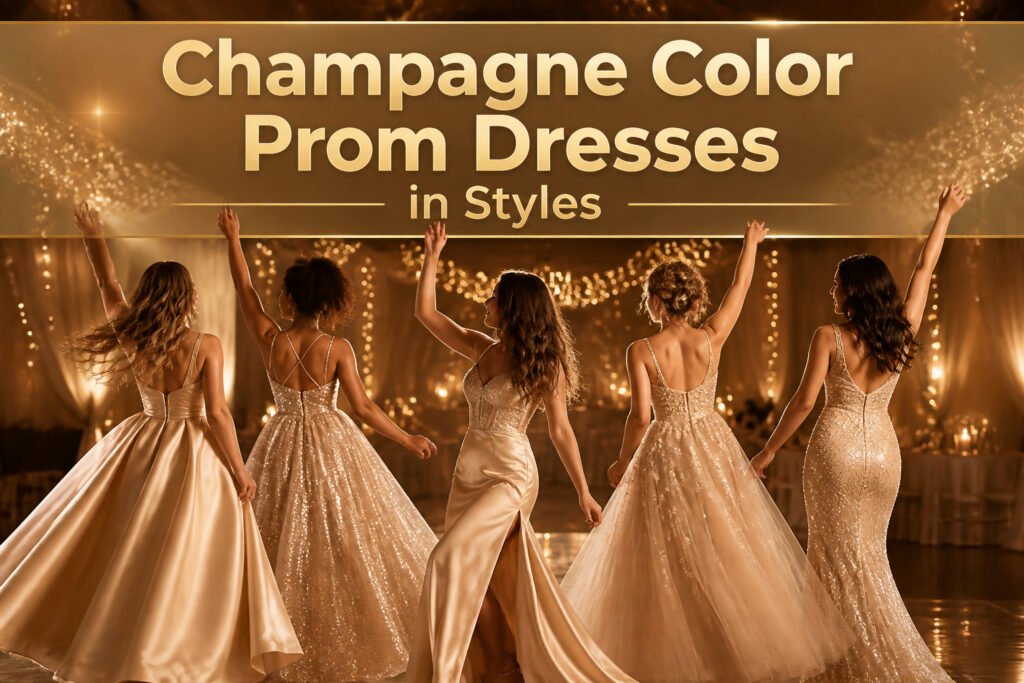
Champagne color prom dresses sit in a narrow band between gold and beige that shifts dramatically under different lights, which is why the same gown can read warm honey in the store and dull olive in your bedroom.
The price runs from about $52 for synthetic satin up past $466 for hand-beaded construction, and most of that spread comes from labor you cannot see on the hanger.
Satin in this shade behaves like liquid metal under dance-floor lights, while tulle softens it to something closer to candlelight, and the choice between them changes how the dress wears across four hours of prom night.
1. Long Champagne Prom Dresses
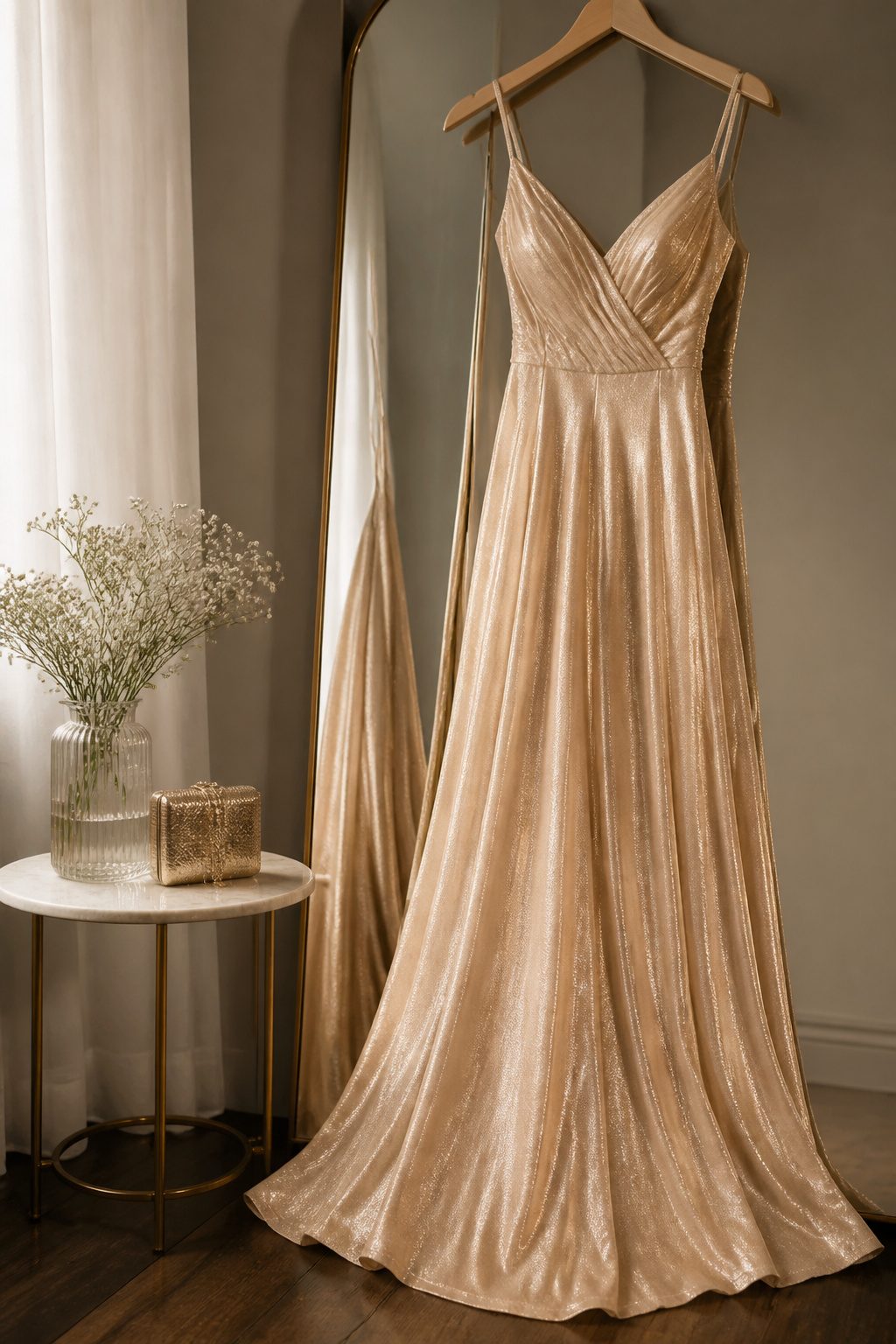
A floor-length champagne prom dress lands differently depending on what it is built from. Satin in this color reads as liquid metal under dance-floor lights, while tulle keeps the tone softer, more like candlelight diffused through fabric.
The difference is not just aesthetic; satin adds weight that pulls the skirt straight down, which can compress a petite frame, whereas tulle builds volume that creates its own silhouette independent of what is underneath.
The length itself sets the formality. Floor-length or formal-length gowns signal that this is the main event, not a cocktail stop on the way somewhere else.
For anyone under 5’3", that same length can swallow the legs entirely unless the waistline sits at the natural waist or higher.
Taller frames have the opposite problem: a skirt listed as floor-length may hit at the ankle, which breaks the line the dress is trying to draw.
Price spreads wide. Budget long gowns in champagne start around $52, while designer pieces run past $466.
The fabric is usually where the money shows. Satin at the low end can look plasticky in photos; tulle holds up better across price points because its effect depends on layering, not on the hand of a single expensive textile.
Check the listed measurements against the heel height you plan to wear.
A train, whether a sweep or chapel length, adds drama to the entrance but needs managing on the dance floor. Some gowns come with detachable trains, which solves the problem cleanly.
2. Short Champagne Prom Dresses
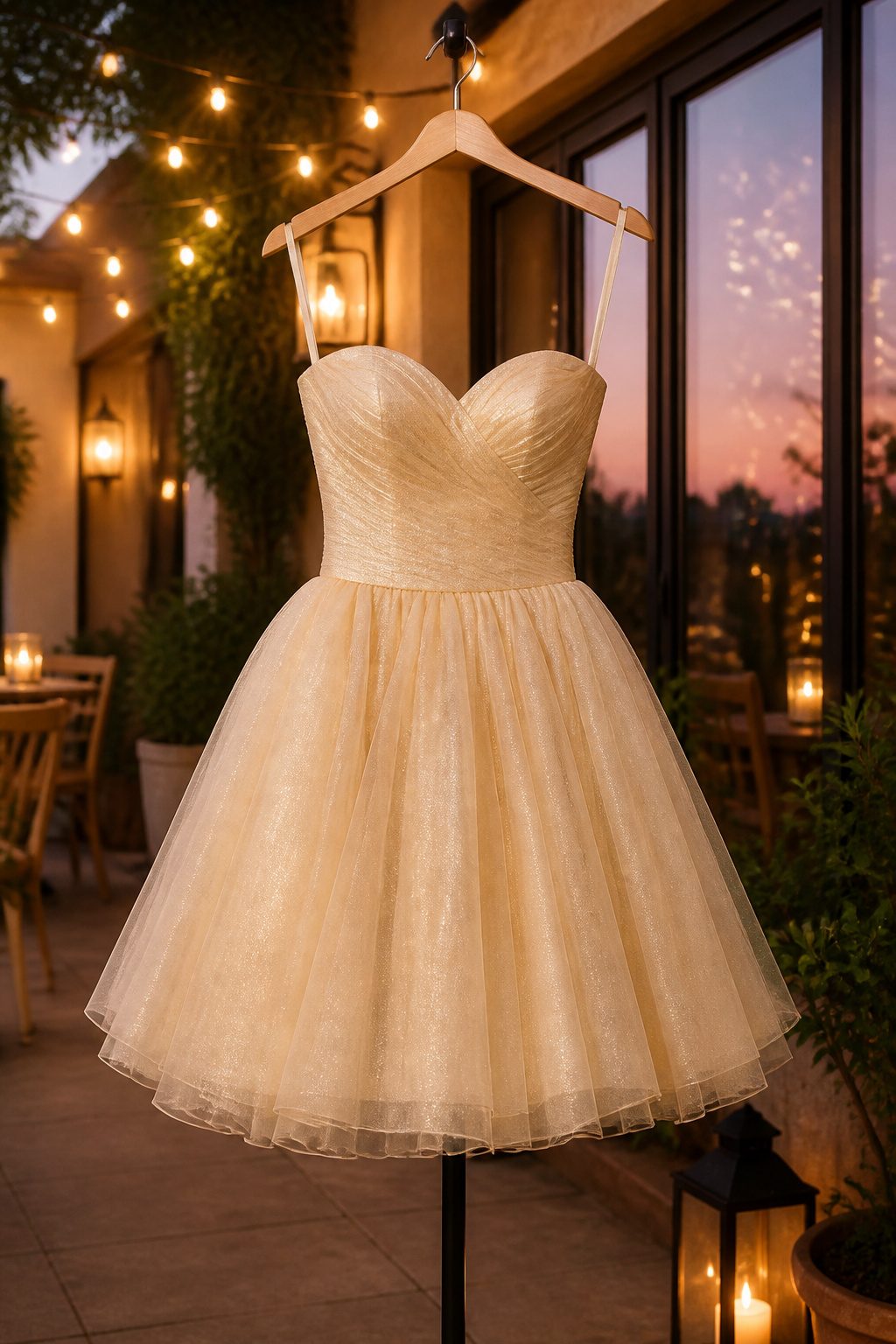
Short champagne prom dresses run from mini hemlines to tea-length cuts that hit mid-calf, and they trade the sweeping formality of floor-length gowns for something you can actually dance in.
A shorter hem makes your shoes part of the look rather than an afterthought, which matters more than you’d think when you’ve spent the evening hunting for the right pair.
Tea-length and knee-length cuts flatter fuller calves and shorter torsos by breaking the body at a more balanced point than a long skirt that pools around the ankles.
These lengths work best at less formal proms and after-parties where the dress code has loosened up.
The fabric tends to shift too; you will see more structured satins and crisp tulle holding their own shape rather than the flowing chiffons that need length to move properly.
Price often drops without all that extra yardage, though heavy beading or lace appliqué on a shorter bodice can erase the savings fast.
If you are petite, a short champagne dress avoids the tailoring almost every long gown needs.
The same goes for anyone who wants to wear the dress again; a knee-length champagne dress reads cocktail party where a full-length version does not.
The energy is different, more fresh than graceful, and that is either exactly right or a reason to stay long.
3. Plus Size Champagne Prom Dresses
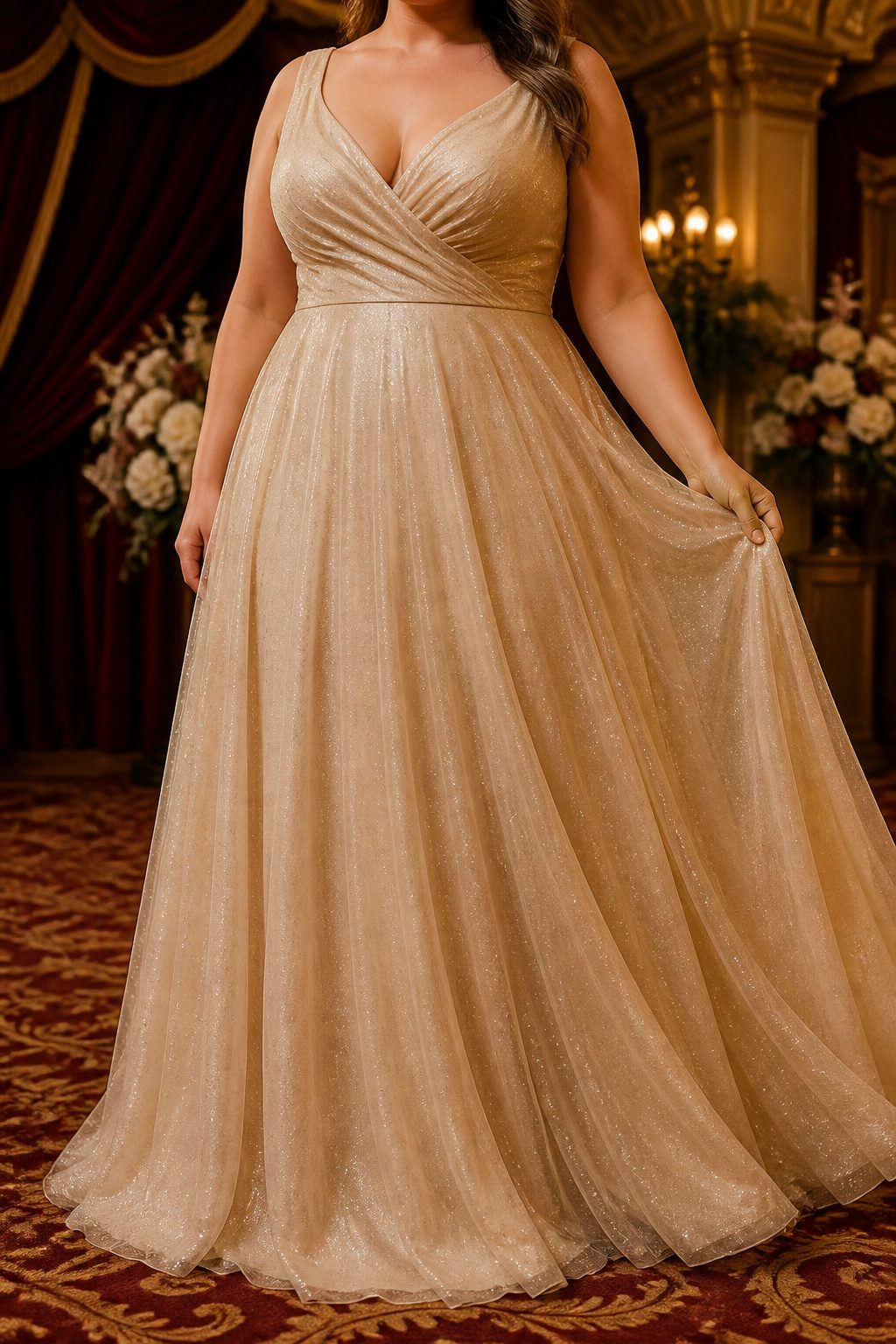
Most champagne color prom dresses in plus sizes sit between 14 and 32, though the upper end thins out fast.
A-line and empire waist cuts carry the fit most reliably, since both let the fabric move independently at hip and thigh rather than pulling across.
A-line drops from a defined waist; empire gathers just under the bust and falls straight, which forgives a wider hip measurement without needing extra length in the torso.
Necklines matter more in extended sizing than you might expect.
A V-neck or portrait collar opens up the upper body and balances a fuller skirt; a high neck or bateau cut, by contrast, can flatten the bust line and make the whole silhouette read blocky.
Sweetheart necklines work if the boning actually extends into the cup, not just the seam, but that detail is hard to confirm online.
Fit through bust and hip is where returns happen.
If your bust and hip fall into different size brackets, order to the larger measurement and plan on tailoring at the waist; most prom dresses with built-in structure can be taken in two sizes, but let out almost none.
Check whether the lining is cut to the same spec as the outer fabric, since a smaller lining will capsize the whole fit even when the shell technically zips.
Retailers carrying reliable extended runs include department store formal lines and dedicated occasion-wear sites that list full measurement charts rather than converting from straight sizes. Designer diffusion lines sometimes stop at 18 or 20, so filter before you browse.
4. A-Line Champagne Prom Dresses
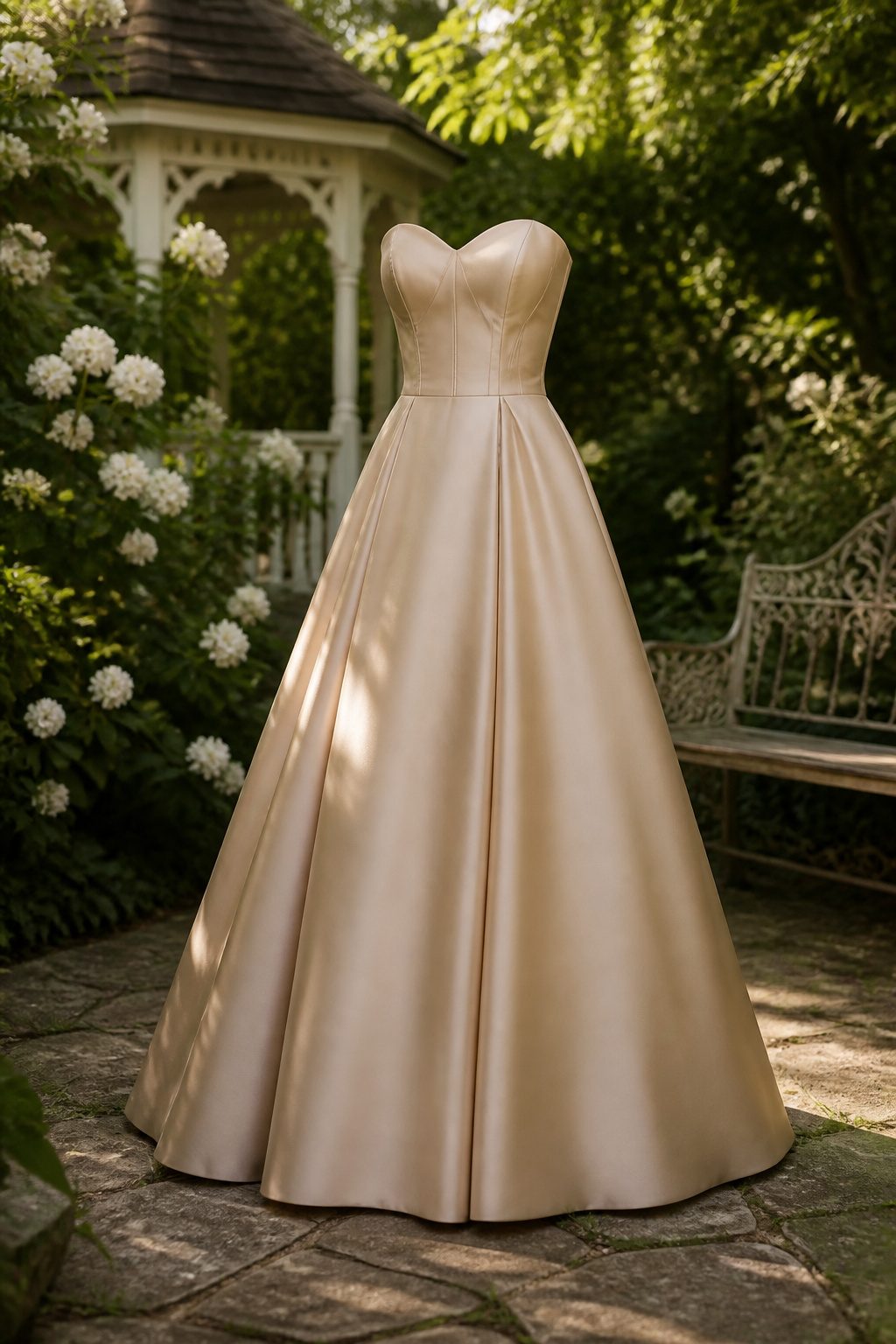
The A-line is fitted through the bodice and flares gradually to the hem, a shape that reads as formal without fighting your body.
Champagne dye sits especially well on this cut because the color’s softness needs structure to keep it from looking like a slip, and the A-line gives it that architecture.
This silhouette is the one you will see most often in champagne because it photographs reliably and works across body types.
The defined waist helps if you carry weight in your midsection, and the flare balances broader shoulders or hips without calling attention to either.
If you are shorter, the line keeps you from swimming in fabric; if you are tall, the proportions still hold.
On the dance floor, the skirt moves without needing constant adjustment. You get the pool of fabric in photos, but you are not managing it all night.
That balance is what makes this the default choice, and what makes it worth trying on even if you think you want something more dramatic.
5. Ball Gown Champagne Prom Dresses
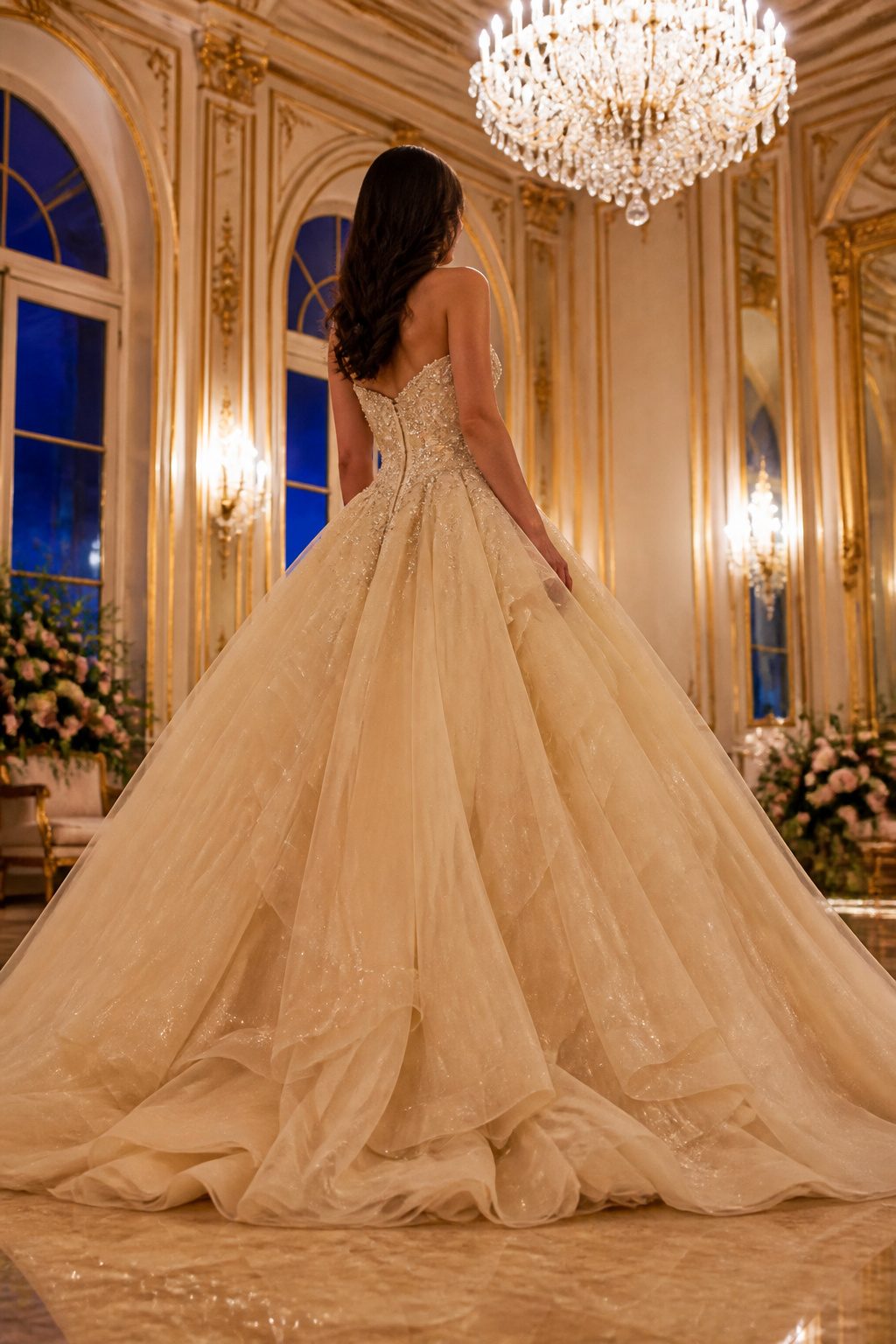
A ball gown in champagne is the silhouette that reads as prom in its purest form, and the color keeps it from tipping into costume.
The volume comes from layered tulle or a crinoline understructure, both of which hold the skirt away from the body in a full bell shape.
Tulle gives a softer, more gradual drape; crinoline creates sharper architecture and more dramatic standoff from the hips. Either way, you are committing to a garment that occupies space.
That space becomes a practical concern quickly.
Sitting in a standard sedan requires gathering the skirt and arranging it over your lap, which takes deliberate maneuvering. Crowded hallways and packed dance floors mean the hem gets stepped on unless you are tracking where your radius ends.
Some wearers handle this by holding the sides while walking; others accept the contact and choose a hemline that clears the floor by an inch or two to reduce drag.
The construction drives the price.
Full skirts demand more fabric, more labor in layering and finishing, and often built-in support that replaces the need for separate shapewear. You are paying for engineering as much as for appearance.
A champagne ball gown at entry-level price points usually thins the tulle layers or uses a simpler bodice to compensate; the ones that hold their shape through hours of wear invest in the understructure.
Judge samples by whether the skirt rebounds after you compress it in your hands. If it stays flattened, it will flatten against your legs by the end of the night.
6. Mermaid Champagne Prom Dresses
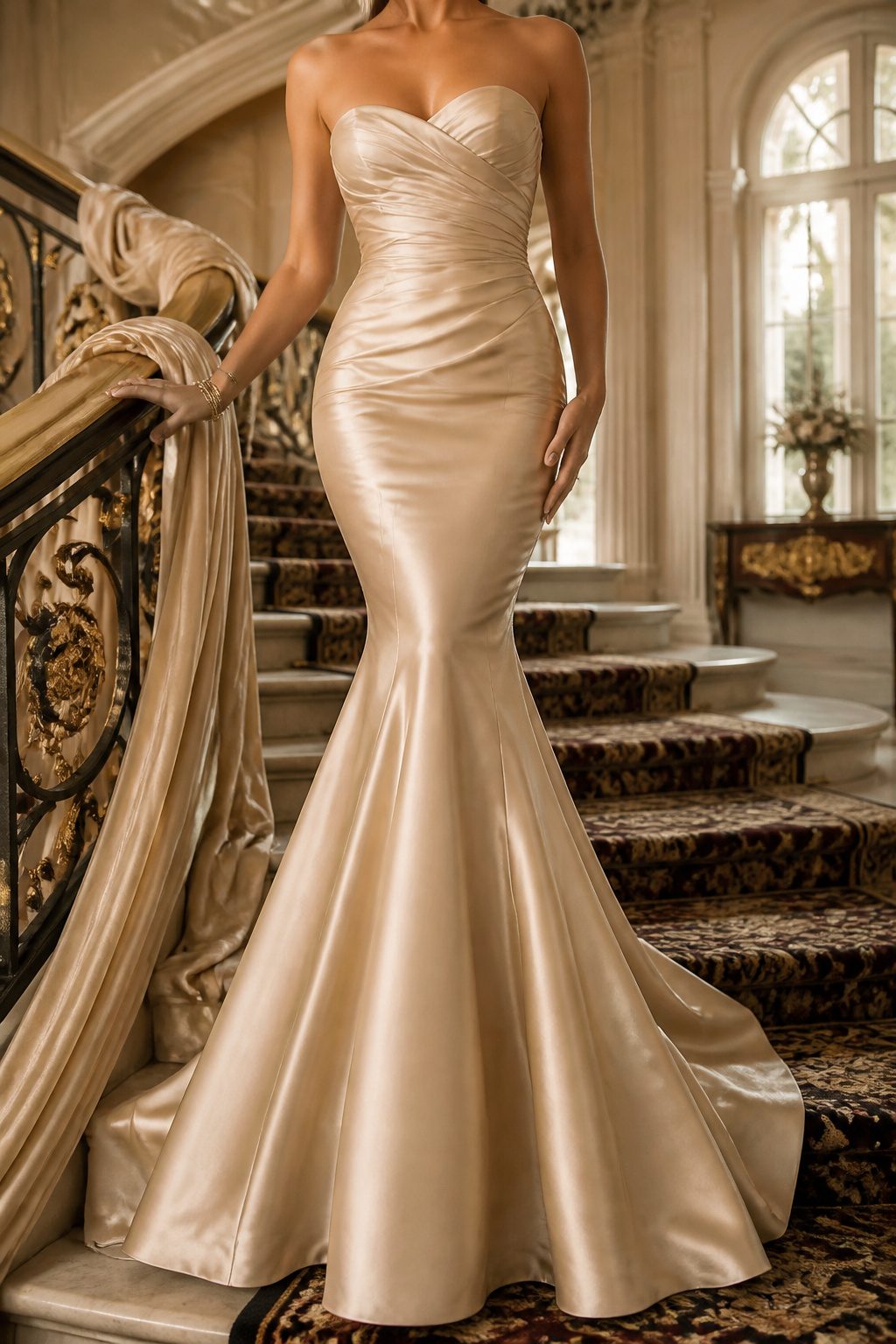
The mermaid cut fits close through the bodice and thighs, then flares sharply below the knee.
In champagne, that sudden flare reads expensive and deliberate: the pale tone keeps the drama from looking costume-y, but it also shows every seam and ripple, so the tailoring has to be precise.
This shape works best when you want to emphasize curves rather than minimize them. The fitted hip and thigh area draws the eye to the waist-to-knee line, which means the flare acts like punctuation.
If you are broader through the midsection or prefer not to highlight your hips, the mermaid will fight you all night.
Satin and structured lace are the fabrics that hold this shape without collapsing.
Stretch satin gives you the molded silhouette; heavy lace with an underlayer keeps the flare crisp and stops it from going limp after an hour of sitting. Softer fabrics like chiffon or jersey will not keep the architecture.
The tradeoff is mobility.
That knee-level flare turns stairs, car seats, and dancing into planned events. You will take smaller steps.
You will sit with your legs angled. For some proms that is fine; for others, you will spend the night aware of your dress rather than in it.
7. Corset Champagne Prom Dresses
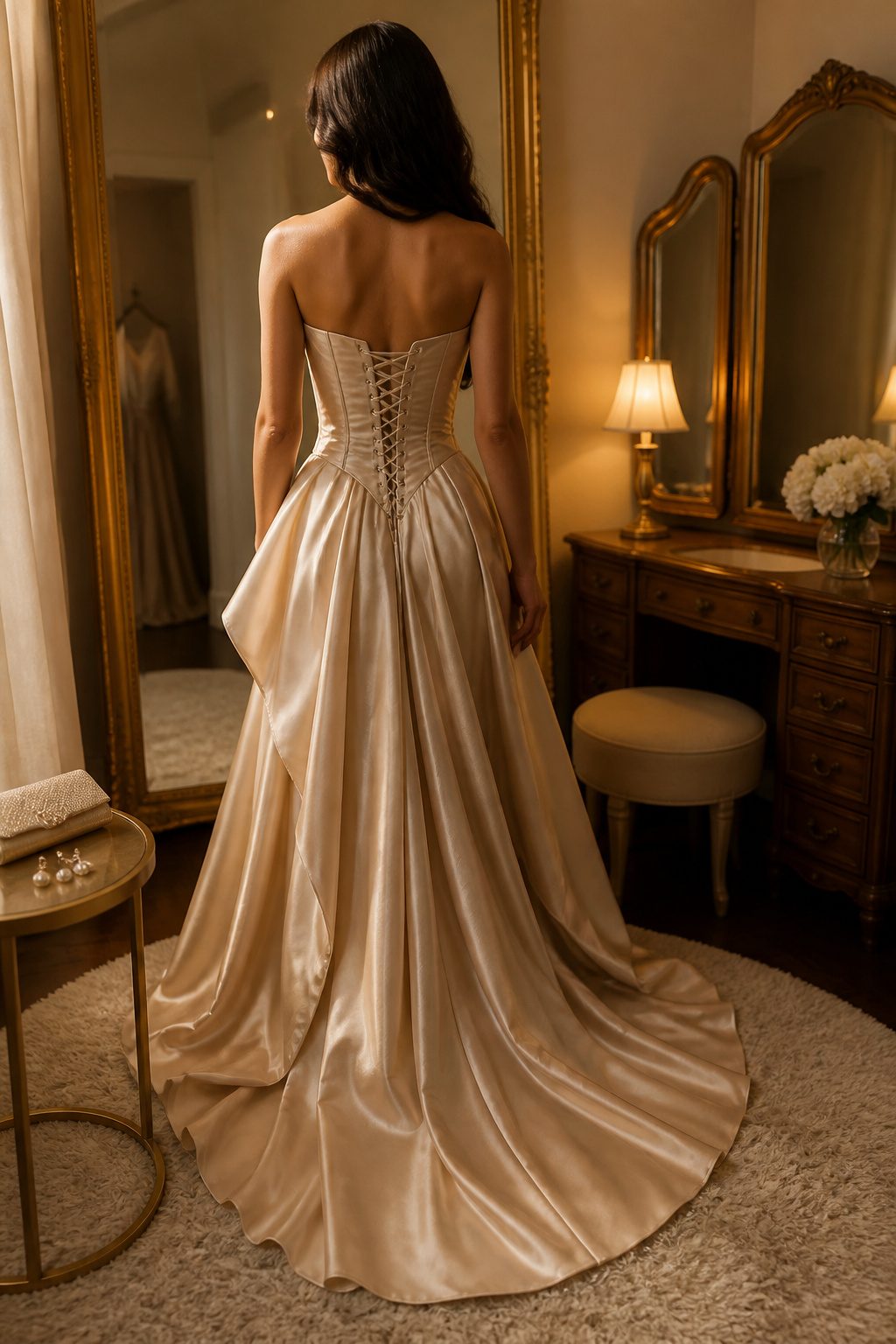
A corset bodice in champagne satin or lace-up structure does what standard boning cannot: it lets you pull the waist in after the zipper is already closed.
That matters because prom sizing runs tight in the ribcage and loose at the bust, or the reverse, and a zipper alone locks you into whichever measurement the pattern guessed.
You will see two builds on the rack.
Functional corsets use steel or plastic boning channels, real lacing through metal eyelets, and a modesty panel behind the ties. Decorative corsets stitch the lacing over a solid bodice; the shape is fixed before you even try it on.
The functional version adds roughly one to two inches of adjustable range, which can shift you between sizes or cover a late alteration. Decorative reads the same in photos but behaves like any other strapless gown once fastened.
Champagne softens the vintage effect.
The color reads as formal without the harsh contrast of black or the costume quality of brighter satins. Pair a lace-up back with clean accessories, since the lines already frame the shoulders and waist.
Skip a necklace if the corset rises to a portrait neckline; let the eyelets or ribbon be the detail. Sizes run 0–23 in most lines that stock this construction, though the bodice depth changes with the silhouette.
A fitted gown needs longer boning to stay smooth through the hips; an A-line can get away with shorter stays that end at the natural waist.
8. Strapless Champagne Prom Dresses
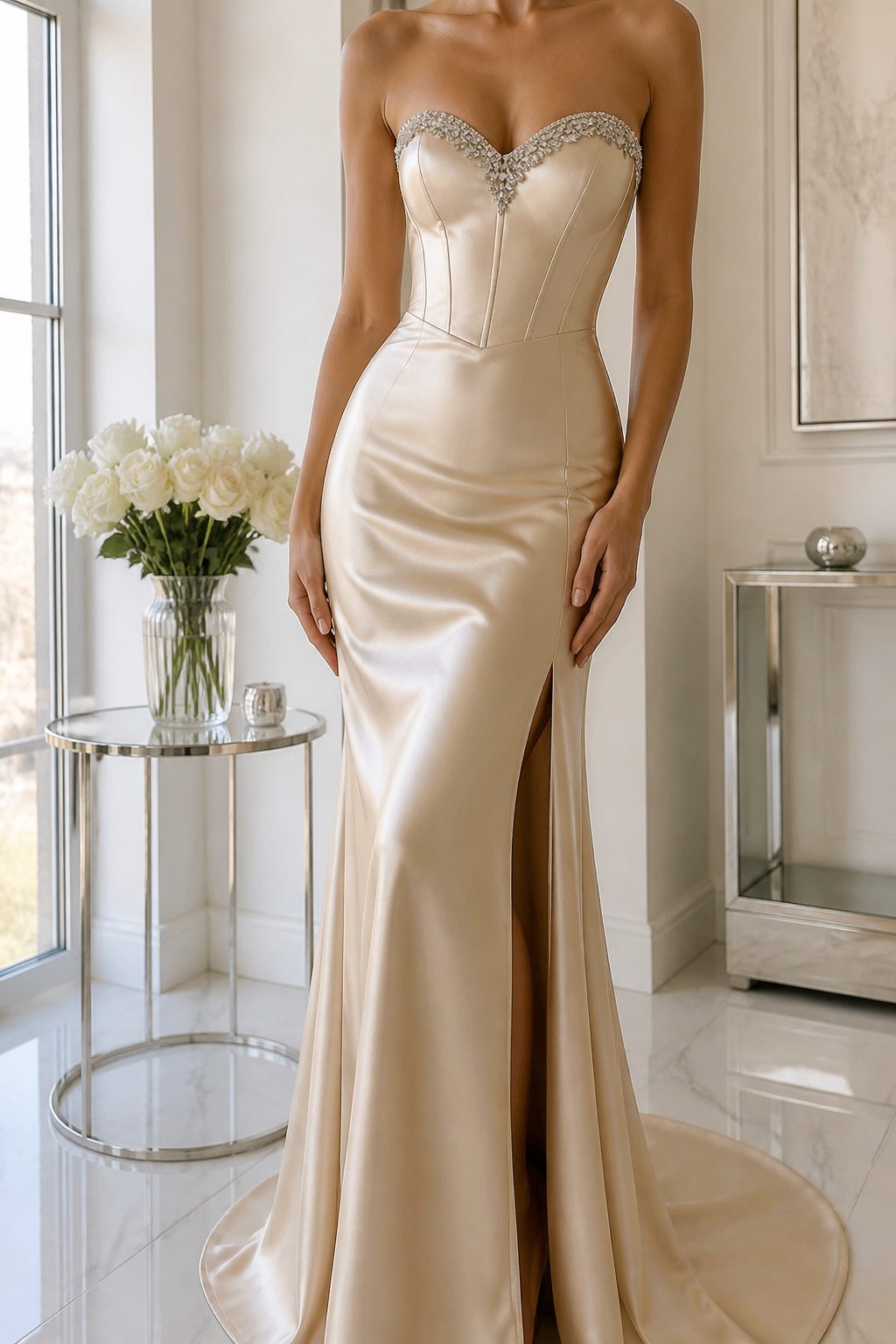
A strapless champagne prom dress lives or dies on its skeleton. The boning has to run the full length of the bodice, not just the sides, or the whole thing sinks south after one dance.
The best ones add grip strips along the top edge, which sounds minor until you are two hours in and the alternative is hiking your dress up in the restroom line every twenty minutes.
The girls who need to check fit most carefully are the smaller-chested ones. A strapless bodice with nothing to grip tends to gape at the top.
If that is you, look for a sweetheart or straight-across neckline with enough structure to hold its own shape even when you are not filling every inch of it.
Fuller busts have the opposite problem: the dress stays up fine, but the pressure concentrates at the ribcage, so boning that ends at the waist instead of continuing into the hip seam will dig in by midnight.
For jewelry, you have the collarbone free, which is the point. A slim pendant or small drops work; anything that sits at the neckline competes with the cut.
Cover-ups are tricky because the strapless line is the whole look. A cropped fitted jacket keeps it, a pashmina kills it.
9. Off-the-Shoulder Champagne Prom Dresses
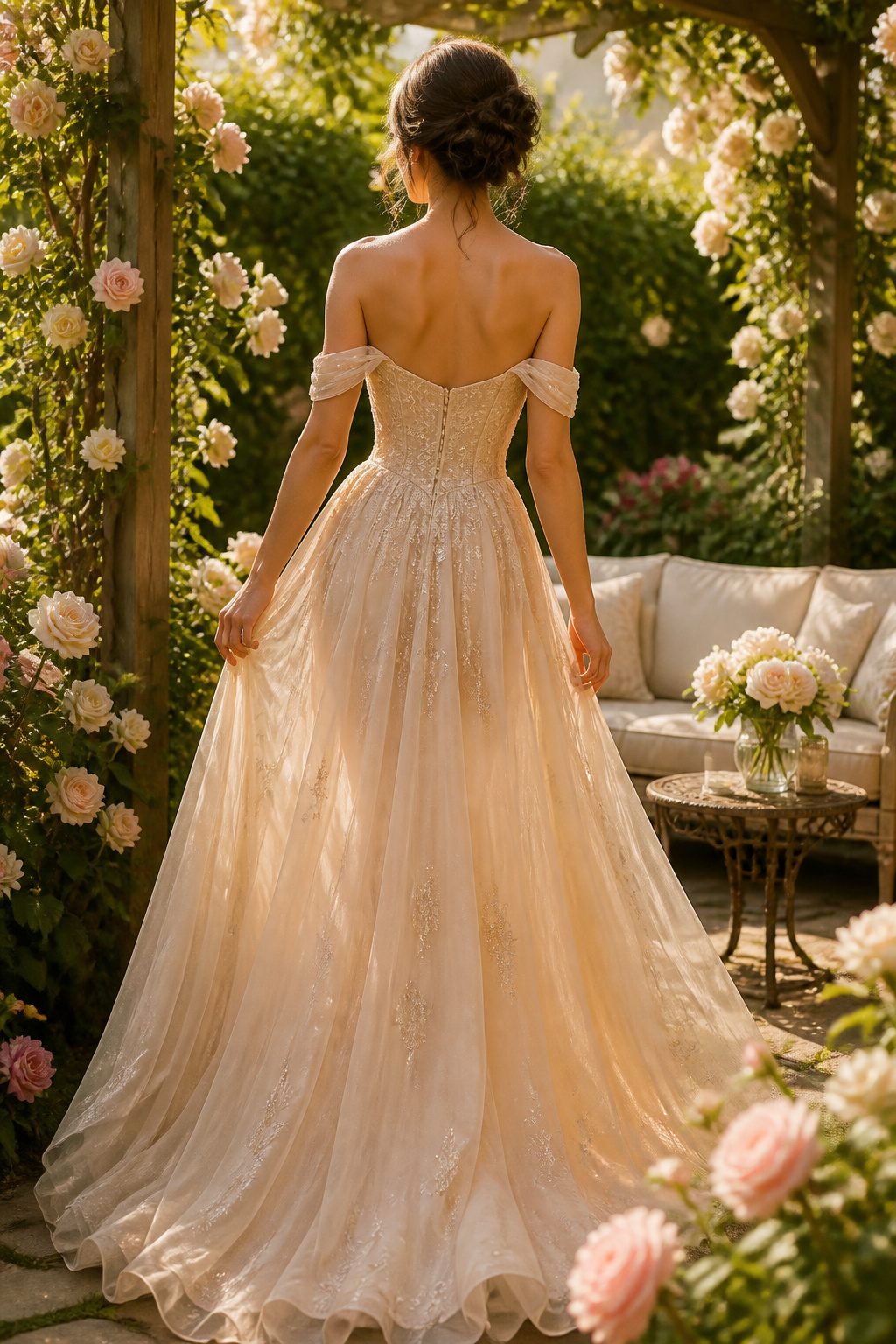
An off-the-shoulder neckline sits across the upper chest, exposing the collarbones and the full curve of the shoulder while a fitted band or structured interior grips the body to keep the dress from sliding.
In champagne satin or chiffon, that exposed skin against the warm, muted gold reads softly formal rather than overtly dramatic; the color does the romantic work so the cut does not have to shout.
The interior grip strip or silicone lining is what separates a dress you can dance in from one you tug at all night, so check for it when you try on.
Sleeve treatments change the mood entirely.
Ruffled sleeves add volume that balances wider hips but can catch on bracelets or date-wear boutonnieres. Straight, close-fitting sleeves keep the line clean and work better for pear shapes that do not need extra width at the shoulder.
Draped or cowl sleeves fall somewhere between, moving when you move but staying out of the way when you raise your arms.
Arm mobility is the real test. Reach overhead in the fitting room; if the bodice hikes up, the elastic or boning is too loose or the cut too shallow across the back.
The neckline frames the face by drawing the eye horizontally across the shoulder line, which flatters oval and heart-shaped faces especially. Round faces benefit from a slightly wider neckline that extends the shoulder visually rather than cutting straight across.
10. Fitted Champagne Prom Dresses
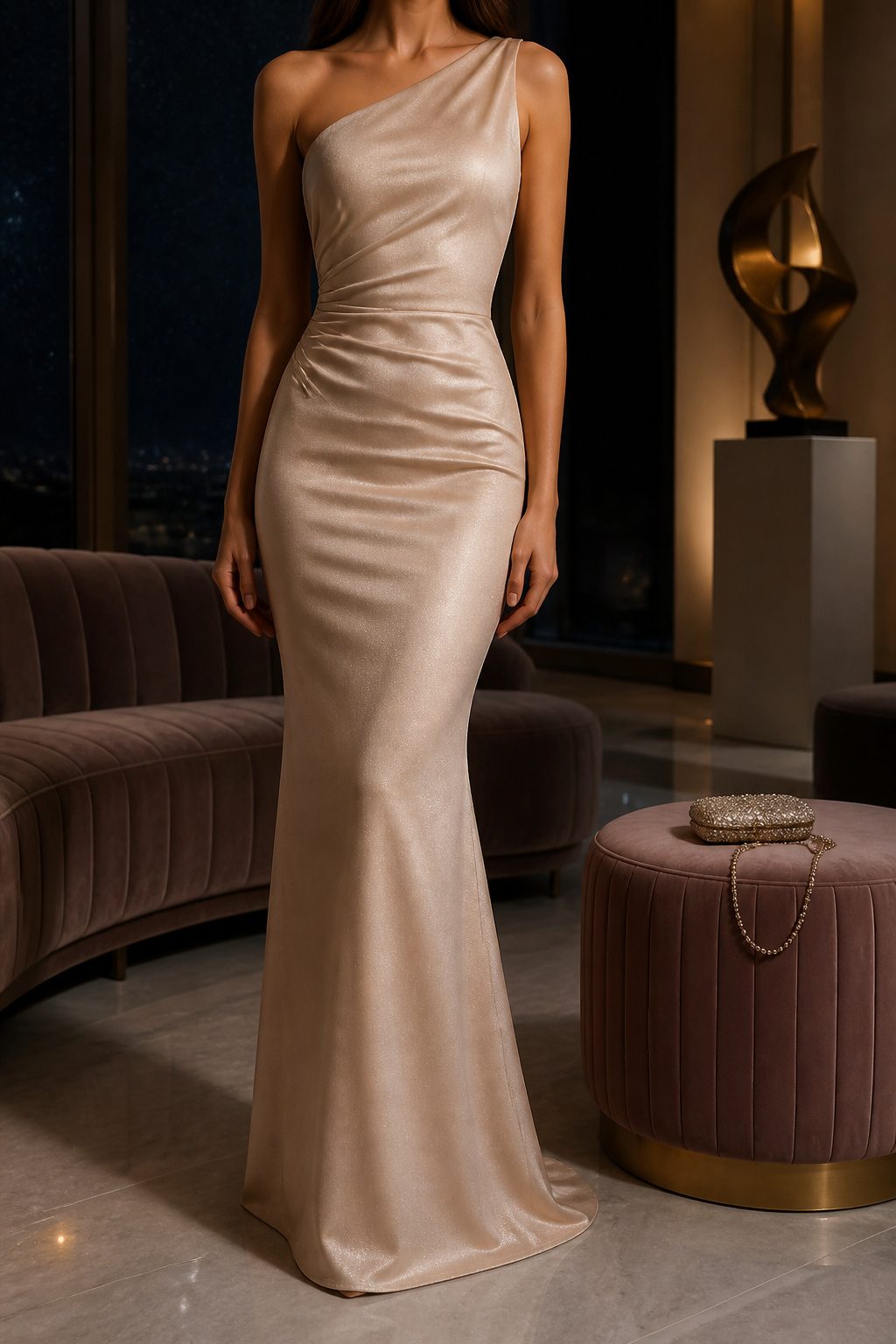
A fitted champagne prom dress in a sheath or column cut will skim your body from neckline to hem without the dramatic flare of a mermaid silhouette.
Champagne satin and crepe catch light differently when stretched across the frame: the color warms and seems to glow, but any wrinkle or pull shows instantly because there is no skirt volume to hide it.
Plan on seamless undergarments with compression, since even the lining in a well-made dress will not smooth you the way the cut demands.
This reads fully formal for prom, no question, but it can tip toward cocktail-hour casual if the fabric is thin or the neckline plunges too deep.
A column in double-faced satin or a slip-style dress with a cowl back holds its own at a black-tie venue; the same shape in lightweight jersey works better for a spring formal or an after-party change.
Sheath dresses also forgive less than A-lines do if you gain or lose a few pounds close to the date, so buy closer to the event or budget for tailoring.
What Champagne Actually Looks Like
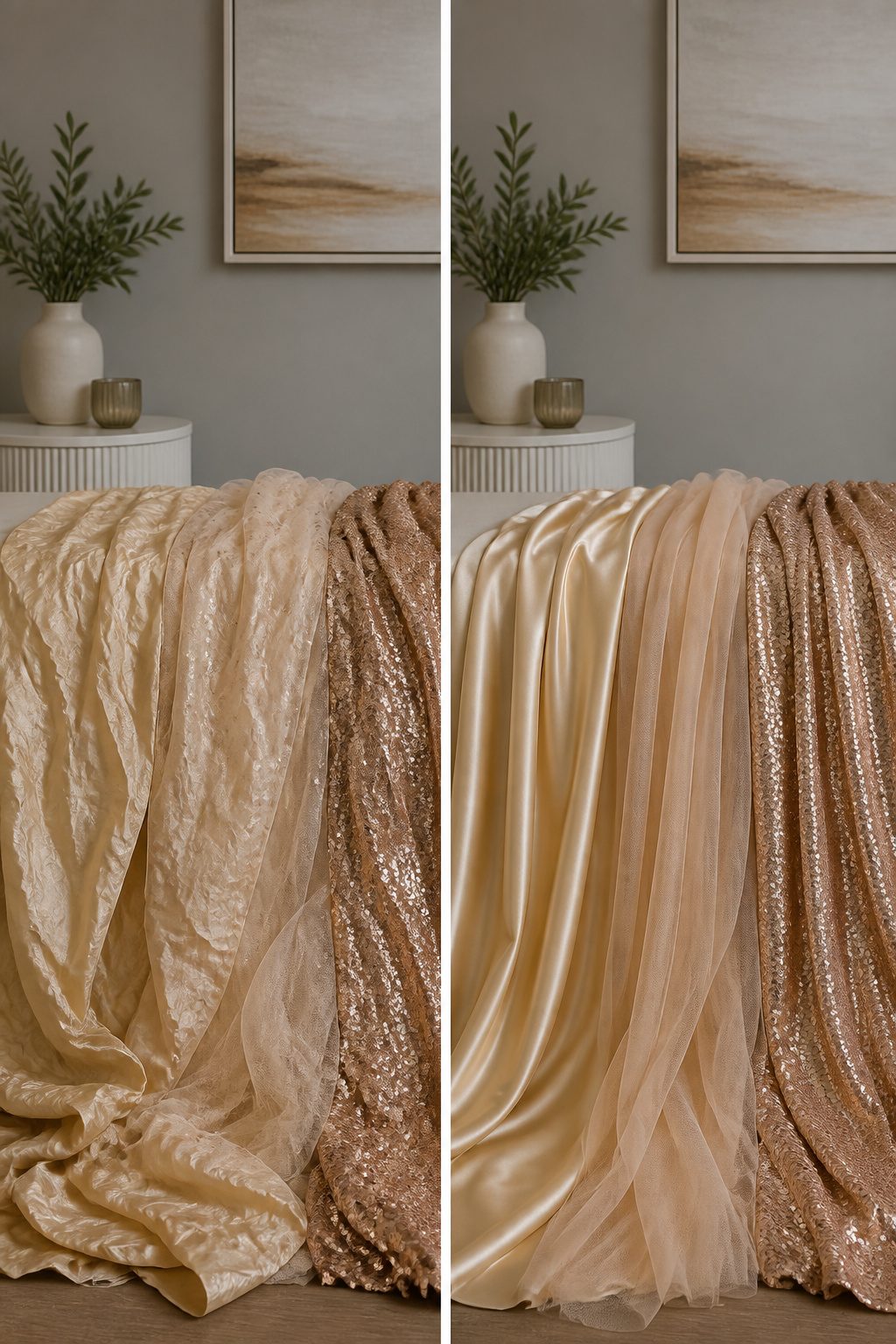
Champagne is not one color. It runs from pale gold with a greenish edge through warm beige, picks up a rose tint in some dye lots, and can go full metallic in others.
The same dress will read as cool or warm depending on the light you see it in, and that is where most online orders go wrong.
Store lighting leans yellow and will warm anything up. Flash photography flattens the undertone and often pushes the dress toward straight beige.
Sunset light, if your prom photos run late, throws everything toward rose. What looked like a soft neutral in a studio shot on your laptop may arrive reading distinctly pink or, worse, olive against your skin.
Your undertone matters more with champagne than with true gold or silver because it sits in the ambiguous middle.
Cool undertones usually need the paler, greener end of the range or the rose-tinged versions; warm undertones can handle the deeper beige and true metallic finishes without looking sallow.
If you cannot tell which camp you fall into, hold a piece of white paper next to your face in daylight.
Pink or blue means steer toward the cooler champagne shades; yellow or peach means you can wear the warmer ones without the color wearing you.
Fabric and Embellishment Choices
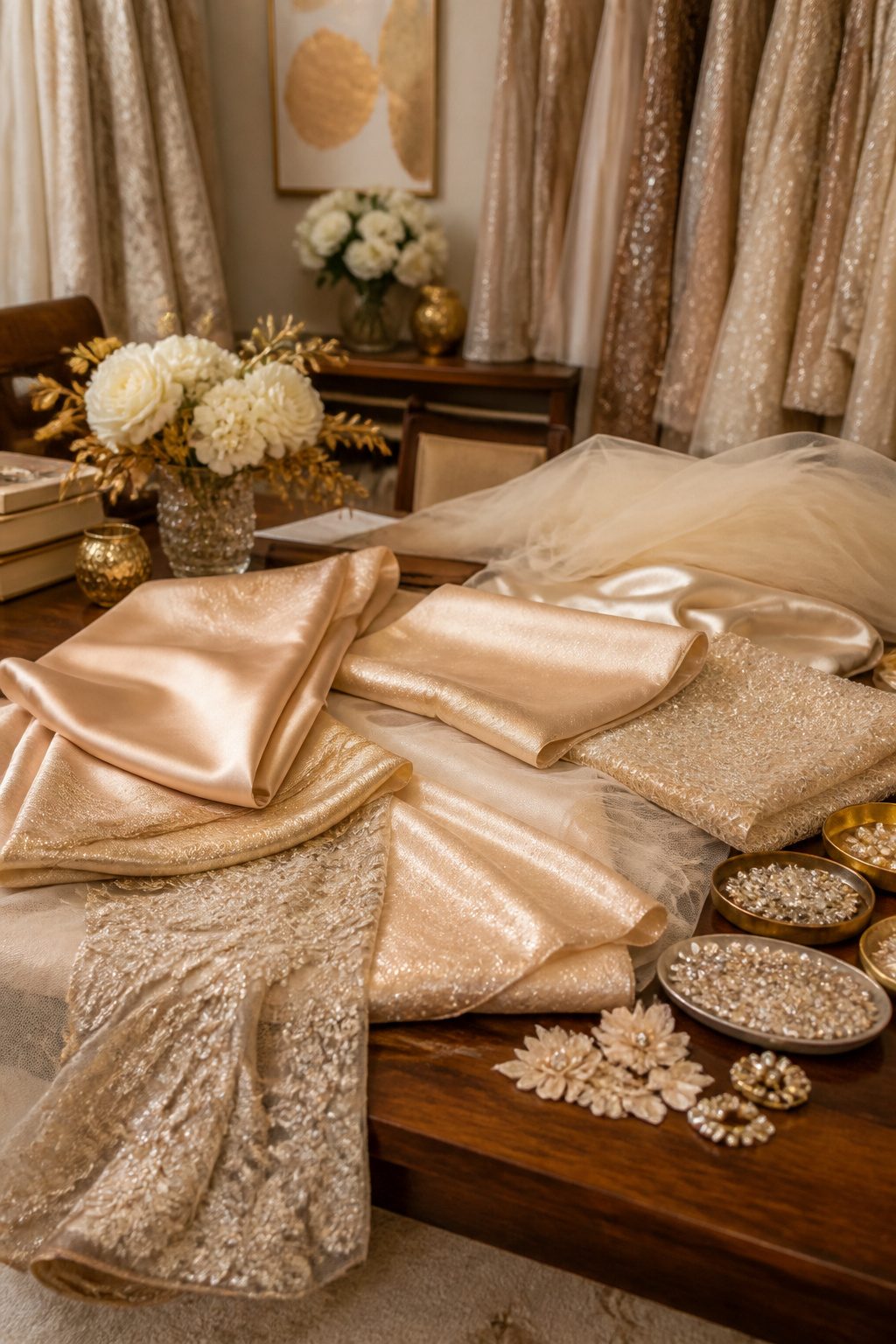
Satin, tulle, sequins, and beading each do something different in champagne, and the choice changes what you pay and what the night feels like.
Satin gives you that smooth sheen with a brushed, quieter finish in champagne than in true gold. It photographs warm and refined under dance floor lights, and it feels substantial against your skin for four or five hours.
The downside: it shows every water spot and crush mark, and creases set in fast if you sit wrong during dinner. Spot-clean only, and hang it steamed rather than folded.
Tulle builds the volume for ball gowns and A-line skirts.
It is light to wear, which matters when you are carrying that shape across a venue, but layers trap heat. Champagne tulle reads soft and romantic in photos rather than metallic.
It snags on jewelry and rough chair edges, and repairs are visible. Store it flat or fully suspended so the skirt does not flatten on one side.
Sequins bring the high-impact sparkle that turns every photo into a moment.
Full coverage sequin gowns in champagne read as warm glitter rather than cold flash. They weigh more than they look, and the backing can itch at the underarms after a few hours.
Missing sequins show as dark dots, so check the dress before you leave the shop and keep a few spares if the designer includes them.
Beading sits between these options: more texture than satin, less movement than sequins. It photographs with dimension but does not dominate.
The weight distributes oddly depending on where the beads cluster, so try sitting and raising your arms during the fitting. Loose threads are the early warning, and they are easier to fix than missing sequins if you catch them.
Pair your jewelry tone to the dress: warm gold on warm champagne, rose gold on rose gold.
Silver fights the warmth rather than complementing it. Black heels ground the look; nude heels disappear and keep the focus on the fabric you chose.
Price Ranges and What Moves Them
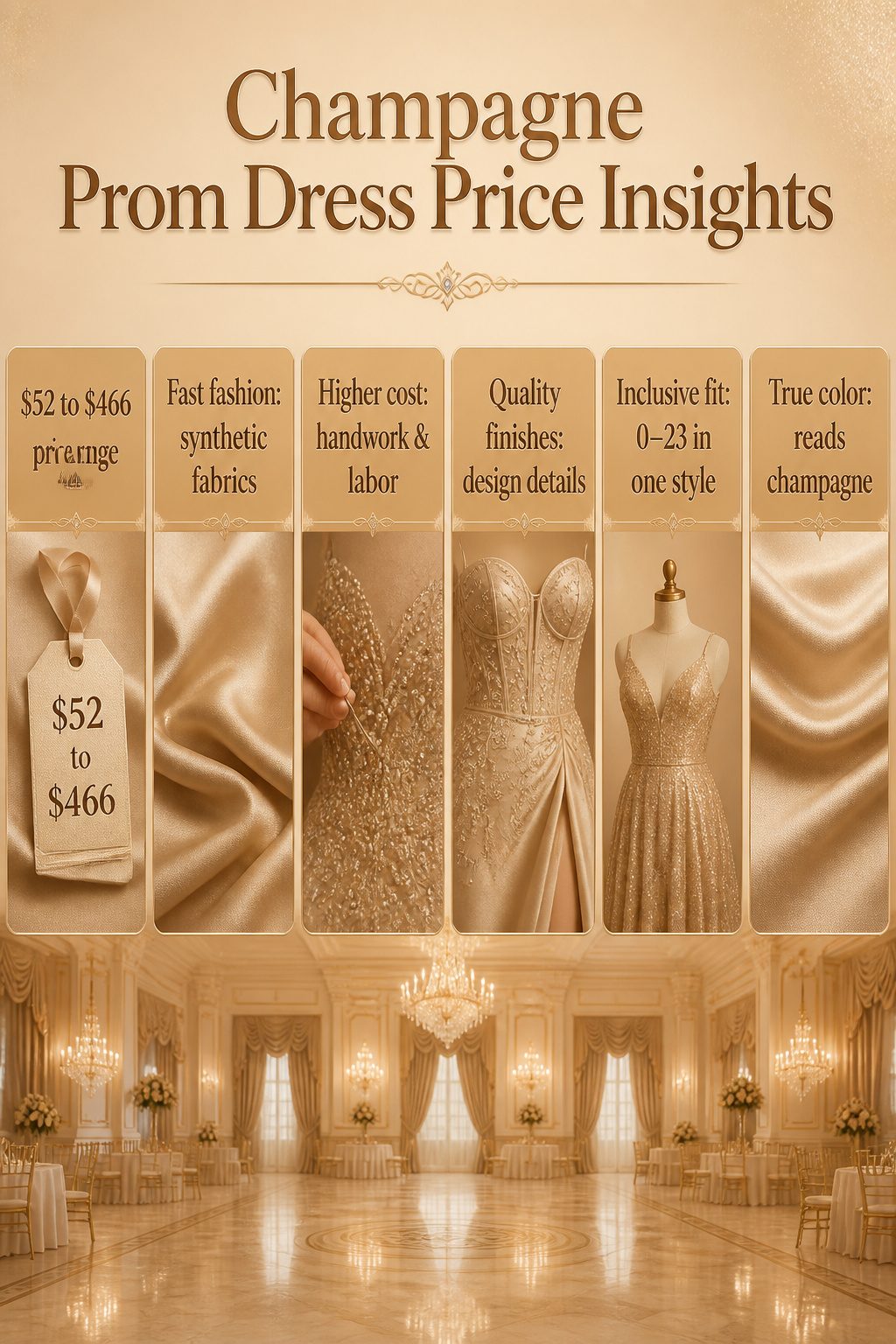
$52 to $466 covers the spread for champagne color prom dresses right now, and where you land in that range depends on what you are actually paying someone to do.
Fast-fashion tiers get you synthetic satin or basic chiffon cut to standard blocks, maybe some machine-placed sequins. The fabric itself is not costly; the savings come from minimal fitting and no handwork.
Move up and the driver is labor, not yardage. Allover beading on a bodice can take forty hours by hand.
Corset boning, built-in cups, a lined skirt that hangs right without a petticoat, all of that is construction time you will not see on a hanger but will feel by hour three of prom night.
Metallic finishes in champagne and rose gold soften the flash but still need careful matching of tone to tone, which adds quality-control steps at the factory.
Brand markup sits on top of both. A label that alters free or stocks 0–23 in one style is charging for the infrastructure to fit more bodies reliably.
Your budget frame: under $150 buys the dress and the risk of a tweak at a local tailor. $250–350 is where hand-beading and better lining start appearing.
Past $400 you are paying for designer pattern-making and the reputation that the color will read true champagne, not beige, under venue lighting.
Simple Accessory Rules
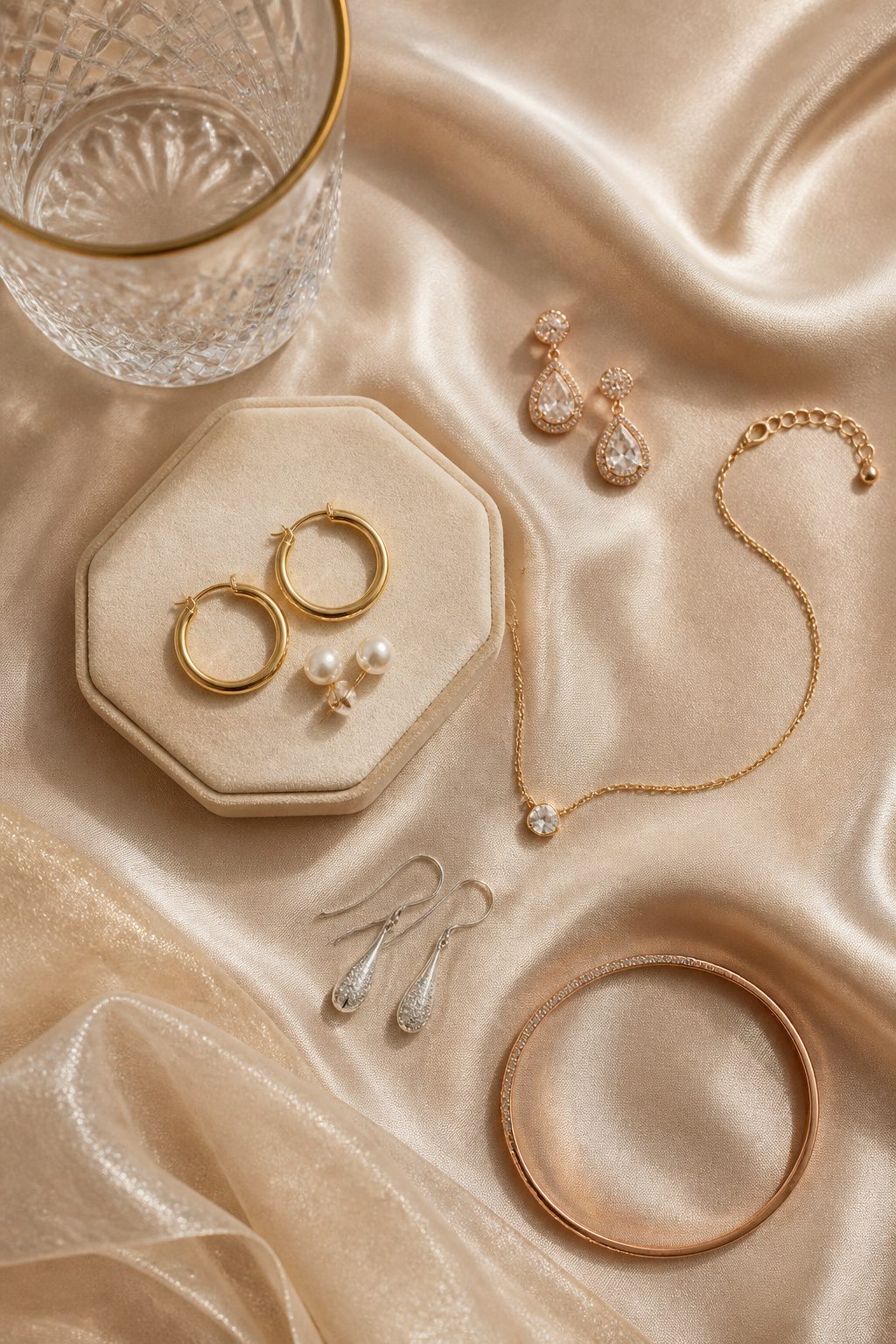
Gold, rose gold, and silver all sit near champagne on the color wheel, which makes choosing between them feel harder than it is.
Hold the metal next to your dress fabric in natural light before you buy: warm, yellow-based golds pick up the deeper honey notes in some champagnes, while rose gold flatters the pinker ones.
Silver only works if your dress runs cool; otherwise it fights the warmth and reads flat.
Let heavily sequined or beaded champagne color prom dresses carry the look alone.
One small pair of matching-tone earrings is enough. Simpler satin or matte finishes need the help: a slim bracelet or delicate pendant adds interest without starting a second conversation.
For shoes, nude heels keep the line long and the eye on the dress.
Black gives classic contrast. Matching gold footwear is fine only if the tone actually aligns, not just in the store’s lighting.
Keep it simple. Delicate jewelry in matching gold tones, a neutral clutch, and black or nude heels let the dress be the focal point.
The common mistake is the statement necklace on an already busy bodice.
Champagne catches light on its own. Adding a competing piece turns you into a display case rather than the person wearing it.
Frequently Asked Questions
What styles of champagne prom dresses are available?
You will find long and short lengths, plus A-line, ball gown, mermaid, corset, strapless, off-the-shoulder, and fitted or sheath cuts. The article covers ten styles in total, from floor-length satin gowns to tea-length and bodycon silhouettes.
What sizes do champagne prom dresses come in?
Most lines stock 0–23, with plus sizes running up to 30 or 32 in dedicated collections. A-line and empire waist cuts fit most reliably in extended sizing, since both let the fabric move rather than pull across the hips.
What is the price range for champagne prom dresses?
Expect to pay between $52 and $466.
Budget tiers use synthetic satin and basic construction; past $250 you start seeing hand-beading, better lining, and corset boning. Above $400 you are paying for designer pattern-making and color accuracy under venue lights.
How should I accessorize a champagne prom dress?
Match jewelry metal to the dress undertone: warm gold for honey champagnes, rose gold for pinker ones, and silver only if the dress runs cool.
Keep it simple on heavily sequined or beaded gowns; let simpler satin or matte finishes carry a slim bracelet or small pendant. Black or nude heels finish the look.
What fabrics are used in champagne prom dresses?
Satin, tulle, sequins, and beading are the main choices.
Satin photographs warm and refined but shows water spots; tulle builds volume and reads romantic; sequins add weight and itch potential at the underarms; beading adds texture without dominating. Each changes how the night feels and what you pay.