
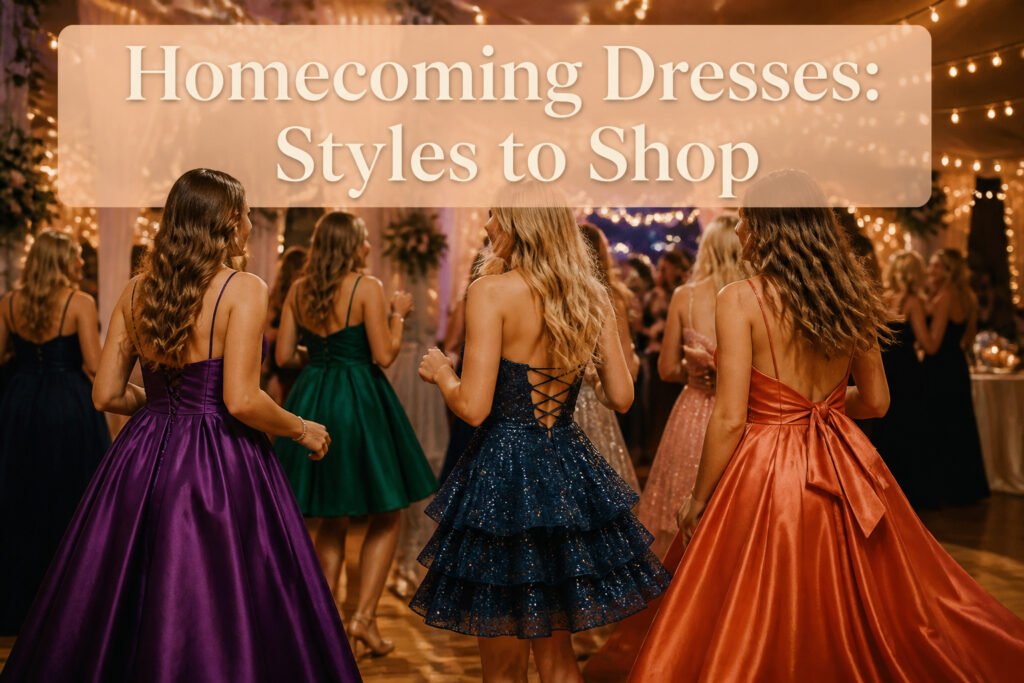
Homecoming dresses are the formal styles high school students wear to the fall homecoming dance, and the right one depends on whether your school runs semiformal or full-gown formal. The $90 polyester tier gets you a color and a cut, but the $100–$150 range is where cotton-sateen blends and metal zippers start appearing. A-line dresses in medium-weight jewel tones hit the exact register homecoming calls for: dressed-up without competing with prom.
1. A-Line Dresses
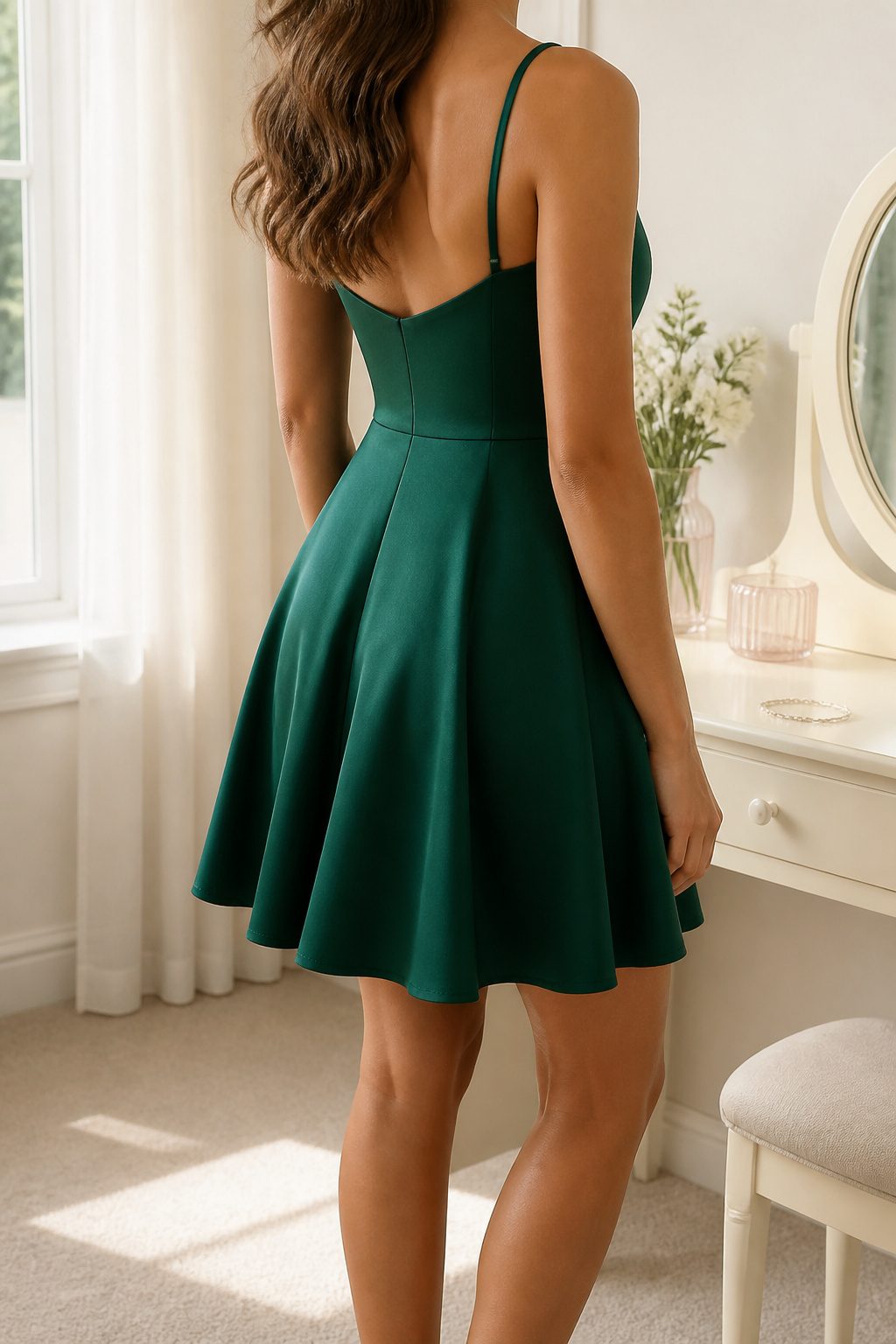
The A-line gets its name from the triangle it makes, fitted at the top and flaring gently toward the hem. That geometry is why it works on nearly every frame: the cut skims the waist without clinging, then gives the hips and thighs room to move. On a homecoming dance floor, that translates to actual comfort through sitting at dinner, standing in line for photos, and moving however the DJ moves you.
Heavier fabrics like crepe or a structured cotton blend hold the shape through a fall evening without looking stiff. Lighter materials can read seasonally off and tend to need more adjusting as the night goes on. A medium-weight A-line in a darker jewel tone reads dressed-up without trying to compete with prom-level formality, which is the exact register homecoming calls for. The silhouette is forgiving enough that you can size for your shoulders and let the skirt do the rest, rather than hunting for a precise waist fit.
2. Ball Gowns
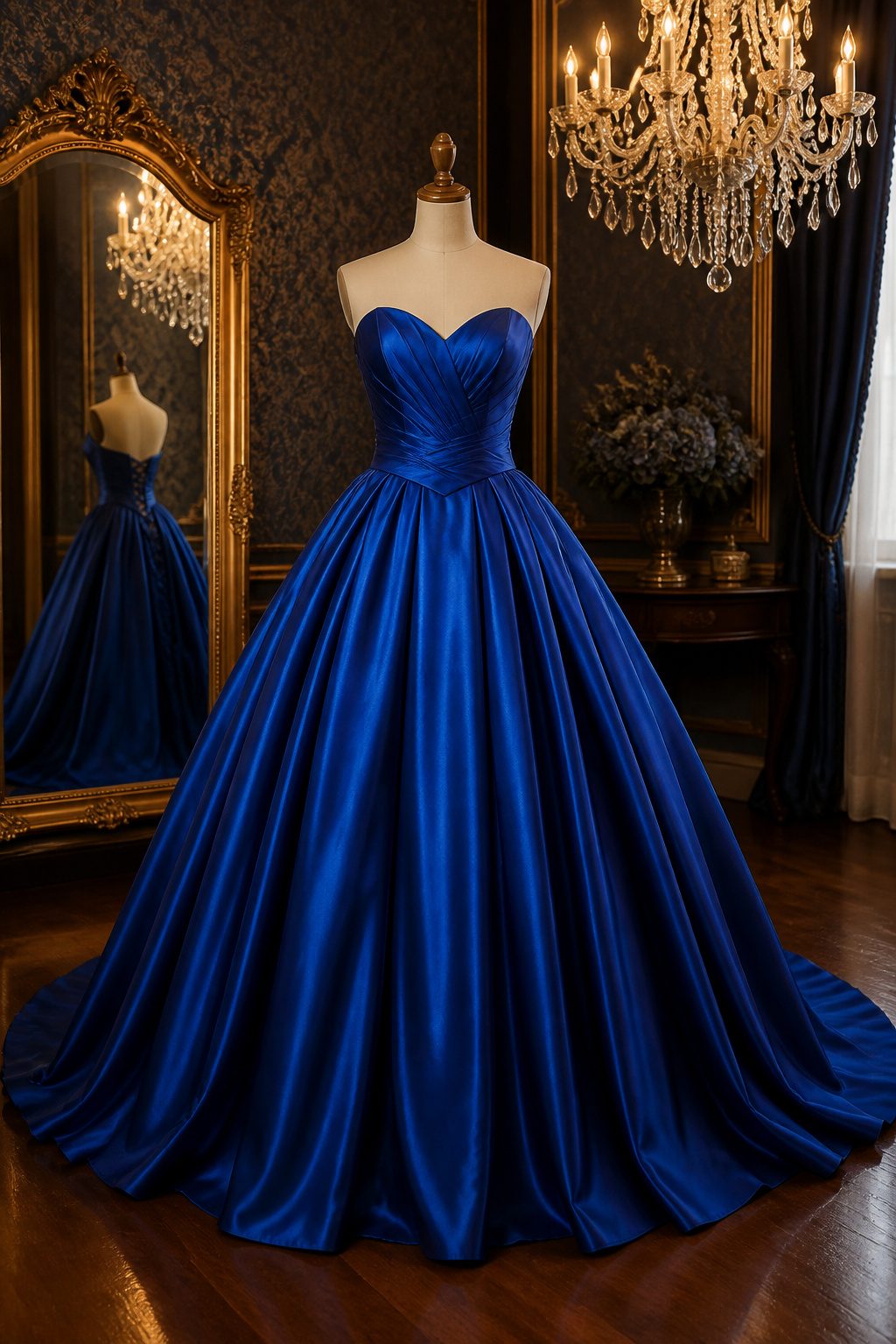
A ball gown is the right call when homecoming court is on the line, or when your venue runs formal enough that anything less reads underdressed. The full skirt and structured bodice signal ceremony in a way few other homecoming dresses manage, and the silhouette works across body types because the volume below the waist creates its own proportions.
The trade is mobility. You will take up more space in the car, at the table, and on the dance floor. The mistake most people make is adding a hoop skirt rental to push the volume even further. The dress already holds its own shape, and a hoop turns sitting into a negotiation and close dancing into a logistics problem. Skip it, let the gown’s own layers do the work, and keep your hands free for the actual night.
3. Fitted Dresses
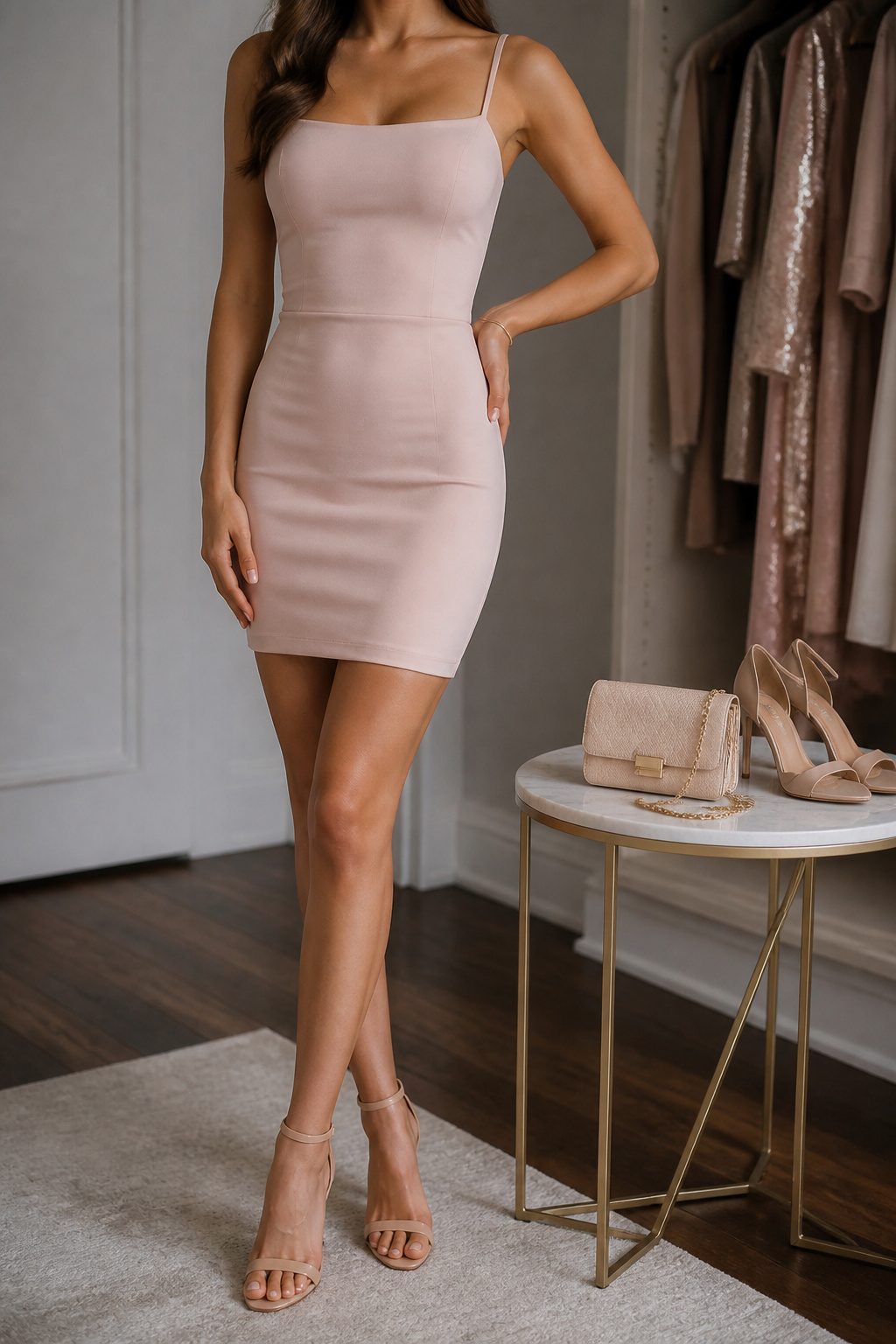
Sheath, bodycon, and slip-style homecoming dresses all follow your silhouette without adding structure of their own, which means the line between striking and unforgiving is thin. A seamless thong or skin-tone bodysuit is non-negotiable here; any seam or strap will telegraph through jersey, crepe, or satin that is cut to cling.
If the event includes a sit-down dinner, look for a fabric with a touch of elastane or a matte crepe that skims rather than grips. A ribbed knit bodycon will show every shift after a heavy meal; a mid-weight slip dress in double-layered polyester or silk-weight viscose recovers better. Sheath dresses in ponte or heavier crepe hold their shape through dancing and second helpings without looking stiff. The mistake is choosing the dress that looks best in the mirror at 3 PM and discovering by 9 PM that you have been holding your breath for four hours.
4. Jumpsuits and Rompers
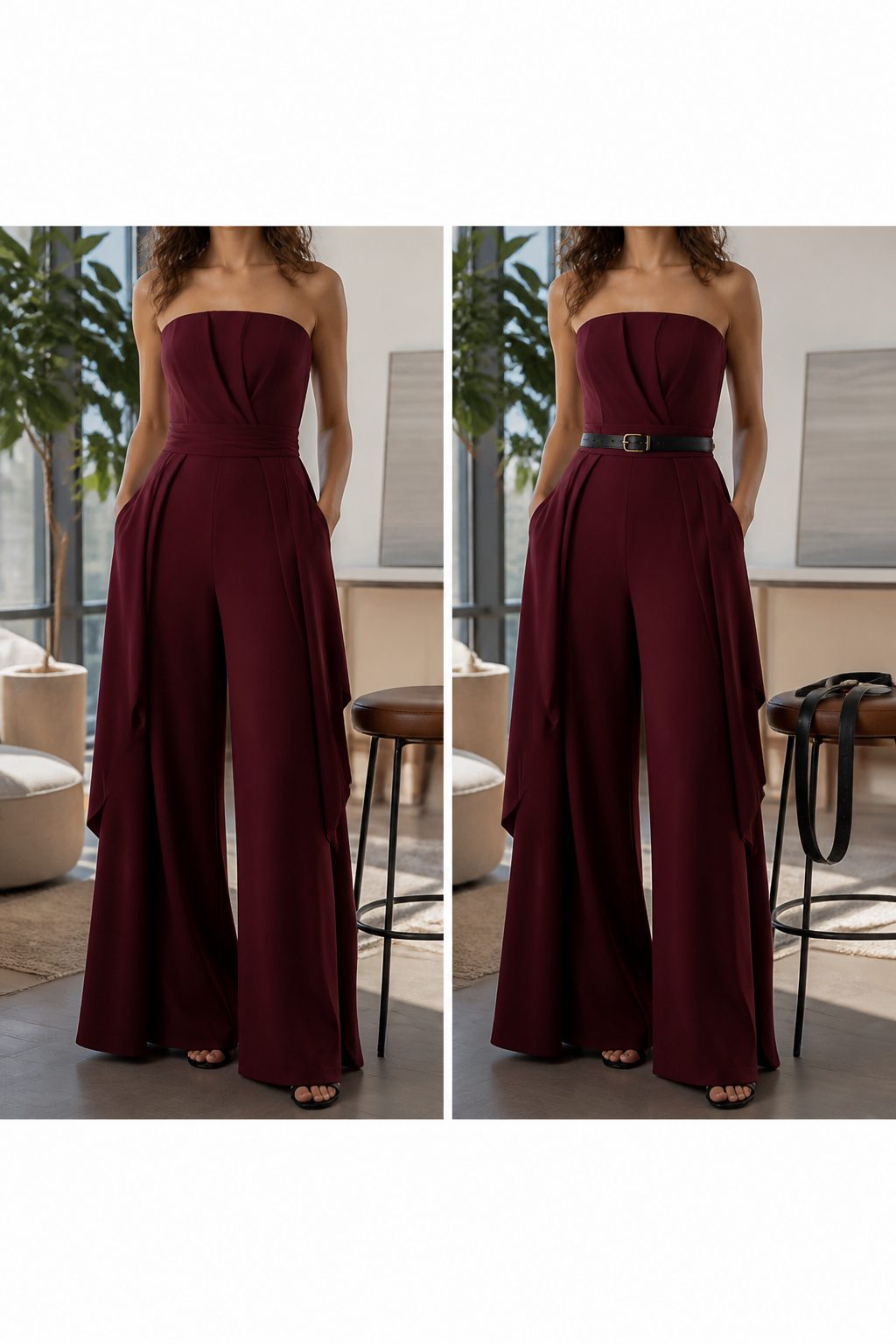
A jumpsuit in a dark, fluid fabric reads as a gown from the waist up, which is exactly what group photos capture. You get the sweep and vertical line without the skirt to manage on a crowded dance floor. The catch is three places where it costs you. Bathroom trips mean the whole thing comes down, not a quick zipper behind a stall door. Seated photos catch the break at the ankle or the bunch at the thigh that a dress would hide. And some schools still word their code around "dresses," leaving a jumpsuit in the gray zone with a chaperone who decides at the door. If your school publishes a specific garment list, check it before you buy. A romper is shorter and lighter, but the same problems hit harder: the proportions read casual in a flash, and the seated silhouette rarely holds up. If you are already building your look around separates you own, a jumpsuit is the bolder move. Just budget the extra ten minutes in the restroom line.
5. Little Black Dress
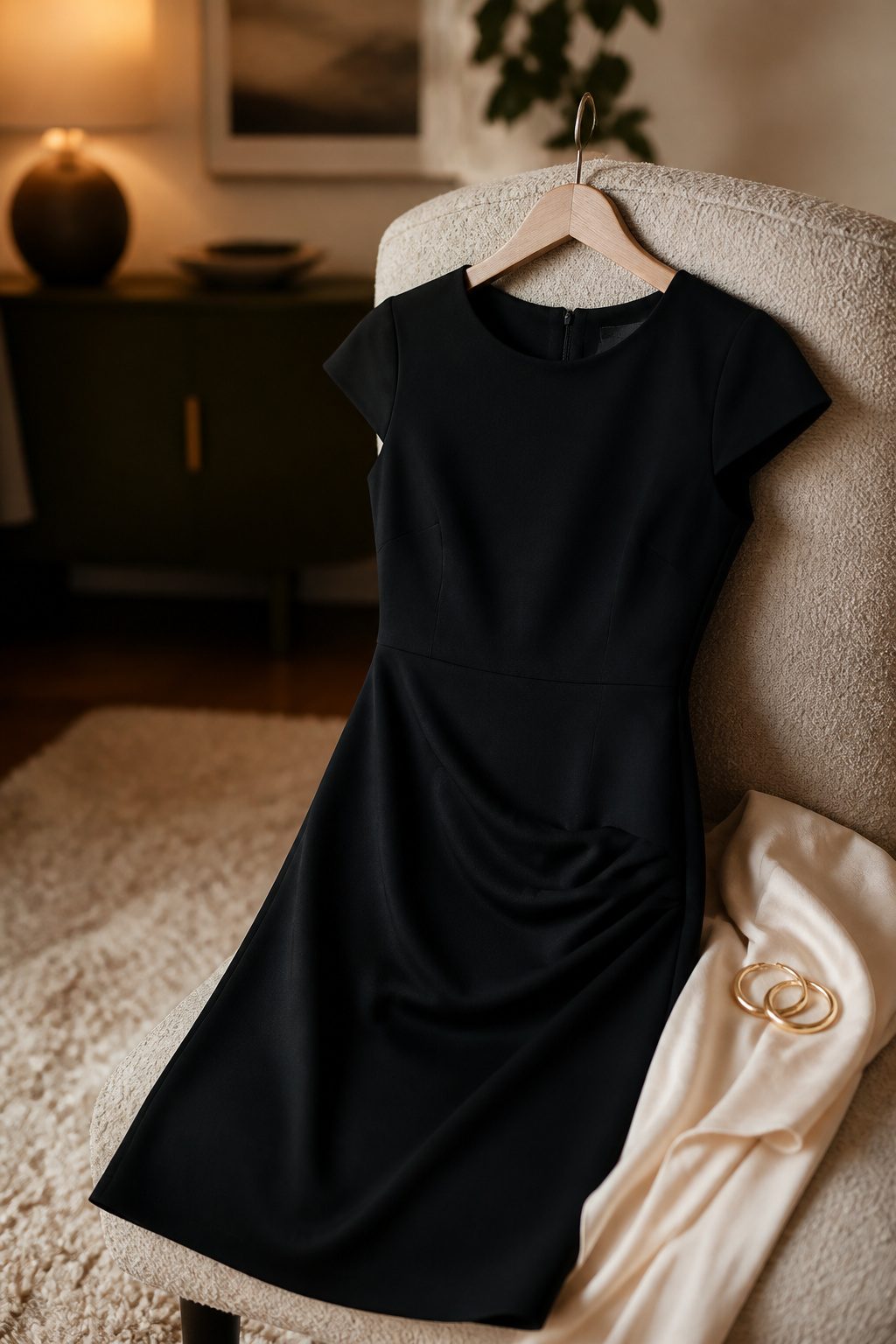
The little black dress survives homecoming season because it lets you control the moment instead of chasing it. What separates a choice from an afterthought is fabric weight: a crepe or substantial jersey holds structure through dancing, while thin polyester goes limp by the second hour and photographs like you borrowed it that morning.
Cut upgrades matter more than trim. A sheath with a slight cap sleeve or a bateau neckline reads deliberate in 2026, where the strapless tube version registers as leftover from 2019. If the dress itself feels minimal, resist loading on statement earrings, a cuff, and a jeweled clutch all at once. Two of those pieces are plenty; three turns you into the accessories instead of the person wearing them. The black dress works when it gives you somewhere to go, not when it makes you work to justify it.
6. Mermaid Dresses
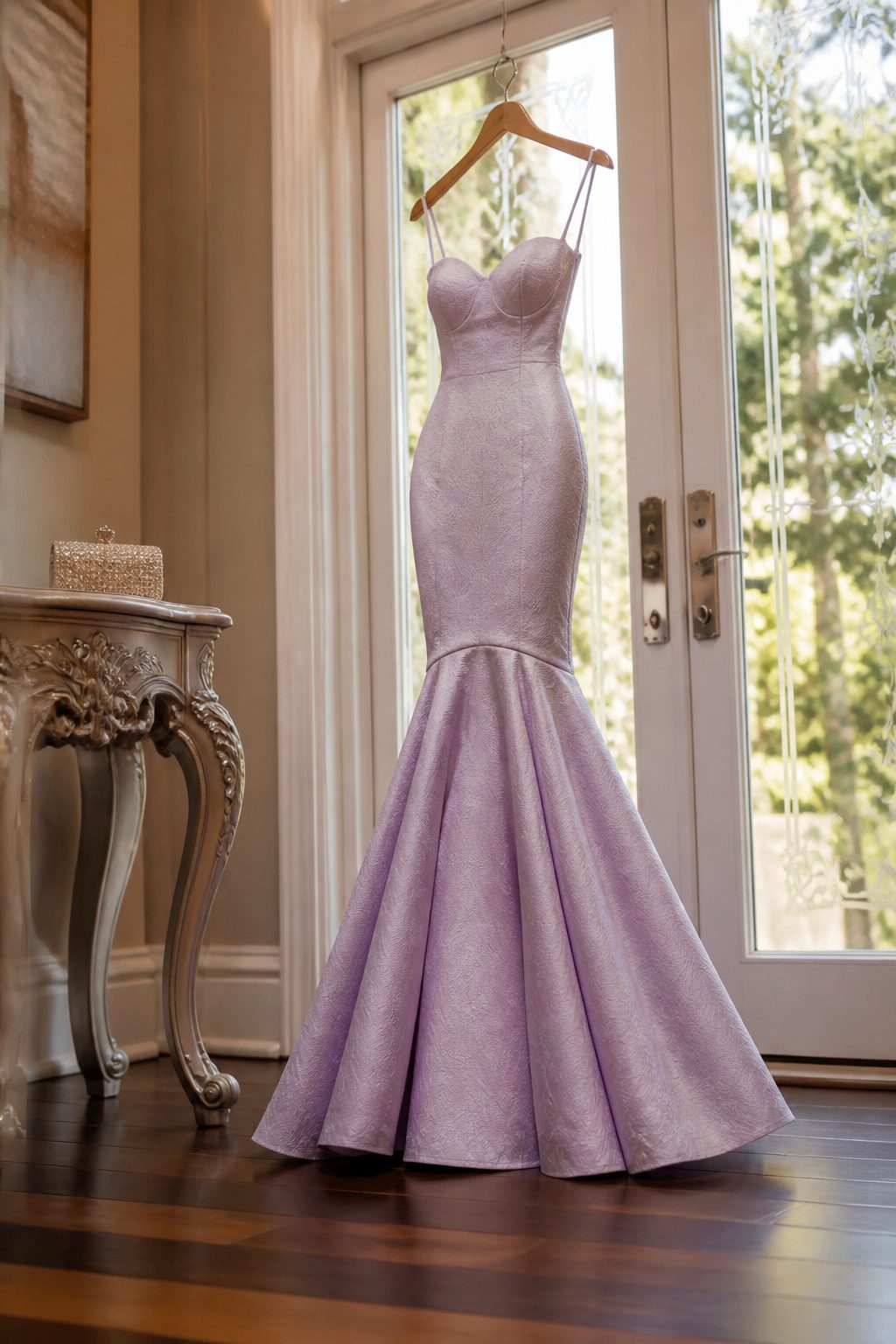
A mermaid dress hugs your torso through the hips, then flares sharply somewhere between mid-thigh and the knee. Where that flare starts changes how you move. Higher flares, up around the thigh, let you take normal steps and even sit without the skirt fighting you. Lower flares, dropping to the knee, look dramatic in photos but turn walking into a careful shuffle and stairs into a genuine project.
This cut rewards a defined waist. If you carry weight in your midsection, the tight line through the hips can emphasize rather than smooth. For rectangular or inverted triangle shapes, the sudden flare builds curve where there is less. Petite frames often find the proportions swallow them unless the flare begins high enough to keep the leg line long.
The real problem surfaces at the venue itself. Most homecomings still happen in gymnasiums, and that polished floor is unforgiving. Mermaid hems with any train, even a short one, catch under heels and send you forward. If the dress has a built-in bustle or you can pin the flare temporarily, you gain safety without losing the silhouette for photos beforehand. Consider it non-negotiable if you plan to actually dance.
7. Plus Size Dresses
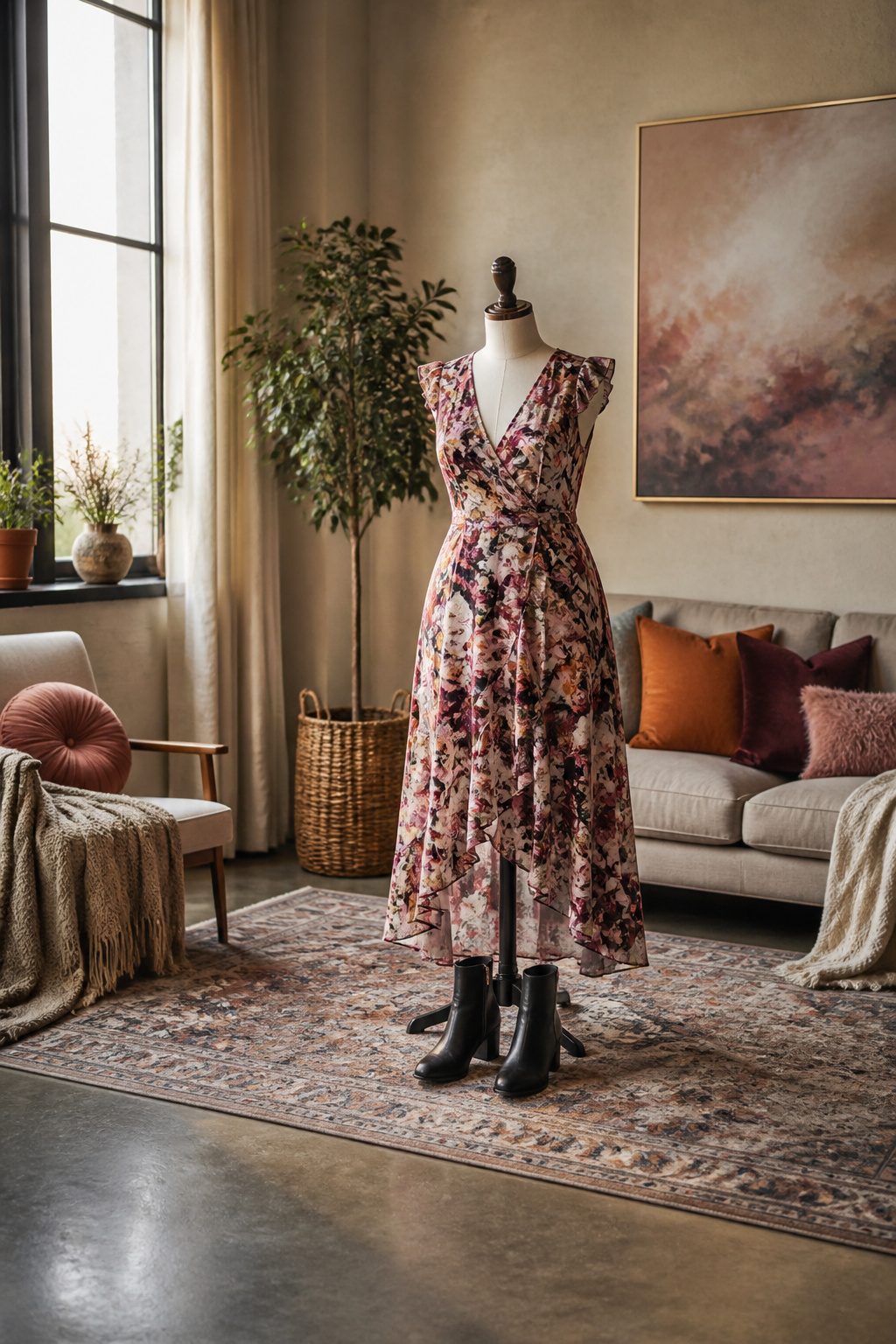
A scaled-up straight-size pattern is not the same thing as a true plus block, and the difference shows up the second you lift your arms. Armhole depth sits lower and wider in a proper plus draft, letting you reach for a drink or hug someone without the whole dress riding up. Waist placement also shifts: it lands at your actual narrowest point, not where a size 2 waist would theoretically fall if you multiplied it by four.
Skirt volume matters just as much as total fabric. A true plus cut distributes fullness so the hem hangs level from hip to knee instead of ballooning at the sides. That distinction is what keeps a full skirt from reading as costume.
When you are shopping homecoming dresses, check whether the line runs 000–30 on shared blocks or splits the range. Shared grading above a 16 or 18 usually means compromise on at least one of those three points.
8. Two-Piece Dresses
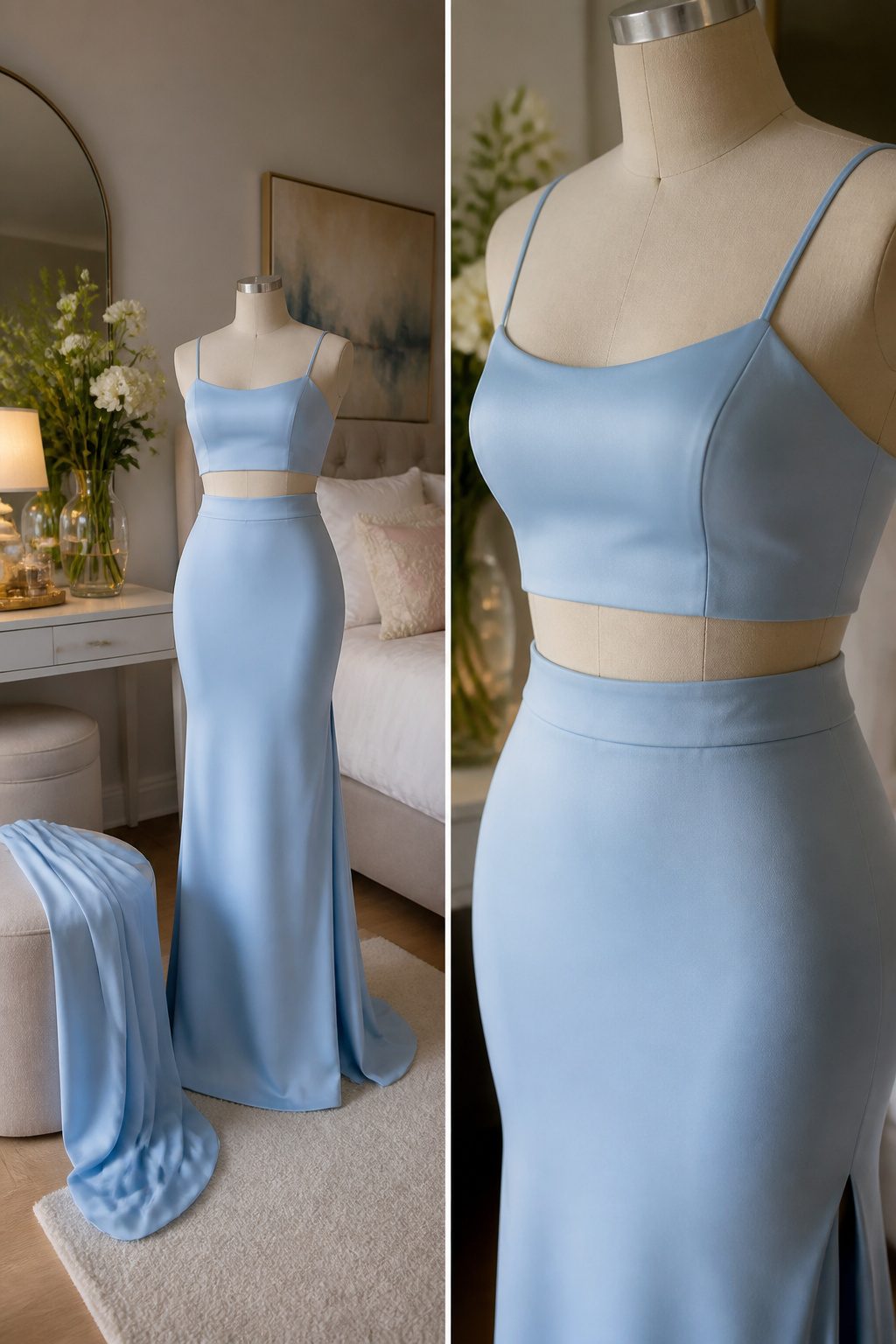
A two-piece homecoming dress breaks the silhouette at the narrowest point between your ribcage and your true waist, which is why it works when standard waists hit too low and pool at the hip bone. The skirt anchors at the midriff instead, so the visual length runs from shoulder to break point, then break point to hem. That split proportion flatters longer torsos and anyone who finds single-piece dresses either straining across the middle or swallowing their shape entirely.
The gap between pieces can be a sliver of skin or a wide band; the principle holds either way. What convinced me, reading through the range of how these are built, is that the break placement matters more than how much shows. Set it at your actual narrowest circumference and the skirt hangs from a fixed point instead of sliding down to find one.
If your homecoming is outdoors in October, that exposed midsection needs a plan. Bare skin against sixty-degree dusk air turns a confident entrance into a hunched shoulder line by the time the dance starts. A matching crop with long sleeves and a higher neckline keeps the proportion logic intact while leaving only a strip of torso open, or you layer a fitted turtleneck beneath the skirt half and treat the crop top as a structured vest for the look.
Lengths That Match the Venue
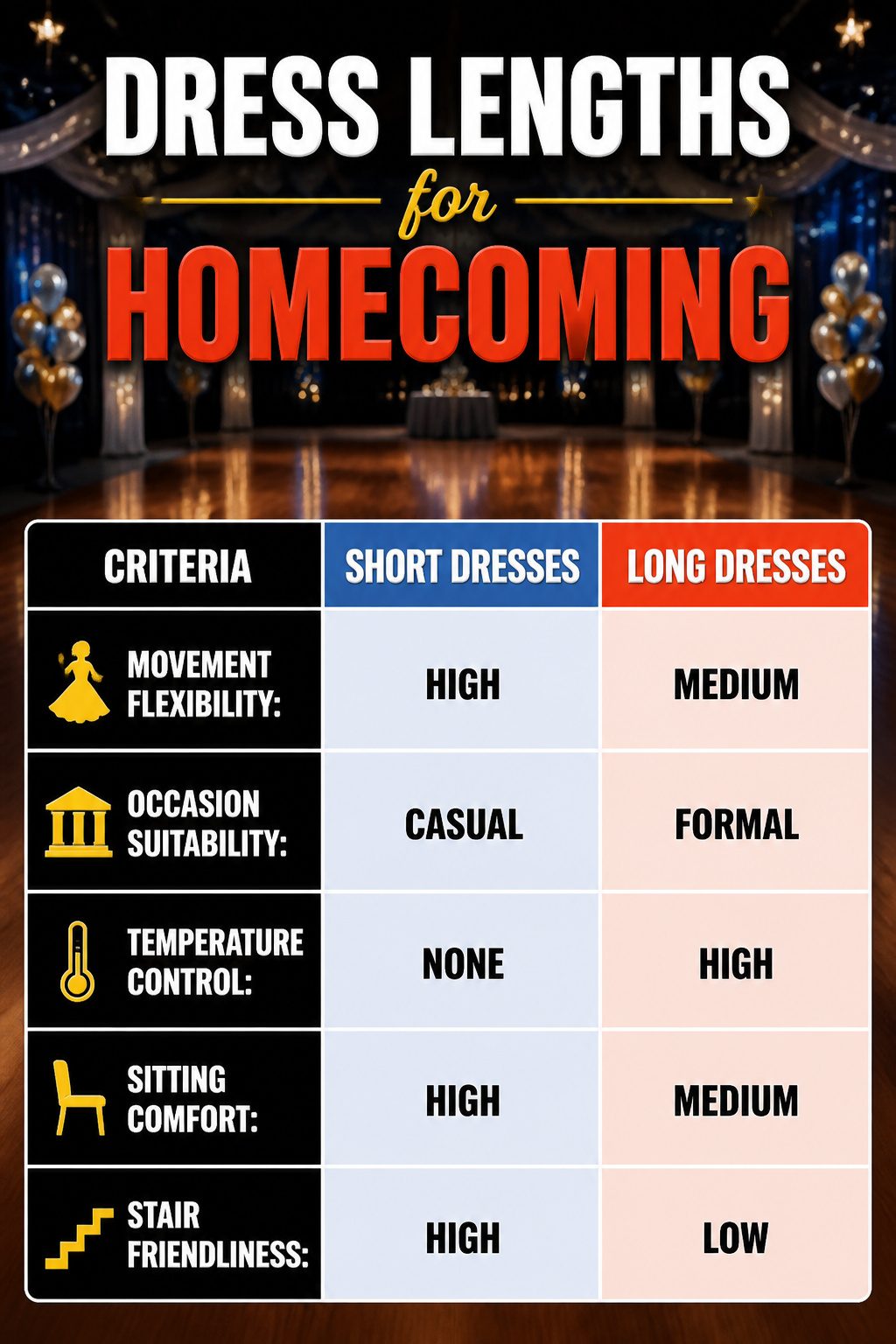
Short homecoming dresses pull ahead when you are on your feet all night. They do not tangle on chair legs or crowd the dance floor, and you can move without gathering fabric in one hand. A hem above the knee is the cut that survives dancing.
Long dresses earn their place at formal dinners and court presentations, where the gown does the work of marking the occasion. The tradeoff is real: you sit more than you move, and stairs take planning.
Long-sleeve options run the same range from short to floor-length, but the point is warmth, not drama. Homecomings fall late in the season, and gyms with heating that works in theory are cold in practice. A sleeved dress lets you skip the coat-check line and still look deliberate, not like you forgot the weather.
Color Choices That Hold Up in Photos
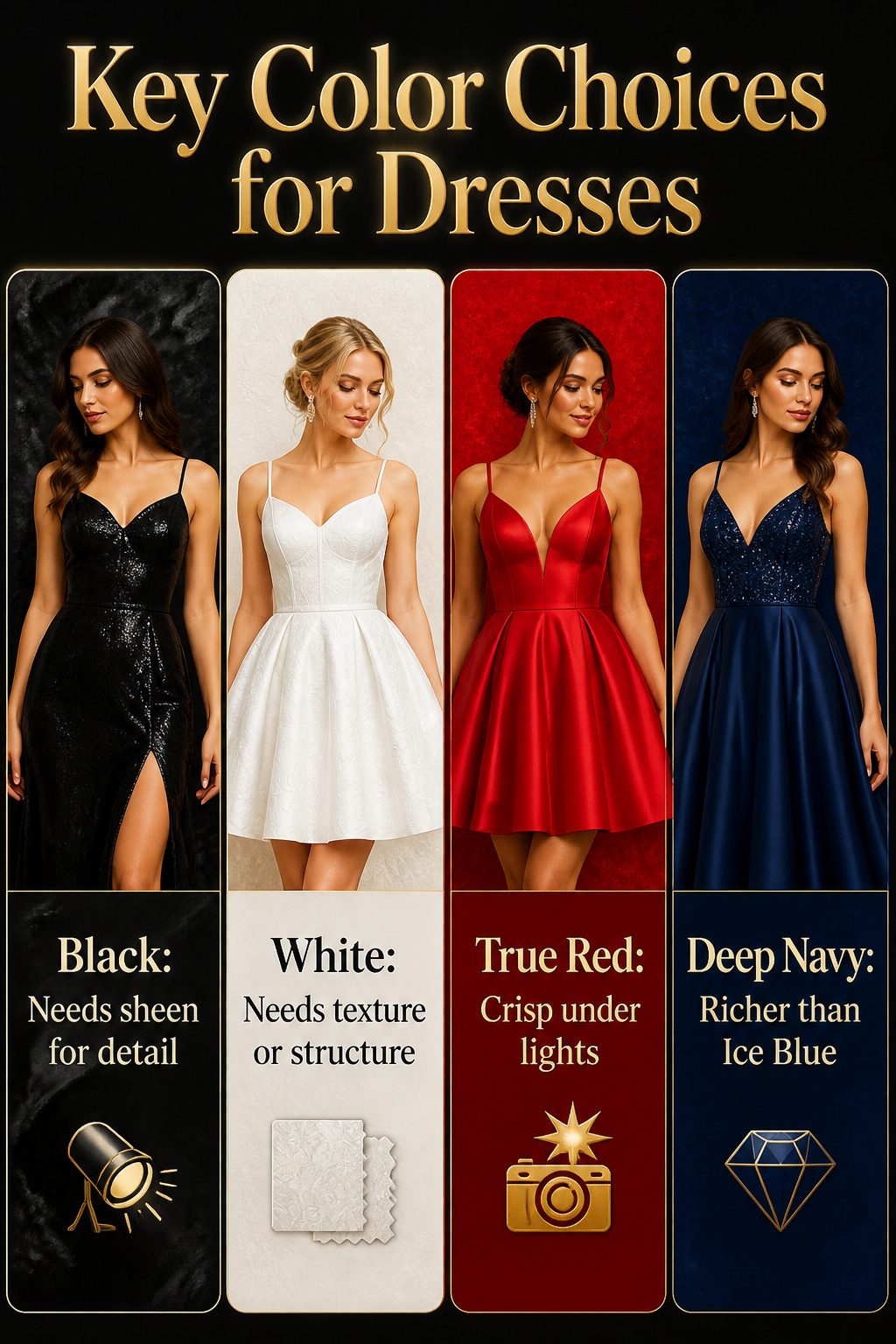
Black, white, red, and blue form the reliable core of homecoming dresses for a reason. These shades hold saturation under harsh gymnasium fluorescents where trend colors often shift toward gray or yellow. A deep navy reads richer than pale ice blue in those lights; a true red stays crisp where coral can look sun-faded.
White reflects the overhead grid and can read flat or blown-out in group shots, so look for texture or structure to give it dimension. Black does the opposite, swallowing detail if the fabric is too matte. The safe move is a slight sheen or a cut that catches light at the shoulders or neckline.
Color sets the tone for your whole look before anyone registers the shape. A red homecoming dress carries its own energy; you do not need to add much in accessories. Blue, especially deeper shades, grounds sequins or beading that would feel loud in a brighter hue. What convinced me, reading through how these choices actually perform, is that the boldest trend color still falls back to whether it survives a phone flash from twenty feet away. If it turns muddy under gym lights, you will not wear it again.
What You Actually Pay
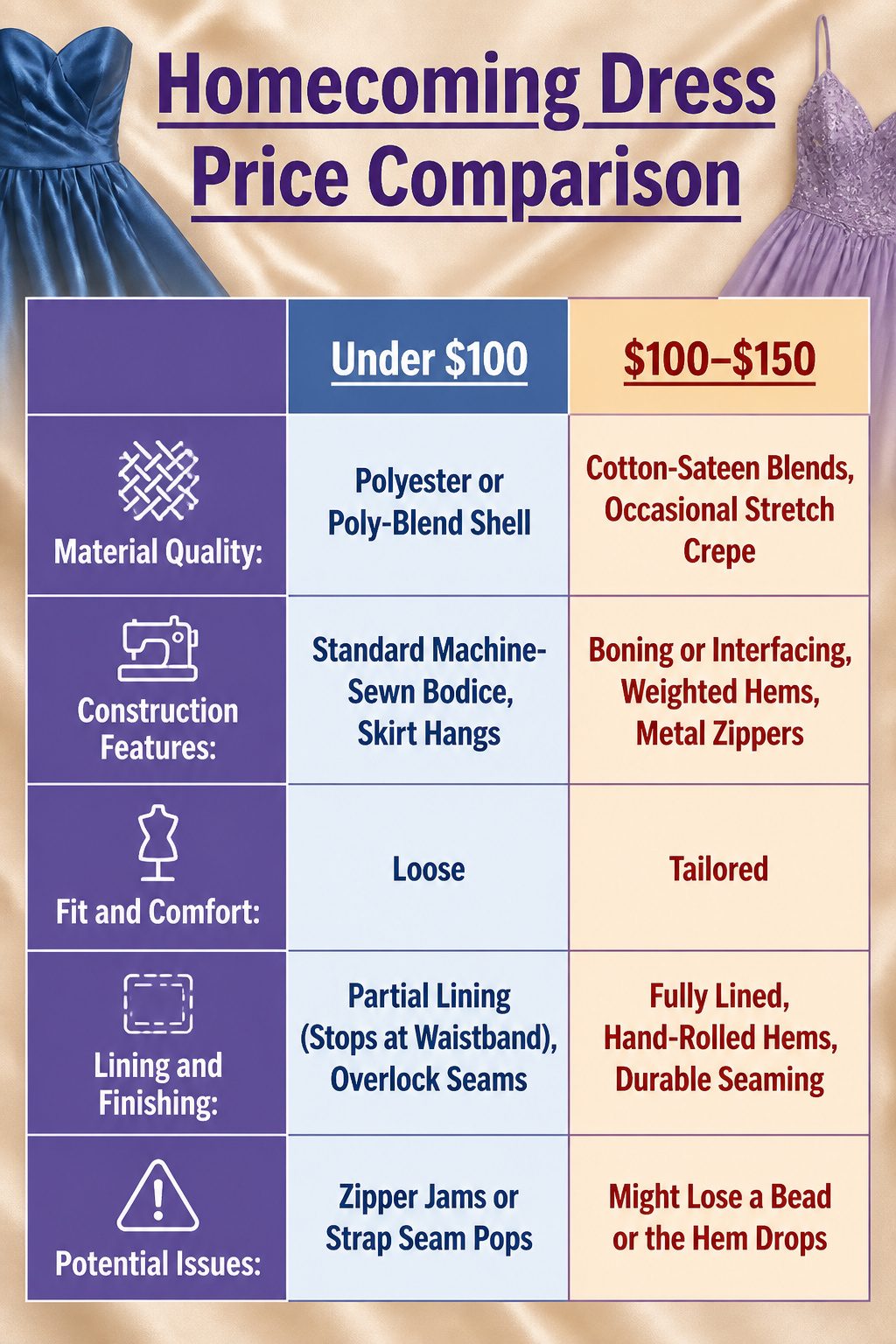
A $90 homecoming dress usually gets you polyester or a poly-blend shell with a standard machine-sewn bodice and a skirt that hangs rather than moves. The lining, if there is one, stops at the waistband. Seams are finished with an overlock stitch that frays after dry-cleaning. You are paying for the cut and the color, not the construction.
Step up to the $100–$150 tier and the differences turn tactile. You start seeing cotton-sateen blends, occasional stretch crepe, and bodices with boning or at least interfacing that holds shape without your body doing all the work. Hems are weighted. Zippers are usually metal rather than molded plastic. The extra $40–$60 buys fabric that recovers after sitting and seaming that survives more than one dance.
At $150–$200, the money goes into finishing you will not name until it fails elsewhere. Fully lined skirts, hand-rolled hems, interior waist stays, and fabric with actual fiber content: silk blends, heavier crepe, structured mesh that holds its own volume. These dresses do not need constant adjusting. The construction does the work so you are not pulling the bodice up between every photo.
Where each tier fails: under $100, the zipper jams or the strap seam pops. Under $150, you might lose a bead or the hem drops. Under $200, the failure is usually fit, not fabric, which means tailoring fixes it instead of replacing it.
Size Reality
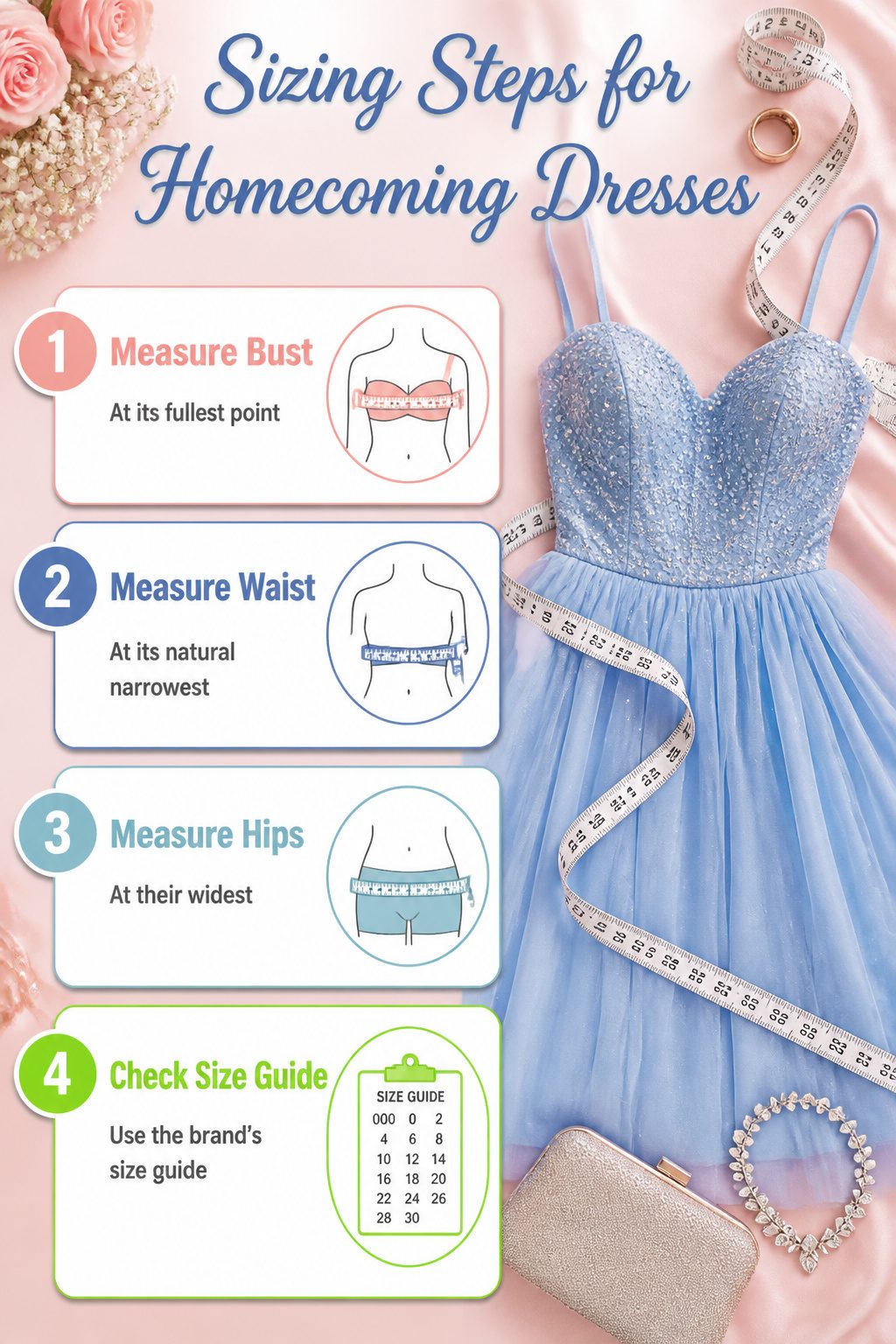
Homecoming dresses run from 000 to 30, but the number on the tag is close to meaningless without your own numbers to match it against. Measure your bust at its fullest point, your waist at its natural narrowest, and your hips at their widest. Write all three down before you open any size chart.
Labels shift by designer. One brand’s 8 is another’s 10, and that gap gets wider the farther you sit from a straight size 6. When your measurements land across two sizes, pick by fit preference and the dress style itself: a fitted bodice needs the smaller number to stay up, while a flowy skirt can hide the extra room of the larger. A size guide beats a guess every time, because the guess costs you a return and possibly the dress itself if stock sells through.
Frequently Asked Questions
How do I choose the right size for homecoming dresses?
Measure your bust at its fullest point, your waist at its natural narrowest, and your hips at their widest, then compare those numbers directly to the brand’s size chart rather than guessing from the tag. Sizes shift between labels, so one brand’s 8 is another’s 10. When your measurements fall across two sizes, let the dress style guide you: fitted bodices need the smaller size to stay up, while flowy skirts can handle the extra room of the larger.