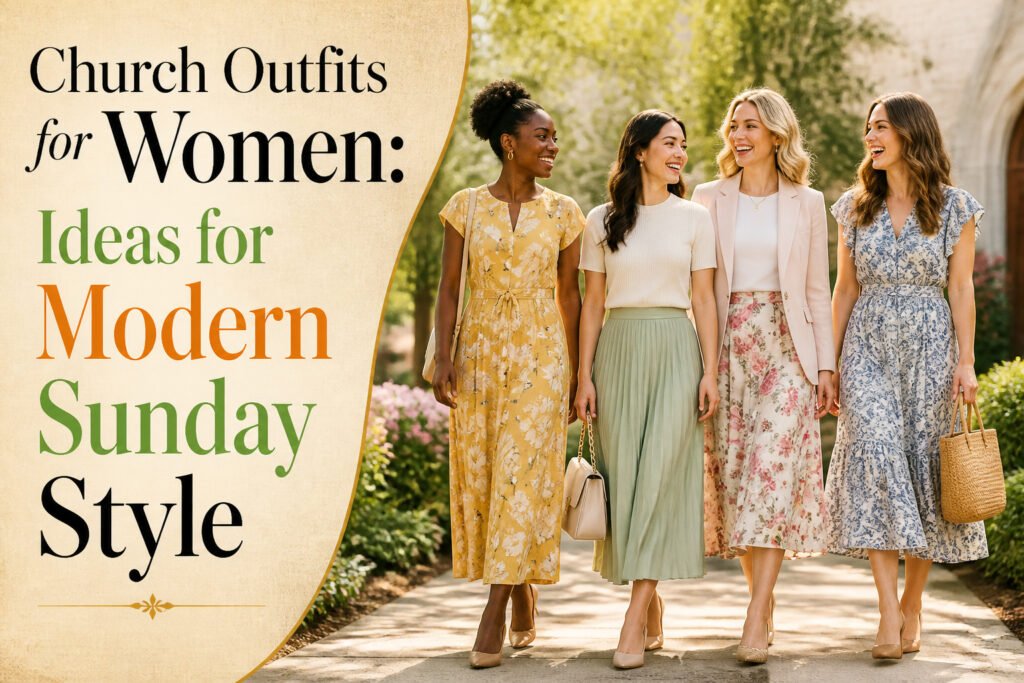
A church outfit is the clothing you wear to Sunday service that meets your congregation’s unwritten dress code without making you uncomfortable by the closing hymn. The gap between what your church considers modest and what the church down the street does can be wide, and getting it wrong means either feeling out of place or overdressing with judgment. One woman showed up to a Methodist service in her Mormon Sunday best and found slacks would have been fine.
1. Wide Leg Pants and Black Blazer
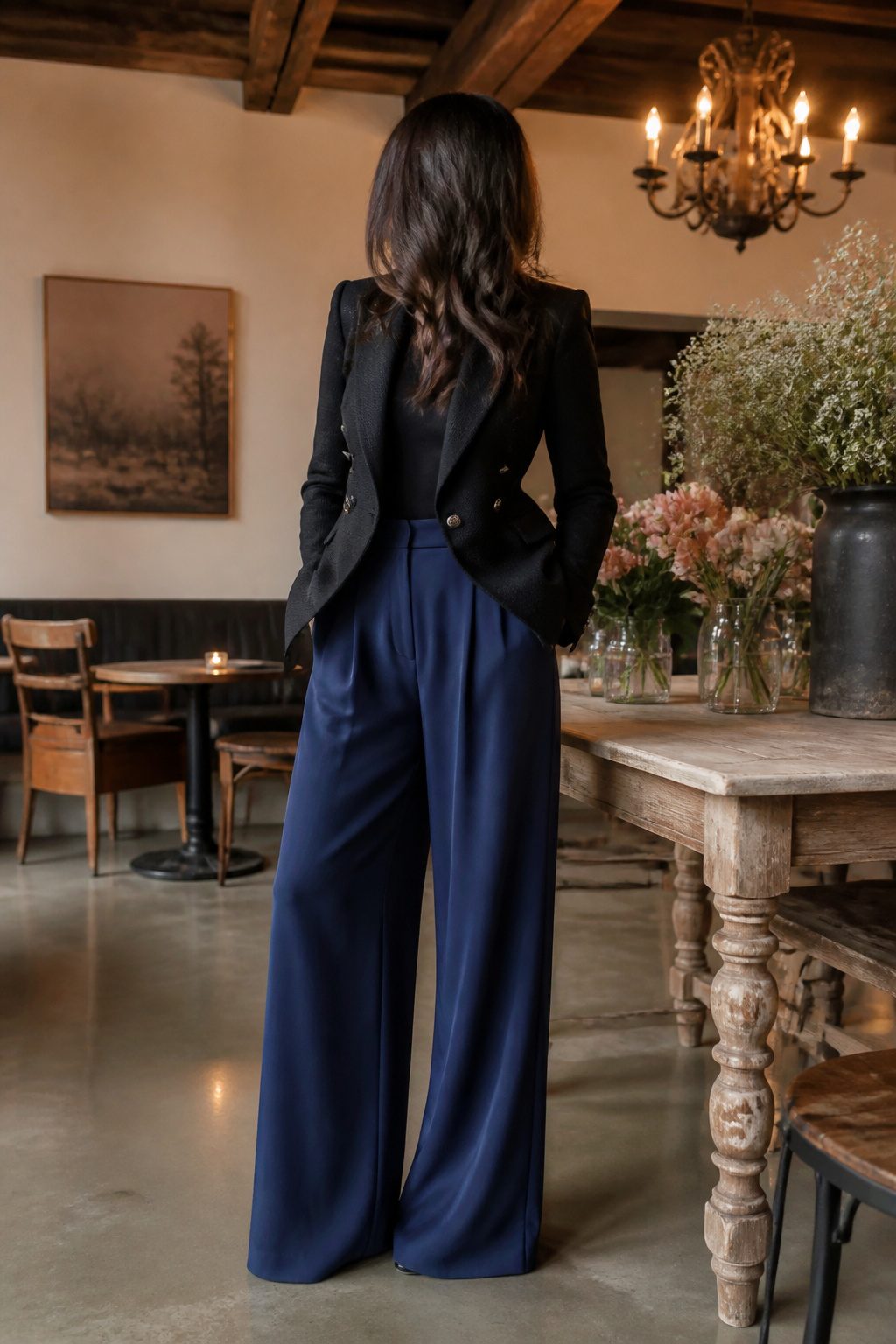
Wide leg trousers and a structured black blazer give you the tailored, classic church outfit that still lets you breathe through a long service. The volume below balances the sharpness above, so you look pulled together without trying to stage a boardroom takeover before coffee hour.
Wear this with flats if your feet are done with heels, or add a pump or strappy sandal if the rest of your Sunday involves standing at a reception or running post-service errands that justify the lift. The point is to match the shoe to what your feet are already used to, not to force an hour of discomfort for the sake of formality.
2. Preppy Wide Leg Look With Sneakers
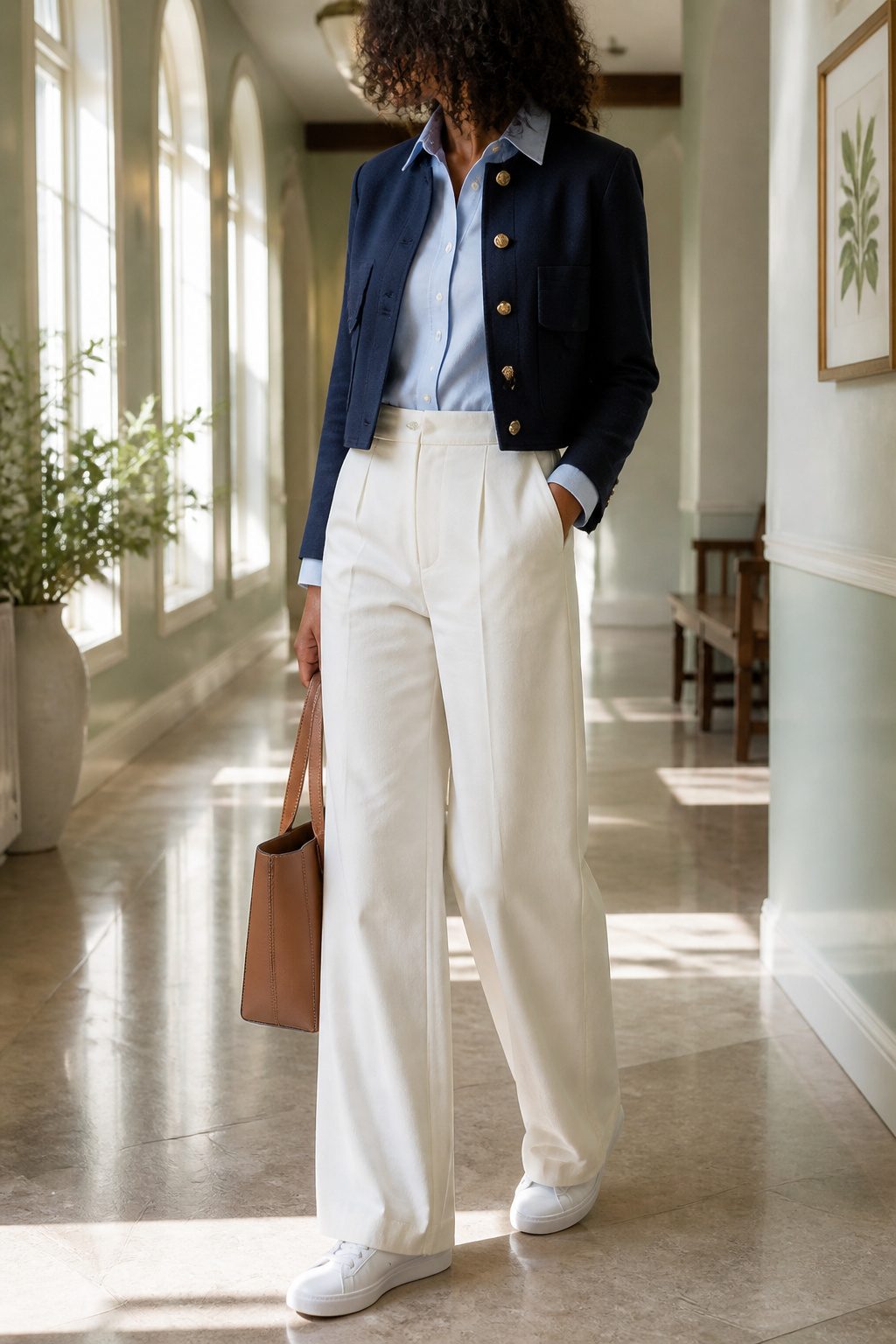
Wide leg pants read polished the moment you stand still, but they only stay comfortable if your feet hold up through coffee line, parking lot, and folding chairs. A clean white or off-white leather sneaker solves that without dragging the look toward gym clothes. The trick is keeping the pant leg long enough to break once over the shoe, never pooling, and choosing a sneaker with zero logos visible at a glance.
Stick to a tucked-in fitted tee or a slim half-tuck with a button-down so the silhouette stays deliberate. A structured cardigan or a cropped jacket adds the layer that signals "dressed" in a casual service. Skip the sock peek if you can; no-show liners keep the line uninterrupted.
This pairing fails when the pants are too short, which turns the volume into a culotte that fights the shoe, or when the sneaker is too bulky, which throws the proportion off below the knee. If you are helping with setup afterward, you already know which shoes let you move without thinking about your feet.
3. Chanel Flat and Black Velvet Bow Look
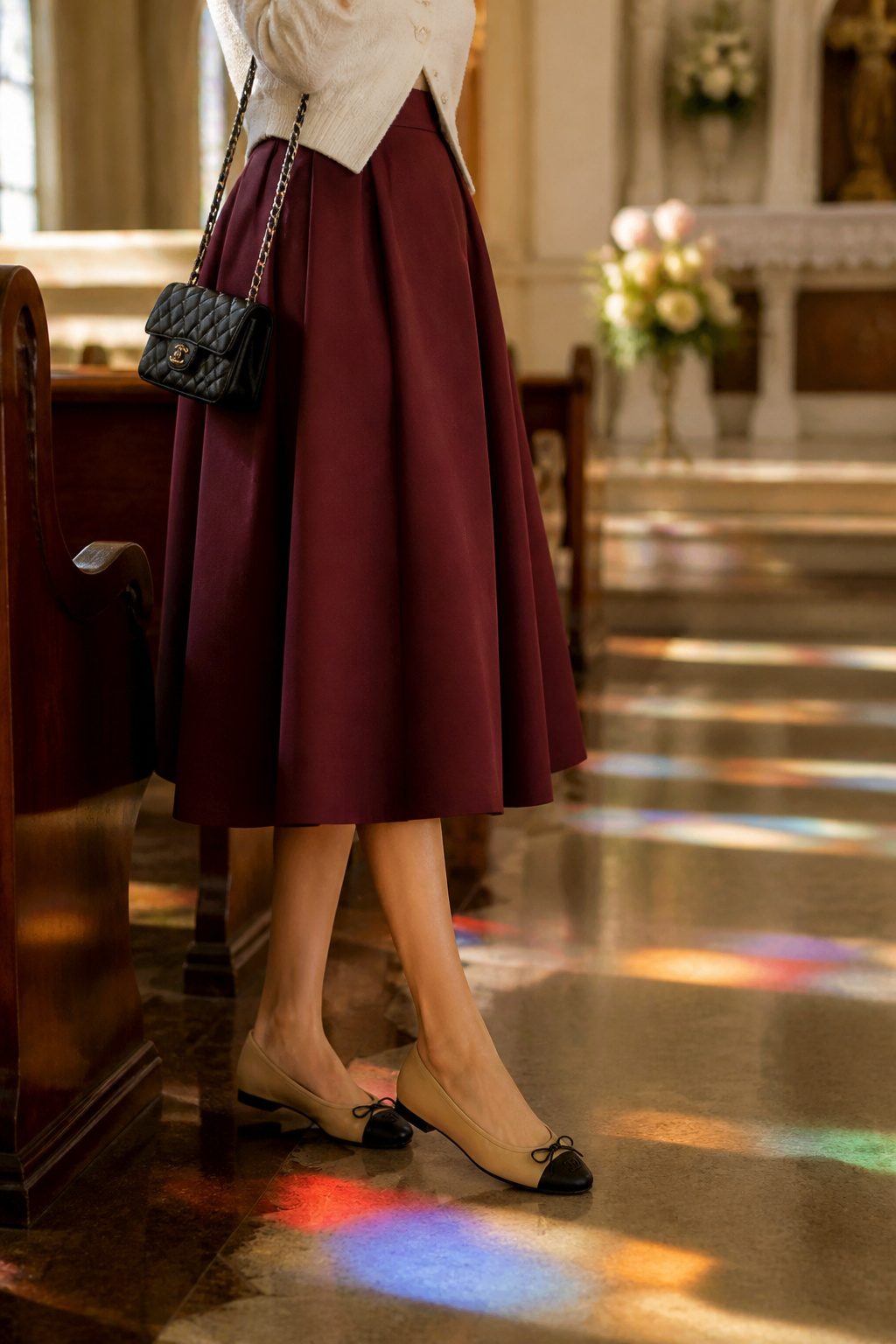
A Chanel flat with a black velvet bow reads finished from the pew to the coffee hour. The bow sits at the vamp, small enough that it does not flap or catch, large enough that the shoe is not just another black ballet flat. You get the polish of a heel without the click on stone floors or the ache by the closing hymn.
The original runs near $800, which is not invisible money for something that spends two hours on your feet on Sunday morning. What convinced me, reading through a dozen of these outfit roundups, is that the look itself travels: any flat with a velvet or grosgrain bow in a dark color hits the same note. You will find credible versions between $40 and $120 from retailers that specialize in work-to-weekend shoes. Check the bow attachment before you buy; a glued knot tends to loosen, and stitched or tacked bows hold their shape through repeated wear. Suede bows look richer than satin but require more care if you step through grass on the way to the side door.
Wear these with a midi skirt that hits below the knee, or with slim trousers that break cleanly at the ankle. The flat keeps the line low, so your hem should do the work of balancing proportion.
4. Studded Ankle Boots and Jean Jacket
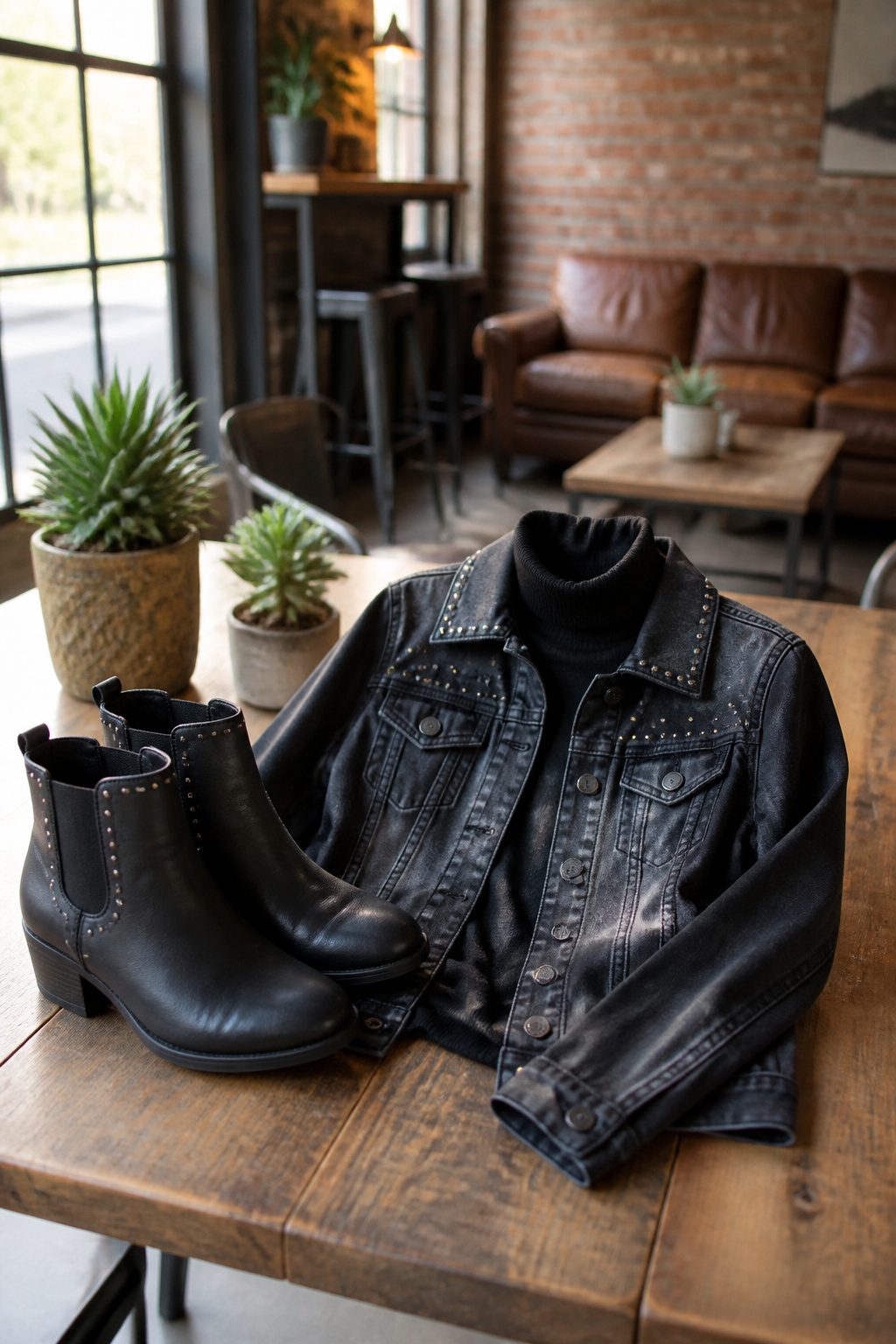
Studded ankle boots under a jean jacket read as personality, not rebellion, when the studs are small and the hardware stays matte rather than mirror-shiny. The jacket should be dark, clean-lined, and fitted enough that it does not swallow the silhouette; the boots need a low heel and a toe shape that does not fight the line of the pant. Keep jewelry to a single thin chain or small studs so the boots remain the one statement. This pairing works best at churches where the congregation already mixes denim into Sunday dress: contemporary services, urban parishes with younger membership, or any place where the pastor wears jeans without comment. If your church still expects hosiery and closed-toe pumps, save this for Saturday brunch and choose the brown jacket and jeans outfit from earlier in this guide instead. The limit is the sanctuary, not your taste; you are dressing to participate, not to announce yourself.
5. Brown Jacket and Jeans
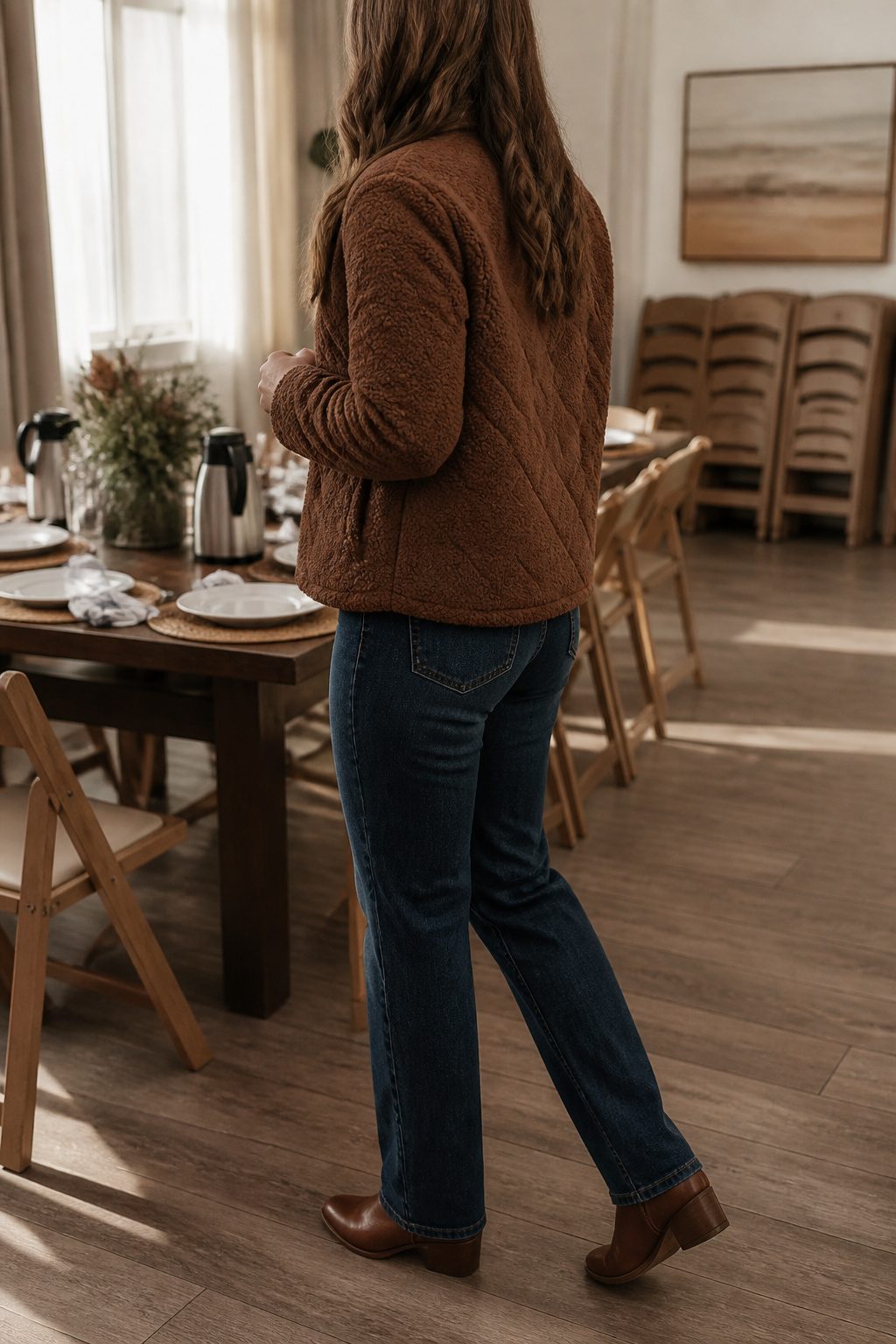
A teddy quilted jacket in brown is the piece that makes jeans feel intentional for church on cold mornings. The fabric matters here. You want something with enough weight to hold its shape through the service, not the thin, fuzzy stuff that pills against a car seat and looks like you grabbed it for the dog park. A proper quilted lining gives the jacket structure, so the silhouette stays neat even if you are sitting in metal folding chairs in the fellowship hall.
Mid-rise straight-leg jeans work best with this volume on top. Skinny styles fight the proportions and make the whole thing feel dated, and anything too distressed reads sloppy for the setting. Dark wash, minimal whiskering, hem that skims the top of your boot.
This pairing is built for the casual congregation or the later service where coffee hour runs long and you end up corralling kids in the parish hall. You will not look underdressed, but you will not look like you tried to outdress the room either. Add a thin gold chain or small hoops if you want to pull it toward polished, or keep it bare if the morning already feels like enough.
6. Black Blazer and Dad Sneakers
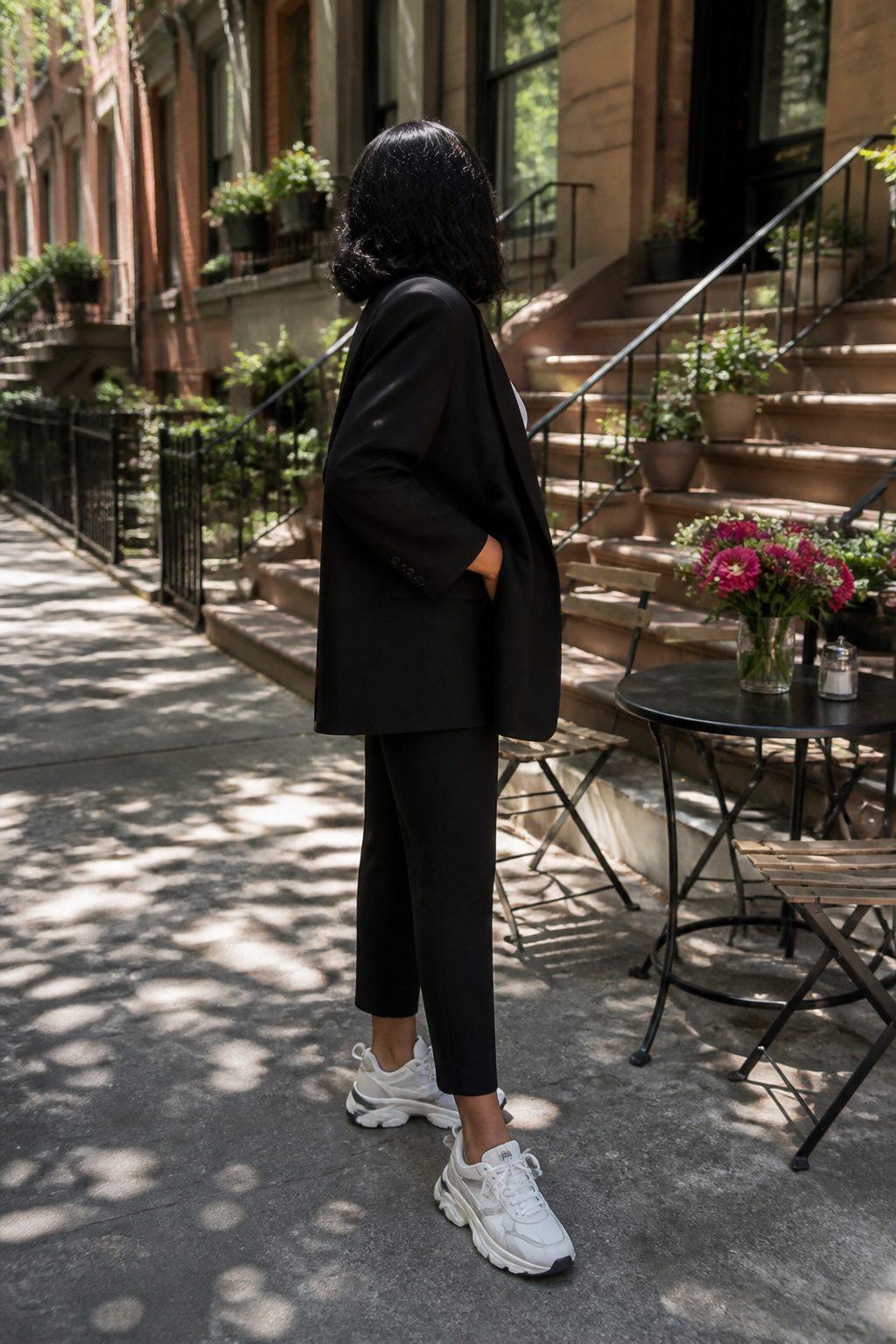
A sharp black blazer with chunky dad sneakers only works if you commit to the contrast instead of splitting the difference. The blazer needs real structure, shoulders that hold their line, length that hits past the hip. Below, the sneaker should be deliberately oversized, not merely comfortable, with enough sole to anchor the eye. Without that weight at the bottom, the whole thing tips forward and looks like a commute gone wrong.
The move that saves it: keep the pant slim and cropped, ending an inch or two above the ankle so the shoe reads as intentional. Wide pants here swallow the sneaker and blur the silhouette into a shapeless column. A narrow trouser in wool or a clean dark denim lets each piece claim its own territory.
Color discipline matters more than you’d think. All black up top, then letting the sneaker bring in white, cream, or even a soft color keeps the story simple. Two competing patterns, or a blazer and shoe fighting for attention, and the outfit collapses into noise.
This pairing solves a real Sunday problem: you want to look pulled together for the service and the coffee hour after, but you also walked from the train or chased a toddler across the parking lot. The blazer does the respect; the sneaker does the miles.
7. Black Blazer and Chanel Ballet Flats
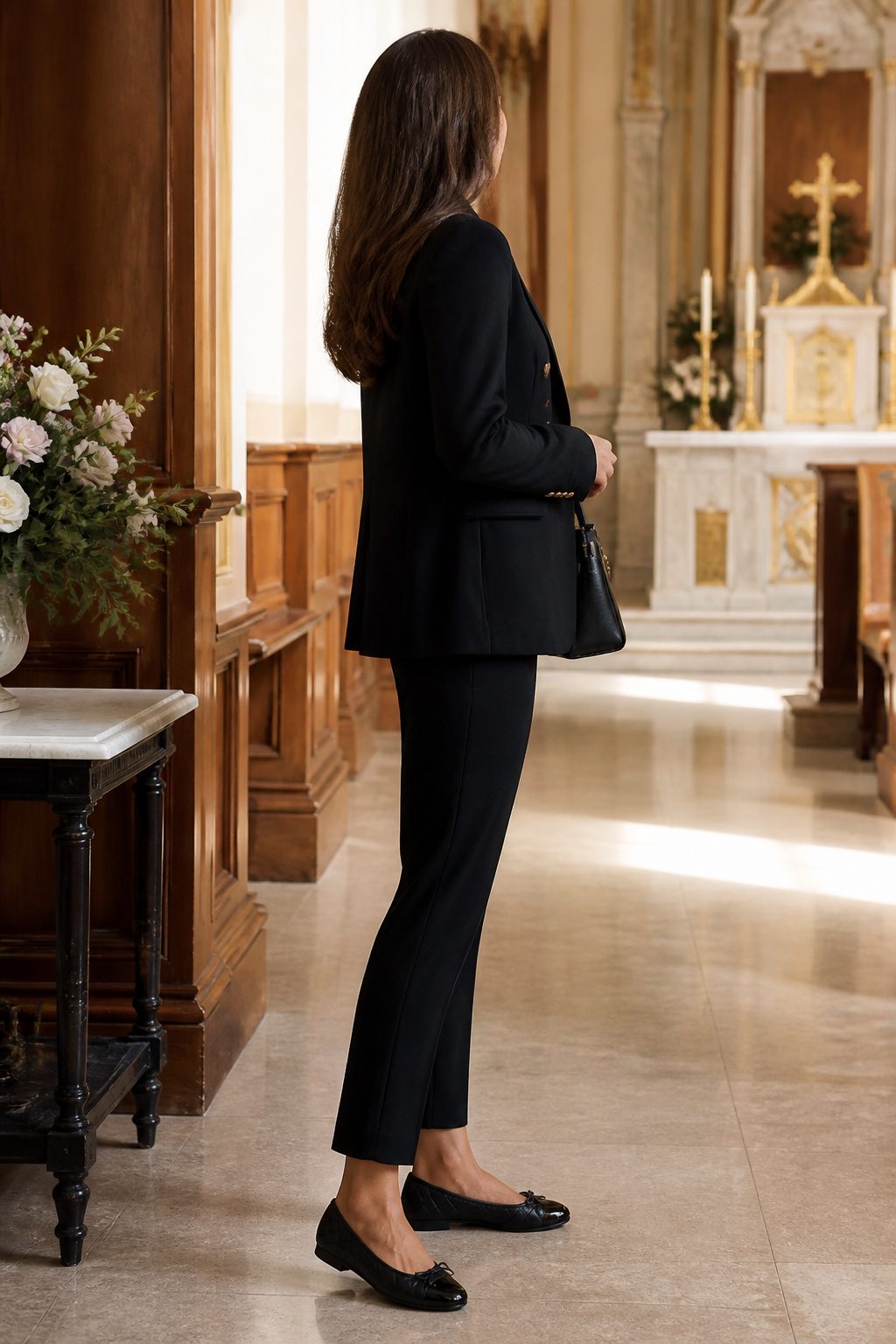
A black blazer with Chanel-style ballet flats is the combination you reach for when you are not sure where a church lands on the dress code spectrum. It reads as polished without the formality of heels, and it works across congregations that run from business casual to nearly traditional.
The flats matter more than you might expect. A quilted leather pair with a small cap-toe holds its shape through years of wear; the stitching and structure keep them from looking like slippers by month three. Suede versions soften faster and lose that crisp edge that makes the outfit intentional. Cap-toe leather in black or navy is the specific style that survives repeated Sunday wear without looking tired.
Your blazer should hit at mid-hip, not cropped, to keep the line elongated with a flat shoe. Pair it with tailored trousers or a midi skirt in a matching weight of fabric; thin jersey underneath throws off the balance and makes the flats look like an afterthought. This is not the outfit for making an entrance, but it is the one that lets you walk in without second-guessing.
8. Black Blazer and Brown Accessories
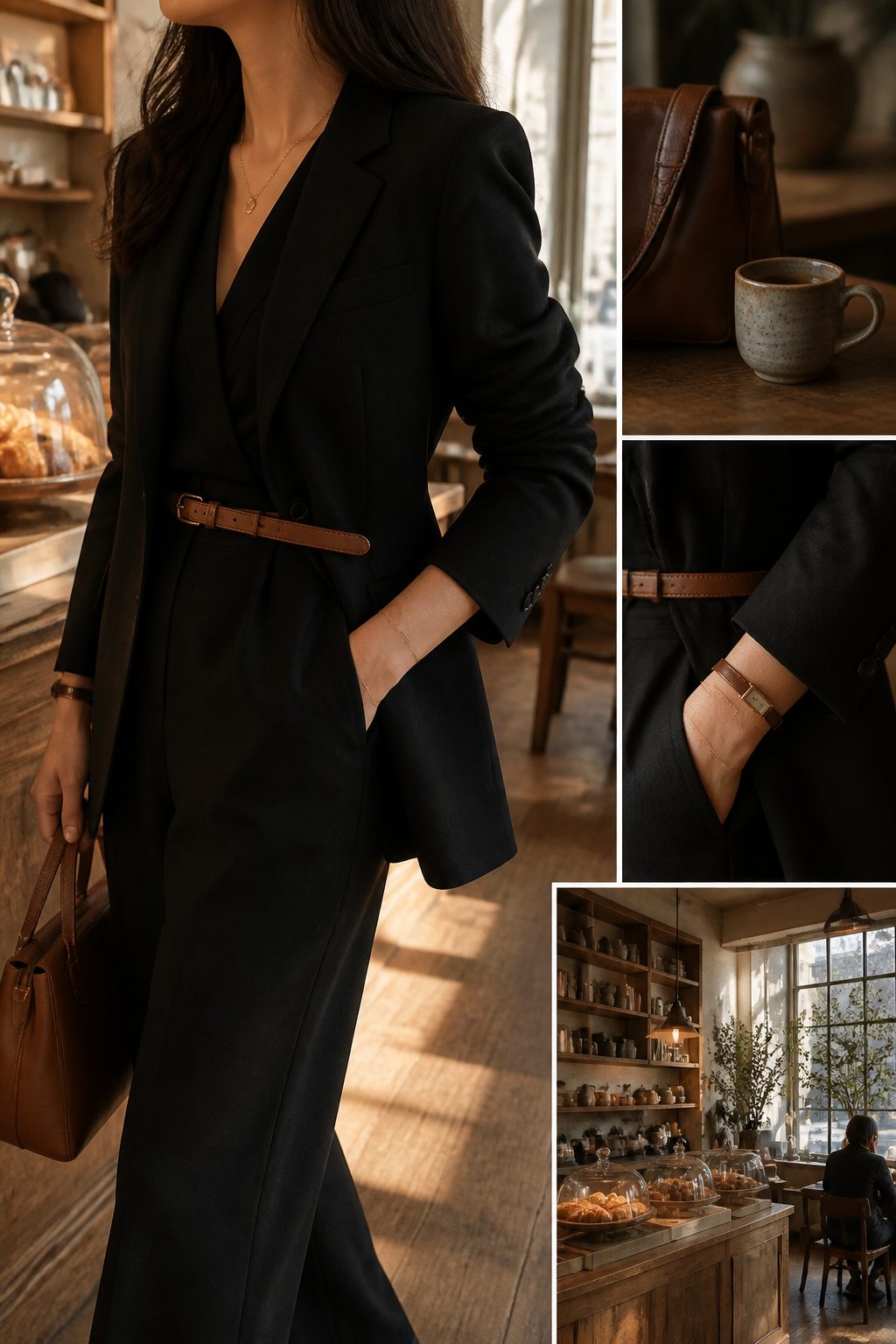
A black blazer you already own turns into four or five Sunday looks once you start pairing it with brown instead of defaulting to black-on-black. The tones that work are camel, cognac, and milk chocolate; reddish mahogany and orange-brown fight the coolness of black and read muddy under church lights. Start with a brown leather belt at your waist, then carry the same color in your bag or shoes so the pieces talk to each other. A thin tortoiseshell bangle or wood-bead earrings add warmth without competing for attention. If your blazer is single-breasted, try the belt over it; if double-breasted, keep the belt on your trousers or dress underneath so the lines stay clean. You are not buying a new blazer, you are teaching the one you have to work with what is already in your jewelry box or on your shoe rack. The trick is repetition of the same brown, not a mix of them. Two browns that do not match will look accidental; one brown, repeated three times, looks intentional and finished.
9. Comfy After Church Outfit
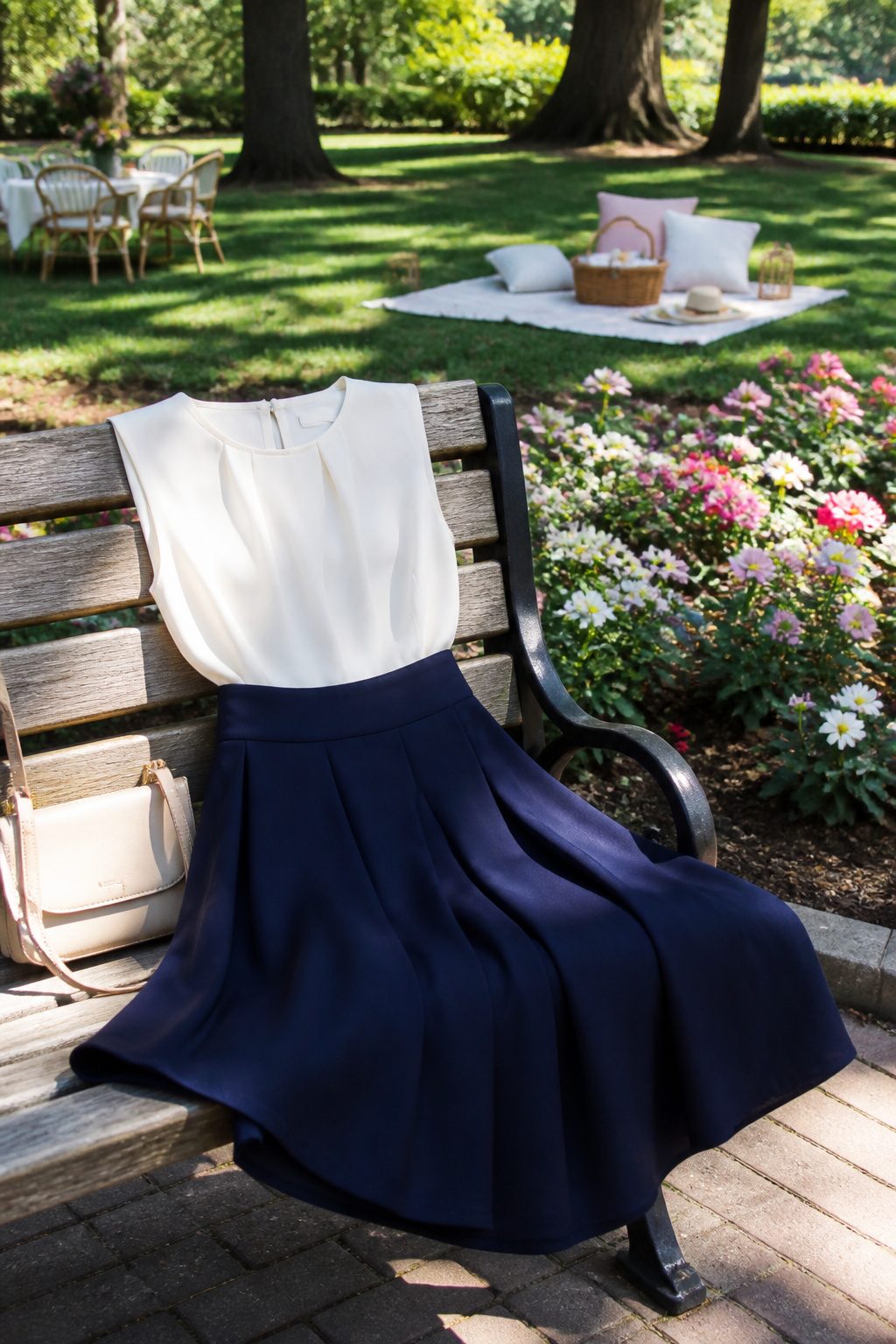
The best after-church outfit is the one you do not have to change. You are already in the car for lunch, or pulling into the grocery lot, or walking up to a friend’s porch, and the dress that felt right at 9 a.m. still looks like you meant it at 2 p.m. That only happens when the fabric does the work.
Look for ponte knit, stretch crepe, or a cotton blend with a touch of spandex: enough give that you can buckle a car seat or reach a top shelf without the seams pulling, enough structure that the skirt does not bag out at the hips by the time you get home. A fit-and-flare dress in a heavier knit works here, or a midi skirt with an elastic-back waistband and a tucked-in shell top. The waistband matters more than people admit; a rigid band digs when you sit through a long lunch, but one that flexes half an inch keeps the line clean without the sacrifice.
Sleeve length is your call, but three-quarter sleeves bridge the gap between sanctuary air conditioning and afternoon sun better than short or full length. If you are in a sheath dress, a cropped cardigan left in the car can cover shoulders for the service and disappear afterward without looking like a separate outfit.
Avoid anything that creases at the mere suggestion of a seatbelt. Linen and raw silk are beautiful until you stand up from the pew or the booth. If you love the look, save it for days with no plans after the benediction.
10. Floral Skirts
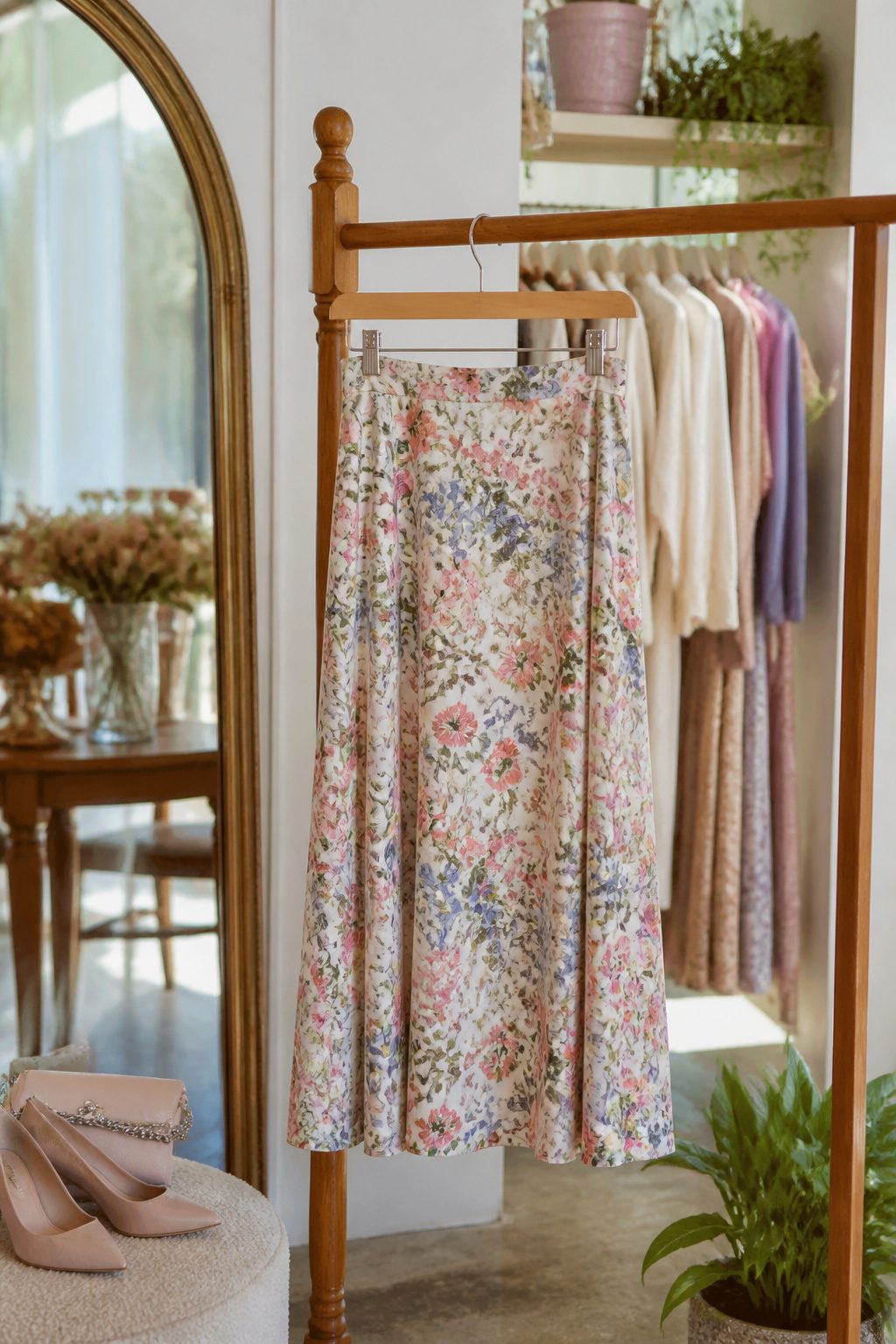
A floral skirt is the piece that lets you bring color into church outfits without worrying about where the line falls. The sources back this up across the board: flowers read as bright and appropriate, not trying too hard.
Length matters more than print size. Midi length, right at or below the knee, covers you sitting and standing. Longer works too, but a maxi needs enough volume that you can walk up aisle steps without hitching it. Too narrow and you shuffle; too full and the skirt wears you.
Scale of the floral is where body shape comes in. Small, scattered prints recede and work well if you are broader through the hip. A larger, bolder flower draws the eye and can balance a narrower frame. The mistake is picking a print that competes with your scale: tiny ditsy florals on a tall frame read junior, oversized blooms on a petite frame can overwhelm.
Pairing is straightforward. A plain top, white or cream, lets the skirt do the work. Add a cardigan if the sleeves are short or the neckline needs covering; this is the layering move that takes the same skirt from Easter through fall. Eyelet and softer yellows feel right for spring services, deeper backgrounds shift the same shape to later months. The sources show this clearly: one bright skirt, three seasons, no extra purchase needed.
11. Long-Sleeve Blouses
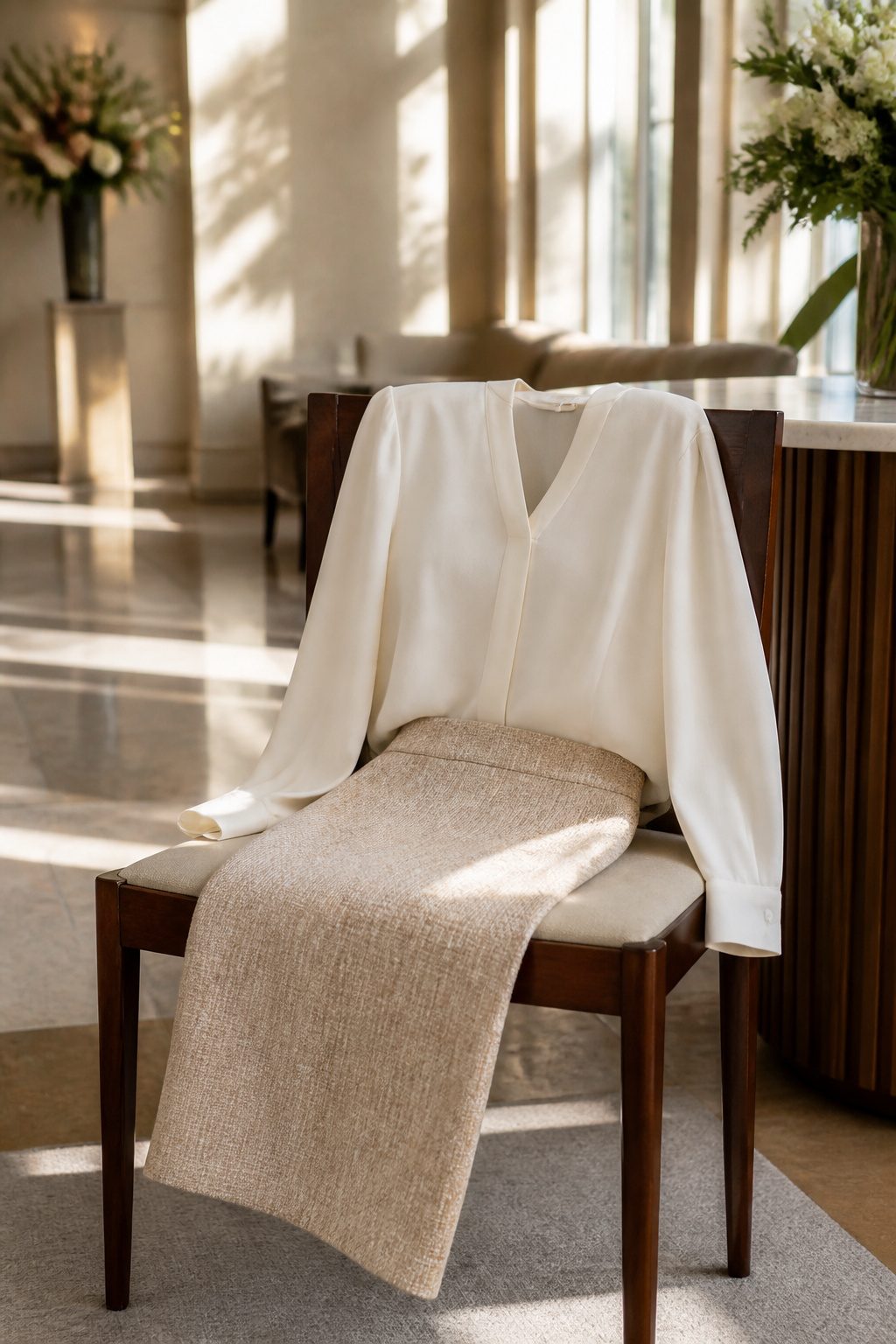
A long-sleeve blouse gives you coverage you can adjust. Push the sleeves to the elbow for a warmer sanctuary, pull them full-length when the AC kicks in, and the whole look stays elegant either way. That adjustability is something short sleeves simply do not offer.
The necklines that read current without crossing into revealing territory are the ones to watch. A soft V or a rounded boat neck frames the face and leaves room for a pendant or a silk scarf without competing for space. Avoid anything that gaps when you lean forward to sign the guest book; the test is whether you would need to keep checking it.
Fabric matters more here than with almost any other church piece. Look for crepe, silk, or a lightweight cotton that drapes away from the body rather than clinging to it. These materials skim rather than outline, and they keep their shape through a full morning of sitting, standing, and greeting.
The tuck is where intention lives. A full front tuck into a mid-rise trouser or A-line skirt defines your waist and keeps the blouse from reading as borrowed. For a softer line, try the half-tuck: front only, with the back left loose. It takes ten seconds and keeps you from looking like you are trying too hard, which, in a church context, is exactly the right balance.
12. Maxi Dresses
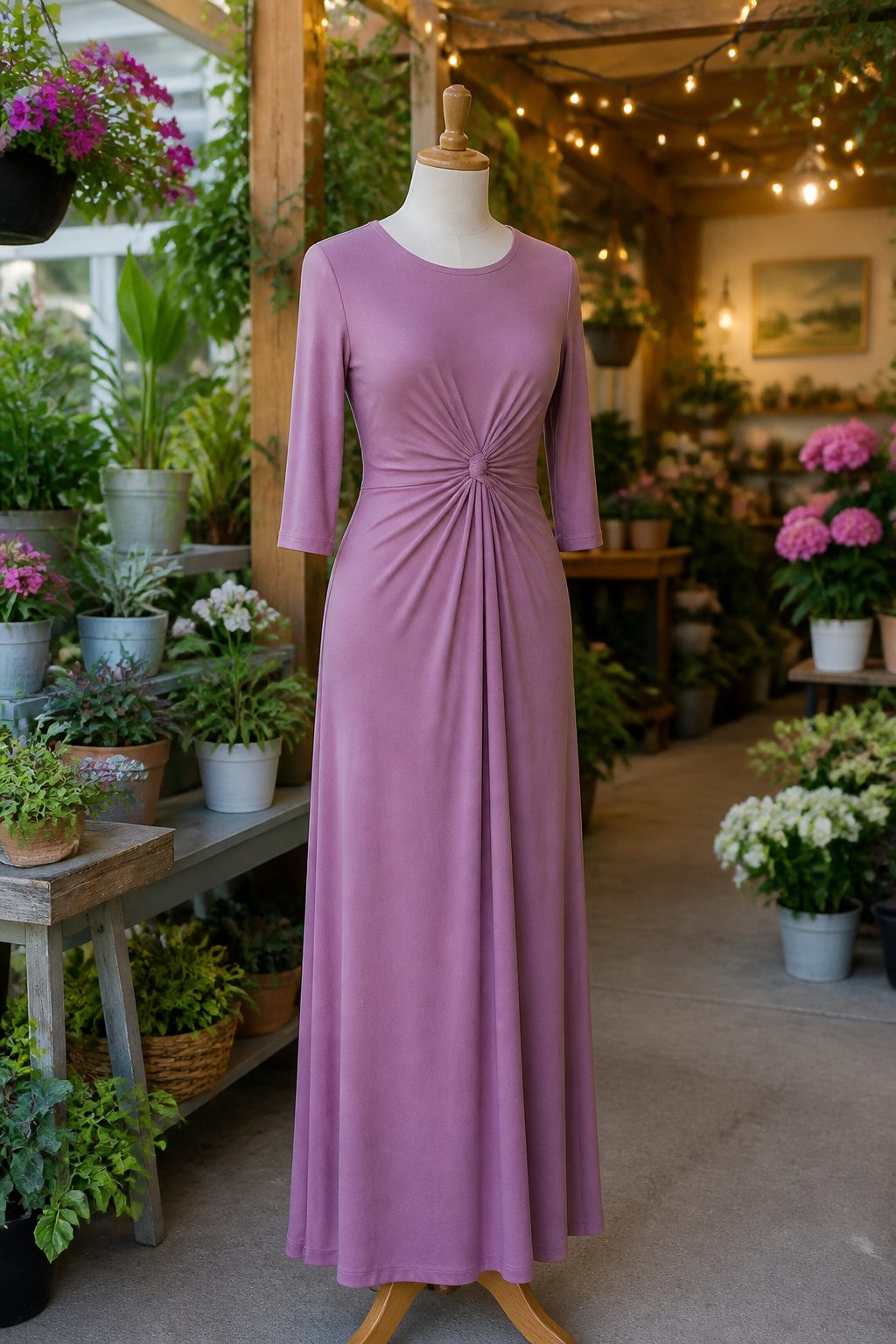
A maxi dress does the whole outfit in one move, which is why it lands on this list. The catch is fit. Waist placement makes or breaks it: an empire seam sits too high on some bodies and creates a maternity effect, while a dropped waist can swallow your shape entirely. Try the dress on with the shoes you will actually wear to church, not the ones you happen to have on in the fitting room. A hem that skims the floor in sneakers bunches in heels, and a length that is perfect with a low heel drags sad and dirty in flats.
Sleeves matter for coverage without bulk. A three-quarter sleeve reads polished in air-conditioned sanctuaries; a cap sleeve can feel too bare in conservative congregations, while a full sleeve in lightweight fabric solves both problems.
Prints separate Sunday from vacation fast. A busy tropical or abstract floral reads resort; a small-scale geo, a muted stripe, or a solid in navy, burgundy, or forest green looks intentional for worship. If you own one maxi that works for both, it is probably the solid color with the better fabric weight, not the louder pattern.
13. Tailored Jeans With Blouses
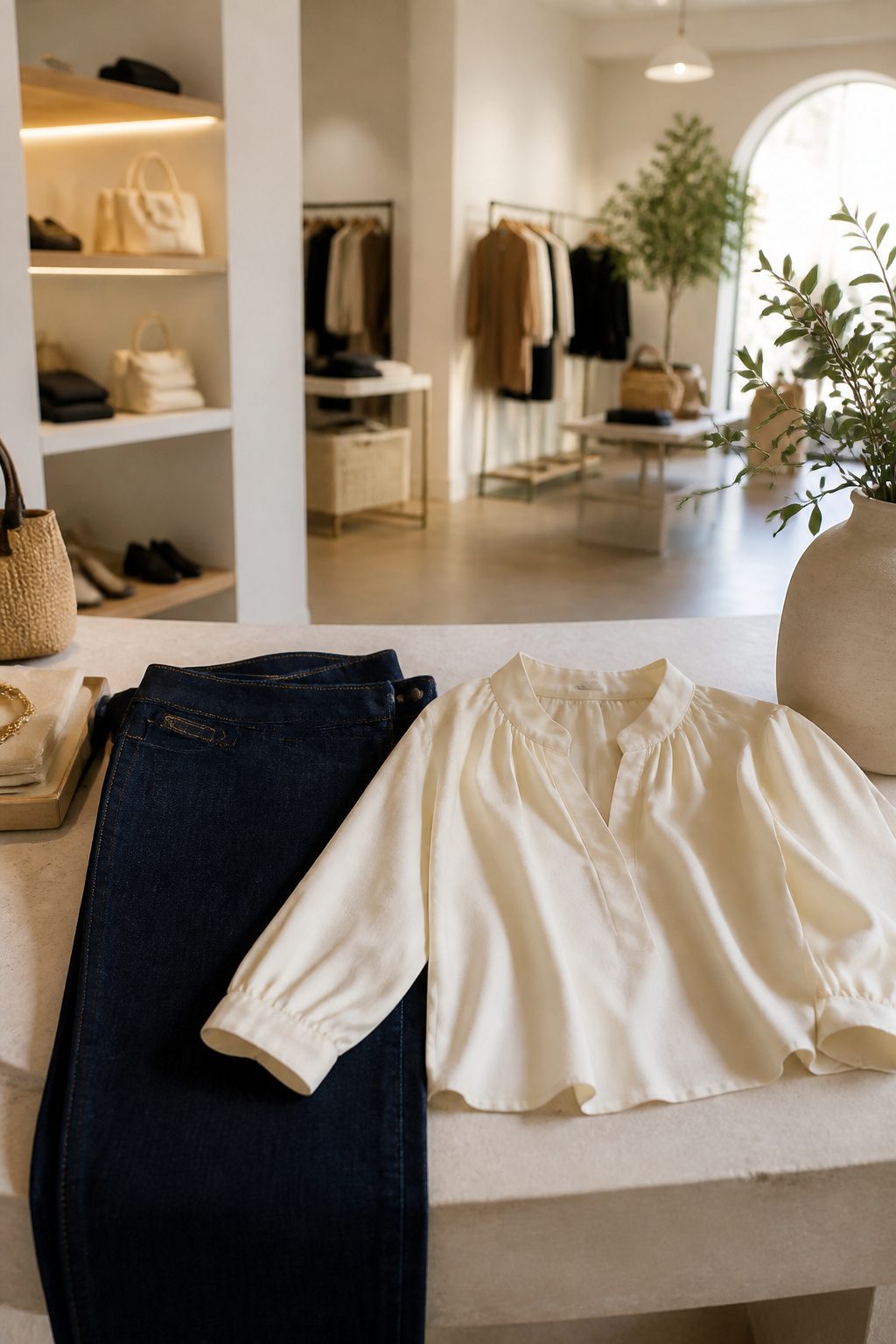
The wash matters more than the cut. Dark indigo or a clean white denim reads intentional where a faded weekend wash looks like you grabbed what was on the chair. For the leg, a flare jean does the heaviest lifting: the silhouette widens at the ankle and the eye reads it as dressy before anything else. A straight leg works if the hem hits at the ankle bone and the fabric has no stretchy sag at the knee by noon. Skip the rips entirely; distressing is the line between casual Friday and Sunday morning, and it is not a close call.
The blouse does the actual elevation. Choose a fabric with some weight: silk, a crisp cotton poplin, or a fine-gauge knit that does not cling. Sleeves should reach at least to the elbow, and a neckline that covers the collarbone keeps the look grounded. Tuck the front loosely so the waistband shows; it signals you thought about proportions. A pair of nude heels or a simple sandal finishes it, and you have an outfit that works past the parking lot.
14. Modest Church Clothing With Heels
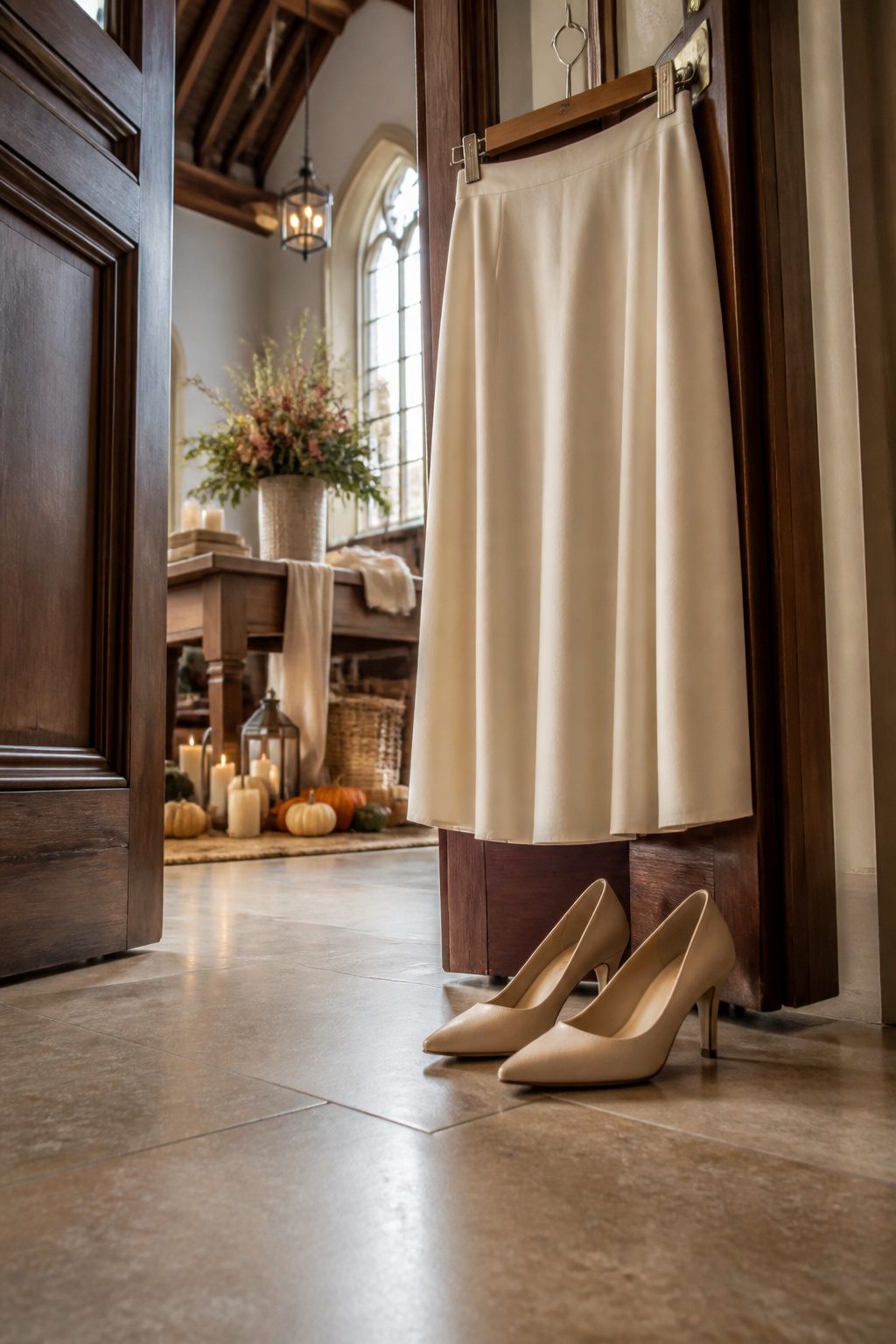
Heels pull modest clothing out of the "dressed because I had to" zone and into territory that reads as intentional. The shift is posture, line, and the way a midi skirt suddenly has geometry rather than just fabric. A two-to-three inch heel is the ceiling for most church mornings if you are staying through coffee hour or standing for any length of fellowship. Anything taller looks like you are borrowing an occasion that does not belong to Sunday morning.
Block heels and short kitten styles carry the look without the wobble that turns modest dressing into costume. A pointed toe under a maxi lengthens the whole silhouette; a rounded toe with a midi keeps the proportion from going severe. The mistake is treating the shoe as the afterthought it often becomes. Slingbacks that slide, straps that cut, or a stiletto clicking on tile during the quietest prayer: these are choices that announce themselves instead of supporting the outfit. Match the heel to the hem weight, not the hem length alone. A heavy crepe midi needs a heel with some substance; a flowing maxi can take something finer, but not so fine that you sink into grass on the church lawn.
What Modesty Means at Your Church
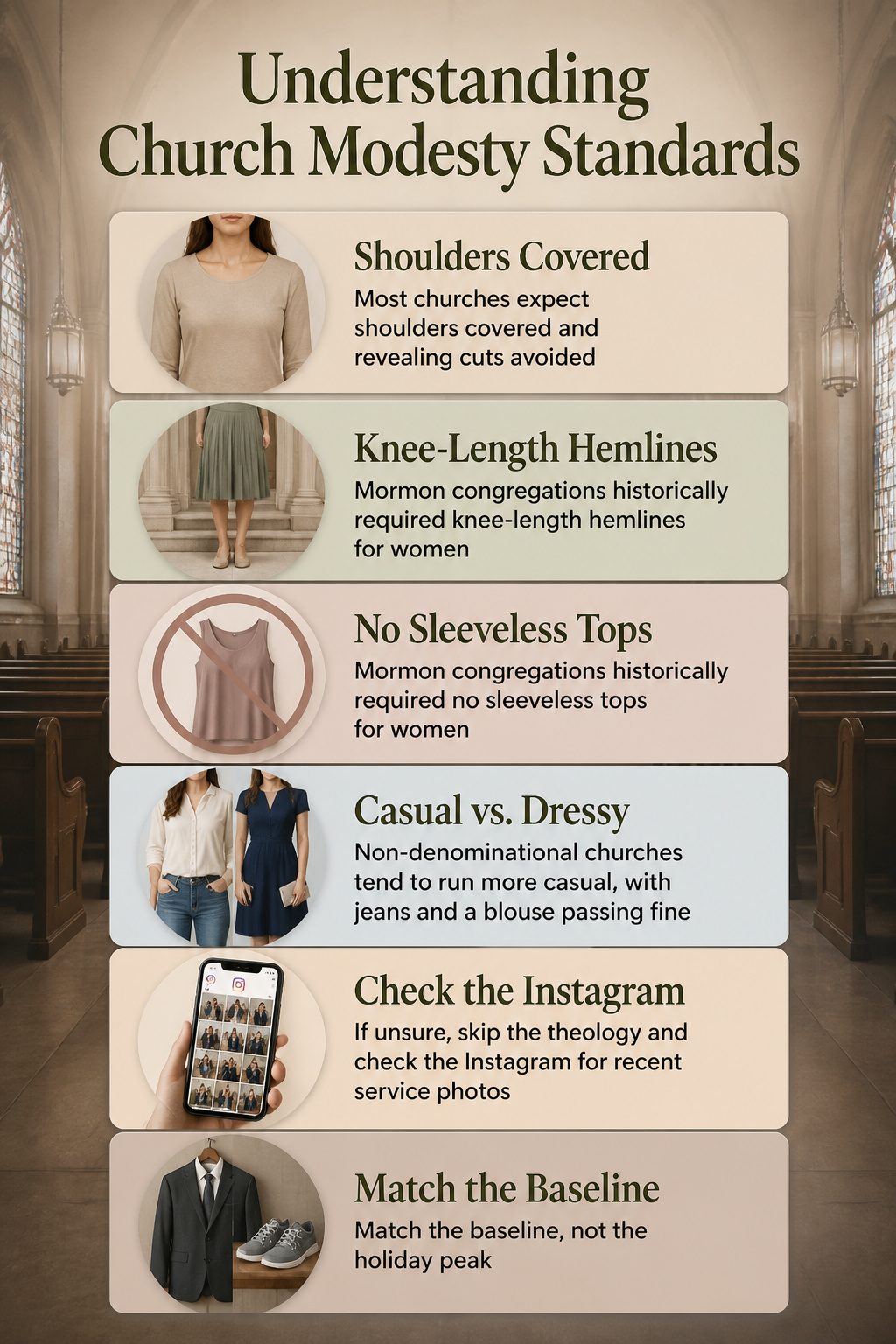
Most churches expect shoulders covered and revealing cuts avoided, though the gap between what your church considers revealing and what the church down the street does can be wide. Mormon congregations, for instance, historically required knee-length hemlines and no sleeveless tops for women, while many Baptist, Catholic, Methodist, and Presbyterian services lean dressier overall. Non-denominational churches tend to run more casual, with jeans and a blouse passing fine.
If you are unsure where yours falls, skip the theology and check the Instagram. Most churches post photos from services; scroll a few weeks back and note whether the women are in dresses or in dark denim. Some websites list dress codes explicitly, though most operate on unwritten rules that are easier to read from images than from a welcome-page paragraph.
The mistake is treating every Sunday like Easter. Many people do dress up for Easter Sunday even at casual churches, but showing up in a full suit every week at a church where the pastor wears sneakers marks you as out of touch, not respectful. Match the baseline, not the holiday peak.
Casual or Formal: Reading the Room
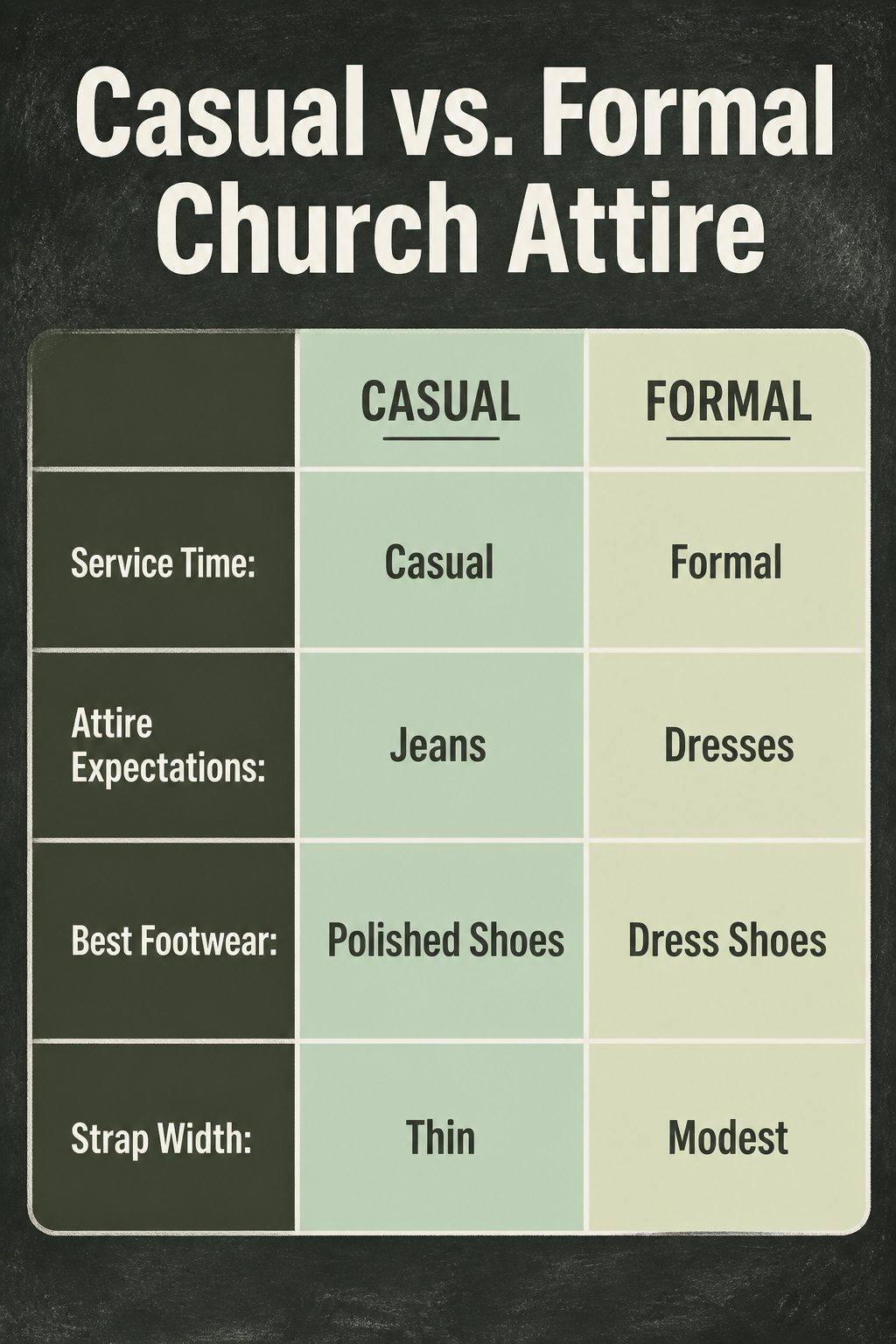
The quickest read on a church’s dress code is the service time. Saturday evening services tend to run more casual, with jeans passing fine, while Sunday morning usually calls for a step up. If the invitation mentions a specific event like communion or a Fifth Sunday, expect more formality. Some congregations ask for white on First Sunday, and certain denominations still prefer dresses over pantsuits, though that line has softened almost everywhere.
When you are visiting blind, polished shoes and a modest dress are your safest middle ground. You can always remove a blazer if the room is casual; you cannot dress up a graphic tee and distressed jeans you guessed wrong on. The same rules apply to fabric weight and strap width: even at a casual church, thin straps read more revealing than most rooms expect, and athletic wear sits outside the frame entirely.
What convinced me, reading through a dozen accounts, is that the real mistake is letting uncertainty keep you home. One woman showed up to a Methodist service in her Mormon Sunday best and found slacks would have been fine. Another walked into a Midwestern church in leggings and felt right at home. The only actual error is overdressing with judgment, or underdressing without care. If you land slightly overdressed, you read as respectful. Slightly underdressed, you read as distracted. Pick the side you would rather be on.
Accessories That Finish the Outfit
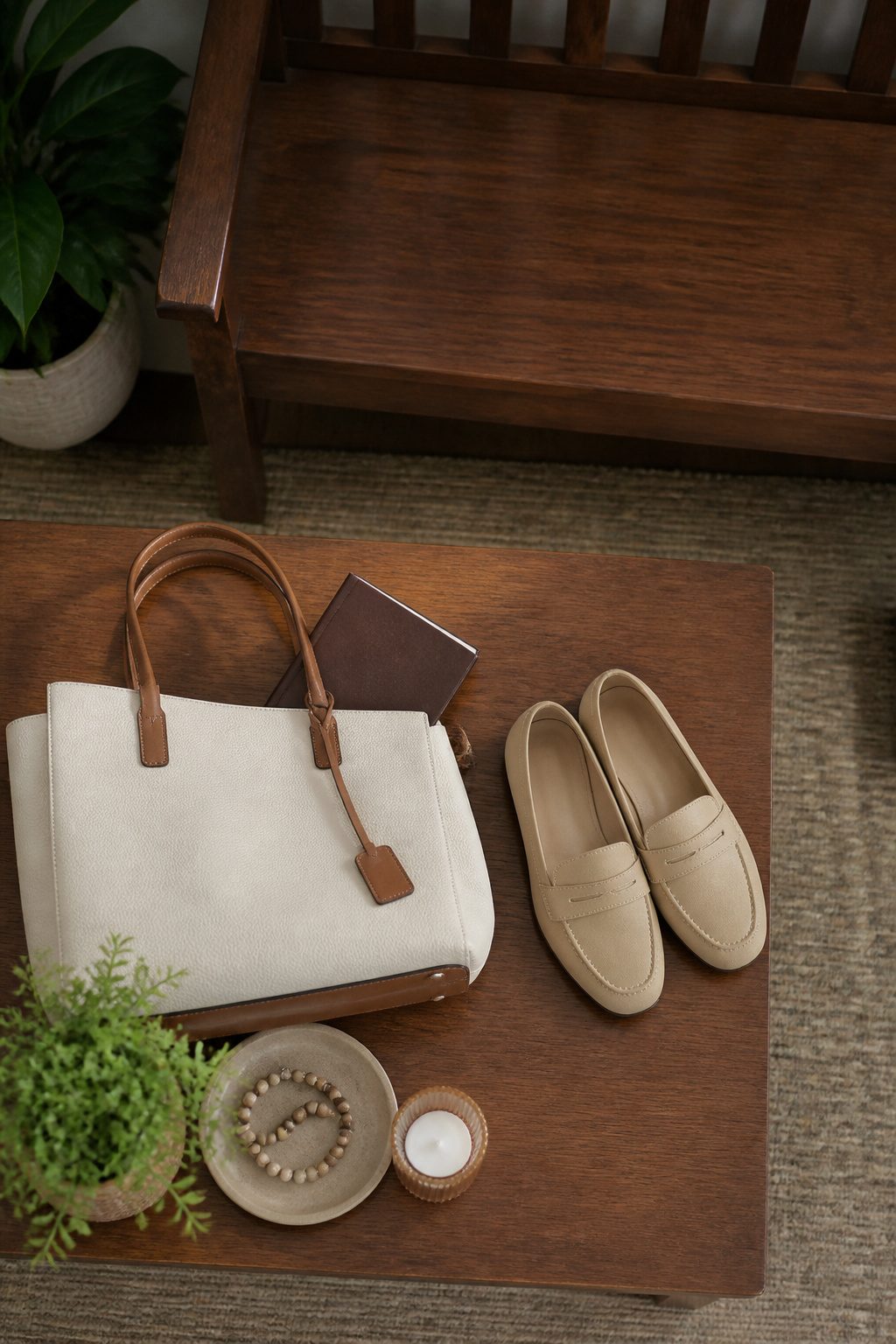
Shoes are where most church outfits fall apart, and usually because of noise rather than looks. Hard sanctuary floors turn every step into an announcement, so a leather sole or a stacked heel that clicks is a mistake you will notice the second the congregation goes quiet. Soft-soled loafers, low block heels, or refined sandals carry you through without the soundtrack. Sandals work fine for summer services if the straps are substantial enough that they do not read as poolwear.
Your bag needs to fit what you are actually carrying. If you bring a Bible, a structured medium tote holds it without the corners dog-earing against a too-small crossbody. If you travel light, a smaller bag keeps the pew beside you clear. Neither choice is more correct; the error is showing up with a clutch that forces you to balance a book on your lap for an hour.
Jewelry should stay still. A long pendant that swings when you kneel, or a stack of bangles that chime during prayer, pulls focus in the wrong direction. One piece with weight, a solid necklace or stud earrings, does the work without the motion. Rhinestone belt buckles and silk scarves add polish if your jacket or dress needs shape or softness, but they are extras, not fixes for a base that already feels off.
Dressing for the Season
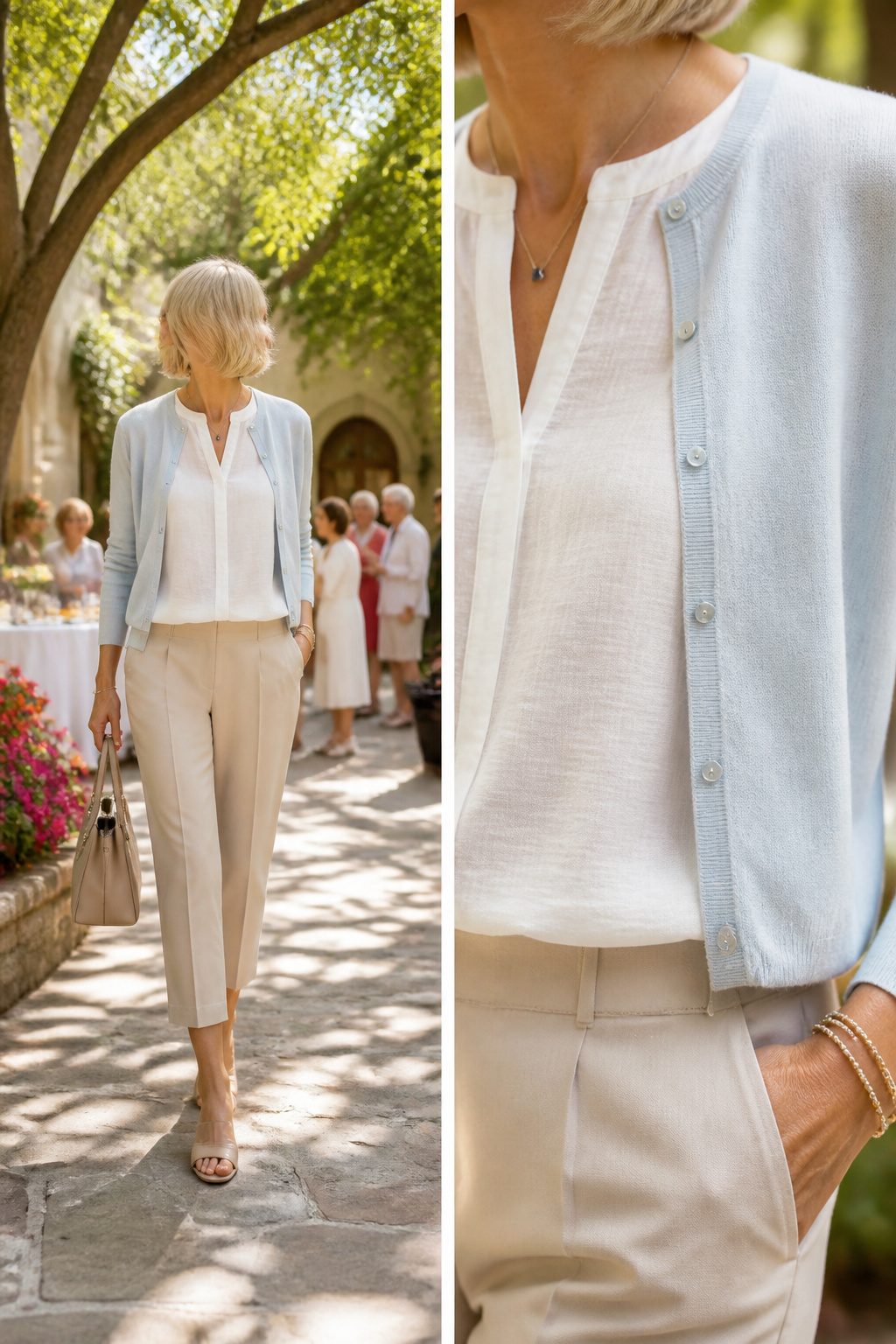
Summer heat in a packed sanctuary means linen and cotton blends that let air move rather than synthetic shells that trap it. A sleeveless shell under a cropped cardigan gives you coverage walking in and relief once you settle; the cardigan comes off, drapes over the bag, and goes back on for coffee hour outside. Winter reverses the logic: a thin merino base layer under a wool skirt suit adds warmth without the boxy silhouette of a heavy coat worn indoors all morning.
Color follows the same practical thread. Pale tones reflect July sun and show sweat less; deeper burgundies, forest greens, and navy absorb January light and hide the inevitable lint of wool and fleece. The mistake is treating either season as an excuse to abandon shape for bulk. A belted coat over a knit dress keeps the line, and that line matters more than the thickness of the fabric holding it.
Frequently Asked Questions
What is an appropriate outfit for church?
It depends on your church, but modest and respectful attire is the baseline. The article covers how expectations vary by denomination, with Mormon congregations historically requiring knee-length hemlines and covered shoulders, while non-denominational churches often accept jeans and a blouse. Your safest bet when visiting a new church is polished shoes and a modest dress, since you can always remove a blazer if the room is casual.
How do I know what size church suit to order when shopping online?
Most designers follow consistent sizing, and product pages include the details you need to choose with confidence. If you are still unsure, customer service teams can offer personalized help with measurements.
Do traditional and modern church suits both work for women?
Yes, both styles are available and appropriate. The article focuses on modern Sunday style with options ranging from structured blazers and wide leg trousers to quilted jackets and clean sneakers, so you can match your outfit to your congregation’s baseline rather than to one fixed standard.
Can I find outfits for special church events as well as weekly services?
Yes, many pieces work for both. A black blazer with Chanel-style flats or a fit-and-flare ponte dress transitions easily from regular Sunday mornings to communions or Easter services. The key is choosing fabrics and cuts that do not crease easily and feel comfortable through coffee hour.