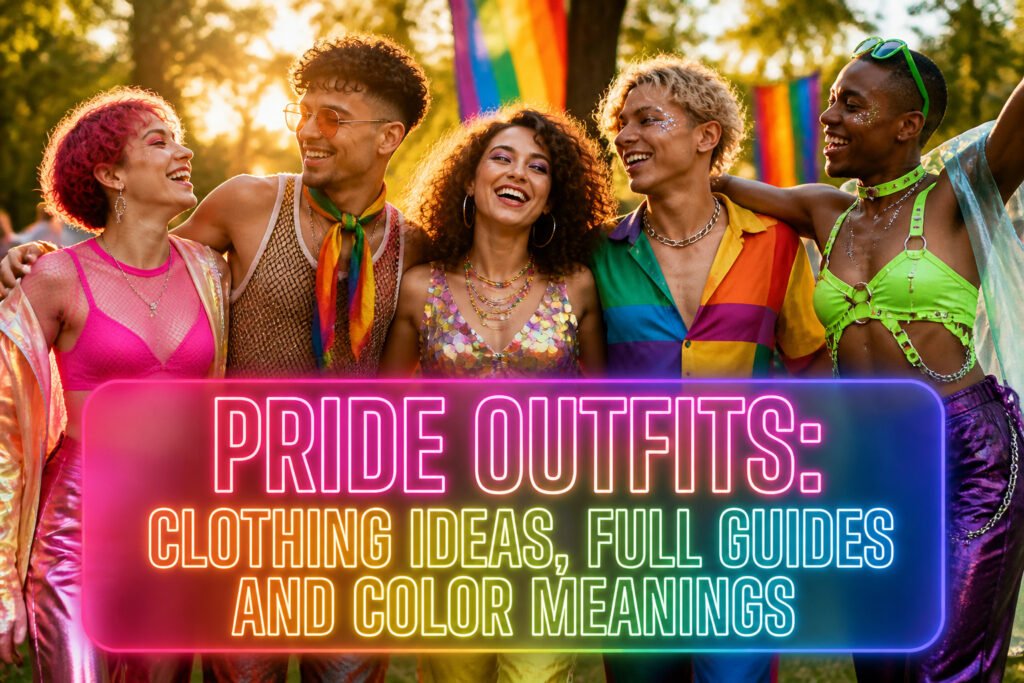
Pride outfits are deliberate combinations of color, cut, and symbolism that carry identity without collapsing into costume. The trap is wearing all six rainbow stripes at once; Gilbert Baker’s 1978 flag was meant to unite, not to be read stripe by stripe across your body. Build around two or three colors instead, and the look holds up from parade noon to after midnight.
Rainbow Colors
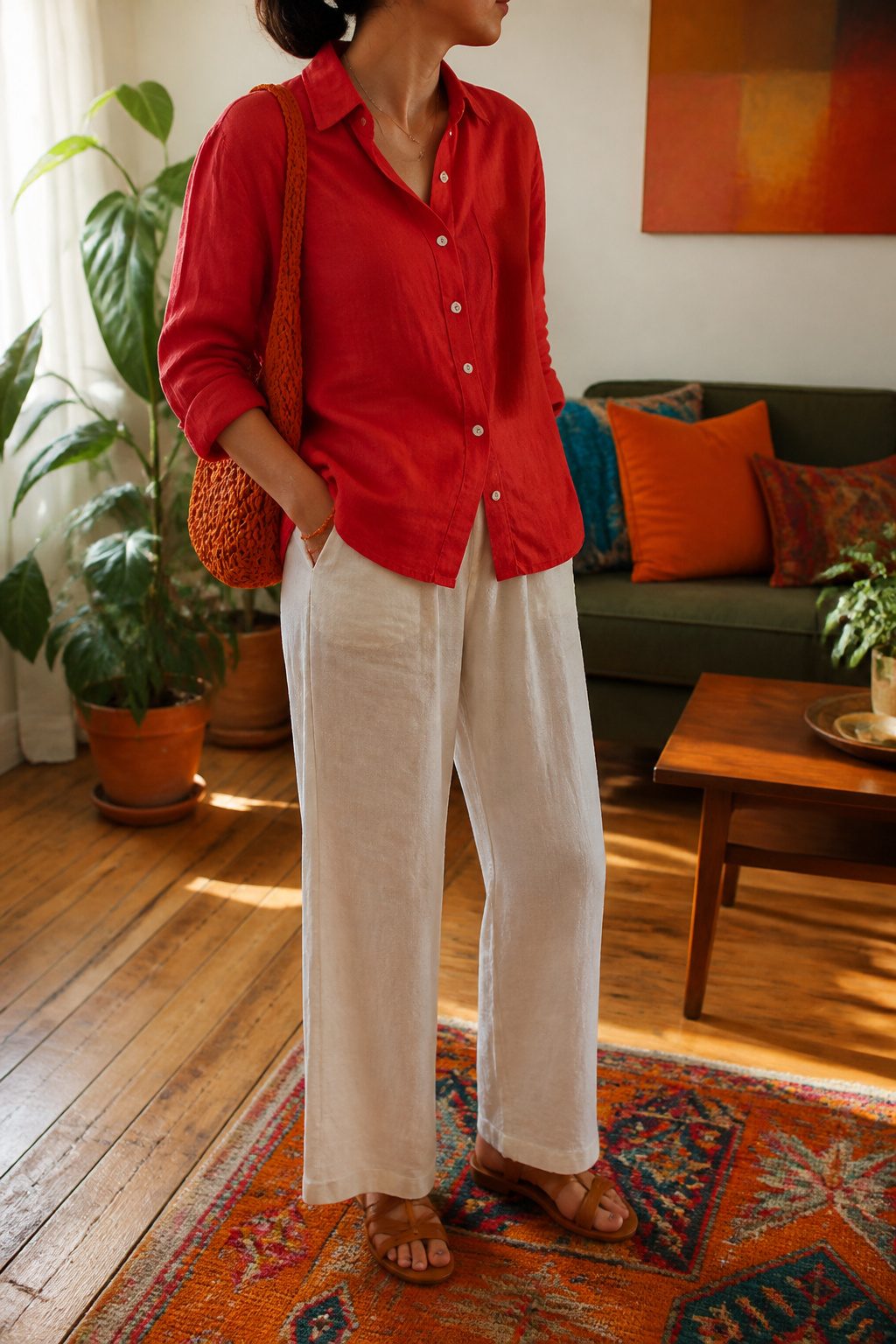
Gilbert Baker designed the original rainbow flag in 1978 with six stripes, each carrying a meaning you can actually use when planning what to wear. Red stands for life, orange for healing, yellow for sunlight, green for nature, blue for harmony, and purple for spirit. The mistake is treating this as a checklist and wearing six separate pieces, one per color. That reads costume, not outfit.
Build around two or three stripes instead. A red linen button-down with orange accessories carries the symbolism without the clutter. Or try yellow as your base, green in a belt or bag, and purple somewhere unexpected like socks or a headband. Blue for harmony works as your neutral: denim, chambray, a navy blazer. The flag was meant to unite, not to be read stripe by stripe across your body.
Casual Chic
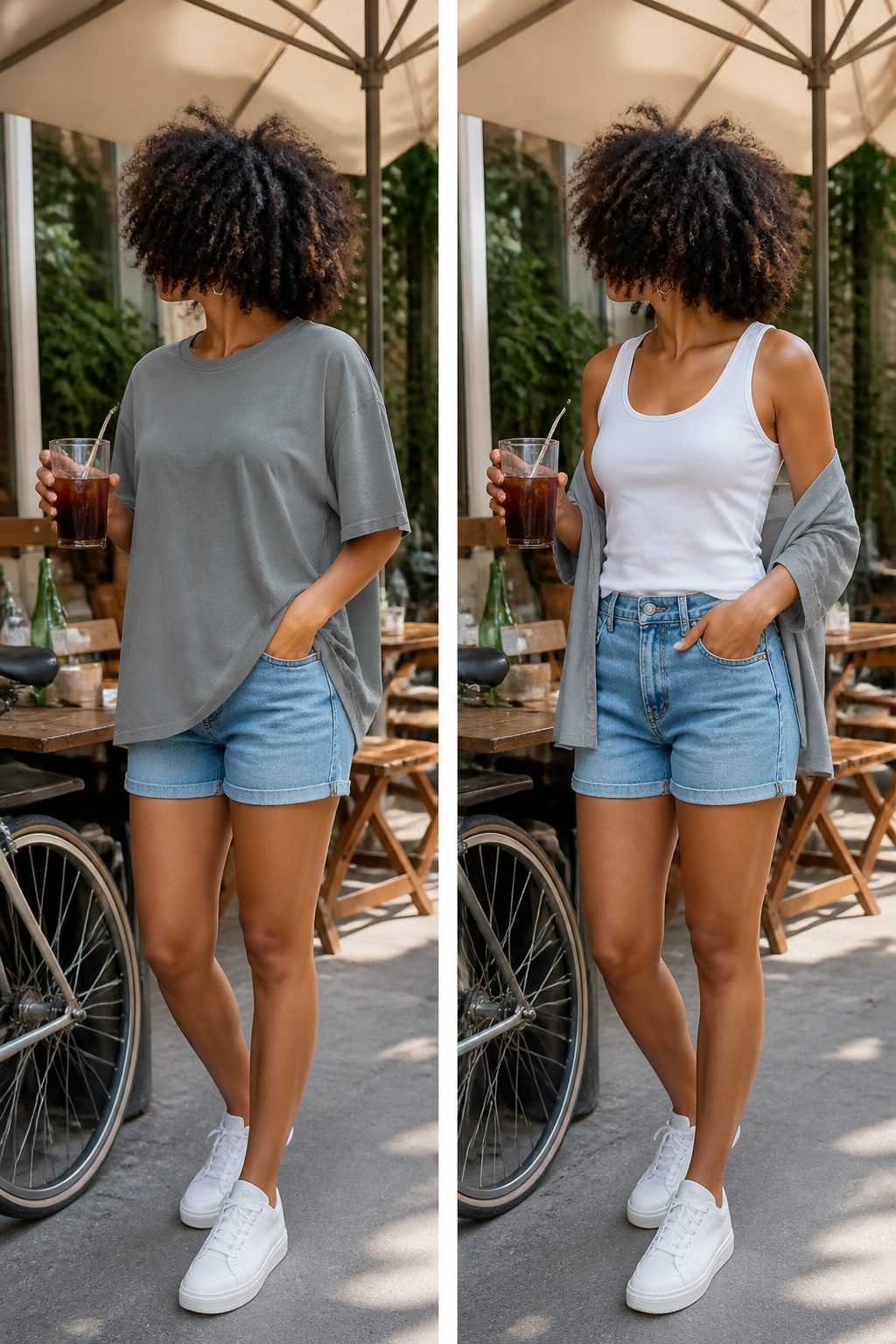
A cotton-blend tank top with denim shorts or cropped jeans handles the parade heat without looking thrown-together. Layer an oversized tee over a collared shirt with skinny jeans when the evening cools, and the same base outfit shifts from afternoon to after-party. Hoop earrings and clean sneakers finish either version without extra luggage. Moisture-wicking fabrics matter more than most people think: fifteen blocks of marching in June humidity turns a cute cotton shirt into a soggy regret if it is not pulling sweat off your skin. The trick is choosing one or two pieces that read as intentional even when accessories change. That oversized tee works at noon with the collar popped out for structure; at night, swap the sneakers for boots and add the jewelry you were carrying in your bag anyway.
Graphic Tees
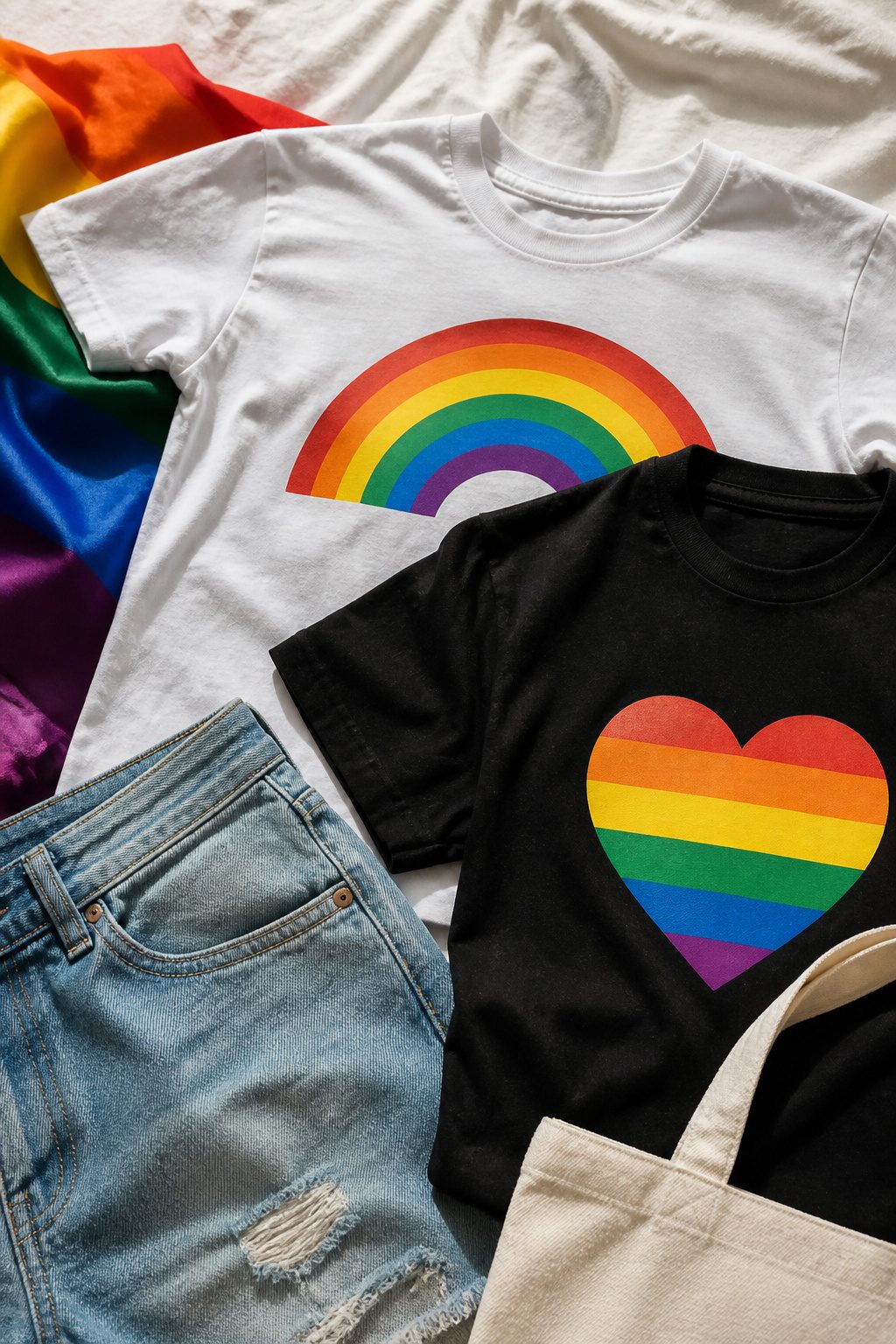
A statement tee still does the heaviest lifting in most pride outfits, and 2025 is pushing that further than the usual slogans. This year, officially licensed character designs are showing up on pride graphic tees with Batman and Pokémon getting the rainbow treatment alongside identity and rights messaging. It sounds like a mismatch until you see it: the familiar iconography does the immediate recognition work, so the pride statement lands without needing to explain itself. For someone building an outfit from pieces they already own, this is the one item that carries the whole theme. Pair it with jeans you have, add one bright accessory, and the look is done rather than assembled. The licensed designs cost more than generic prints, but they also photograph distinctly in a crowd and start conversations with people who would not approach a text-heavy political shirt. Two ways to wear this: lean into the playfulness with bright bottoms, or ground it with neutrals and let the tee read as the single deliberate choice. The neutral route wins if you are walking from a daytime event into evening plans without a change of clothes.
Gender-Neutral Apparel
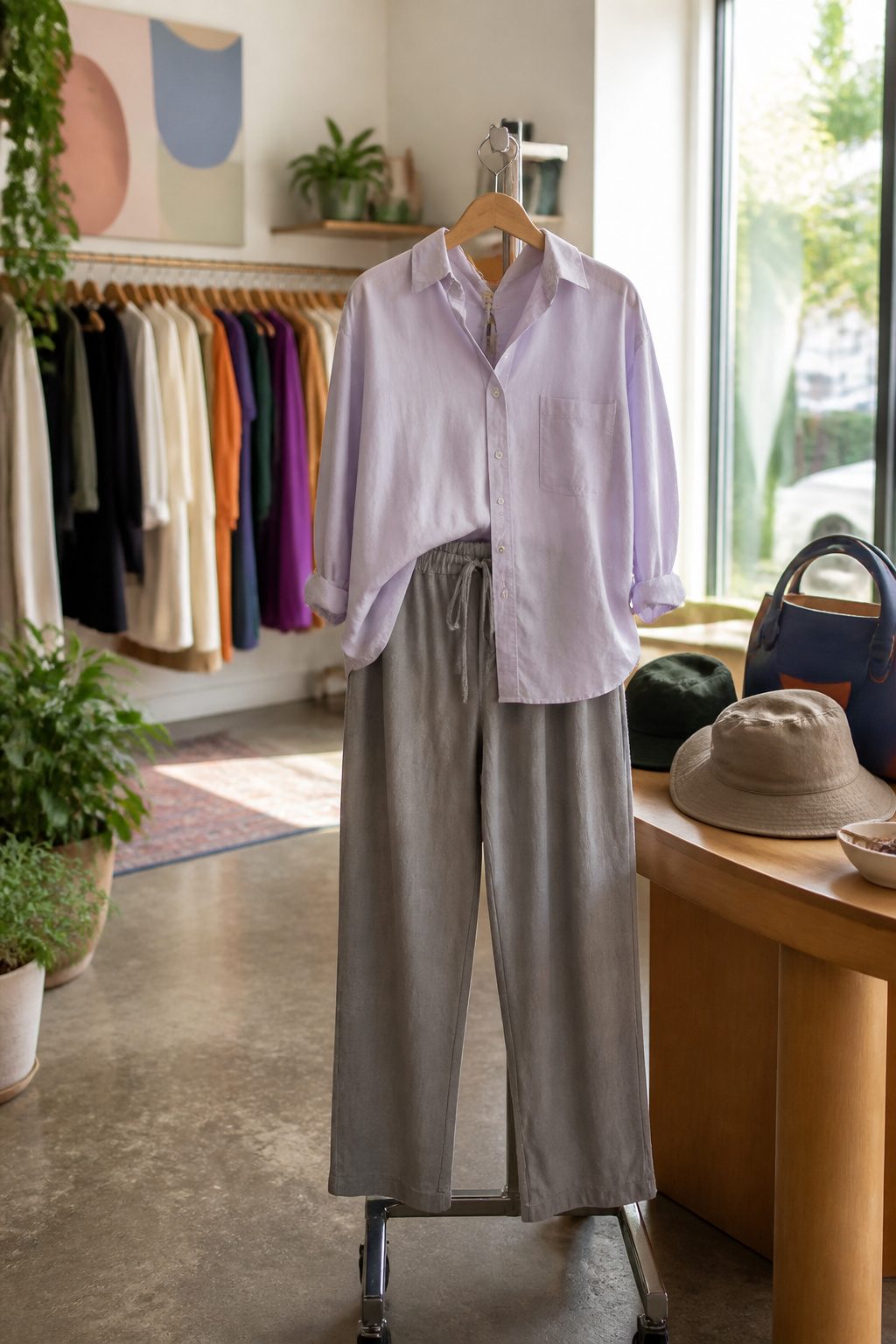
Gender-neutral pride outfits are built around adjustable waistlines, relaxed shoulders, and versatile cuts that work across body types rather than forcing you into traditional masculine or feminine silhouettes. The 2025 collections treat this as a filter, not a separate aisle. You are looking for how fabric drapes and where a small adjustment, a cinch or a loosening, creates a cleaner line on your frame. Extended sizing charts that account for different body proportions are the baseline now, not a bonus. Comfort for a full day at a parade or festival comes from durable materials paired with fits that do not bind or gap. Whether you want an androgynous look or something between gendered styles, the same pieces should shift with you.
Retro Vibes
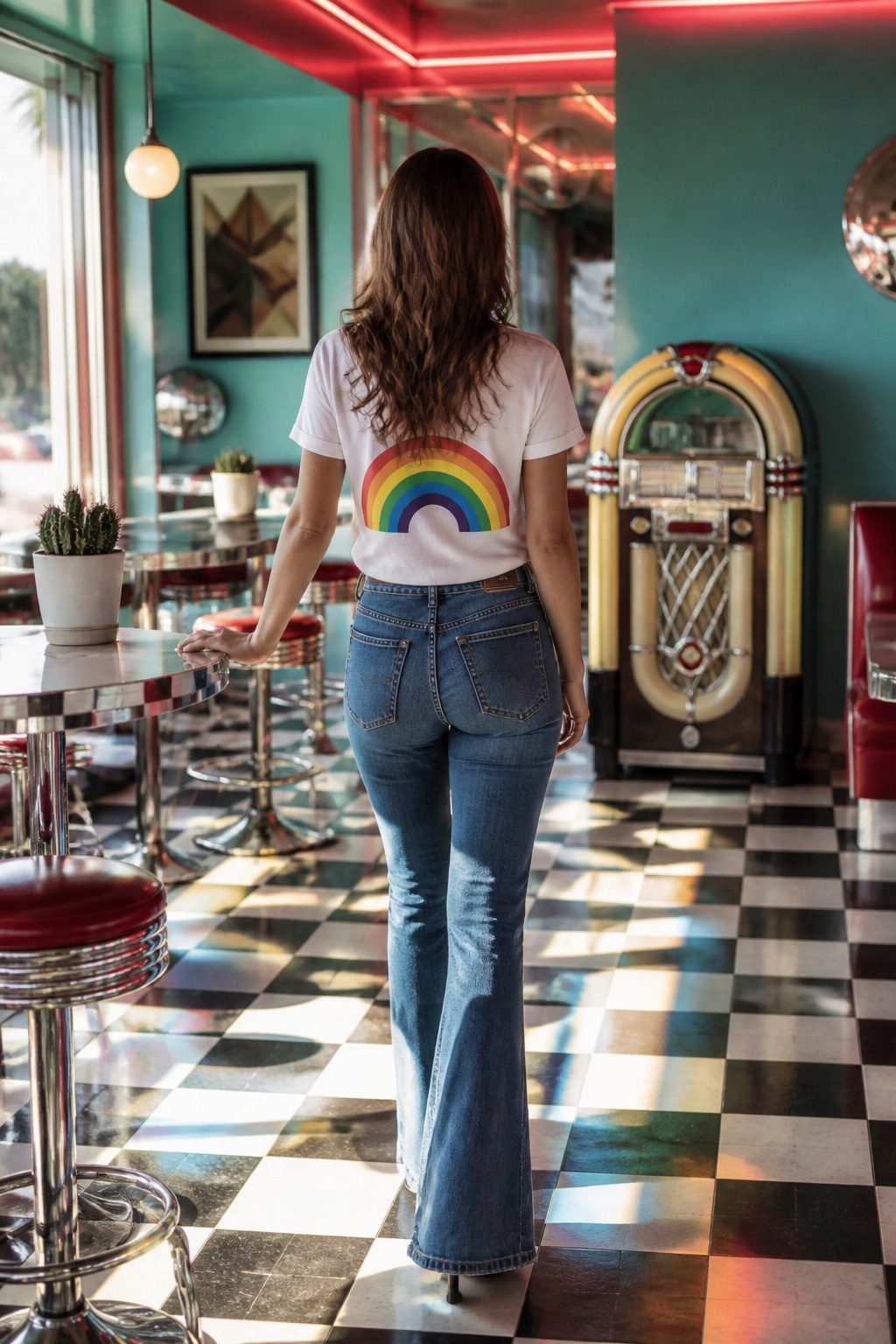
The 1970s keep resurfacing at Pride for a reason that has nothing to do with nostalgia and everything to do with proportion. Flared jeans balance hips visually in a way skinny cuts never managed, and the high waist sits where a parade-day fanny pack or harness actually wants to live. A bold slogan tee tucked in gives the shape its anchor; round sunglasses and a trucker hat finish it without trying to costume the whole decade.
Tie-dye carries the same 70s lineage but works on different bodies and in different crowds. The pattern hides sweat marks after three hours in June sun, and a handmade version, even clumsy, reads as participation rather than performance. Fabric paint or markers let you build a spectrum that actually fits your group rather than buying six identical rainbow shirts.
The real advantage of vintage-inspired Pride dressing is thrift availability. Local shops in most cities price these pieces at $8–15, and the hunt itself becomes part of the day. What breaks the look is overmatching: one period piece per outfit, not head-to-toe retro. The jeans do the work; let everything else be yours.
Statement Pieces
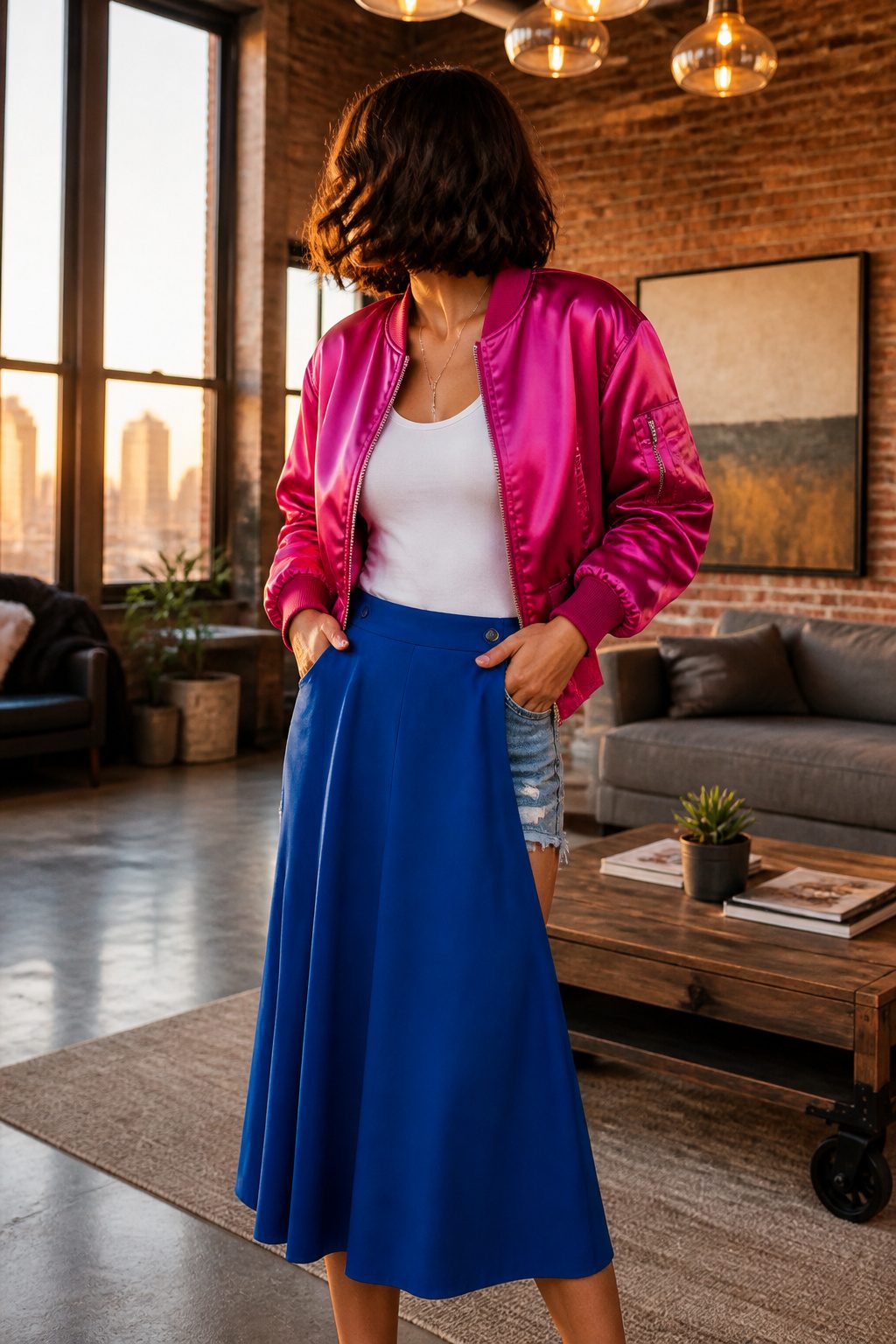
A single jacket can pull together jeans and a tee you already own, or it can sit in your closet because you never found the right moment. Buy the jacket that needs no other purchase to work. A cropped satin bomber in a solid fuchsia or cobalt does this. It reads celebratory over a white tank and cutoffs, but the cut is ordinary enough to wear to dinner a month later. The mistake is the floor-length duster in full rainbow stripe. It demands the right pants, the right shoes, the right confidence, and most people wear it twice.
For bottoms, a structured midi skirt in one loud color, not a pattern, gives you more mileage than print. Tuck in any black or white top you have. The shape does the statement, not the fabric. Wide-leg trousers in a heavy linen blend work the same way. Emerald, tangerine, ultraviolet. One color, clean line, pockets that actually hold your phone. You will reach for them when Pride month is over.
The test is whether you can build three outfits from it without shopping again. If you cannot, the piece is asking too much.
Pins and Patches
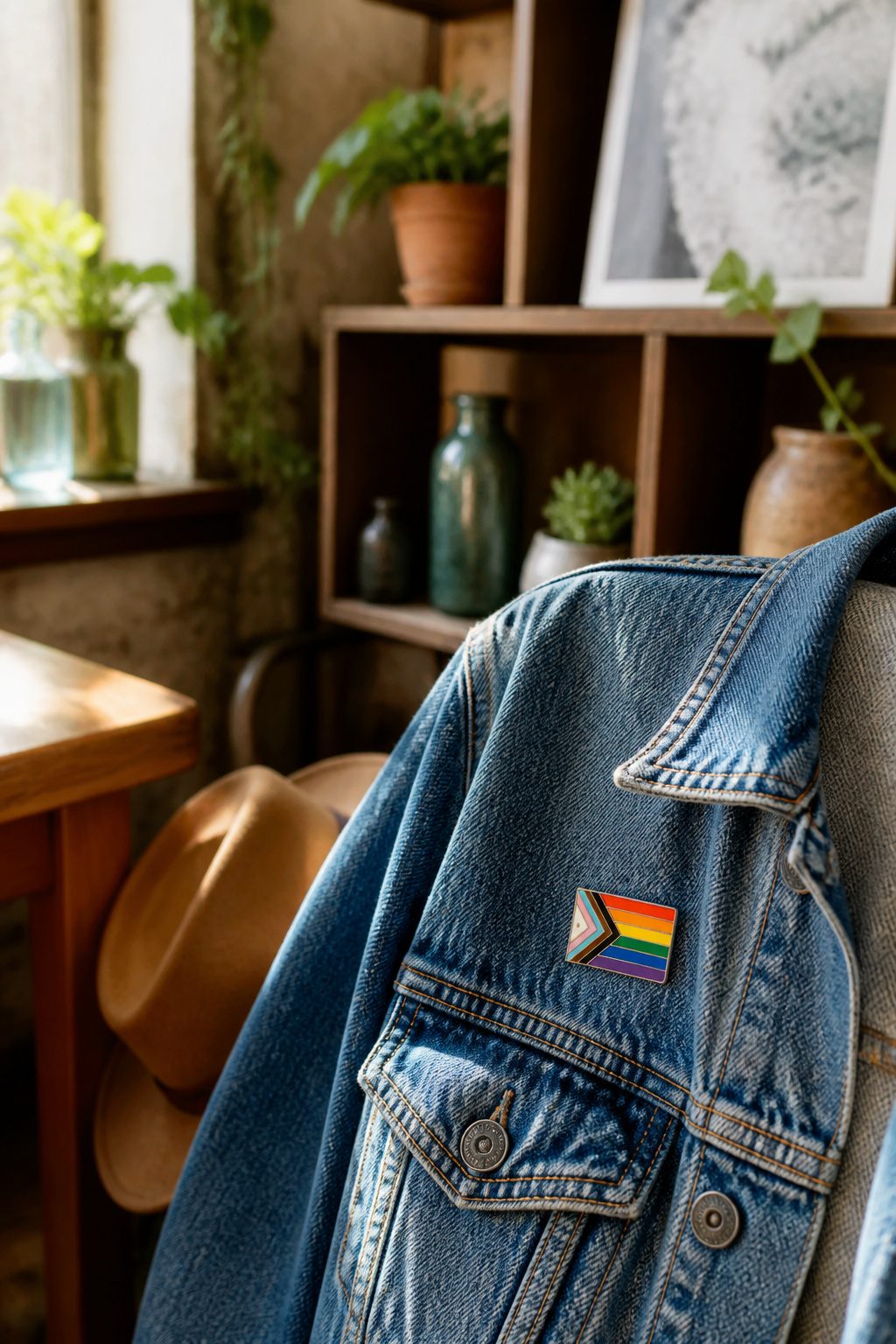
A single enamel pin on a lapel can read as an afterthought if it sits crooked or too low. Place it dead center on the left chest, level with the top button of a blazer or the seam of a shirt pocket, so the eye finds it immediately rather than hunting. For workplace events where a full rainbow feels like too much, a progress pride pin with its trans and POC stripes tucked into the flag does the signaling without shouting. Two pins clustered an inch apart, one flag and one message, look deliberate; one pin floating alone on a blank jacket looks like you grabbed whatever was in the dish by the door. Patches work the same way. Sew or iron them onto a denim jacket’s breast pocket, a canvas tote you actually carry, or the cuff of a chore coat where the placement feels considered. A patch on the back of a jacket reads statement piece. The same patch on the strap of a bag you wear crossbody reads personal habit, something you chose and kept. Either works, but know which one you’re doing.
Bright Patterns
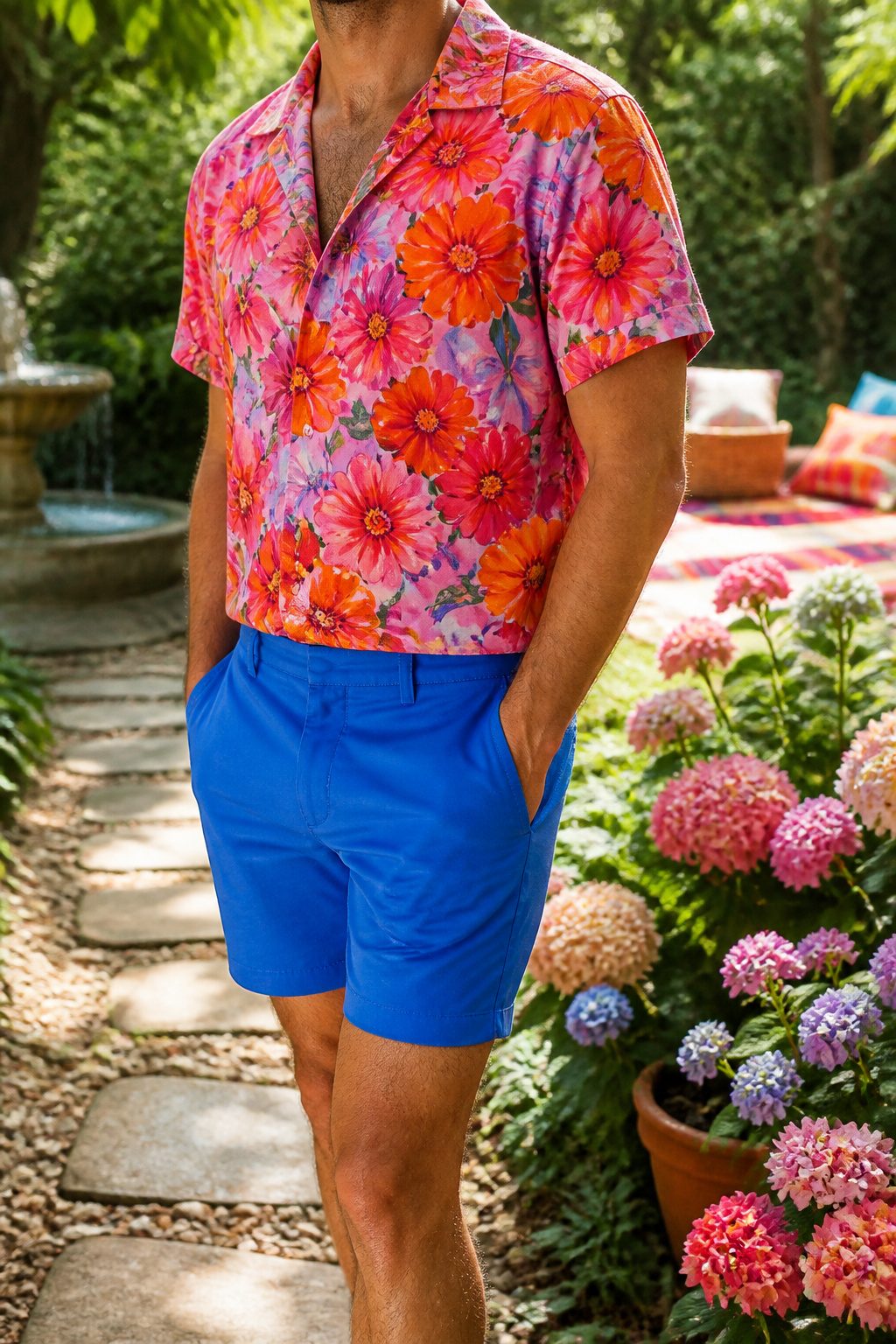
You do not need a full rainbow stripe to read as pride. A floral button-down in saturated pinks and oranges, or a geometric shift in blocks of teal and violet, does the same work with more room to style. The risk is looking like you dressed for three different events at once.
Keep one print dominant and let the other play backup. A large-scale abstract top stays in charge if you pair it with a micro-dot short or a solid bottom in a color pulled straight from the print itself. That second piece is doing the same job as a neutral, just louder. If you want two prints, vary the scale hard: a tight geometric with a loose, hand-drawn floral. Same color family, different visual rhythm. Sequins, wigs, and full sparkle have their own section this article covers later; for bright patterns, the move is letting the cloth talk while the styling shuts up.
Flash and Flare
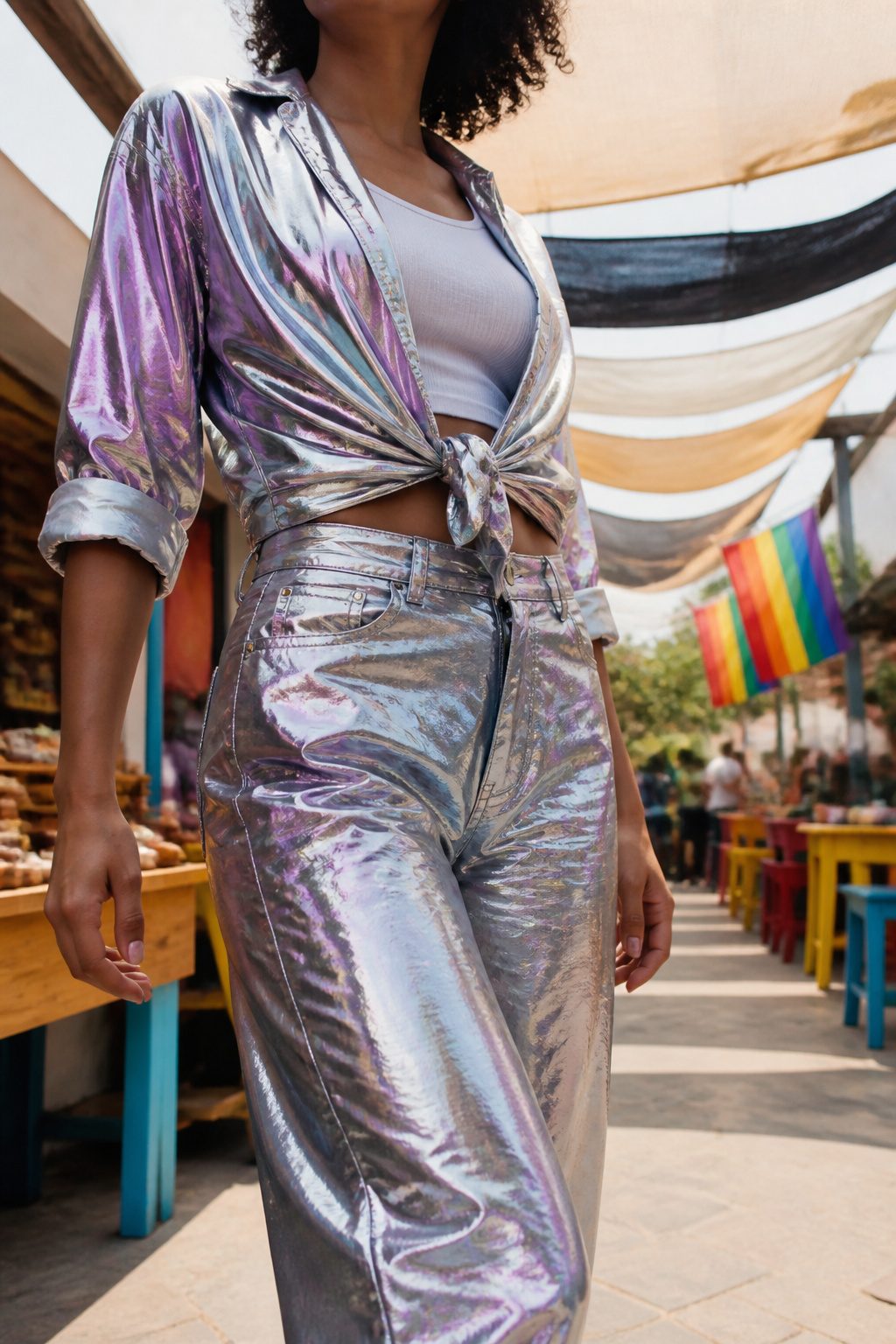
Bright and memorable are not the same thing under parade sun. A sequin bodysuit that reads electric on a float at 8 PM turns into a heat mirror by noon, and metallic fabrics in direct light can throw glare back at every phone pointed your way. The move is to save flash for surfaces that move, like a cropped jacket you can tie at your waist when the temperature climbs, or a bag with a single metallic panel that catches light only in motion.
High-saturation color blocks photograph best when one stripe sits against neutral ground. A transgender flag pocket square against a white tee keeps the palette legible without turning you into a walking color chart. Same for bisexual pride pink, purple, and blue: one color as the main piece, a second as a belt or shoe, and the third maybe just in nail polish. Full rainbow head-to-toe works fine at night. For a daytime picnic, pick two stripes and let them breathe.
DIY It
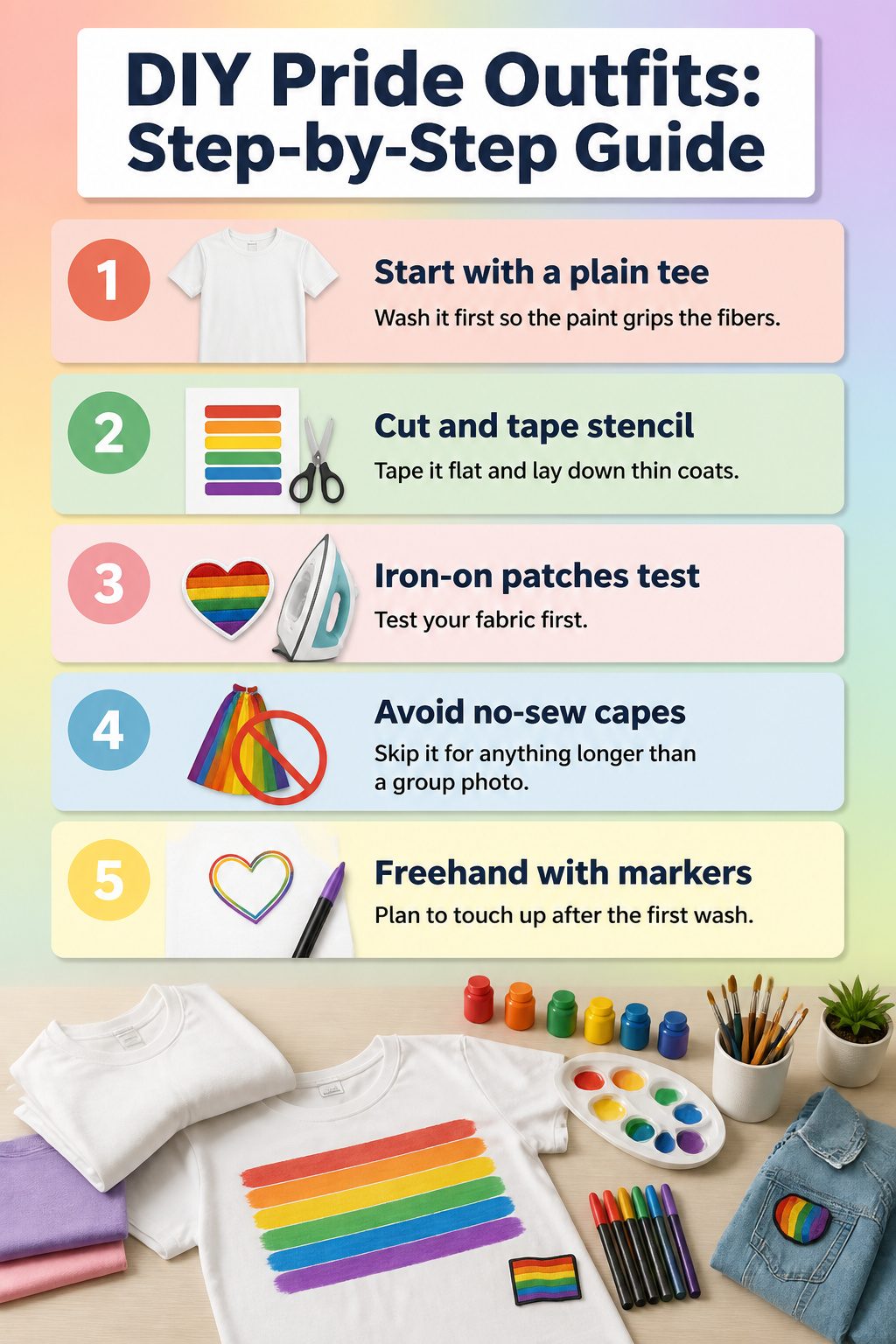
- Start with a plain cotton or cotton-blend tee in white or a solid that matches your flag. Wash it first so the paint grips the fibers instead of sitting on factory sizing.
- For stripes, cut a stencil from cardstock or buy one pre-cut. Tape it flat, load your brush lightly, and lay down thin coats with 20 minutes drying time between layers. Thick paint cracks when you move. Let it cure 24 hours, then heat-set with an iron on the cotton setting for permanent results that survive washing.
- Iron-on patches work faster but test your fabric first. A patch that lifts at the edges three hours into a 12-hour march is not worth the time you saved. Press hard, use a pressing cloth, and reinforce the perimeter with fabric glue if the patch has loose corners.
- No-sew cape construction looks dramatic in photos and falls apart by hour six. The sources that mention it do not claim it holds; skip it for anything longer than a group photo. If you want layers, a thrifted button-down worn open does the same job and stays intact.
- Freehand designs with fabric markers give you more control than paint for small details, but the color sits on top and fades faster. Plan to touch up after the first wash.
Mix and Match
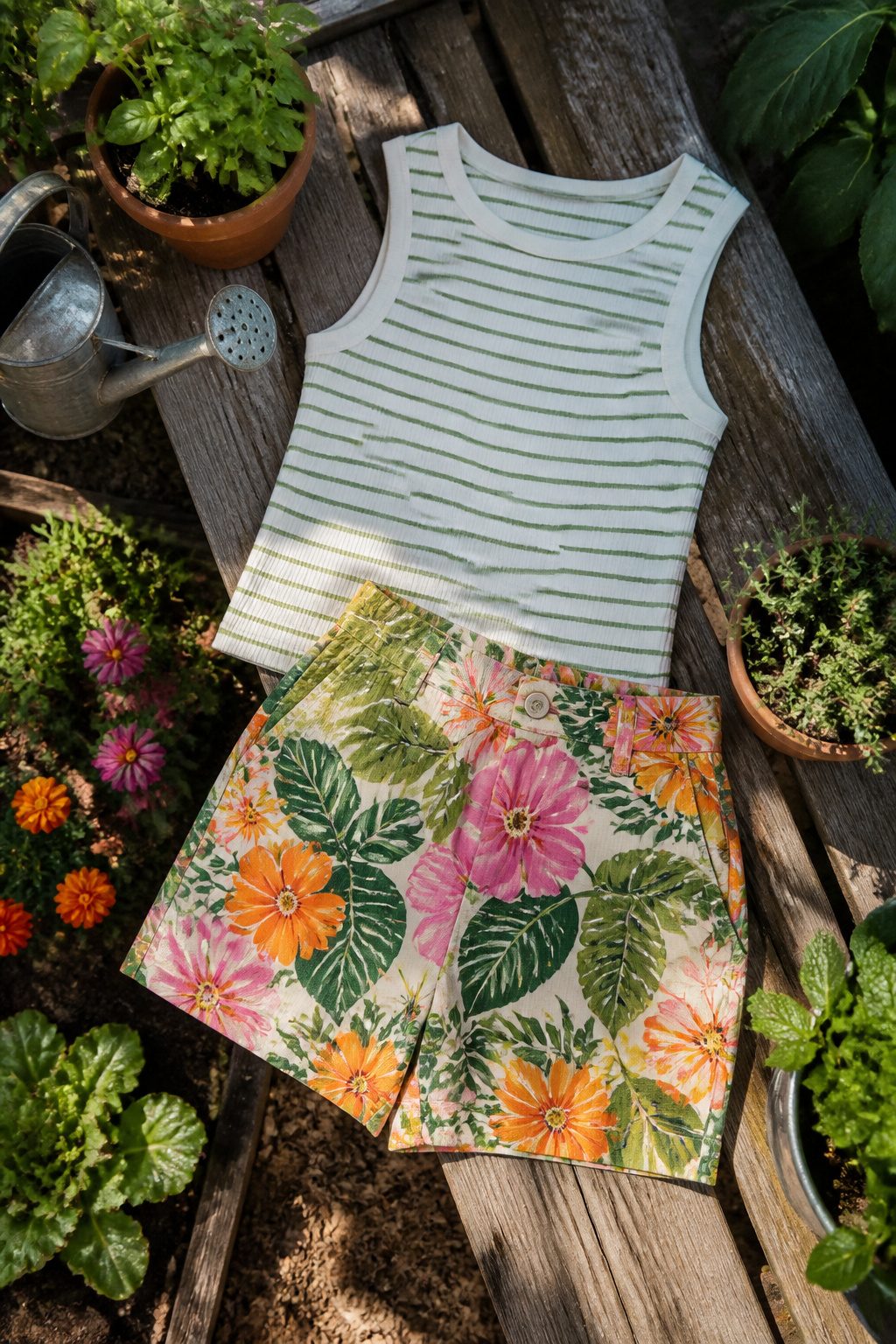
Bold floral print shorts with a striped sleeveless top works because both pieces share a clear color story, not because clashing is the point. The same rule holds for an iridescent top against turquoise velvet, or a fringe tank with a fluffy tulle skirt: one texture leads, the other supports. Stop at two competing elements, or you cross from outfit to costume. A third pattern, a third texture, a third silhouette, and the eye has nowhere to rest. Florals with stripes reads intentional; florals with stripes with polka dots reads like you dressed in the dark. Pick your star, let everything else go quiet, and you have a Pride look that photographs well and still feels like something you’d wear to brunch the week after.
Cool Accessories
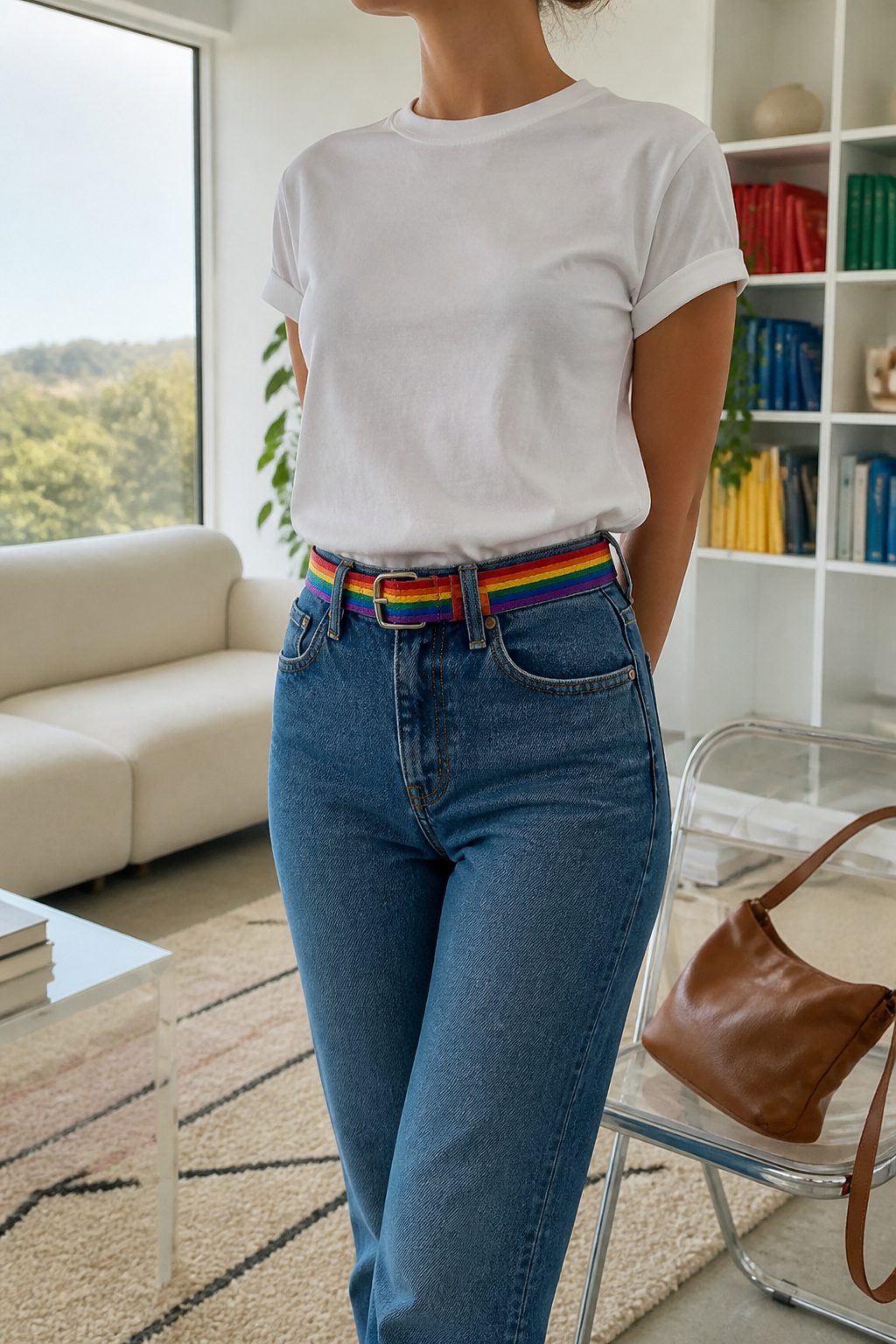
A thin belt in a single rainbow stripe does more for a plain white tee and jeans than a full sequin getup ever could. It marks your waist without turning you into a walking float.
Scarves work the same way. A silk square in the trans flag colors, tied at the neck or looped through a belt, reads intentional rather than costume. The trick is picking one color story and letting the rest of your outfit stay neutral. If your closet runs to navy, black, and olive, a scarf with the bi flag’s pink, purple, and blue picks up where your clothes leave off.
Bags and hats should solve a problem, not create one. A crossbody in a solid bright keeps your hands free for holding signs or a drink. A bucket hat in lavender or mint shades sun without shouting. Before you buy, hold it up to the three pieces you wear most. If it fights with two, skip it.
Bold Socks
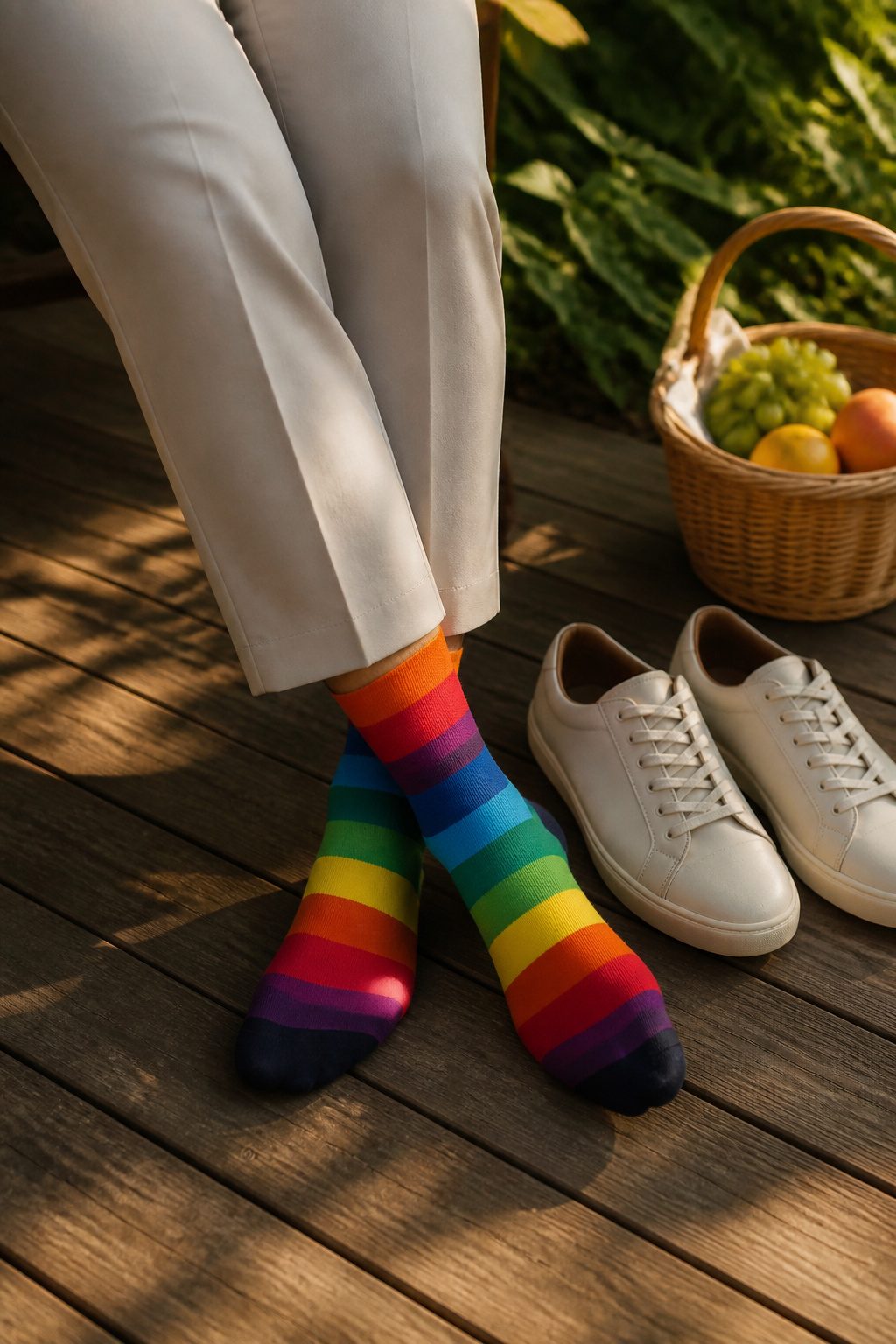
Socks are the first place to start when you want to signal without committing to a full look. A bright stripe at the ankle reads as intentional in shorts, cropped trousers, or a midi skirt with a side slit. In full-length pants that break at the shoe, the same sock disappears, and the effort is wasted. That distinction matters more than the pattern itself.
The mistake is treating bold socks as a default rather than a decision. They work best when the outfit gives them a frame: a neutral shoe, a clean leg line, enough fabric above to balance the noise below. Wear them with sandals and the clash looks accidental, not expressive. The same pair under cuffed jeans with white sneakers becomes the whole point.
Let them show on purpose, or skip them entirely. A half-reveal, a flash only when you walk, is enough. The goal is someone noticing, not you explaining.
Vibrant Shoes
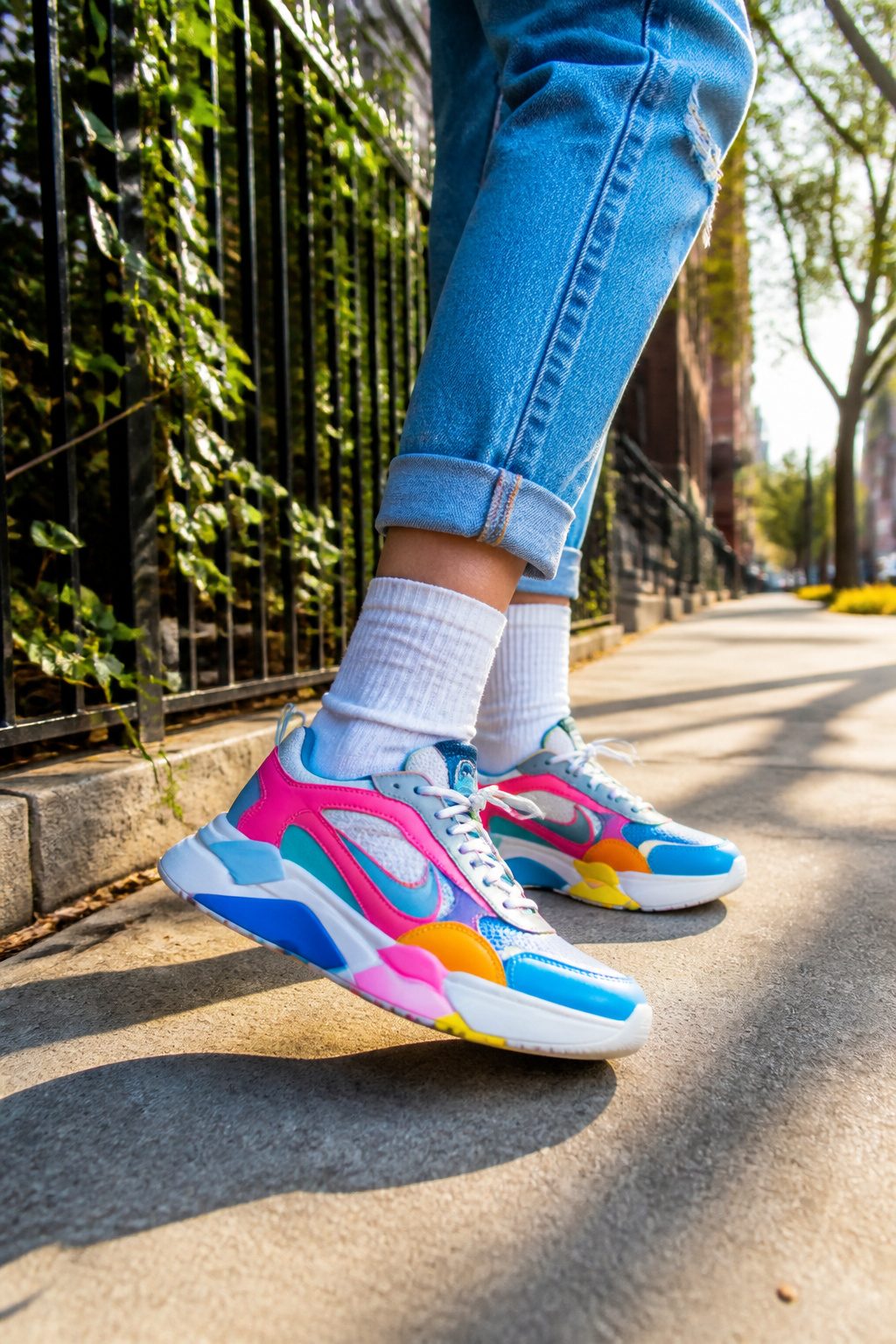
The wrong shoe choice at Pride usually reveals itself somewhere between the third hour and the fifth parade block. That is when a platform that looked dramatic at home becomes a blister factory, or a cheap flat sole turns concrete into something that punishes your lower back. Comfort is not the opposite of statement; it is what lets the statement last.
If you are going to walk all day, look for a cushioned footbed with real arch support, not just a padded insole that compresses by noon. Chunky sneakers in saturated color blocks do the work without the sacrifice. Bright leather loafers or oxfords hold up better than canvas if rain hits, and they photograph sharper against pavement.
A heel can work, but only if you have tested it on uneven ground. Cobblestone, grass, and metal grates exist in most Pride routes. Wedges distribute weight more evenly than stilettos, and a block heel under three inches keeps you stable in a crowd. The mistake is buying something the morning of and trusting the mirror over a two-hour test walk around your neighborhood.
Paint It On
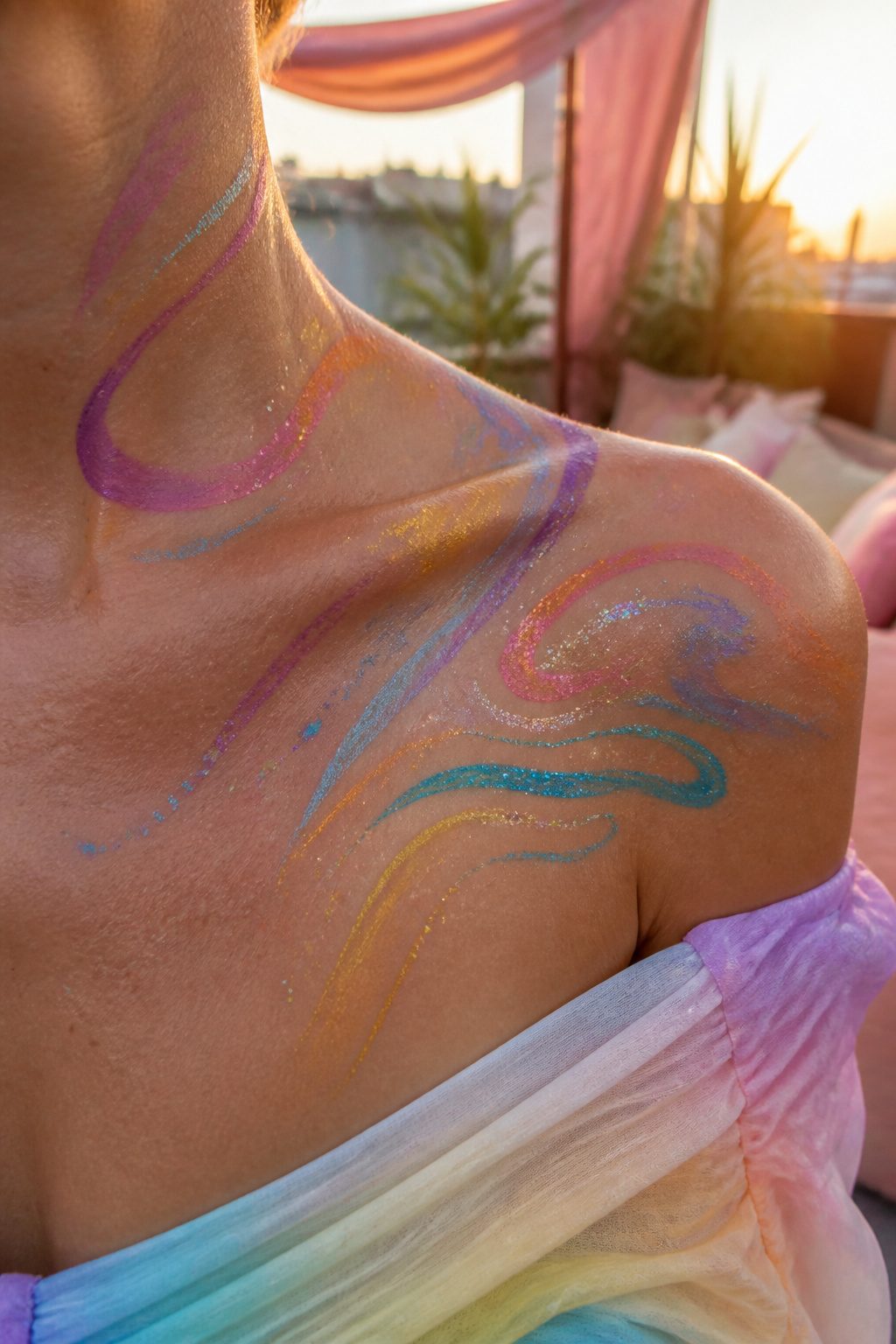
Body paint reads as an outfit at a distance, but up close it is skin care, laundry risk, and bathroom logistics rolled into one. For a two-hour rooftop party, a single accent, a stripe across the collarbone or a small flag at the wrist, holds up fine with a setting spray. You dance, you sweat, you go home. An eight-hour parade is different. Full-coverage paint cracks at the joints, transfers to every shared Uber seat, and demands a touch-up kit you probably will not want to carry once the sun hits. What convinced me, reading through a dozen of these accounts, is that the people who last the day treat paint as jewelry, not clothing: a few deliberate inches that frame a real tank or shorts. If you do go larger, plan the fade. Paint thins at the inner arm and the waistband first; those are your check points, not the center of your chest.
What the Colors Mean
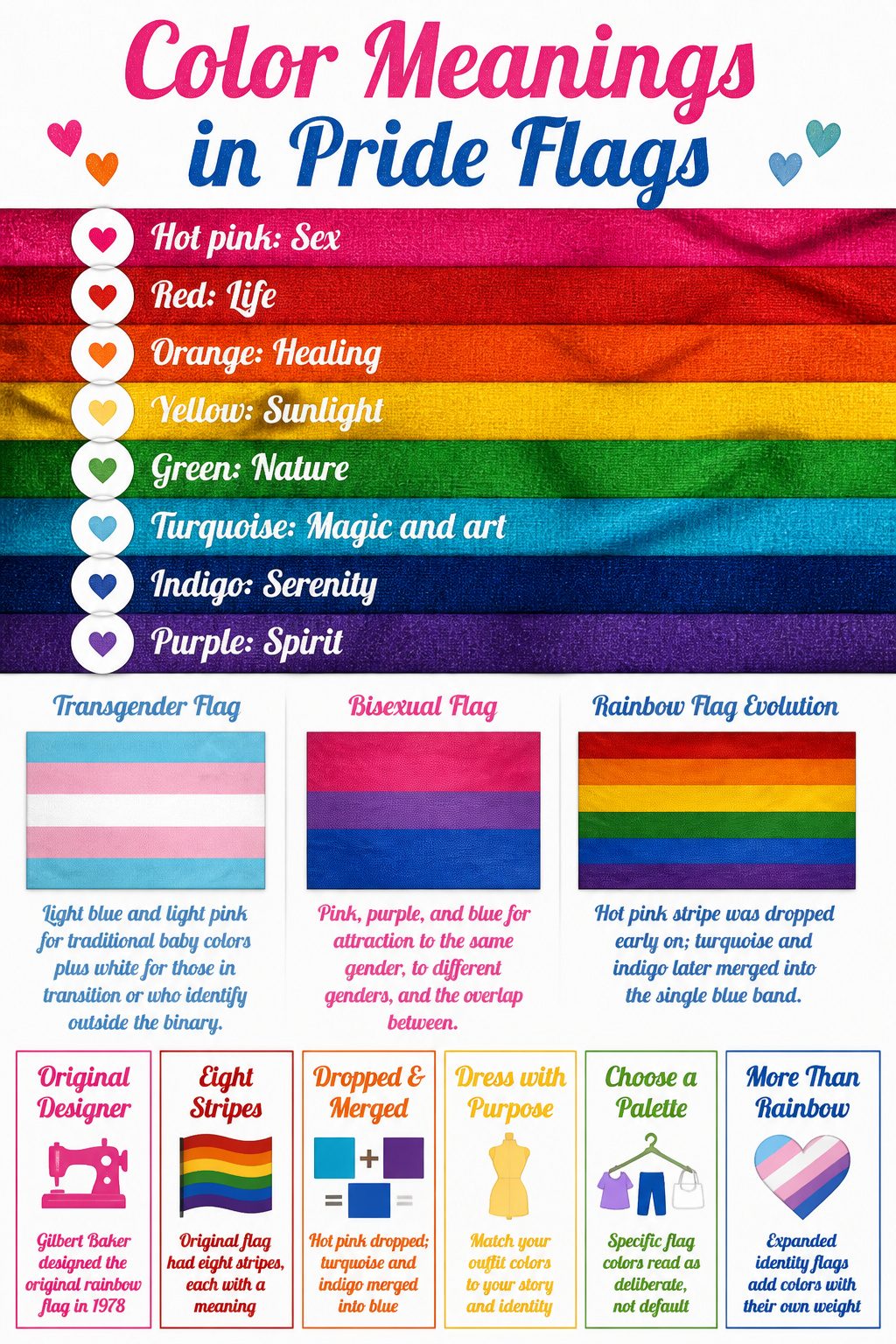
Gilbert Baker designed the original rainbow flag in 1978, and each of the eight stripes carried a specific meaning. Hot pink stood for sex, red for life, orange for healing, yellow for sunlight, green for nature, turquoise for magic and art, indigo for serenity, and violet for spirit. The hot pink stripe was dropped early on because fabric in that color was hard to source, and the turquoise and indigo stripes later merged into the single blue band most people recognize today.
Knowing this history changes how you build a pride outfit. Wearing red and orange leans into life and healing, a quieter statement than head-to-toe rainbow but still rooted in the flag’s actual symbolism. The expanded identity flags that came later added colors with their own weight. The transgender flag uses light blue and light pink for traditional baby colors plus white for those in transition or who identify outside the binary. The bisexual flag layers pink, purple, and blue for attraction to the same gender, to different genders, and the overlap between.
Choosing a palette from a specific flag rather than generic rainbow reads as deliberate, not default. A lavender top with deep blue trousers signals bisexual pride without needing the stripes in sequence. A white base with pale pink and blue accessories does the same for trans identity. The point is matching the color story to your own, whether that means the full Baker spectrum or the narrower range of a flag that fits who you are.
Sizing That Actually Fits
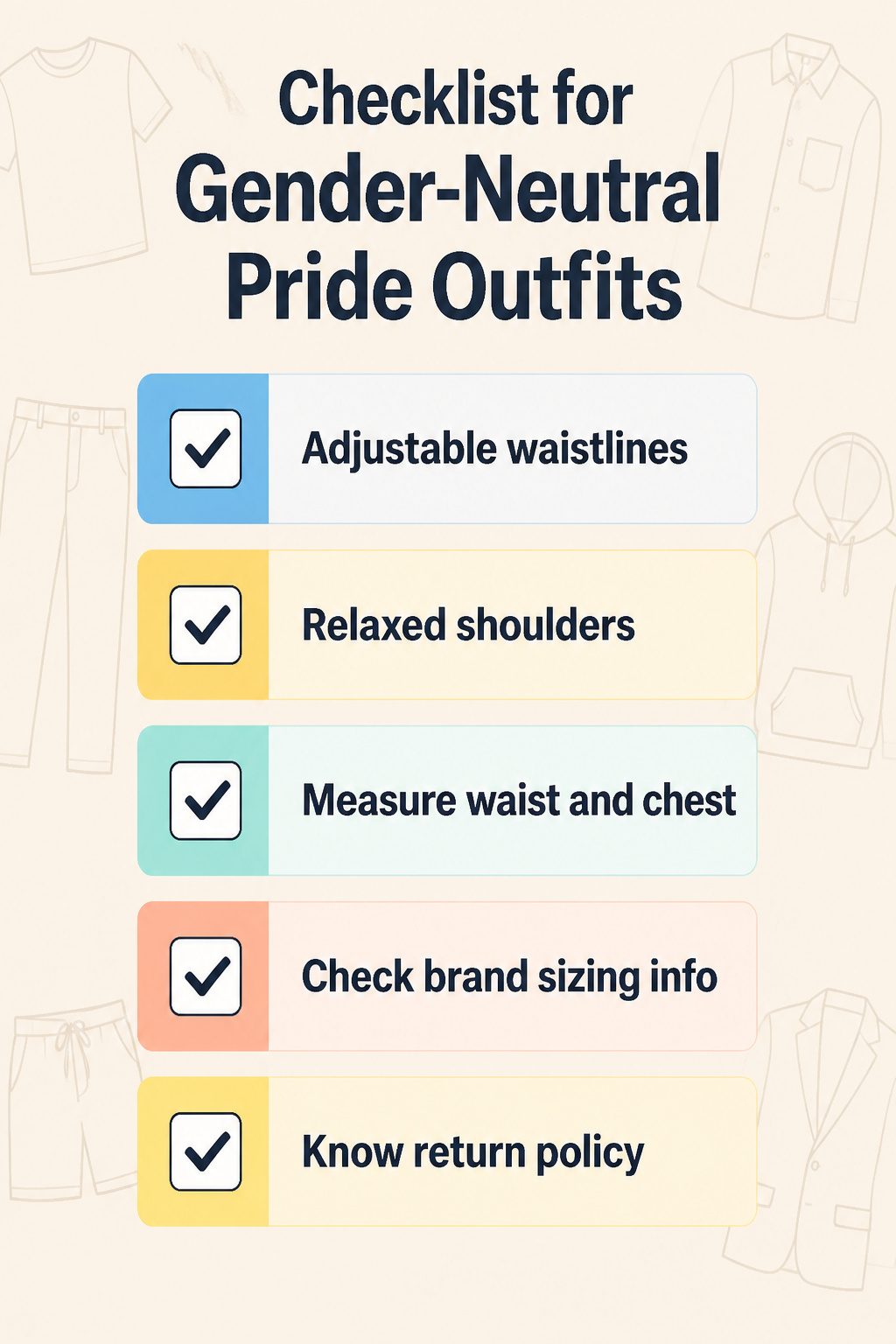
Gender-neutral pride outfits live or die by where the waistline sits and how the shoulder falls, not by whether the label says men’s or women’s. Look for adjustable waistlines and relaxed shoulders first; those two details do the most work across different body proportions. A loose-fitting tee paired with tuxedo pants, or a cropped hoodie over relaxed shorts, gives you room to move without fighting the cut.
Since every brand charts differently, pull out a soft tape before you order. Measure your waist where you actually bend, your chest at its widest point, and your hips where they sit when you stand straight. Write all three down; most gender-neutral lines size by one of those numbers, but they rarely tell you which one upfront. Check whether the brand lists finished garment measurements or just body measurements. The former tells you how the fabric will drape; the latter leaves you guessing.
Return policies matter more here than with standard cuts. Look for prepaid return labels and at least a 21-day window. Some retailers that specialize in inclusive sizing also offer fit consultations over chat; use them, because their staff knows where a given cut runs long or short. If the site only lists a final-sale disclaimer on pride collections, order two sizes and plan to send one back. The extra shipping beats keeping a suit that gaps at the waist or binds at the shoulder when you are eight hours into a parade.
Adaptive Pride Wear
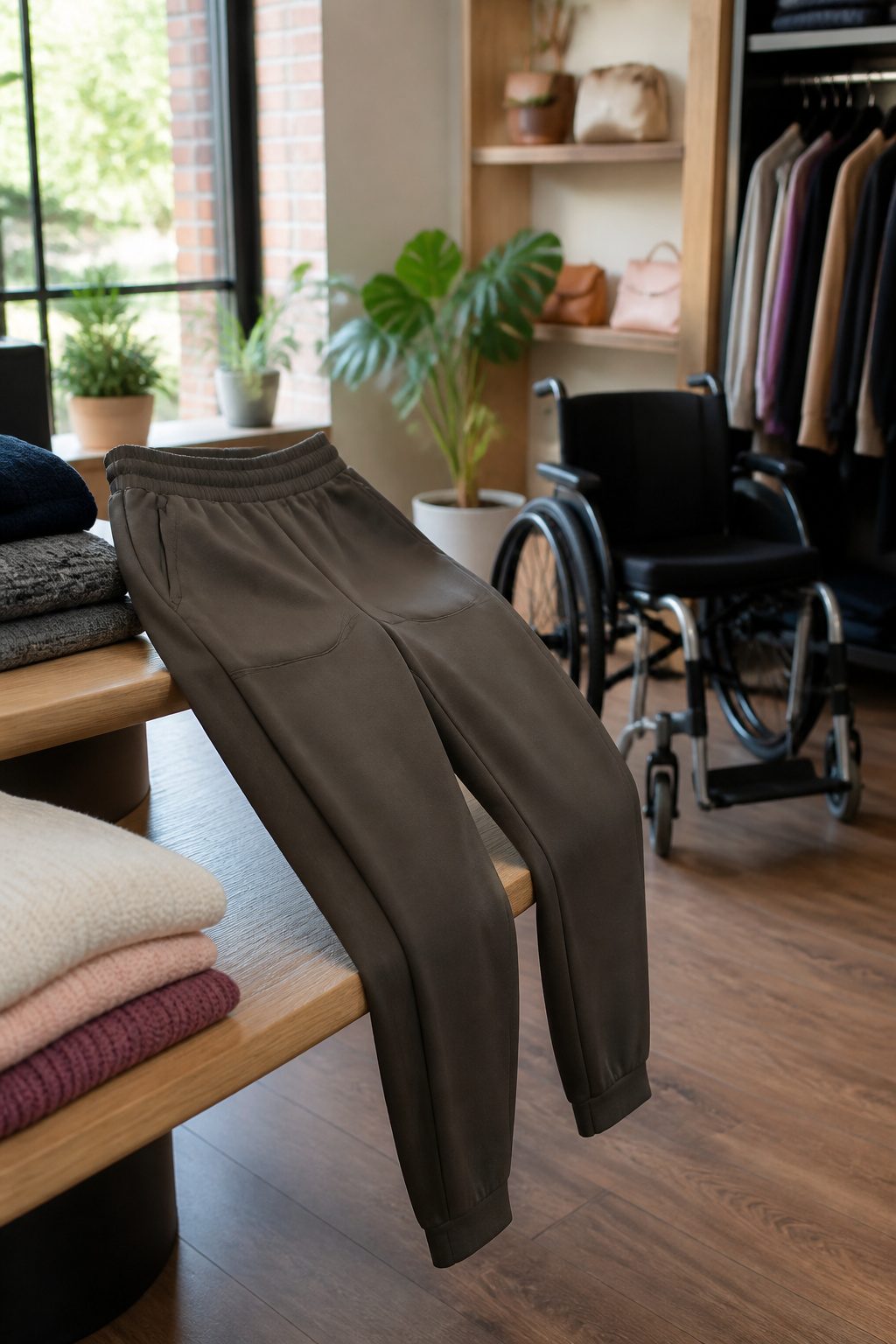
Most pride collections ignore seated wear, which leaves out anyone spending the day in a wheelchair or who needs to park on a bench between parade floats. A skirt or dress that reads as a mini when standing often rides up to underwear territory once you sit, so look for drops that hit at or below the knee when you are upright, or choose pants with a higher back rise and no pockets that gape open. For mobility aids, side seams with magnetic or snap closures save the wrestling match with standard zippers when your grip is off or your shoulder does not cooperate that morning. Seated pants exist, cut with a longer back rise and no fabric bunch at the beltline, but they rarely show up in seasonal pride drops. Standard joggers work if you size up and have a tailor remove the elastic waistband for a flat front with a hook-and-bar closure. Compression from tight sequins or heavy vinyl can spike sensory issues fast, so test the fabric against your inner arm for ten minutes before you commit. If adaptive options are missing, a seamstress can add magnetic closures to a standard button-down for under twenty dollars, and that one change often makes the difference between an outfit you wear and one you abandon in the closet.
Family Pride Outfits
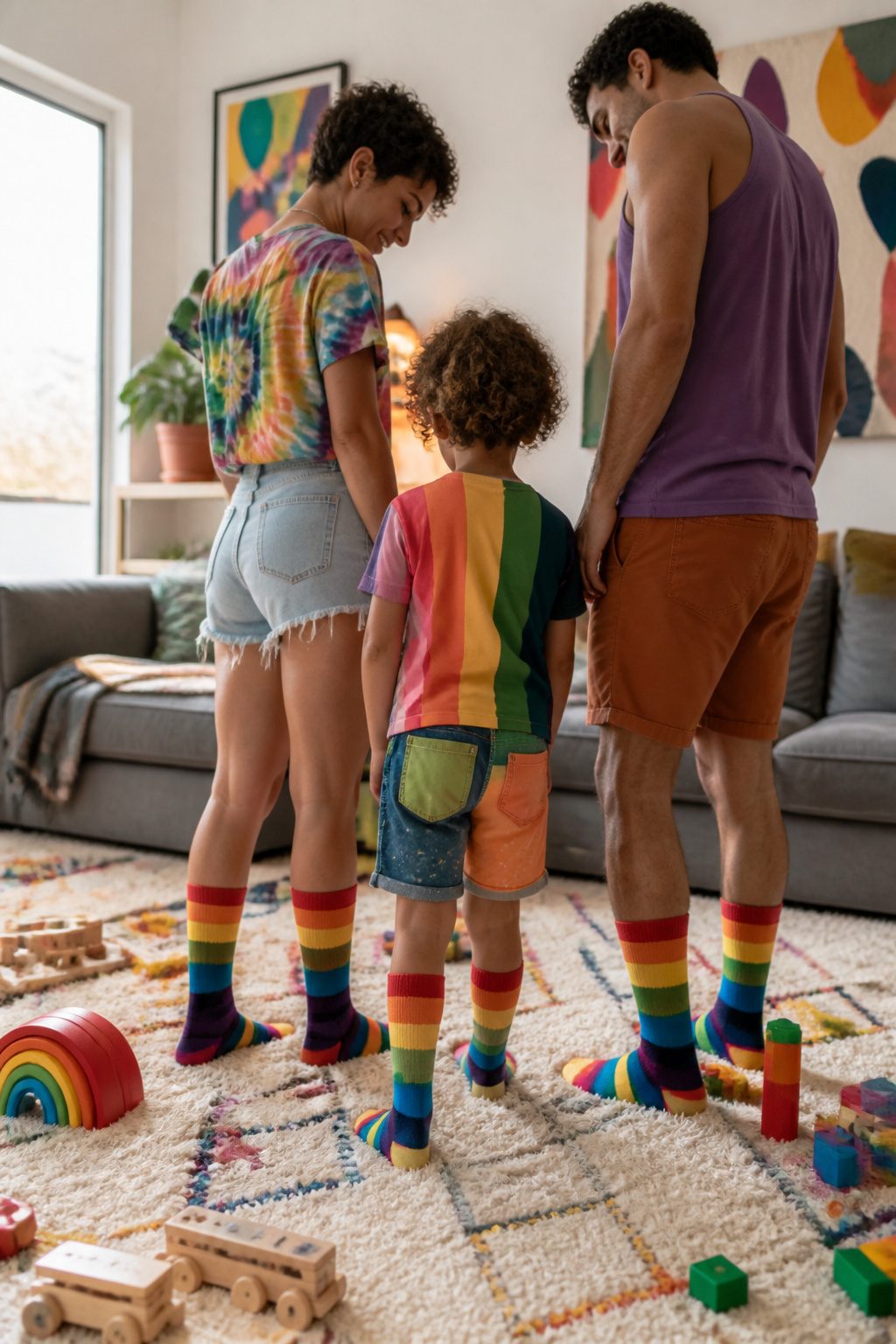
Family pride outfits work best when everyone coordinates without looking identical. Pick a shared color palette and let each person carry it their own way: one kid in a rainbow stripe across a black tee, another in just rainbow socks with their favorite shorts, you in a rainbow scarf over whatever you were already wearing. That way the group reads as a unit in photos but nobody is stuck in a costume they hate.
For kids old enough to pick their own clothes, set the palette and let them choose the volume. A child who wants loud prints gets the full rainbow; one who wants quiet gets a single accent band. The only non-negotiables are practical: soft fabrics without scratchy seams, no loose pins or small detachable parts, and machine-washable everything because spills will happen. Pack backup clothes in your bag, not the car. Animal onesies are a comfortable, playful option for kids who want something fun without the pressure of a "pride outfit" at all.
Frequently Asked Questions
What are the key elements that make a pride outfit iconic and meaningful?
An iconic pride outfit pairs bold color choices with symbolic meaning and self-expression that feels true to you. Build around two or three stripes from the rainbow rather than all six, letting each color carry its own weight. Red for life, orange for healing, yellow for sunlight, green for nature, blue for harmony, purple for spirit. The symbolism lands when it is deliberate, not when it reads as a checklist.
How are 2025 pride outfit trends incorporating officially licensed character designs?
This year’s pride graphic tees feature officially licensed characters like Batman and Pokémon receiving the rainbow treatment alongside identity messaging. The familiar iconography does immediate recognition work, so the pride statement lands without explanation. These designs cost more than generic prints, but they photograph distinctly in crowds and start conversations with people who would not approach a text-heavy political shirt.
In what ways do 2025 pride outfits prioritize inclusivity and comfort for all body types?
Gender-neutral pride outfits are built around adjustable waistlines, relaxed shoulders, and versatile cuts that work across body types rather than forcing traditional masculine or feminine silhouettes. Extended sizing charts that account for different body proportions are now the baseline, not a bonus. Durable materials paired with fits that do not bind or gap keep you comfortable through a full day of marching.
How can I choose pride outfits that effectively use color symbolism and represent specific LGBTQIA+ identities?
Start by learning the color meanings of the flag that fits who you are. The original rainbow carries red for life, orange for healing, yellow for sunlight, green for nature, blue for harmony, and purple for spirit. The transgender flag uses light blue, light pink, and white; the bisexual flag layers pink, purple, and blue. Choose a palette from a specific flag rather than generic rainbow, and wear those colors through bold prints or subtle accents that spark meaningful conversation.