A party outfit is a stylish ensemble chosen for a specific social event, one that balances what the occasion demands against pieces you already own.
The mistake most people make is chasing runway trends instead of judging by body shape and actual dress code.
A $50 silk blouse from your work rotation, paired with the right skirt and shoes, can read entirely different without a separate purchase. The real test is whether you feel right in the room, not whether you bought something new.
What Makes a Party Outfit Work
You walk into a party and half the room is in cocktail dresses while you’re in jeans, or you’re the only one in sequins at a backyard cookout.
That mismatch is what happens when the outfit and the occasion never had a conversation. A party outfit is simply a stylish ensemble chosen for a specific social event, one that reflects your personal style while respecting the event’s formality.
The right balance comes from weighing what the event demands against what you already own.
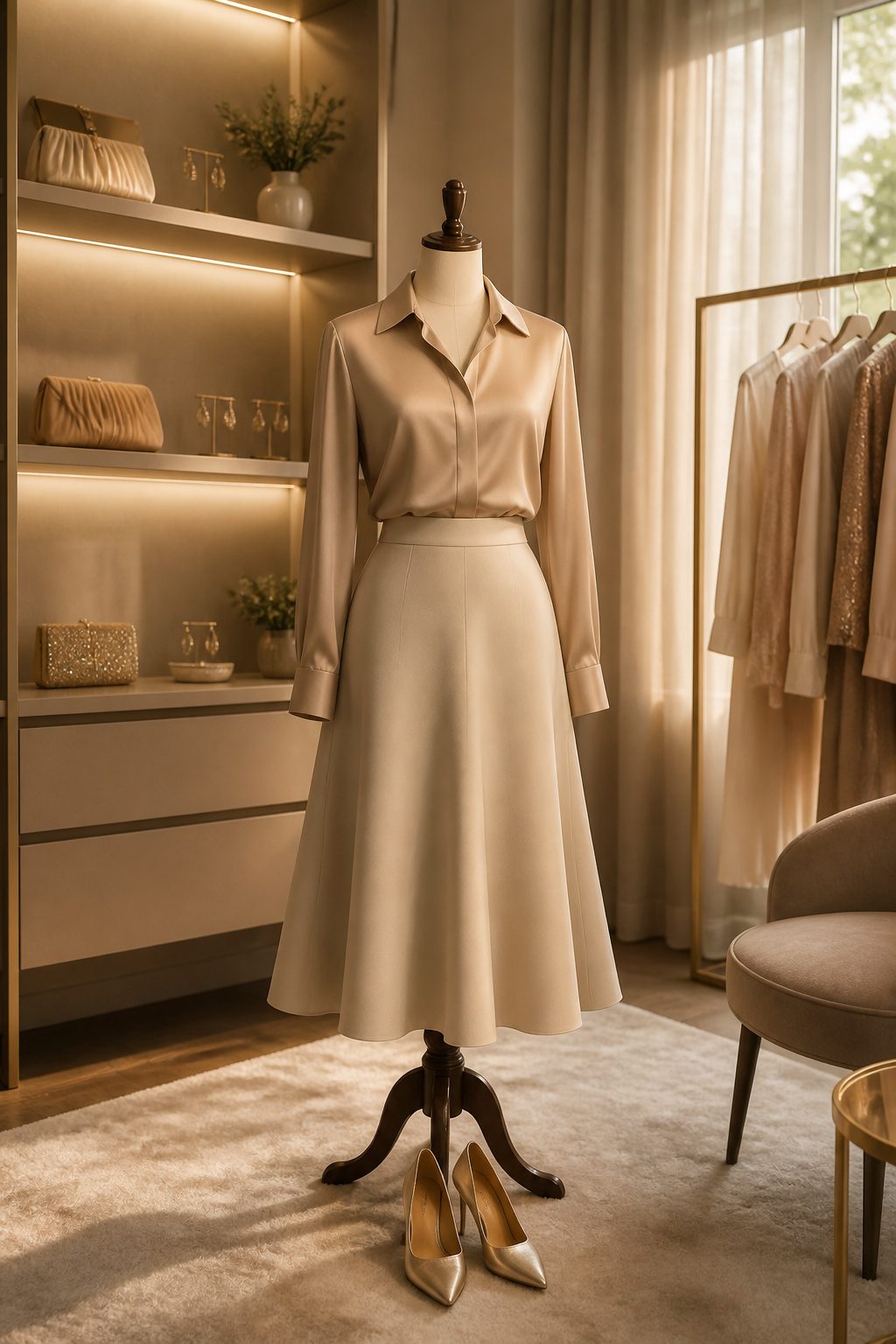
A silk blouse you wear to work can read entirely different with the right skirt and shoes. A blazer from your closet steps up a simple dress without a separate purchase.
This article builds from exactly that premise: pieces you can buy or already have, judged by your body shape and the occasion itself rather than whatever walked a runway last month.
The goal is an outfit that works because you feel right in the room, not because you chased a trend.
1. Party Dresses That Do Not Try Too Hard
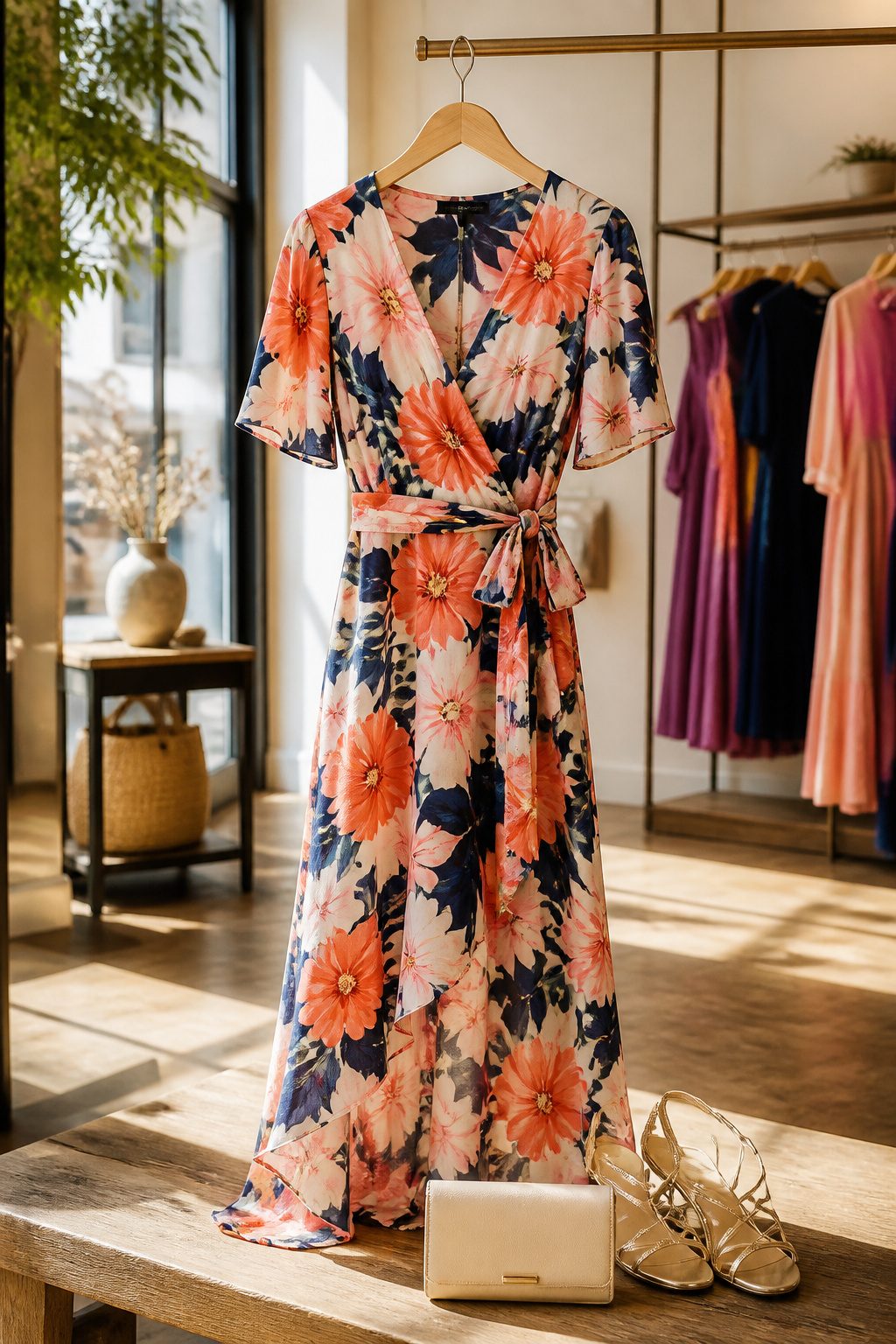
A bold print or a velvet dress does the heavy lifting so your shoes and bag do not have to.
That is the whole point of choosing one statement piece: you wear it again with different accessories, and the outfit reads new.
For summer weddings specifically, 16 wedding-ready dresses and accessories were pulled together for exactly this approach, each one bold enough to stand alone without a closet full of backup options.
Sequins read celebratory but can feel like costume if the cut fights your shape.
The same goes for daring necklines or a thigh-high slit: the moment the dress requires constant adjusting, you have stopped being at the party and started managing a garment.
Choose the cut by what actually fits. A wrap-style bodice works for defined waists; a column or A-line silhouette carries volume without adding structure you do not need.
If you are broader through the shoulder, a one-shoulder or asymmetric neckline balances the line rather than boxing it in.
Velvet and heavy sequin work for indoor evening events from October through February. For outdoor summer parties or daytime wedding receptions, those same textures overheat and look out of season.
That is when you reach for the printed midi or a lighter textured weave instead. The decision is not "is this dress pretty," it is "where will I actually wear this more than once."
2. Jumpsuits With Bold Design
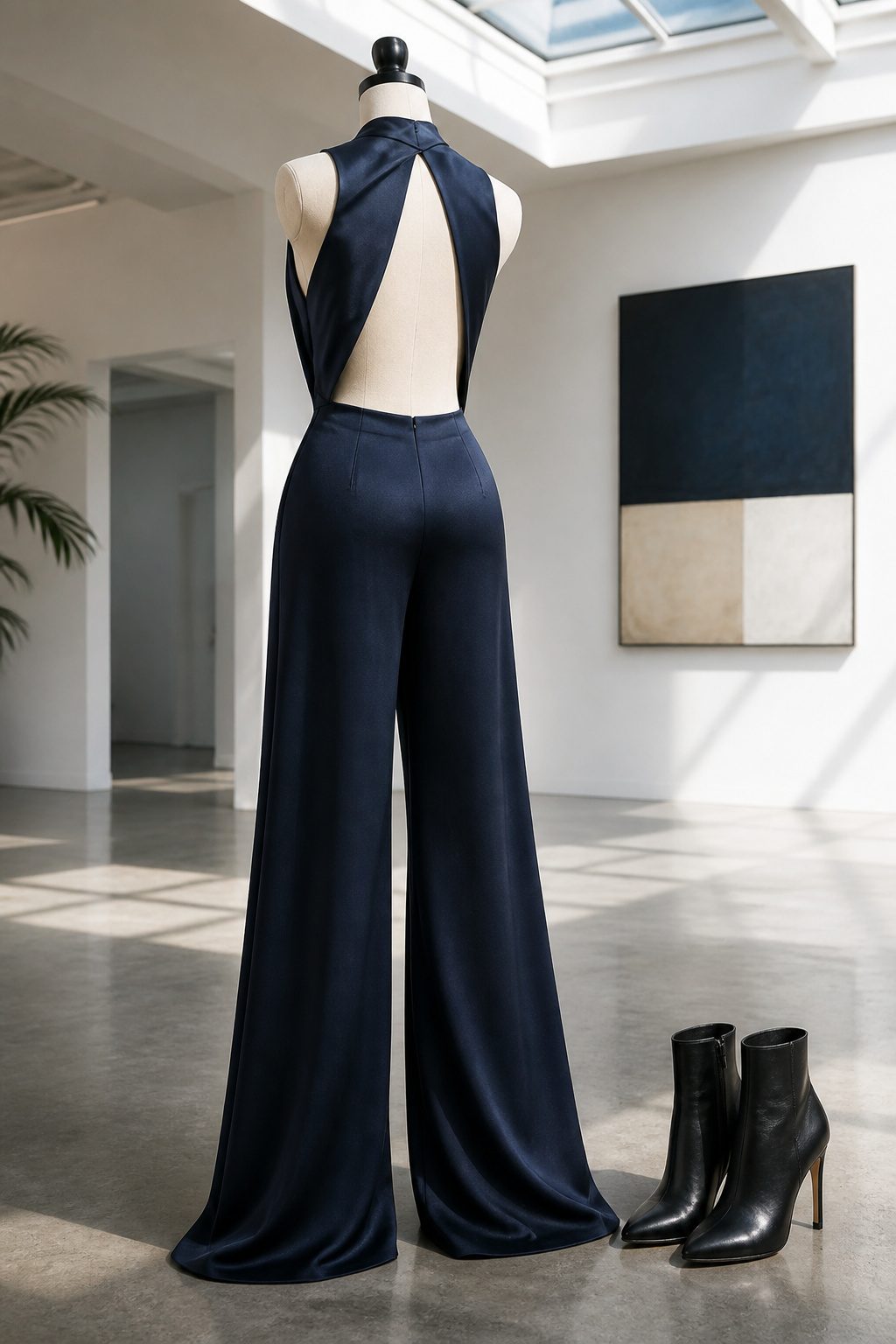
A jumpsuit wins over a dress when you want a strong vertical line without the fuss of separates.
The best party versions build the drama into the structure itself: a wide leg that pools slightly over your shoe, a halter or plunging back that reads as jewelry, fabric with enough weight to sway when you move.
Satin crepe and fluid silk blends photograph well and do not bunch at the seat.
The bathroom question is real and you should answer it before you buy. A fully lined jumpsuit with a back zip means stripping to your bra in a stall.
Wrap styles or front buttons change the math entirely. Try the sequence in the fitting room, not at home with the tags still on.
For body shape, a defined waist and wide leg balances shoulders and adds height. A column cut in one color does the same work on a smaller frame that separates might break up.
Dresses still pull ahead when you need to adjust hem length for heels, or when the event involves sitting on low sofas where a jumpsuit waistband can ride and bunch.
Choose the jumpsuit for standing-room cocktail hours and any party where you plan to dance.
3. Statement Tops With Skirts or Pants
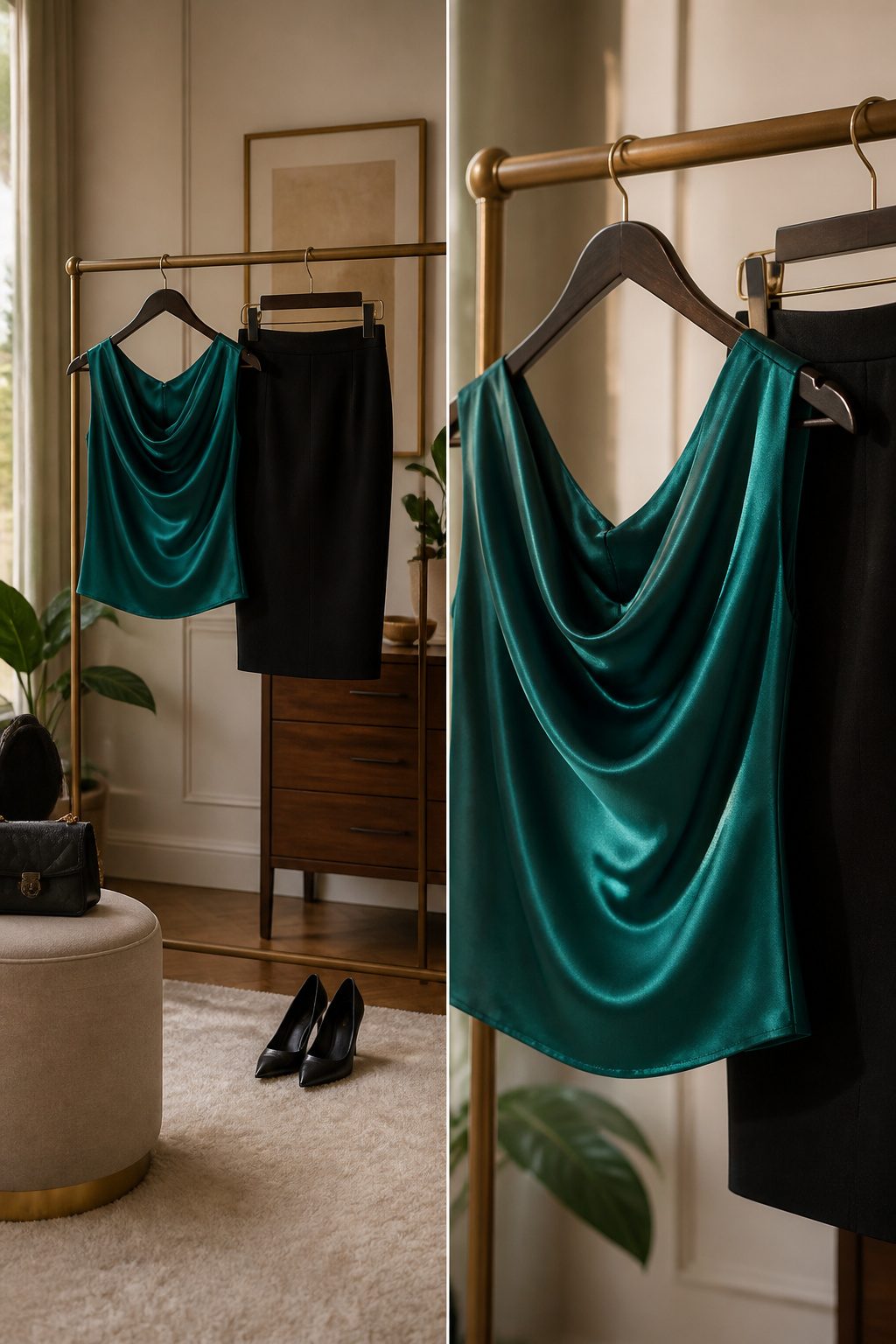
A statement top paired with a black skirt or trousers you already own is the most reliable way to build a party outfit without buying a whole look.
The top does the work: a satin cowl neck, something with an asymmetric sleeve, a fitted bodice in a metallic knit, or a crisp cotton poplin with an exaggerated collar. Any of those reads as dressed up against plain bottoms.
The reverse holds too.
A sequined or velvet skirt with a simple fitted turtleneck or a clean camisole lets the single dramatic piece carry the occasion. You are not building a costume; you are letting one strong element do the signaling.
This is where your wardrobe stretches. The same black trousers from your work rotation become a 9pm look with a top that has some shine or an unusual cut.
The skirt that sat through three weddings as a guest outfit gets another year if you switch in a new texture above the waist. You buy the piece that changes the outfit, not the whole outfit each time.
The occasions shift too.
The satin top with a midi skirt works for a dinner party; with wide-leg trousers and a heel, it reads more formal. One purchase, two dress codes.
4. Casual Party Outfits That Still Feel Festive
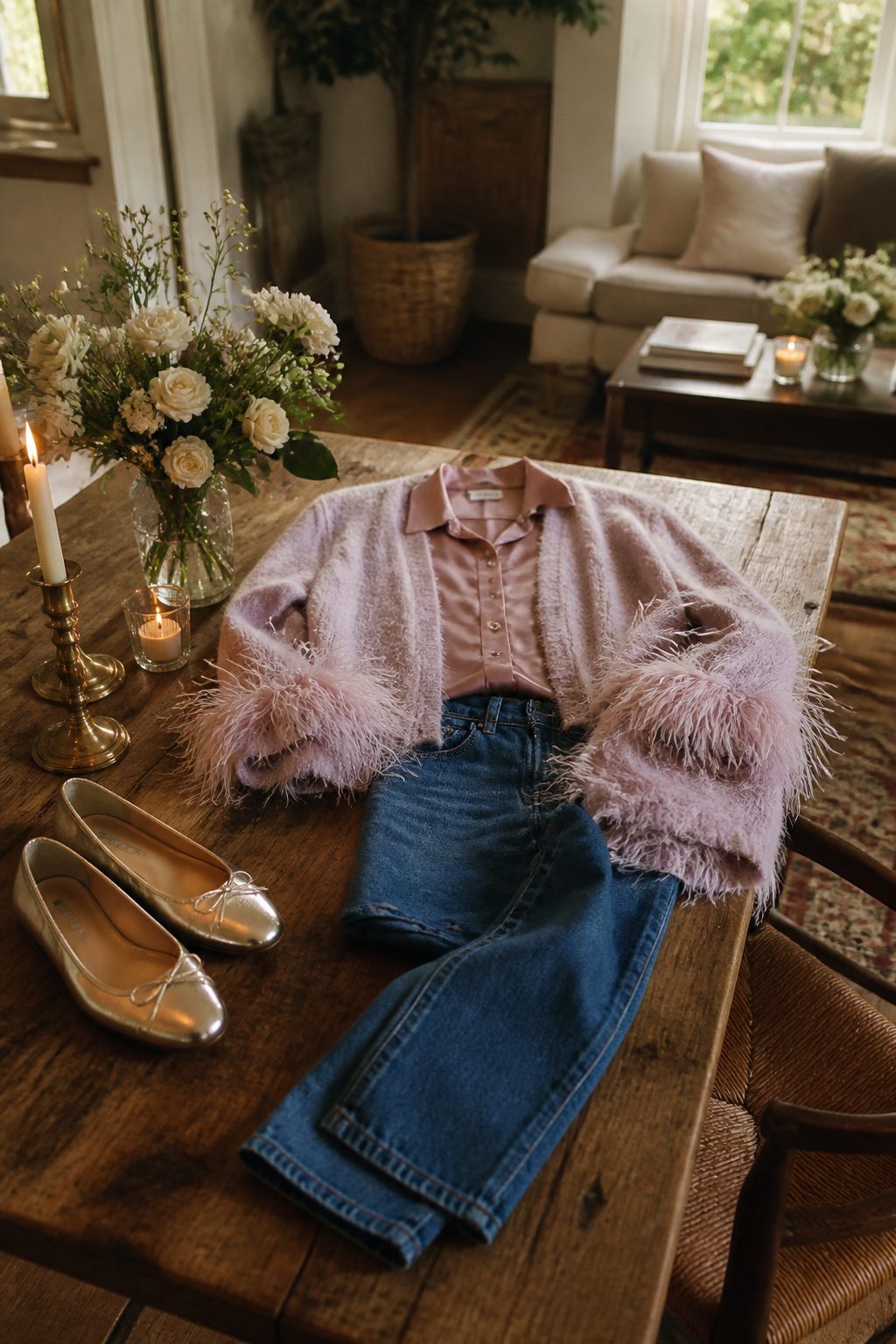
A casual party outfit is not a formal look with the heels swapped for flats. It is its own category, built on soft structure and texture that reads intentional under low light.
A feather-trimmed cardigan over straight jeans, or a relaxed satin shirt with a wide-leg trouser, keeps the shape easy while the material does the festive work.
The mistake is treating every invitation like a nightclub door. Read the signals: "drop by," "our place," "nothing fancy" means the host wants comfortable guests, not underdressed ones.
When the dress code is vague, add one element, a single one, to an ordinary base. One sequined accessory, one metallic shoe, one brooch on a crewneck sweater.
Two reads costume; zero reads like you forgot. Your everyday blazer with a silk camisole and a clip or feather detail at the collar is enough.
The host said casual. Believe them.
5. Formal and Semiformal Attire
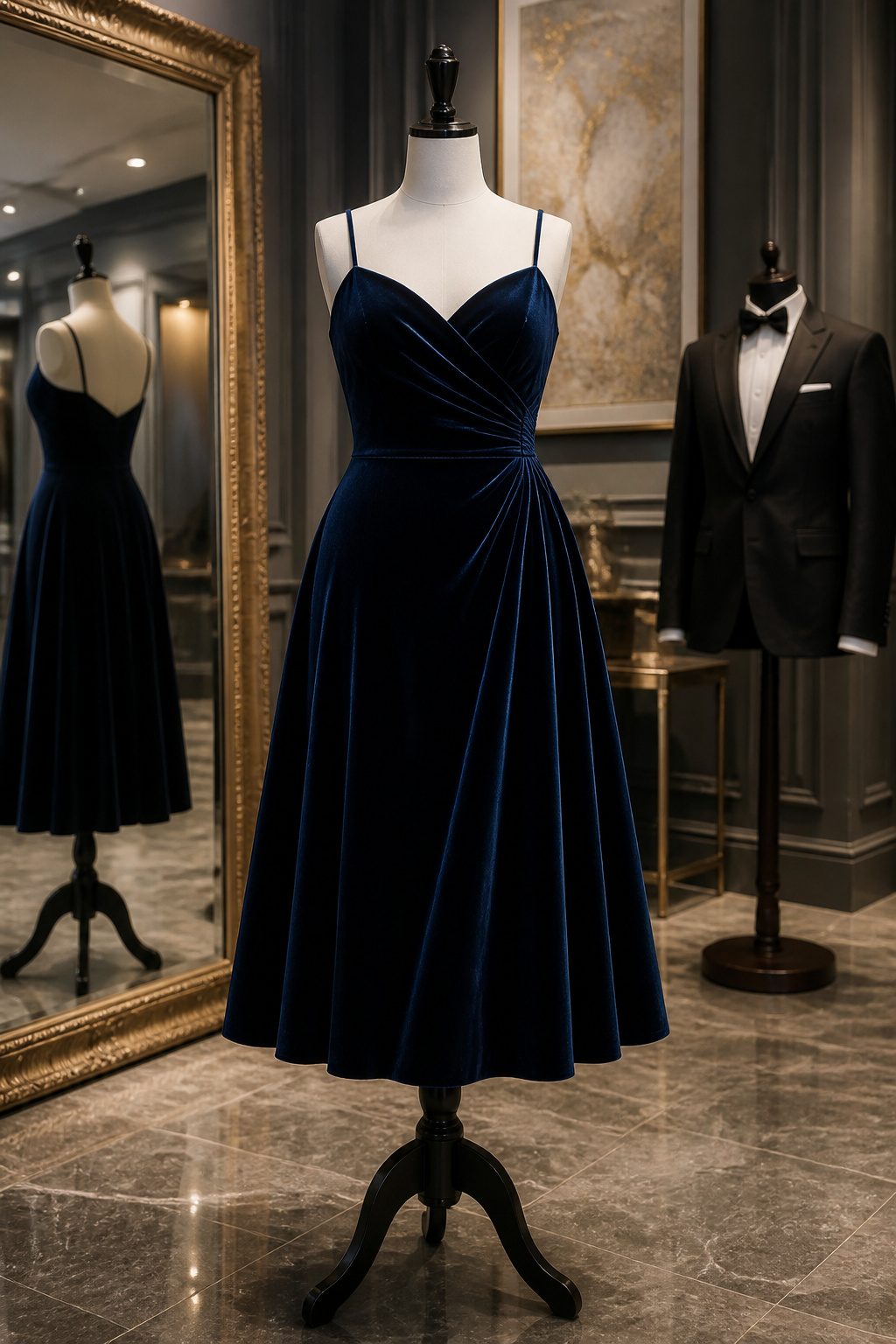
Formal starts at floor-length, but the line between formal and semiformal is not where most invitations place it.
A velvet midi dress in a saturated color reads formal at a December gala and semiformal at a September wedding because the fabric does the heavy lifting, not the hem.
That is the practical difference: formal allows you to dress up without dressing costume, and semiformal is where you stop before you hit costume territory.
For weddings with vague wording like "festive attire" or "dressy," lean one step above what you guess others will wear.
A structured jumpsuit in crepe or heavy satin hits formal when the cut is sharp and semiformal when the pant is wide or the neckline softer. The same piece works both rooms with shoe and jewelry swaps.
Gala invitations that say "black tie optional" are testing whether you own a gown.
You do not need one. A column dress in a dark, fluid fabric, or a tuxedo-cut suit in silk or fine wool, satisfies the code and reappears at holiday parties for years.
Renting a gown runs the cost of a versatile piece you could own; the math favors buying the thing that works twice.
The real mistake is buying for the single event instead of the calendar. A formal outfit that cannot also reach semiformal with minor adjustments is an outfit that traps you.
6. Summer Party Outfits
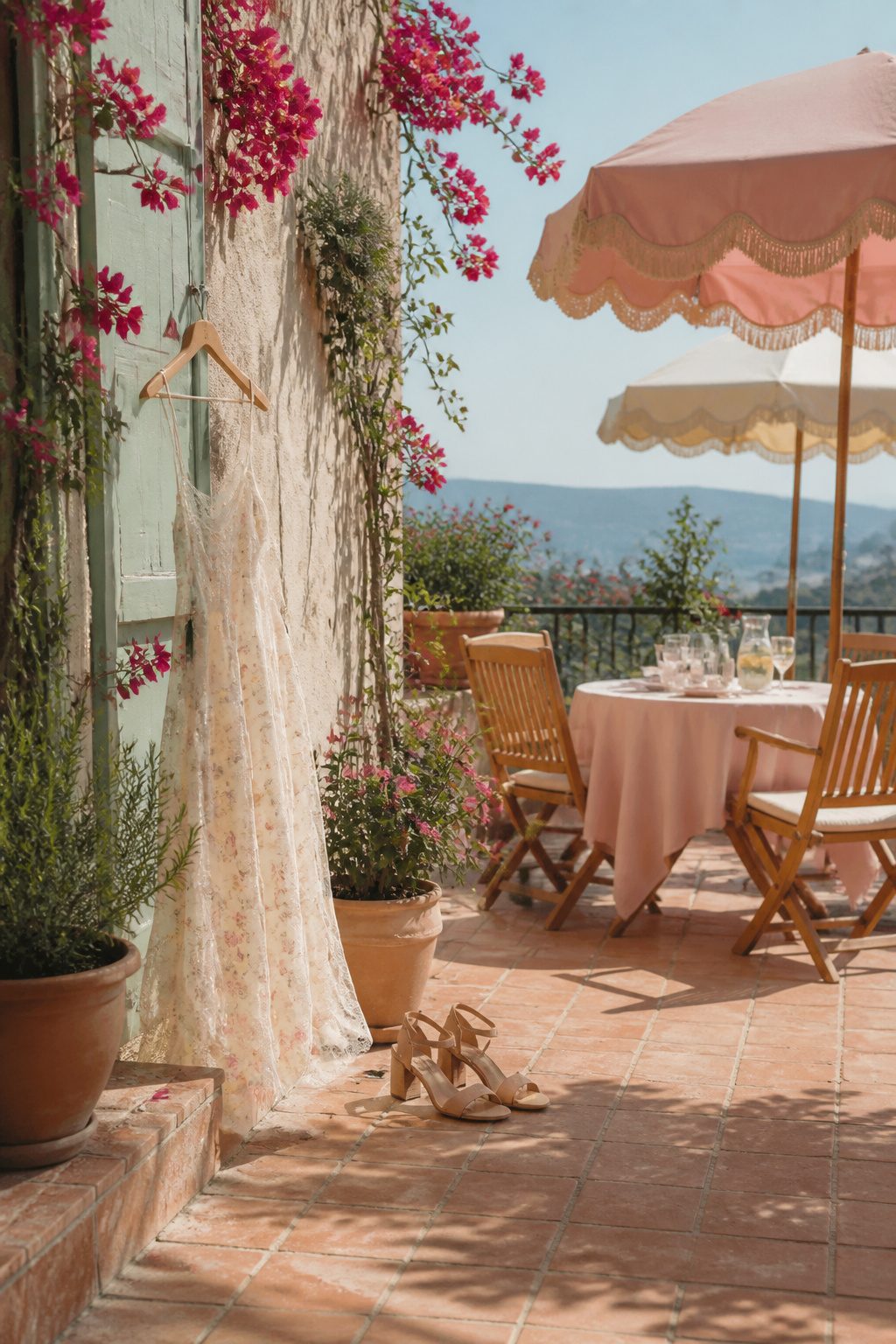
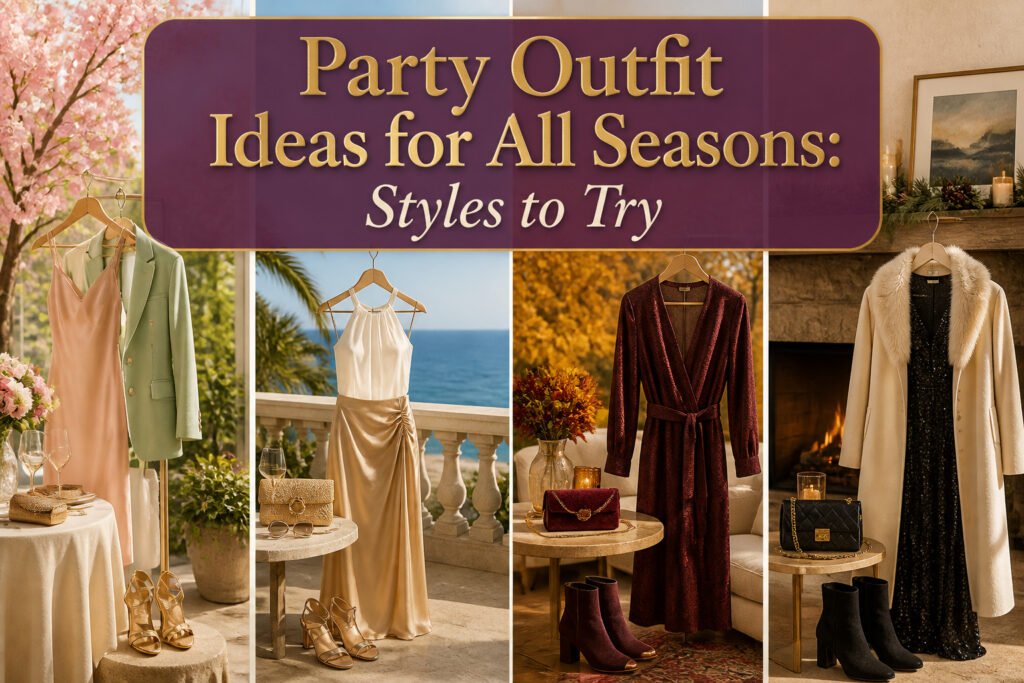
Summer heat changes what a party outfit can be. Lighter fabrics and bright colors are not just aesthetic choices here; they are how you stay comfortable through hours outdoors without looking like you gave up.
Breathable materials that move with you, linen that does not cling, cotton voile that catches a breeze, these are the pieces that let you relax into the evening instead of counting the minutes until you can leave.
For summer weddings specifically, 16 wedding-ready dresses and accessories cover the range of nuptial dress codes without defaulting to the same satin that works in December.
A lace slip dress in a warm-weather weight reads romantic without the return of heavy construction. Pair it with block heels or a strappy sandal you can actually walk in on grass.
Outdoor events bring three practical problems: uneven ground, humidity, and the storm that builds while no one is watching.
A heel that sinks is a heel that snaps; a wide-brimmed hat or a light shawl buys you time when the temperature drops ten degrees in twenty minutes.
Fabric that breathes also dries faster, and that matters more than most guests plan for.
7. Winter Party Outfits
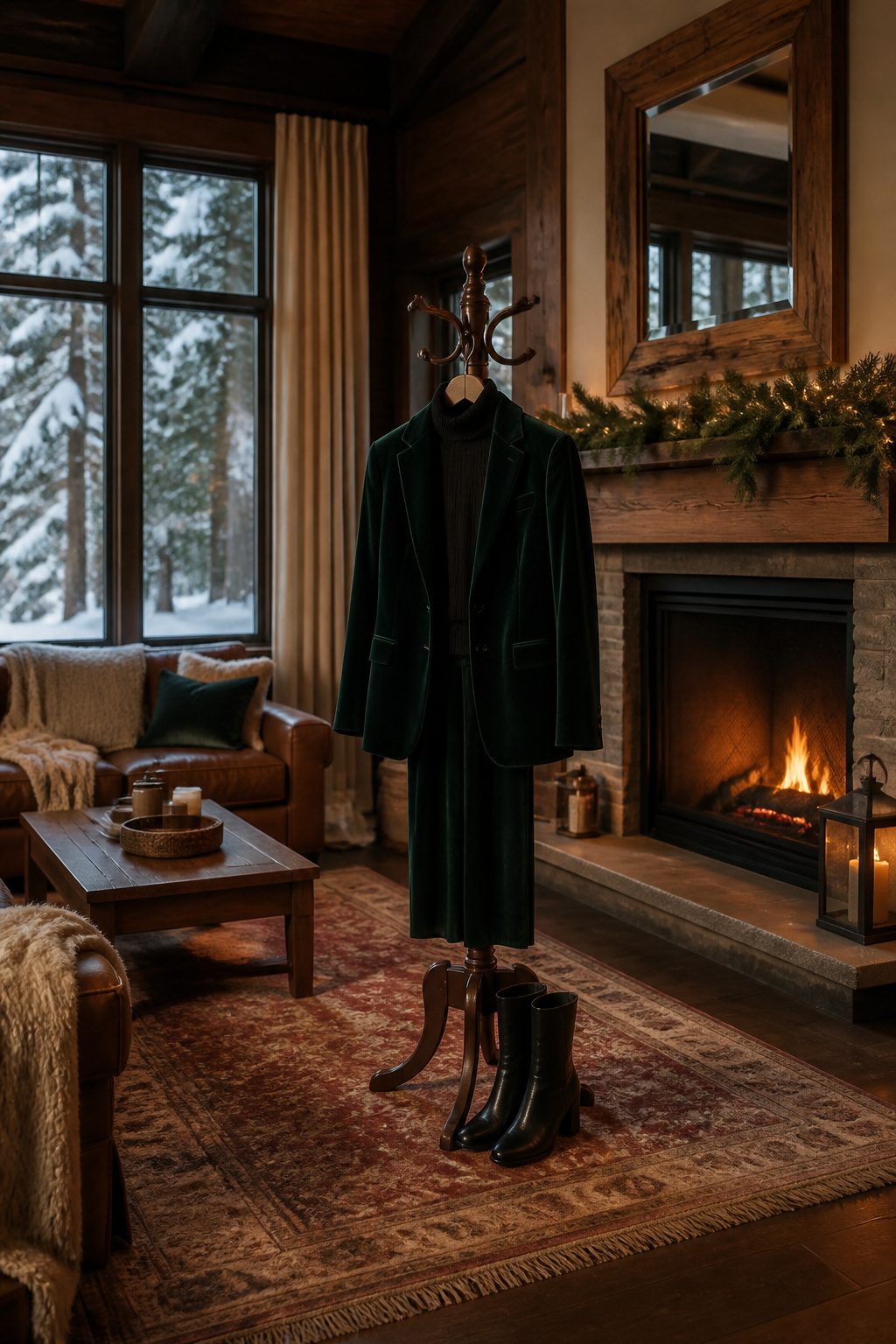
Winter party outfits live or die on fabric weight. Heavier materials like luxe velvet and layered mesh keep you warm without the sleeping-bag silhouette, and darker colors read richer under candlelight than they do in afternoon sun.
The real test is building warmth without bulk: a body-skimming knit base, velvet on top, mesh where you want air to move.
The coat problem is where most winter looks fall apart. You plan for the room, not the curb.
Check the invitation for coat-check details, or call the venue directly. A cropped wool jacket beats a puffer that swallows your shape; a structured topcoat works over velvet without creasing it.
Carry a bag large enough to fold a thin layer into if the room overheats. The wrong outerwear does not just clash, it derails the whole outfit before you reach the door.
8. Layering for Transitional Weather
The hardest party outfit to get right is the one that has to survive a 30-degree temperature swing.
You step out of the car into October air that bites, then into a venue that runs hot from bodies and lights, then back out at midnight when the wind has dropped even further.
The jacket you choose for this cannot be an afterthought, because it will spend half the night on your arm or draped over a chair, visible to everyone, and half the night actually on your body.
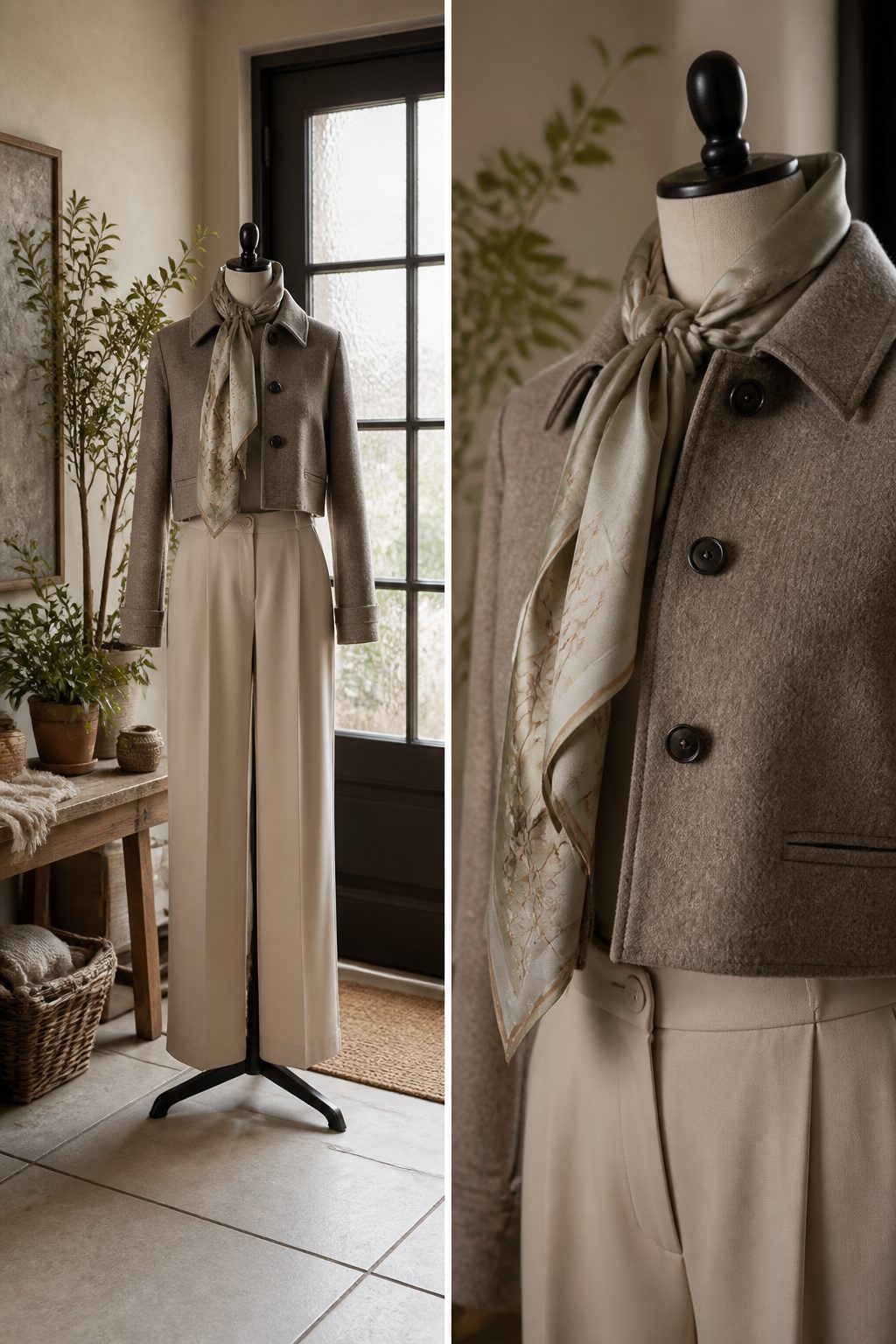
A cropped jacket works better than a long coat for almost every party outfit.
It ends at or above the waistband, so it does not break the line of a dress or high-waisted pants, and it does not bunch awkwardly when you carry it.
A fitted blazer in a fabric with some structure, wool or a heavy crepe, keeps its shape through the on-and-off cycle. Avoid anything with a heavy lining; it adds bulk and traps heat indoors.
The sequence of dressing matters more than most people think. Put the jacket on before you do your hair, so you are not crushing volume or flattening waves at the last second.
For makeup, do your base and eyes, add the jacket, then finish lips and any setting spray; this avoids the collar grazing wet product.
When you remove the layer, fold it collar-to-hem rather than balling it, and drape it over a chair back rather than the seat, where someone will sit on it.
A wrap is the better choice for outfits where even a cropped jacket feels like too much.
A large silk or fine wool square, folded to a wide rectangle and tied at the sternum, reads as intentional and can be loosened or tightened without full removal.
The wrap should share a color with something you are already wearing, not introduce a new one; otherwise it looks like you borrowed it from the venue’s lost and found.
9. Accessories That Change Everything
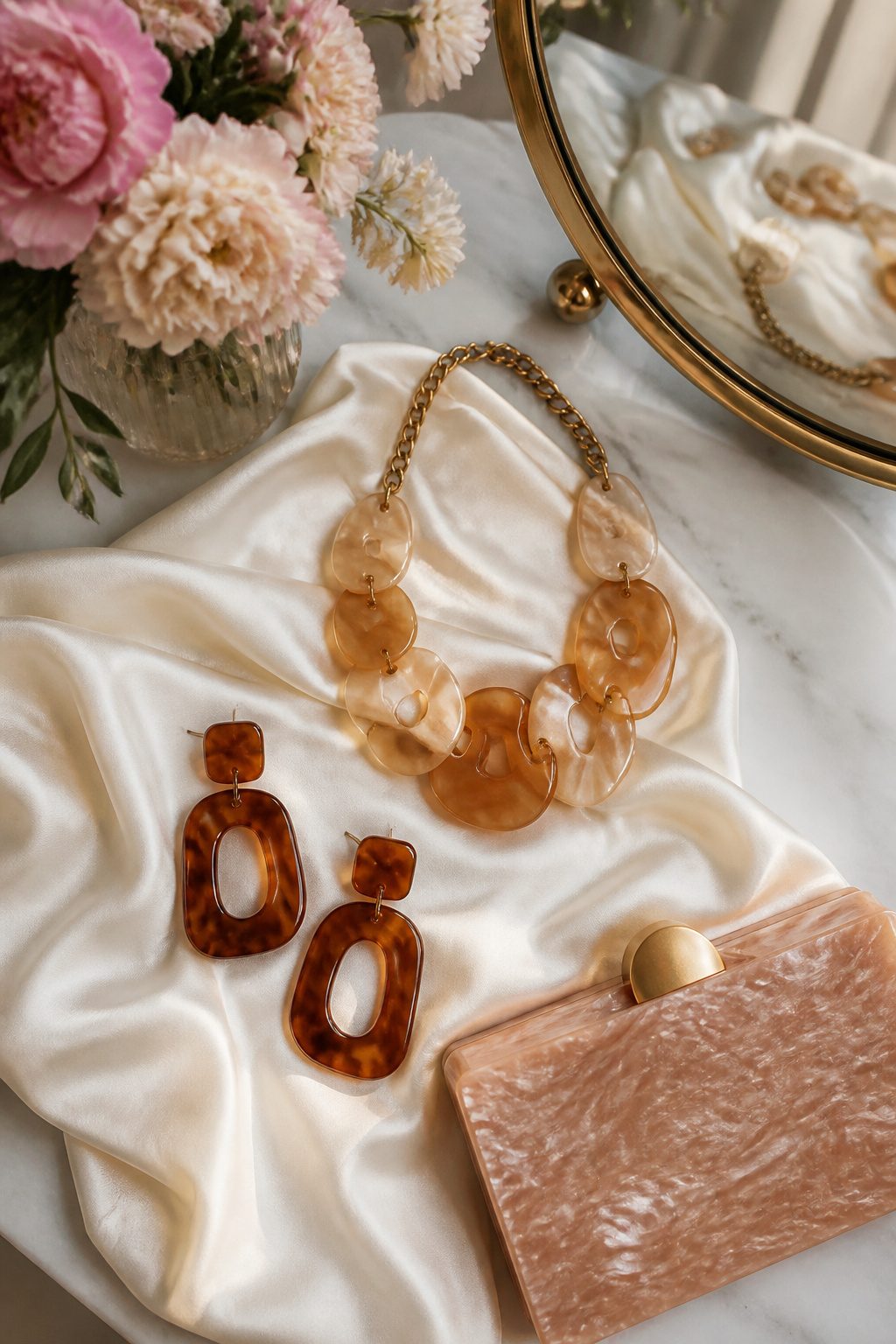
A pair of earrings or a clutch can pull a party outfit together faster than a new dress ever will.
What convinced me, reading through a dozen of these style breakdowns, is that the rule of one statement piece beats piling on everything you own.
One sculptural necklace or a pair of oversized resin earrings gives the eye somewhere to land. Stack three competing things and you have noise, not style.
Your outfit already speaks, so listen to it before you add.
A sequined top needs small gold hoops and nothing else. A plain black slip dress earns the chunky bracelet or the beaded bag, not both.
The common mistake is buying the dress, finding the shoes, then realizing the next morning that you have nothing to carry or the heels pinch after twenty minutes.
Budget for accessories in the same breath you budget for the clothes, because a party outfit without the right shoes and bag is just clothes you never wear out.
10. Party Outfits Under $50
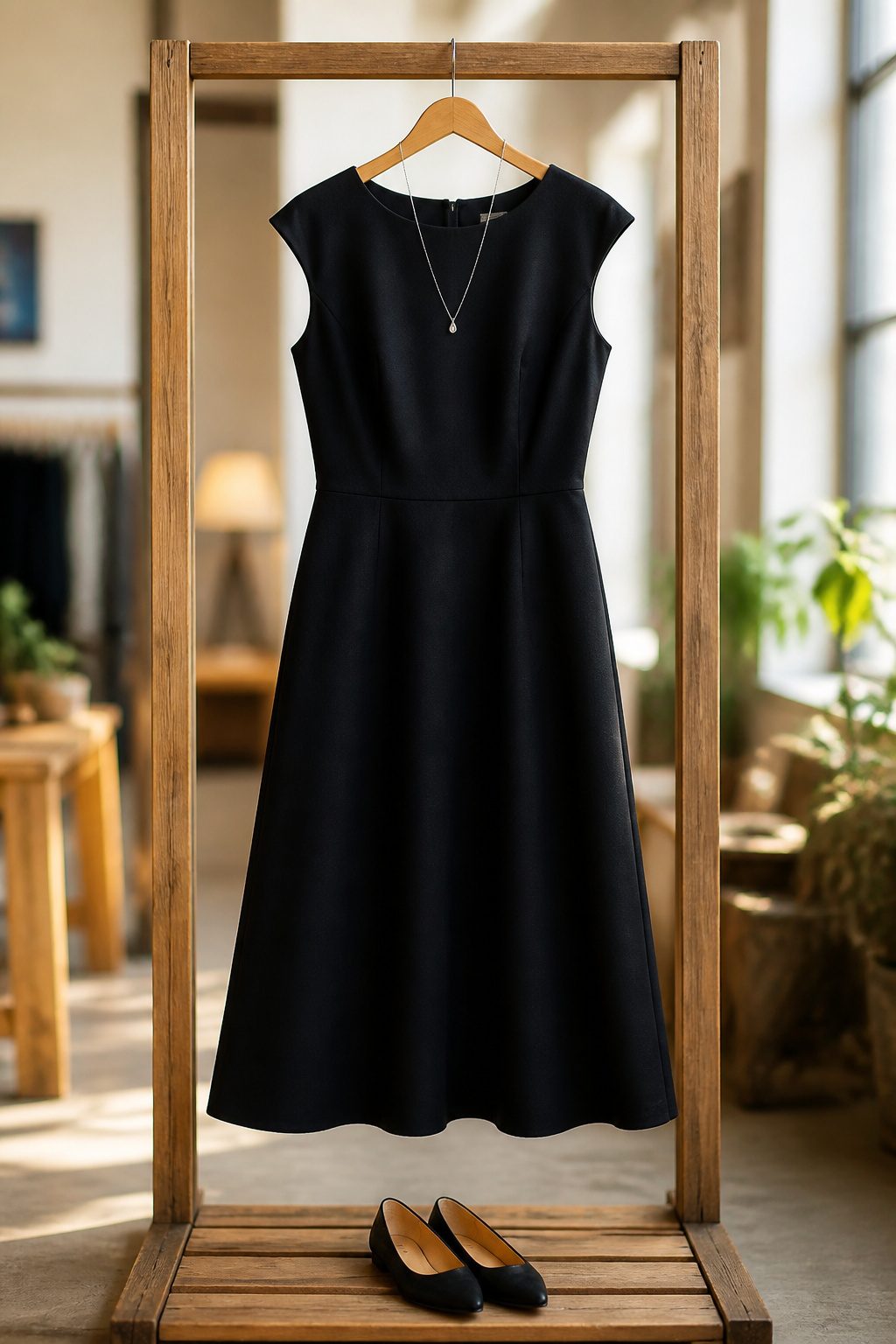
A $50 ceiling leaves almost no room for error, so put the money where it shows.
Fabric with a little weight to it, a neckline that sits flat without gaping, and a hem that hits at the right place on your calf or ankle will read as deliberate.
Skip the beading, the sequins, and anything with a side zipper that puckers; those details fail cheaply and obviously.
Thrifting or resale apps get you farther than fast fashion retail at this price.
A solid black midi dress from a mid-tier brand, secondhand, usually outlasts three new trend pieces. If you are buying new, look for sales on last season’s inventory from reliable basics labels.
The move that makes budget look expensive is fit.
Spend $15 at a tailor to shorten straps or take in a waist. Polish the shoes you already own, wear the earrings that catch light without shouting, and steam the garment rather than ironing it flat.
The difference between a $35 dress that looks like $35 and one that looks like $130 is almost always attention to proportion and pressure.
How Formality Changes Your Choice
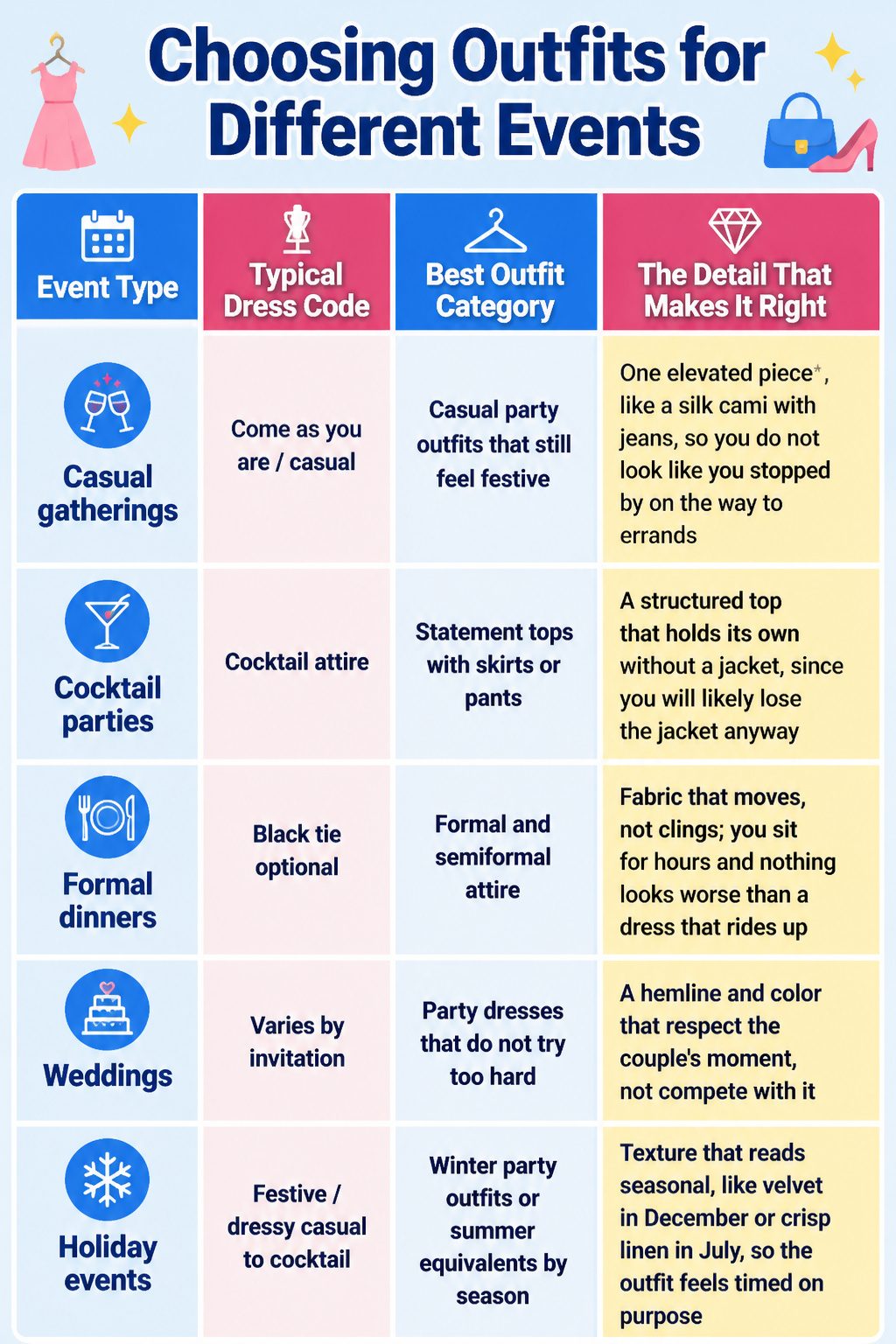
You have probably walked into a party before and realized your outfit was one step off.
The fix is usually one detail, not a whole new wardrobe. Match the event to the right category and that detail takes care of itself.
| Event Type | Typical Dress Code | Best Outfit Category | The Detail That Makes It Right |
|---|---|---|---|
| Casual gatherings | Come as you are / casual | Casual party outfits that still feel festive | One elevated piece, like a silk cami with jeans, so you do not look like you stopped by on the way to errands |
| Cocktail parties | Cocktail attire | Statement tops with skirts or pants | A structured top that holds its own without a jacket, since you will likely lose the jacket anyway |
| Formal dinners | Black tie optional | Formal and semiformal attire | Fabric that moves, not clings; you sit for hours and nothing looks worse than a dress that rides up |
| Weddings | Varies by invitation | Party dresses that do not try too hard | A hemline and color that respect the couple’s moment, not compete with it |
| Holiday events | Festive / dressy casual to cocktail | Winter party outfits or summer equivalents by season | Texture that reads seasonal, like velvet in December or crisp linen in July, so the outfit feels timed on purpose |
Refer back to this when you are short on time. The right category plus the right detail beats a closet full of almost-right pieces.
What to Check Before You Buy
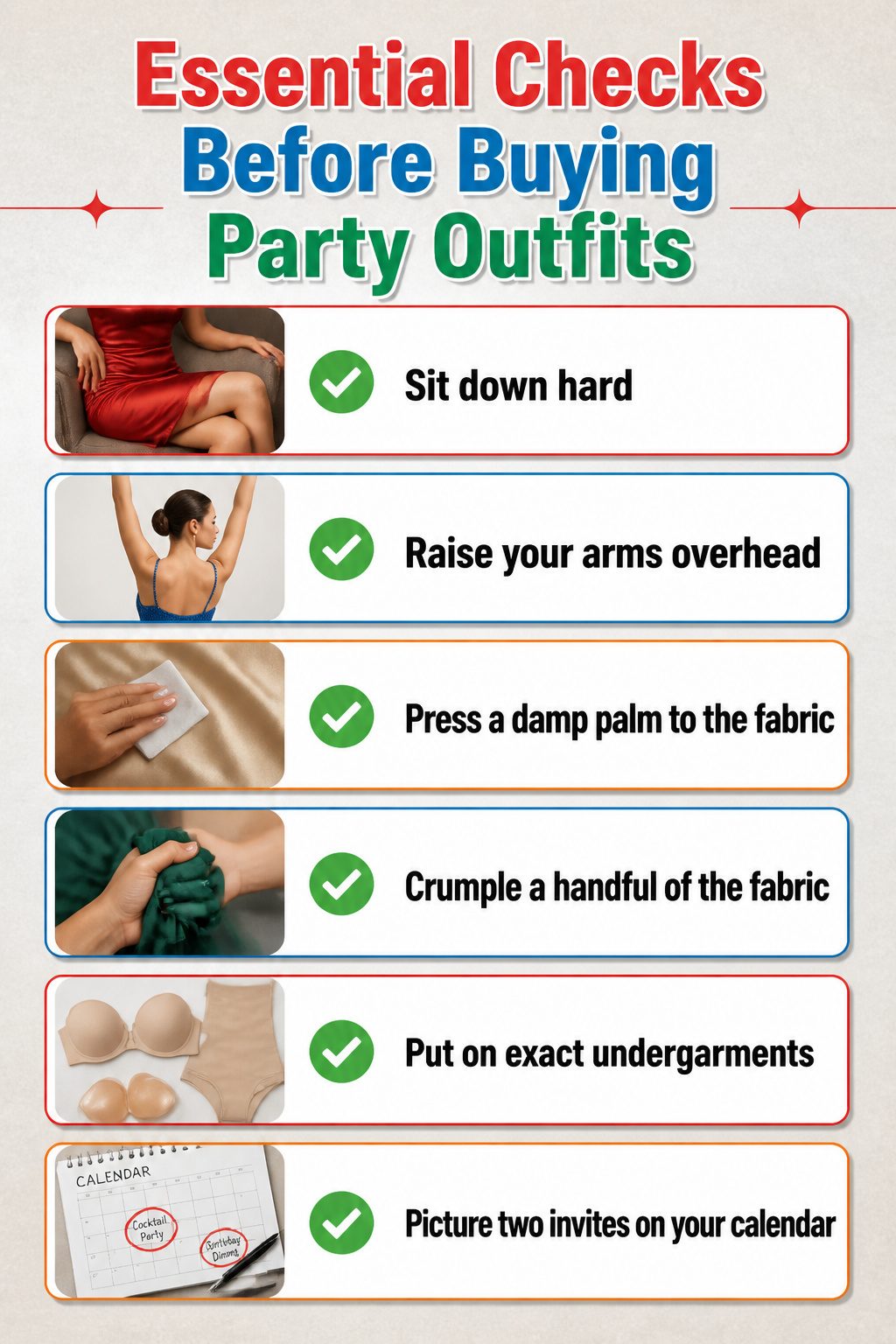
Most party outfit returns happen because someone looked great in the mirror but could not function in the clothes.
A five-minute fit test saves that trouble. Try these checks before you commit:
- Sit down hard. If the waistband digs, the skirt rides up to an indecent length, or the seams strain across your hips, you will spend the whole event choosing between discomfort and standing in a corner.
- Raise your arms straight overhead. Tops that bare your midriff at full stretch will do exactly that when you reach for a cocktail or hug a host.
- Press a damp palm to the fabric and hold it ten seconds. Satin, rayon, and some polyesters show water spots or dark patches that look like sweat even when you are dry.
- Crumple a handful of the skirt or sleeve for thirty seconds. Linen and cheap crepe come out looking like you slept in them; structured cotton blends and heavier silks usually recover.
- Put on the exact undergarments you would wear out. Strapless bras, shapewear, and adhesive cups change how a dress hangs by half a size.
- Picture two actual invites on your calendar. A piece that only works for one specific fantasy event is a poor buy, even on sale.
Frequently Asked Questions
What types of outfits are suitable for different types of parties?
Match the event to the right category and one detail takes care of itself.
Casual gatherings call for one elevated piece over an ordinary base, like a silk cami with jeans. Cocktail parties need a structured statement top that holds its own without a jacket.
Formal dinners demand fabric that moves rather than clings, since you sit for hours. Weddings require a hemline and color that respect the couple’s moment rather than compete with it.
How can I accessorize a party outfit?
Follow the rule of one statement piece. One sculptural necklace or oversized resin earrings gives the eye somewhere to land; three competing pieces create noise, not style.
Budget for accessories in the same breath you budget for the clothes, because a party outfit without the right shoes and bag is just clothes you never wear out.
A sequined top needs only small gold hoops; a plain black slip dress earns either the chunky bracelet or the beaded bag, never both.
What are some affordable options for party outfits?
A $50 ceiling leaves almost no room for error, so put the money where it shows: fabric with weight, a neckline that sits flat, and a hem at the right place on your calf or ankle.
Thrifting or resale apps get you farther than fast fashion retail at this price. The move that makes budget look expensive is fit: spend $15 at a tailor and steam rather than iron, and a $35 dress can read like $130.
How do seasonal changes affect party outfit choices?
Summer heat demands breathable materials that move with you: linen that does not cling, cotton voile that catches a breeze.
Heavy materials like velvet and layered mesh keep you warm in winter without bulk, and darker colors read richer under candlelight.
The coat problem sinks most winter looks, so plan outerwear that works over your outfit without swallowing your shape or creasing fine fabrics.