An elegant prom dress is a formal evening gown chosen for a high-school prom, and the right one depends on matching the silhouette to your body, your budget, and what the venue actually demands.
A long A-line in layered tulle or hand-beaded satin runs anywhere from $45 to over $1,000, while a mermaid cut in the same fabric asks you to plan every step for the drama it delivers.
The difference between a gown that photographs well and one you regret is not the price tag; it is whether you accounted for the lighting, the seating, and the temperature of a ballroom packed with dancing bodies before you bought it.
1. Long A-Line Dresses
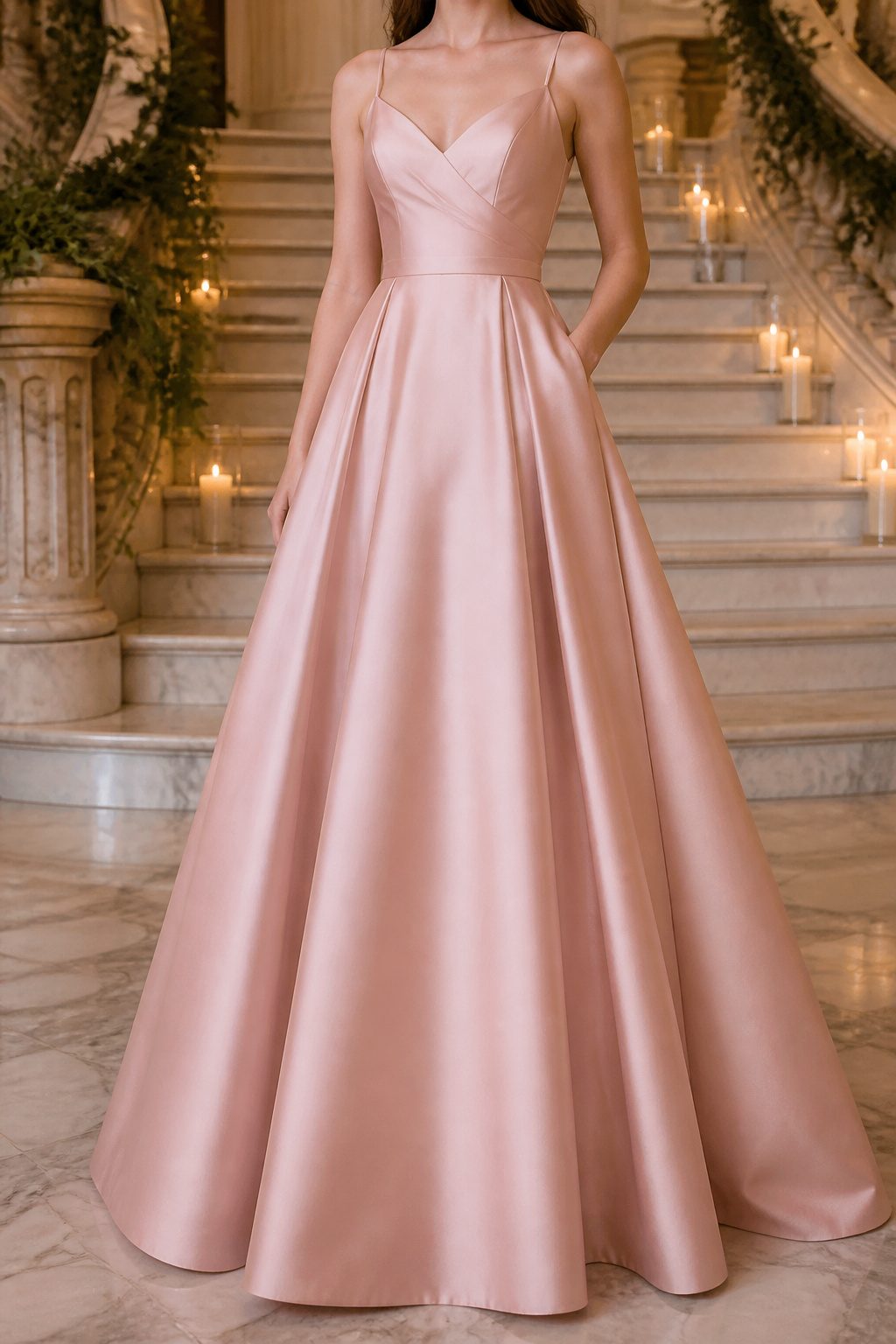
A long A-line dress is fitted at the bust and gradually widens toward the hem, creating that classic "A" shape that works on nearly every body type.
The structure defines your waist without clinging to your hips, which is why it remains the safest silhouette if you are ordering online without trying on first.
You will see this cut everywhere from homecoming to black-tie weddings, though for prom it hits the right note of formal without trying too hard.
Prices run from about $45 to well over $1,000, depending on fabric and construction.
At the lower end you are looking at polyester or simple satin; at the upper end, designers like Jovani, Sherri Hill, and Faviana build these in layered tulle or hand-beaded bodices with corset closures that actually stay put through hours of dancing.
LaDivine also cuts a strong A-line if you want something between the budget basement and the four-figure investment.
The shape does not demand a train or heavy skirt to read as elegant, so you can get away with less volume than a ball gown and still photograph well from every angle.
2. Mermaid Dresses
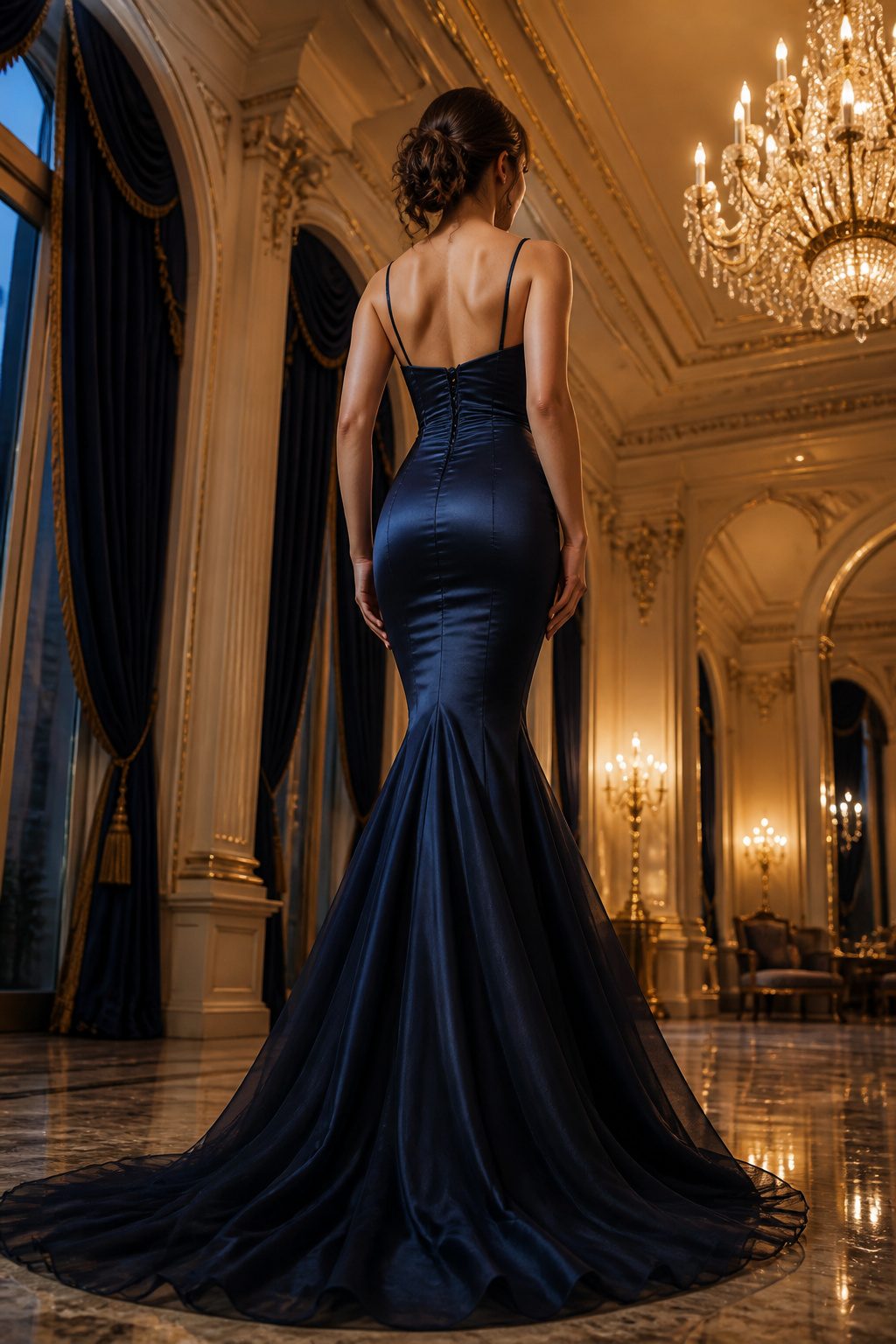
A mermaid dress grips the body from chest to knee, then kicks out in a flare that demands attention with every step.
That late flare is the whole point: it sits lower and tighter than an A-line, which starts its gentle widen at the natural waist and keeps the skirt soft enough to walk in without thinking.
The mermaid asks you to plan your stride, and rewards you for it.
Hourglass and pear shapes tend to own this silhouette, since the cut builds in waist definition and lets the flare balance fuller hips.
If you carry weight through the middle or prefer to move freely on the dance floor, this is probably not your easiest choice.
Fabric choice changes the drama entirely. Satin mermaid dresses read sleek and expensive under low light, the kind of thing you see from Zac Posen or a house like Jovani in their evening collections.
Chiffon overlays soften the line and make the flare feel lighter, almost like it is floating rather than structured.
Tulle builds real volume down there, the full princess effect but anchored to a body-conscious top. Sequins on a mermaid cut are not subtle; they catch light at every curve, and the dress becomes the event.
What convinced me, reading through how these are built, is that the material does not just decorate the shape. It decides whether you glide or you stride.
3. Ball Gowns
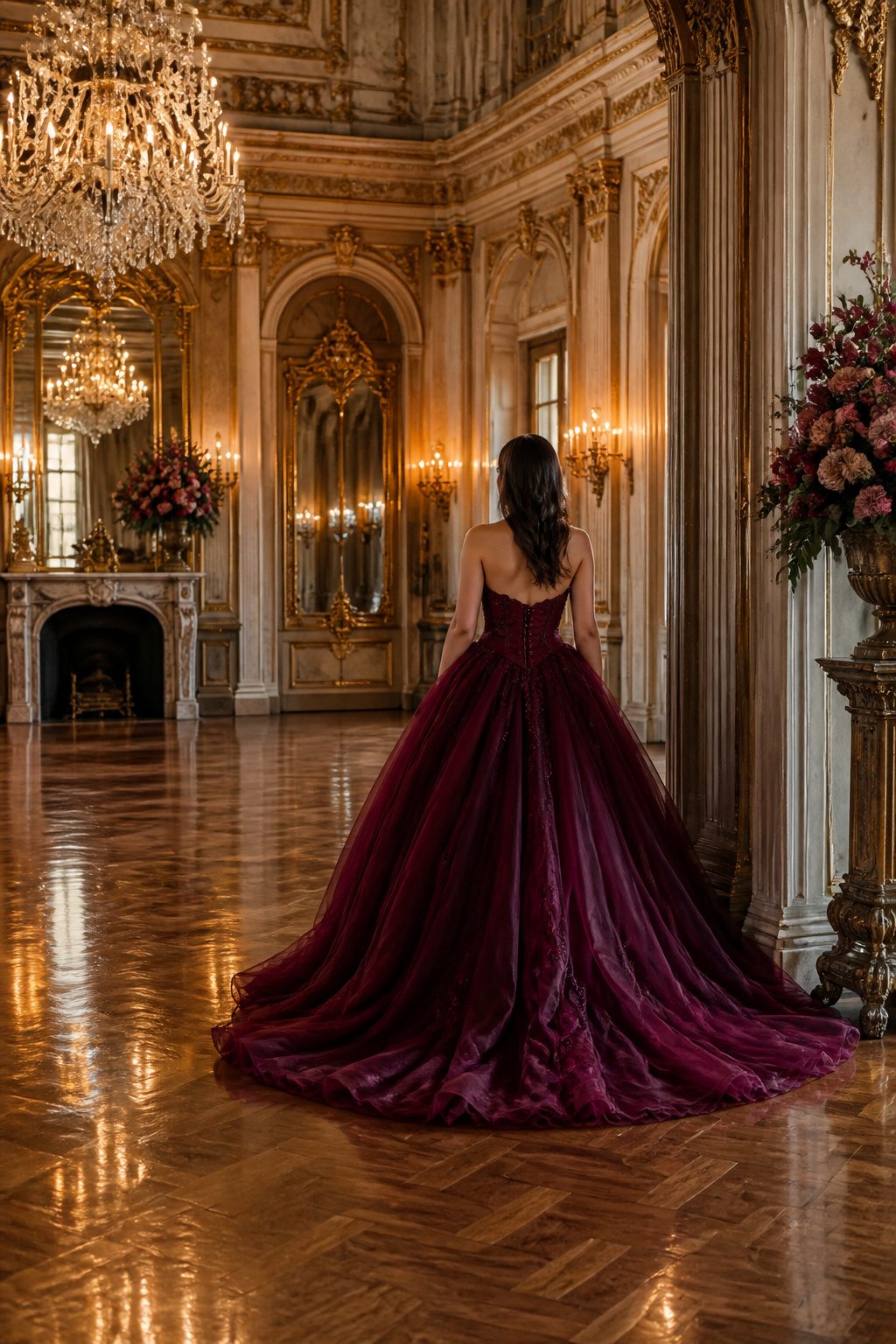
A ball gown lives or dies on the tension between its fitted bodice and the skirt it releases.
That contrast is what reads as princess-like from across a ballroom, but it also decides whether you can sit through dinner without the waist digging in or dance without stepping on your own hem.
The formality question is straightforward. This shape owns the room at a black-tie prom or any venue with a grand staircase and professional photography.
It starts to look like costume at a hotel conference room with fluorescent overheads. Match the dress to the architecture, not the fantasy.
For dancing, the skirt’s volume is the problem you solve.
Tulle builds that structure through layers of netting that hold their shape without weight. Satin, heavier and more fluid, needs petticoats or built-in crinoline to achieve the same bell.
Tulle lets you move faster; satin photographs richer. Budget roughly $115–$220 for ready-to-wear ball gowns from mid-range formal retailers.
Below that, the bodice boning tends to collapse by midnight. Above it, you are paying for hand-finishing you will not see in prom lighting.
4. Short Dresses
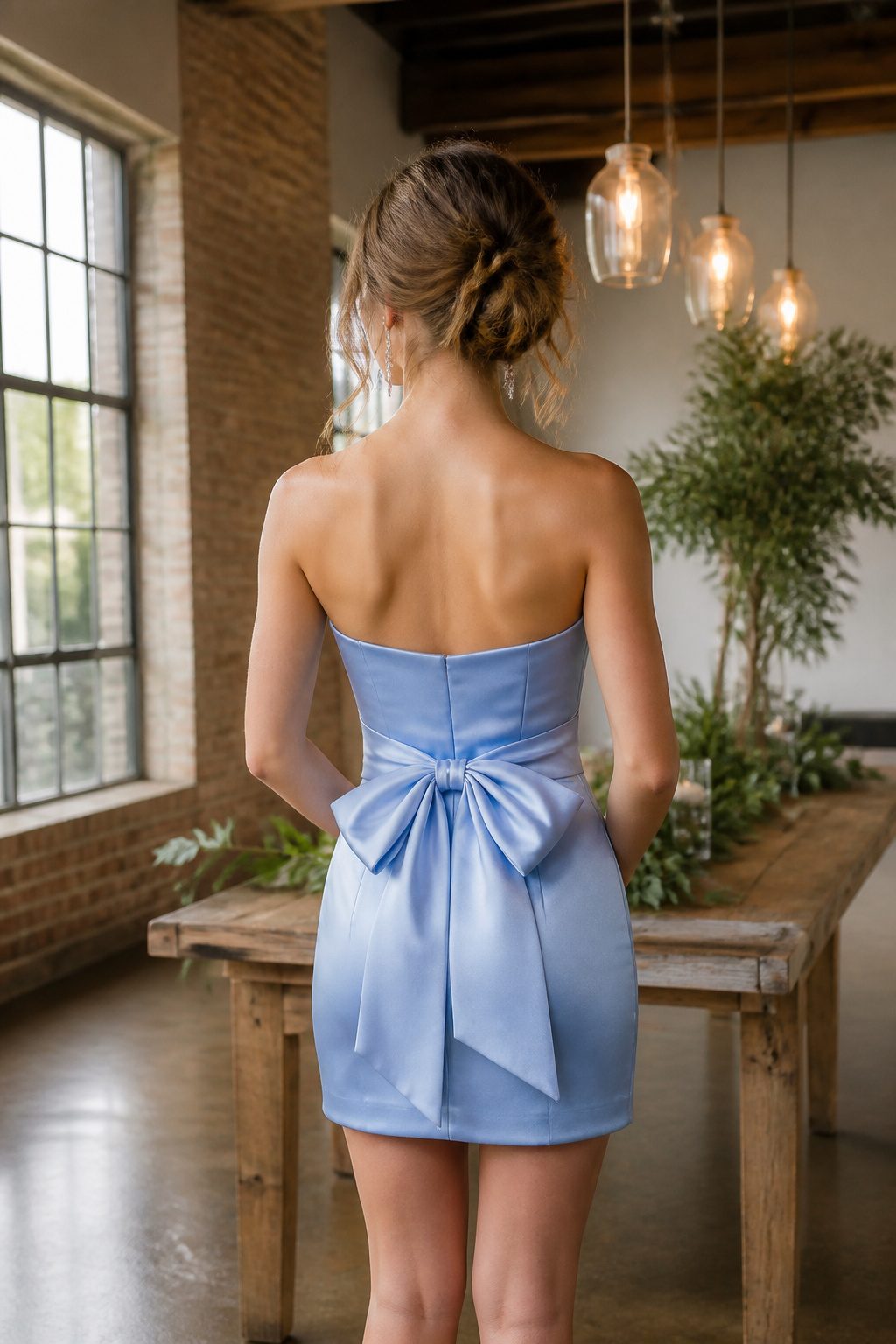
Short dresses for prom are not a mistake. They are a choice, and one that works when the event itself has shifted downward in formality.
A true casual prom looks like this: the venue is a school gym or a rented hall without the full sit-down dinner, the ticket price sits lower, and the crowd shows up in everything from jumpsuits to separates.
If your prom posts a dress code at all and the word "cocktail" appears anywhere, you are in this territory. Judge it by the ticket price and the venue before you judge it by what your friends are wearing.
Length sits on a spectrum. A midi that hits mid-calf reads more formal than you think, especially in a structured sheath with a jewel neck or a bow detail.
Move shorter to a true mini, like the Edikted Pheona strapless at $69, and you land firmly in after-party territory. The $87.95 bow-detail midi in black or navy splits the difference.
What convinced me, reading through the collections, is that the detail work matters more than the inches: a corset bodice or off-shoulder cut lifts a short dress out of looking like you borrowed a homecoming look.
The midi is your safest bet if you are unsure where your prom falls on the formality scale.
5. Two-Piece Dresses
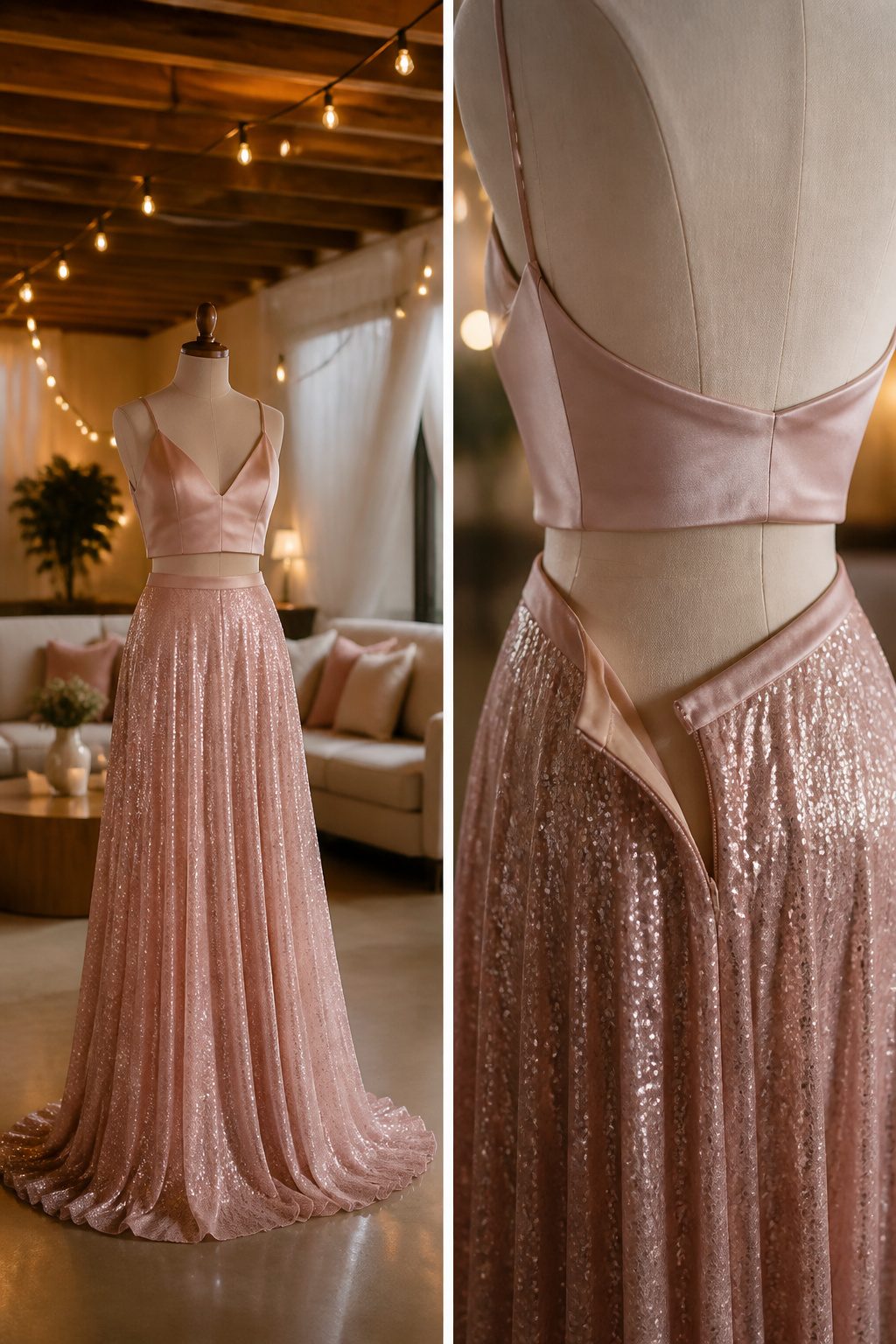
A two-piece prom dress lets you pair a plunging v-neck satin crop with a sequin maxi skirt, or swap either half for something else entirely.
The real advantage is fit: your torso and your hips rarely size the same way, and separates let you get each piece right without tailoring a whole gown.
After prom, that top works with high-waisted trousers; the skirt reads formal on its own with a simple shell.
On the formality scale, this sits at traditional full-length prom, though you will want to check whether your school dress code has rules about midriff coverage before you commit.
The style reads modern rather than casual, especially in heavier fabrics like satin or all-over sequin. The risk is costume-y if the contrast between pieces gets too loud, so one quiet element keeps it elegant.
6. Plus Size Dresses
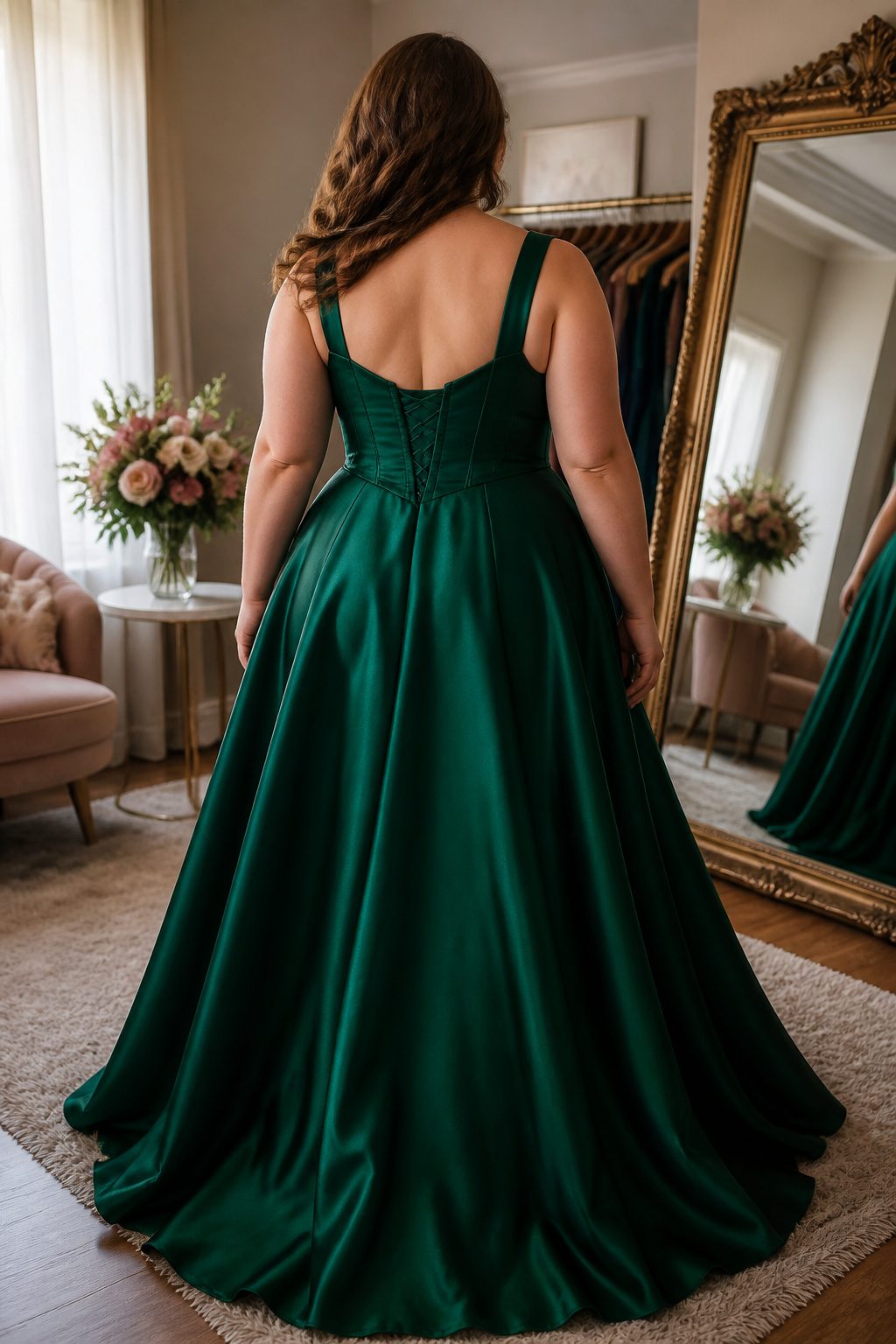
Plus size elegant prom dresses are built differently from straight sizes, and the difference matters once you start moving.
Look for gowns with built-in corsetry or boning through the bodice, not just extra fabric laid over a standard shell. The waistline should sit at your actual waist, not where a size chart assumes it is.
Designers like LADivine, Mac Duggal, and Jovani cut their extended ranges with adjusted proportions rather than simple grading up, which keeps the neckline and armholes from gaping.
A-line skirts with structured bodices tend to photograph and move better than unstructured sheaths in larger sizes.
If you are between measurements, take the larger size and alter down; prom dress fabric rarely gives, and a too-tight bodice will ride or buckle by the end of the night.
7. Unique Styles
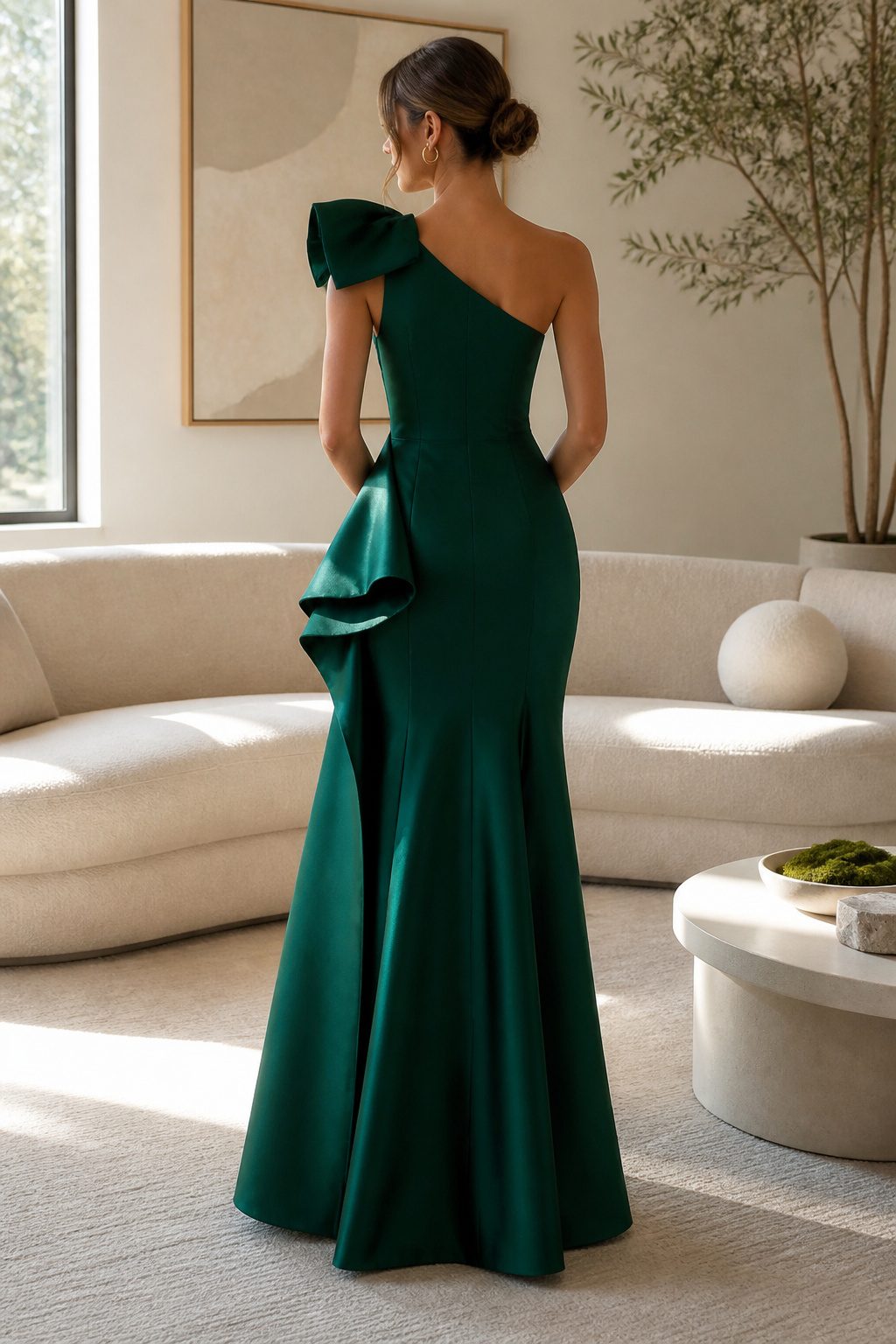
A dress that stands out because of a single bold choice photographs better than one that tries everything at once. Emerald green, pastel pink, gold, and silver are the colors that read as distinctive without tipping into costume territory.
Metallics like gold and silver catch light beautifully; the risk is looking like a disco ball, so keep the cut simple if the fabric shines.
Same rule in reverse: a sculptural emerald or pastel pink shape needs minimal jewelry, or the effect turns cluttered.
The line between memorable and regrettable usually comes down to one extra detail too many. Bold color plus bold print plus bold accessories is where prom photos become cringeworthy years later.
Pick your single statement: the color, the silhouette, or the embellishment. Let the other elements support it quietly.
If you are drawn to something truly unusual, ask whether you would still like it with your hair flat and your date’s arm around your shoulder. That is the version the camera keeps.
Popular Colors
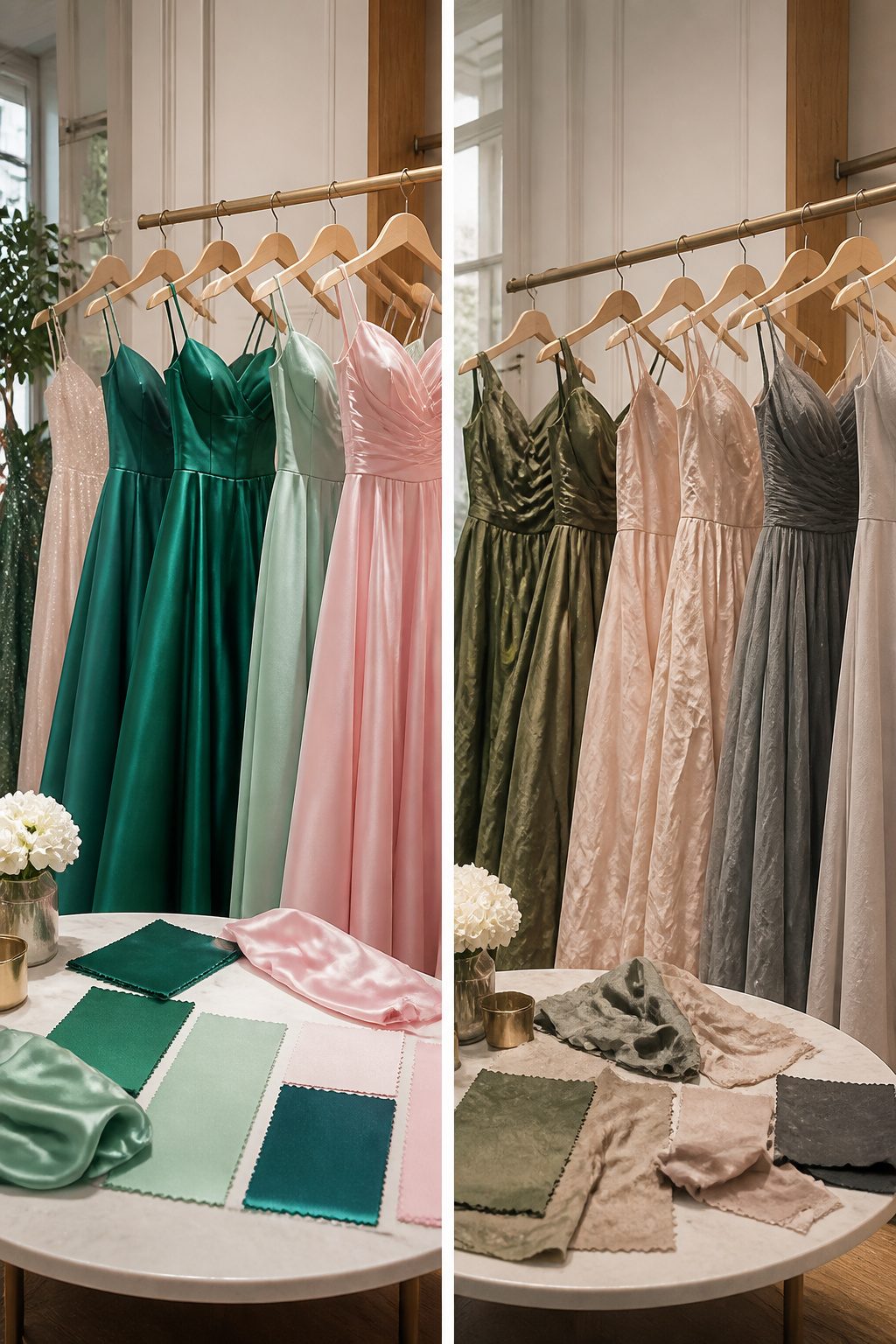
Emerald green, pastel pink, and metallics like gold and silver dominate the color boards every prom season, and the reason is practical before it is fashionable.
These colors survive the lighting you are actually walking into, not just the ones in the store. Emerald green holds its depth under fluorescent gymnasium overheads and still registers as jewel-toned in phone flashes and candlelight.
Pastel pink, especially in matte satin or crepe, reflects enough warmth to keep you from washing out in venues that run cool, and it softens under dimmer switches rather than turning muddy.
Metallics do the opposite work: gold and silver create their own highlight, which means you stay visible in a darkened ballroom without reading as costume.
Skin tone matters less than most guides suggest, but venue does.
Gold flatters under warm bulbs, which most hotel ballrooms use; silver reads cleaner in LED-heavy spaces, which newer event halls favor. If your prom is outdoors or in mixed light, emerald green carries across both without shifting.
Pastel pink risks going flat under pure LED, so look for a blush with a little peach in the base rather than a cool baby pink.
The metallics to avoid are the ones that compete with the venue, not your skin: rose gold is elegant in a candlelit room but can turn brassy under cheap fluorescents, while champagne reads as neutral almost everywhere.
Choose the color for where you will stand, not for the mirror in the dressing room.
Dress Lengths
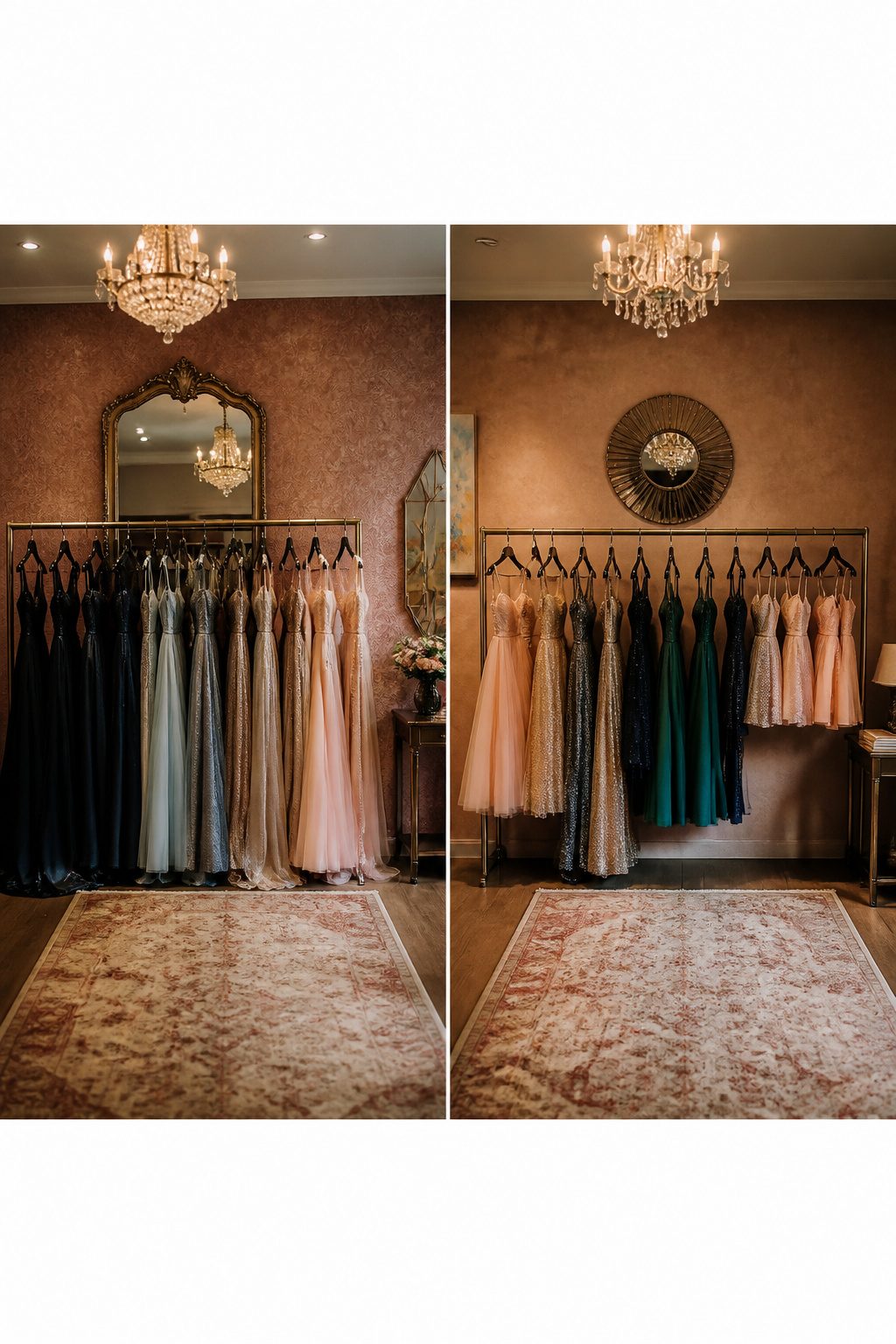
Floor-length gowns still carry the weight of tradition for any formal night, and most invitations that specify "black tie" or name a hotel ballroom are quietly asking for that hem to sweep the ground.
Read the venue before you commit to a length: a posted dress code beats guessing, and even the phrase "cocktail attire" signals you can drop below the knee without looking underdressed.
Midi cuts split the difference and move well on a dance floor, though they demand a heel with real height to keep the proportion from truncating your leg.
Short styles work when the event leans casual, a backyard tent or a rented loft where a long skirt collects dust and cobwebs; pair them with a strappy sandal you can actually walk in, not the platform you white-knuckled last year.
The one mistake worth avoiding is choosing length for drama alone and forgetting how you’ll sit, step into a car, or stand through three hours of photos.
Materials
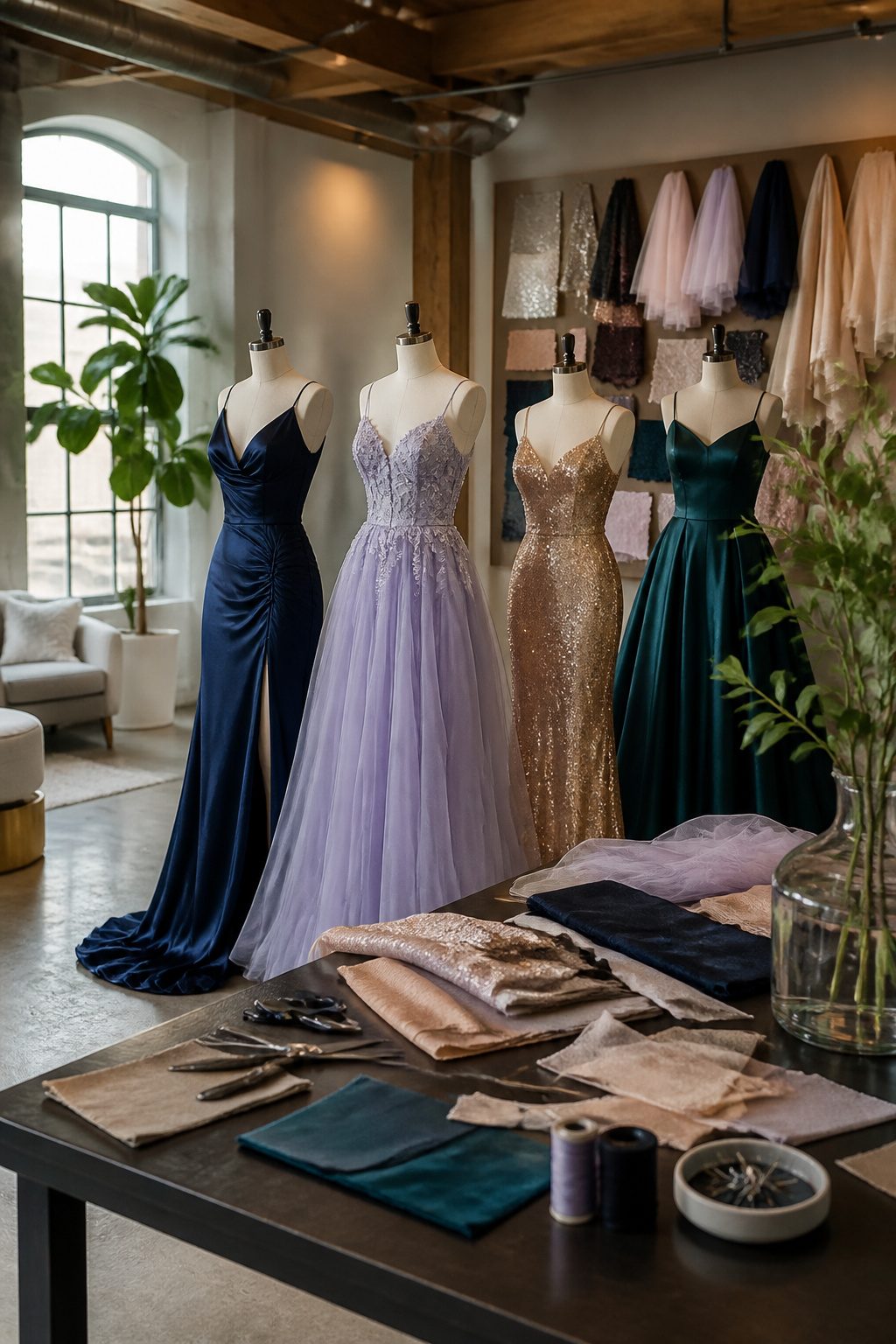
Chiffon moves like water and photographs softly, which makes it forgiving under venue lighting, but it layers well for warmth if your prom falls before May.
Satin gives you that liquid-gold reflection that reads expensive on camera; the tradeoff is weight and a tendency to show every wrinkle from the car ride over.
Tulle builds volume without the heaviness of older crinolines, though the full skirts trap heat and can feel like wearing a cloud that slowly becomes a sauna.
Sequins catch light dramatically, and reviewers note the fallout during unboxing as a real annoyance, but the payoff in flash photography is hard to match.
Price spreads run wide: the Dress Outlet lists satin off-shoulder styles around $158, tulle ball gowns near the same mark, and sequin-lace chiffon combinations closer to $141.
The beaded mermaid gowns sit higher, around $218. What convinced me, reading through the listings, is that the fabric choice matters more than the label for how you’ll feel three hours in.
How to Measure
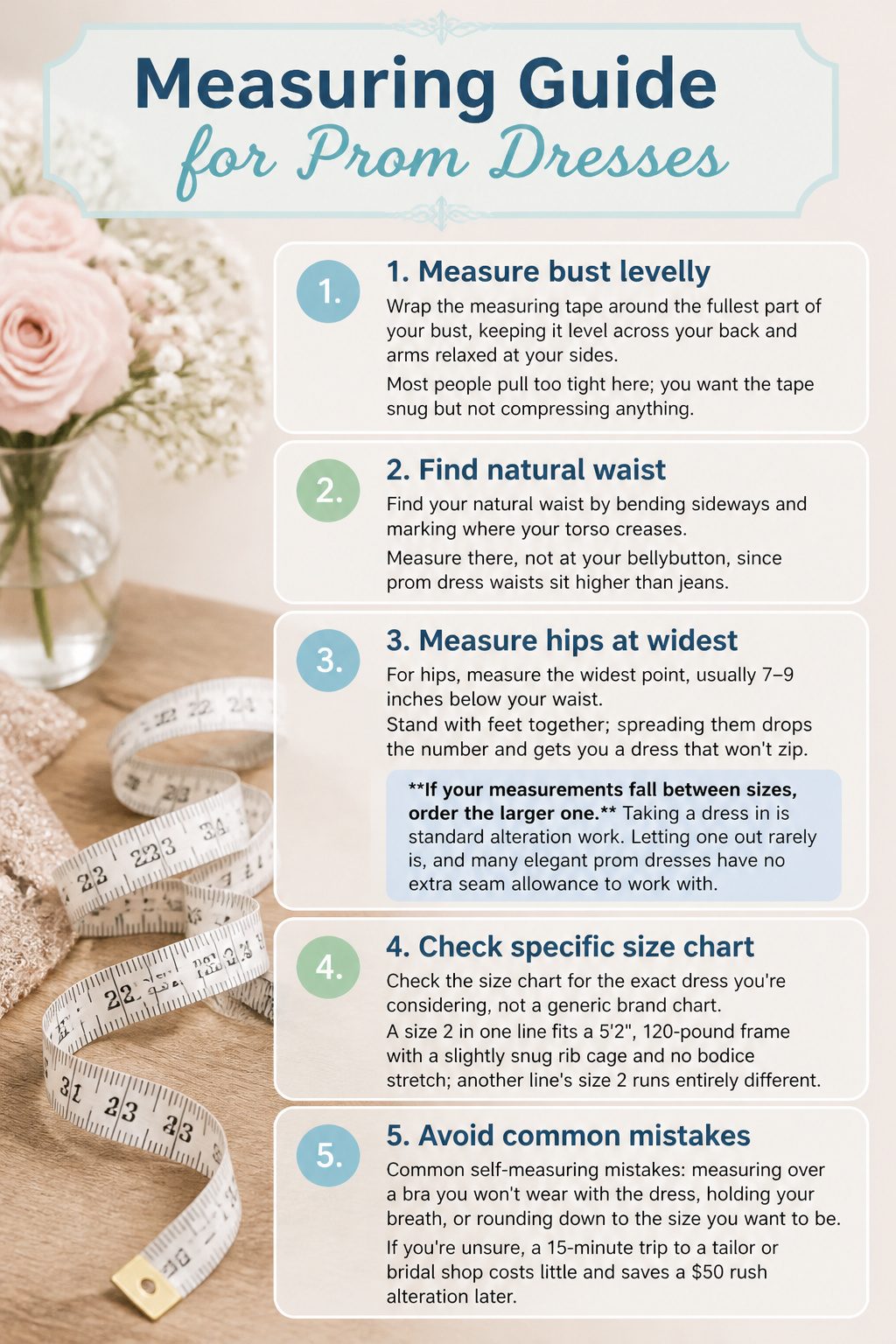
- Wrap the measuring tape around the fullest part of your bust, keeping it level across your back and arms relaxed at your sides. Most people pull too tight here; you want the tape snug but not compressing anything.
- Find your natural waist by bending sideways and marking where your torso creases. Measure there, not at your bellybutton, since prom dress waists sit higher than jeans.
- For hips, measure the widest point, usually 7–9 inches below your waist. Stand with feet together; spreading them drops the number and gets you a dress that won’t zip.
If your measurements fall between sizes, order the larger one.
Taking a dress in is standard alteration work. Letting one out rarely is, and many elegant prom dresses have no extra seam allowance to work with.
- Check the size chart for the exact dress you’re considering, not a generic brand chart. A size 2 in one line fits a 5’2", 120-pound frame with a slightly snug rib cage and no bodice stretch; another line’s size 2 runs entirely different.
Common self-measuring mistakes: measuring over a bra you won’t wear with the dress, holding your breath, or rounding down to the size you want to be.
If you’re unsure, a 15-minute trip to a tailor or bridal shop costs little and saves a $50 rush alteration later.
Frequently Asked Questions
What kind of prom dress should I get?
Match the dress to your event’s formality and venue: ball gowns own a black-tie hotel ballroom, while short or midi styles fit a casual school gym or loft space.
A-line dresses are the safest silhouette for most body types and easiest to order without trying on first.
Mermaid cuts flatter hourglass and pear shapes but restrict movement, and two-piece sets solve fit problems when your torso and hips size differently.
What are popular colors for prom dresses?
Emerald green, pastel pink, gold, and silver dominate every season because they survive real venue lighting. Emerald holds depth under fluorescents and phone flashes; pastel pink in matte satin or crepe keeps warmth in cool-lit rooms.
Gold flatters under warm bulbs, silver reads cleaner in LED-heavy spaces, and rose gold can turn brassy under cheap fluorescents so choose it carefully.
How do I choose the right size in women’s prom dresses?
Measure your bust at its fullest point, your natural waist where your torso creases when you bend sideways, and your hips at their widest point with feet together.
Compare these numbers to the size chart for the exact dress you want, not a generic chart, and order the larger size if you fall between sizes.
Taking a dress in is standard; letting one out rarely works since elegant prom dresses often have no extra seam allowance.