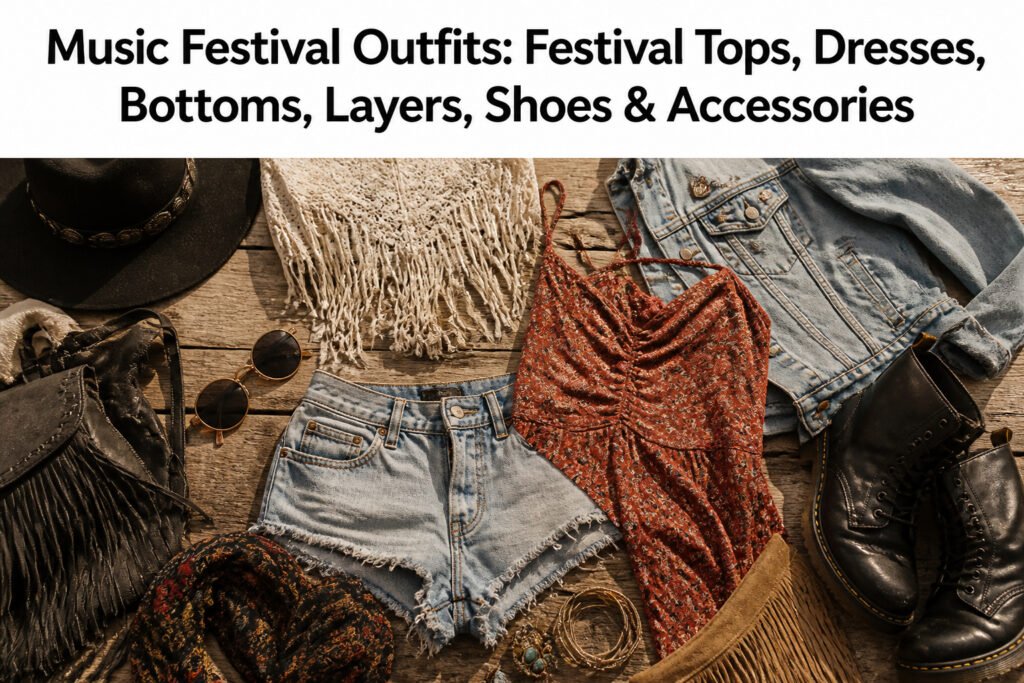
Music festival outfits are the practical clothes you wear to survive eight hours of heat, crowds, and sudden rain while still looking like yourself.
The mistake is treating them as costumes instead of functional clothing: one hero piece, grounded by simple everything else, is what separates personal style from dressing up.
A corset top or sequin dress does the work so you are not adjusting trends between sets.
Festival Tops
A corset-inspired top is one of the most flattering pieces you can pack for a festival, and it pairs with almost anything: short shorts, a flowy skirt, whatever you already own.
The structure does the work, so you don’t need to stack trends on top of it. Pick one hero piece and let it carry the outfit.
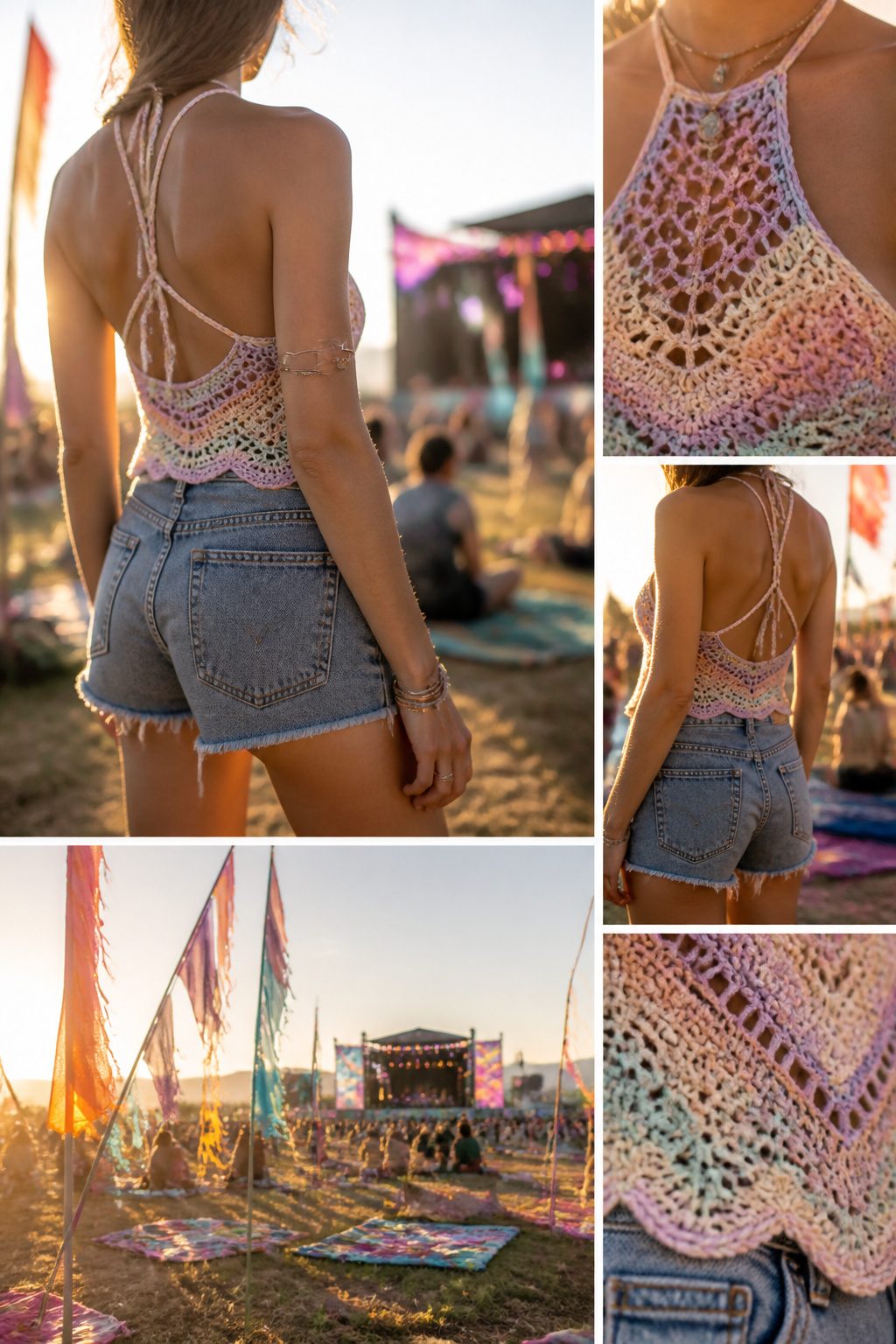
Crochet and open-knit textures hit the same note with less structure.
The breathability matters more than most people think until they’re three hours into a set in 90-degree heat, and the ’90s boho reference reads as personal style rather than costume if you keep the rest simple.
Bodysuits solve a specific problem: dancing for hours without adjusting. Everything stays put, which means you stop thinking about your clothes and start thinking about the set.
Baby tees and graphic tees do the opposite job, leaning into comfort and nostalgia, showing taste without trying to construct a look. The graphic you already own is usually better than the one you buy for the occasion.
Dresses
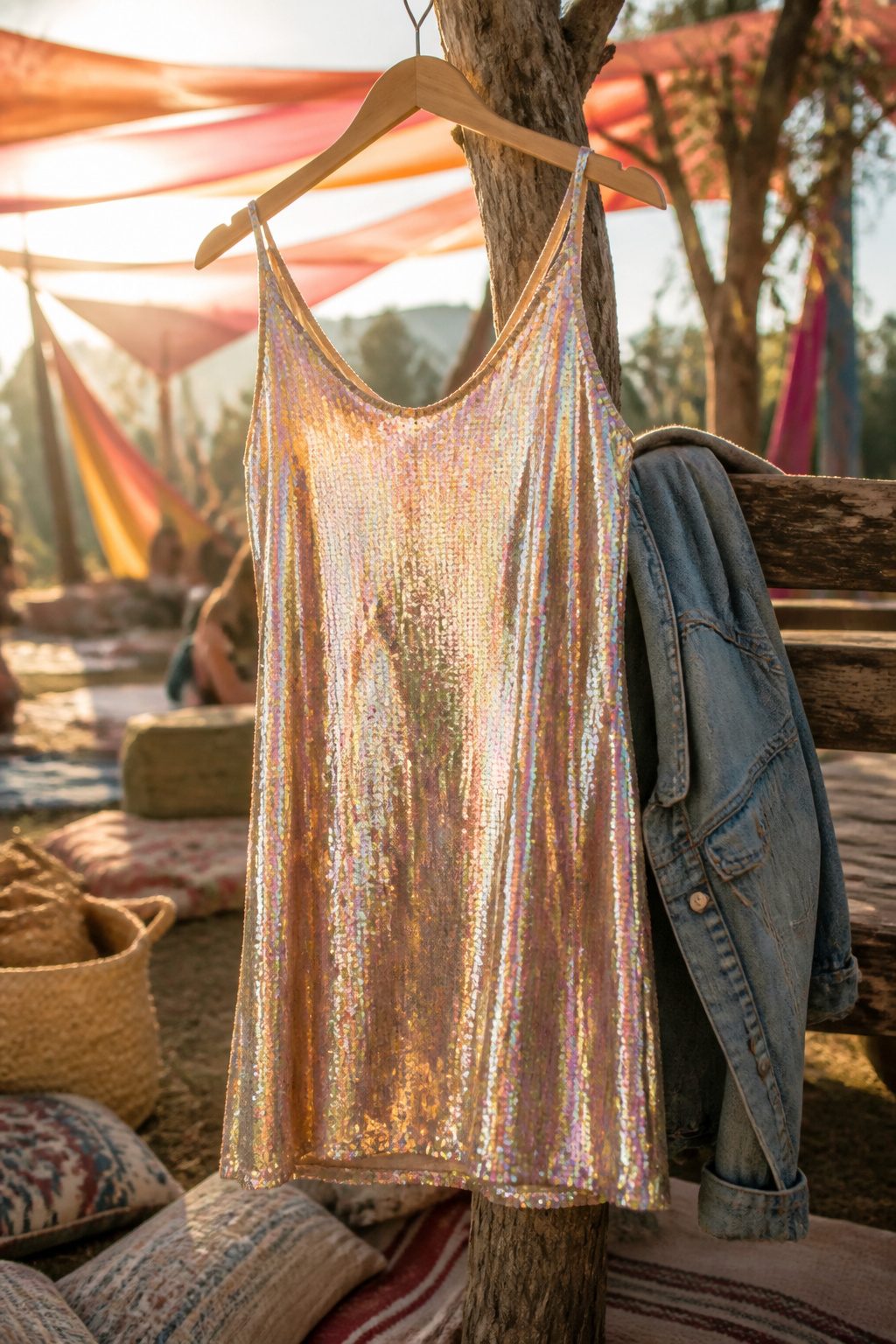
A sequin dress delivers instant impact with minimal effort, which is exactly what you want when packing light for a weekend festival.
The trick is keeping it from reading as costume. Choose one with a relaxed fit or a soft lining so you can still move, still breathe, and still feel like yourself at hour six.
Slip dresses carry that ’90s sensibility without trying too hard. The spaghetti straps and light-catching sheen do the work; you just add a baby tee underneath or a jean jacket on top when the temperature drops after sunset.
Smocked and tiered dresses solve the heat problem differently.
Smocked styles stay snug at the chest then release into breathable volume below; tiered versions trade structure for something softer and more romantic. Both handle sun and crowd crush without complaint.
Pick one hero piece. Keeping the balance means having fun, staying true to personal style, and exercising some restraint.
— Macy’s
That restraint is what separates festival dressing from costume. One statement, grounded by simple everything else.
Bottoms
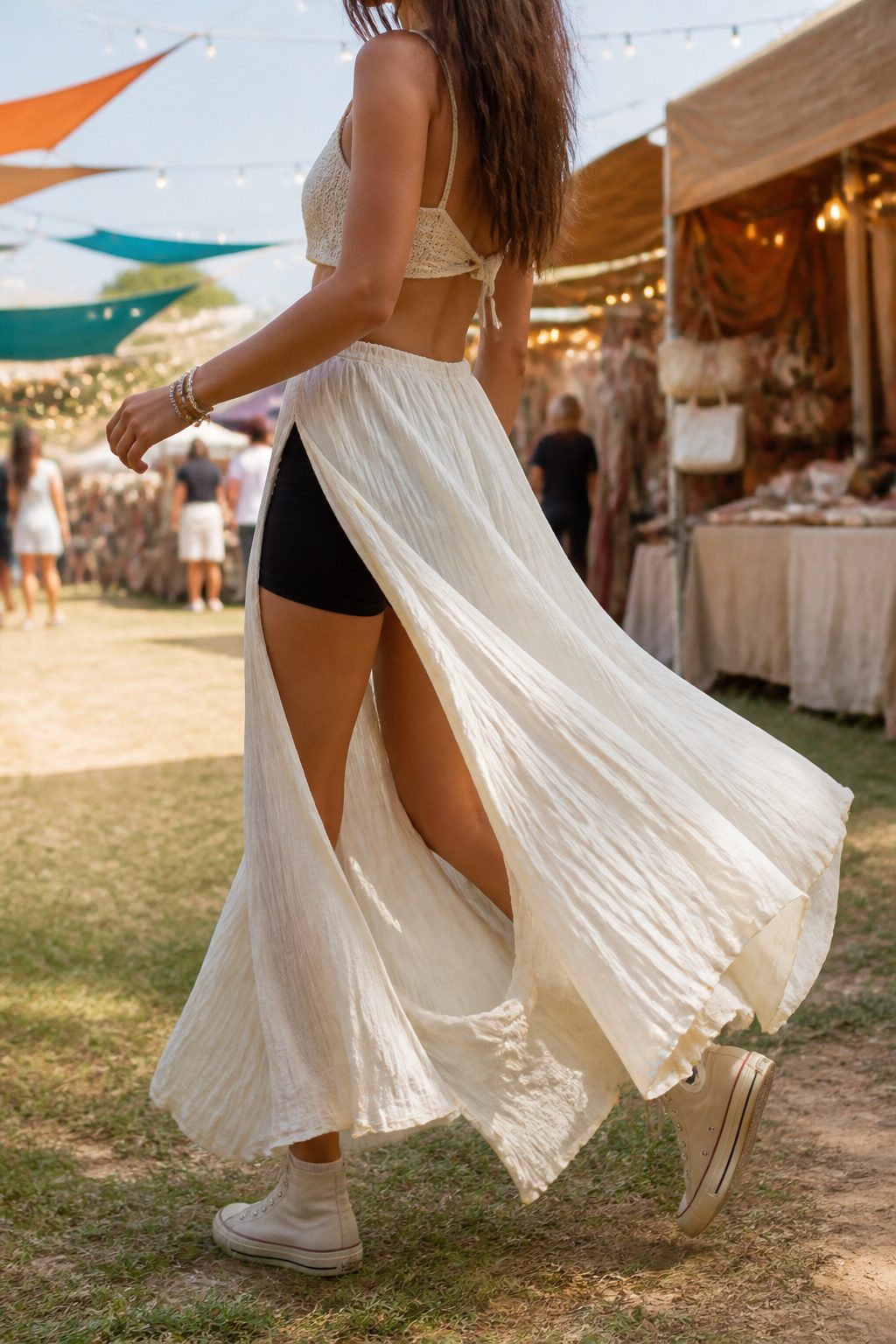
Bottoms ground the whole look, and at a festival they earn their place by how they move through crowds and how long you can stand in them.
A maxi skirt is the easiest win here: the length is flattering on most frames, the fabric keeps air moving, and the hem is surprisingly easy to walk in even across uneven ground.
Wear biker shorts underneath and you sidestep the chafing that ruins day two.
Mini skirts trade some of that coverage for heat relief and a lighter energy. They work best when you already know your top layer and want the silhouette to read as playful rather than practical.
For hands-free storage, cargo pants and parachute styles split the difference. Cargo pants run medium to heavy in cotton with that utilitarian pocket layout; parachute pants drop the weight to a nylon or polyester shell that barely registers in heat.
Both carry the Y2K utility vibe, and both let you ditch the crossbody bag.
Denim shorts are the reliable fallback.
They pair with anything, belted or loose, under an oversized button-down or a fitted knit. The only mistake is grabbing a pair with no stretch and finding out eight hours in that the waistband has become a problem.
Layers
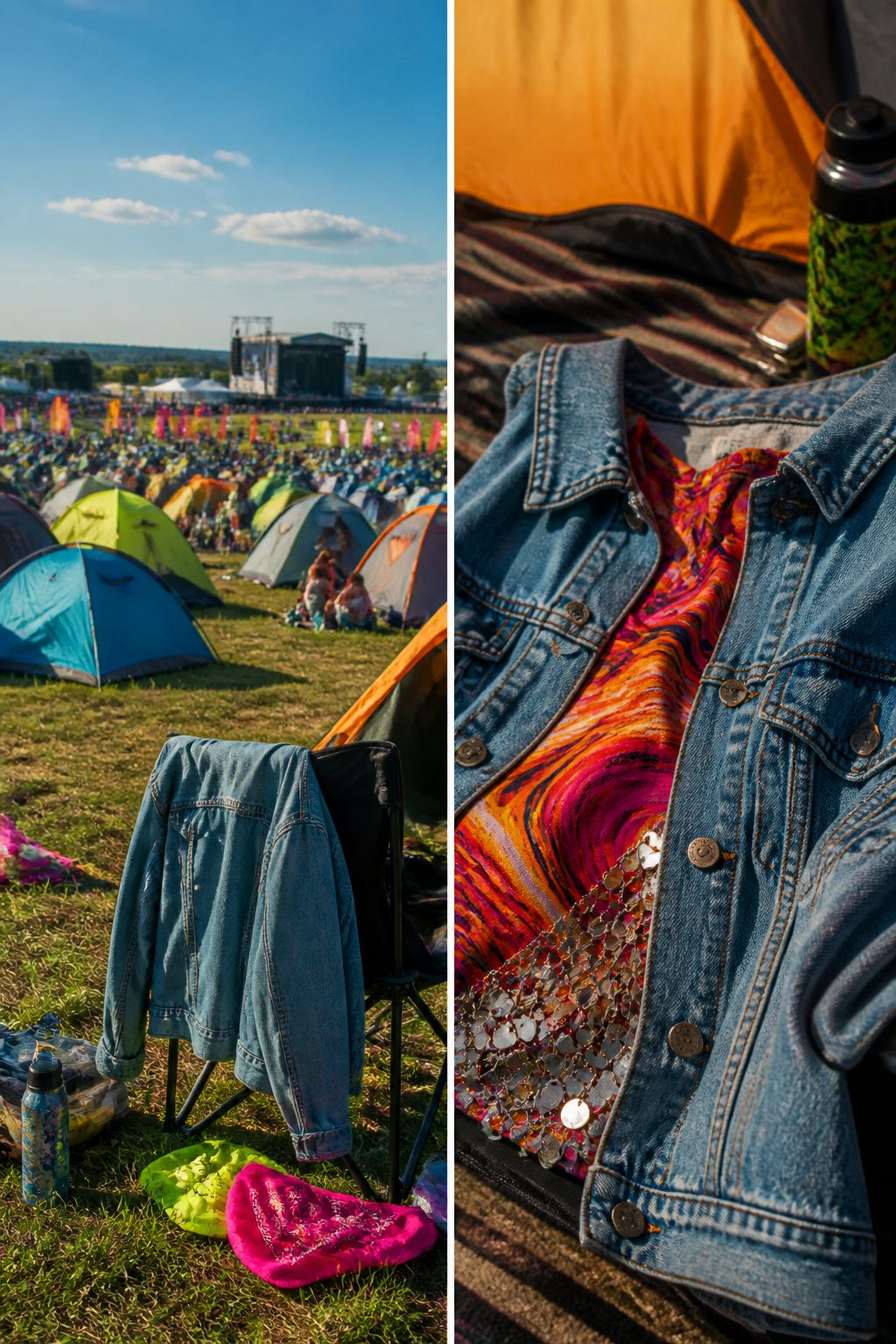
Festival weather turns on you fast. Daytime sun can push into the nineties while post-sunset drops leave you shivering in a tank top.
The layer you carry should add warmth without adding bulk, or you will ditch it by the second set and never see it again.
Denim jackets and light bombers are the workhorses. They pair with basically everything, photograph well, and handle the temperature flip without looking like you came prepared for a different event entirely.
An oversized button-down is the lighter alternative: open it for airflow, button it after dark, or tie it at the waist when you are done.
Cropped jackets keep the line cleaner, especially with high-rise shorts or a breezy mini dress, and they do not swallow your shape in fabric you do not need.
Rain is the variable that ruins more festivals than bad sets. A packable shell or ultra-lightweight trench packs down small and adds virtually zero weight.
The mistake is bringing something that handles water but not heat, so you sweat through the liner by noon. Check the forecast, then pack for the forecast being wrong.
Shoes
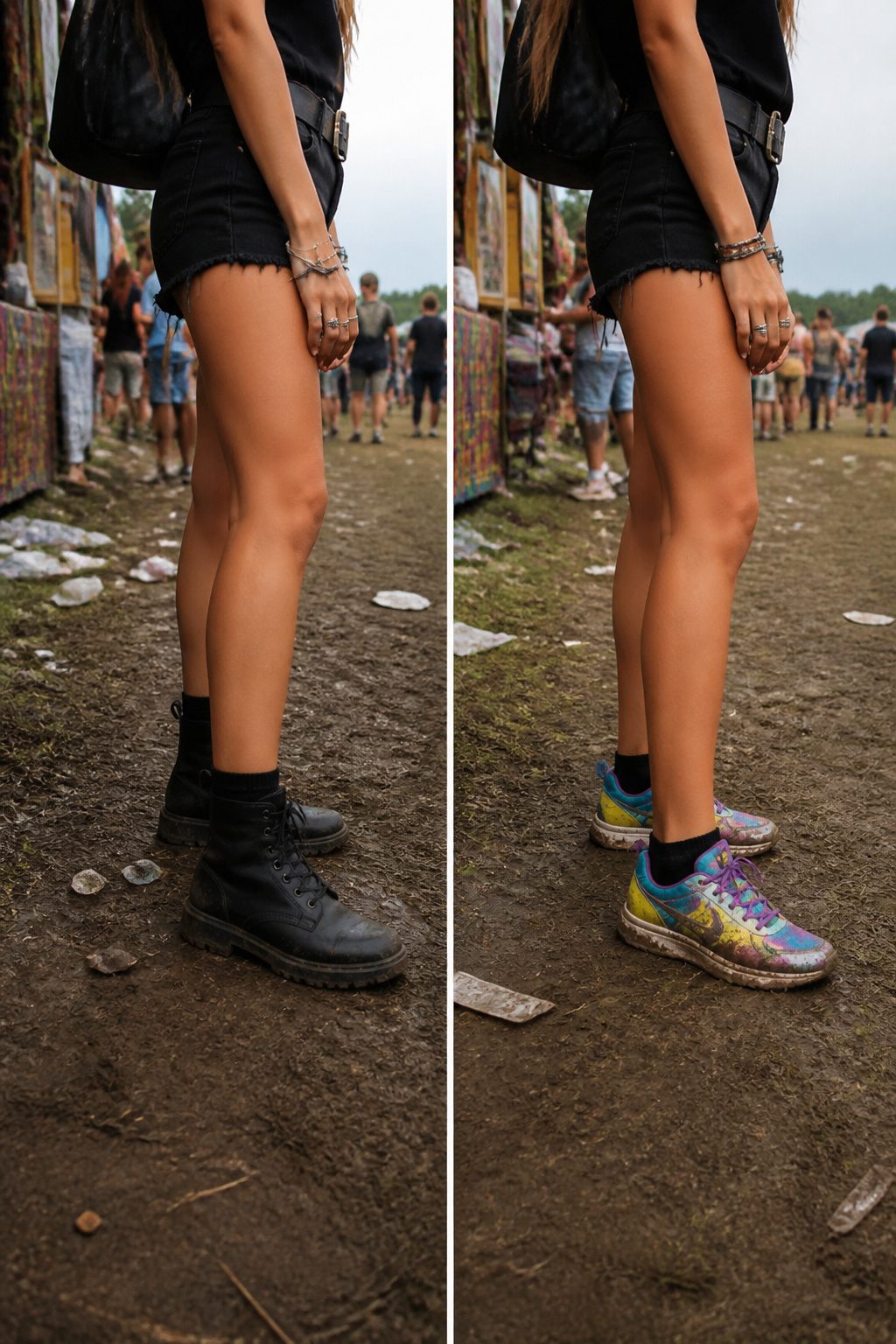
Sneakers are the safest all-day pick for festival shoes. They handle the miles of walking, hours of standing, and sudden bursts of dancing without the gamble of blisters or rolled ankles.
The best part is the range: you can grab a clean white pair that disappears under a maxi dress or go loud with color and mesh panels, and either way you are covered.
Platform sandals and platform sneakers give you height, but only if the ankle strap is doing real work.
A wobbly lift on uneven grass turns a look into a liability fast. Test the buckle before you commit; if your heel lifts out when you walk, that shoe is not festival-ready.
Chunky boots work when the forecast looks grim or the lineup leans dark and distorted.
They laugh off dust, spilled drinks, and the mud that collects near the barricade. The catch is the break-in.
A stiff boot on day one will shred your heel by the third set. Wear them to three grocery runs first, minimum.
One rule that crosses all three: new shoes on festival day are a mistake you will feel by noon. Comfy socks, blister patches, and a few bandages in your bag cost almost nothing and save the whole trip.
Accessories
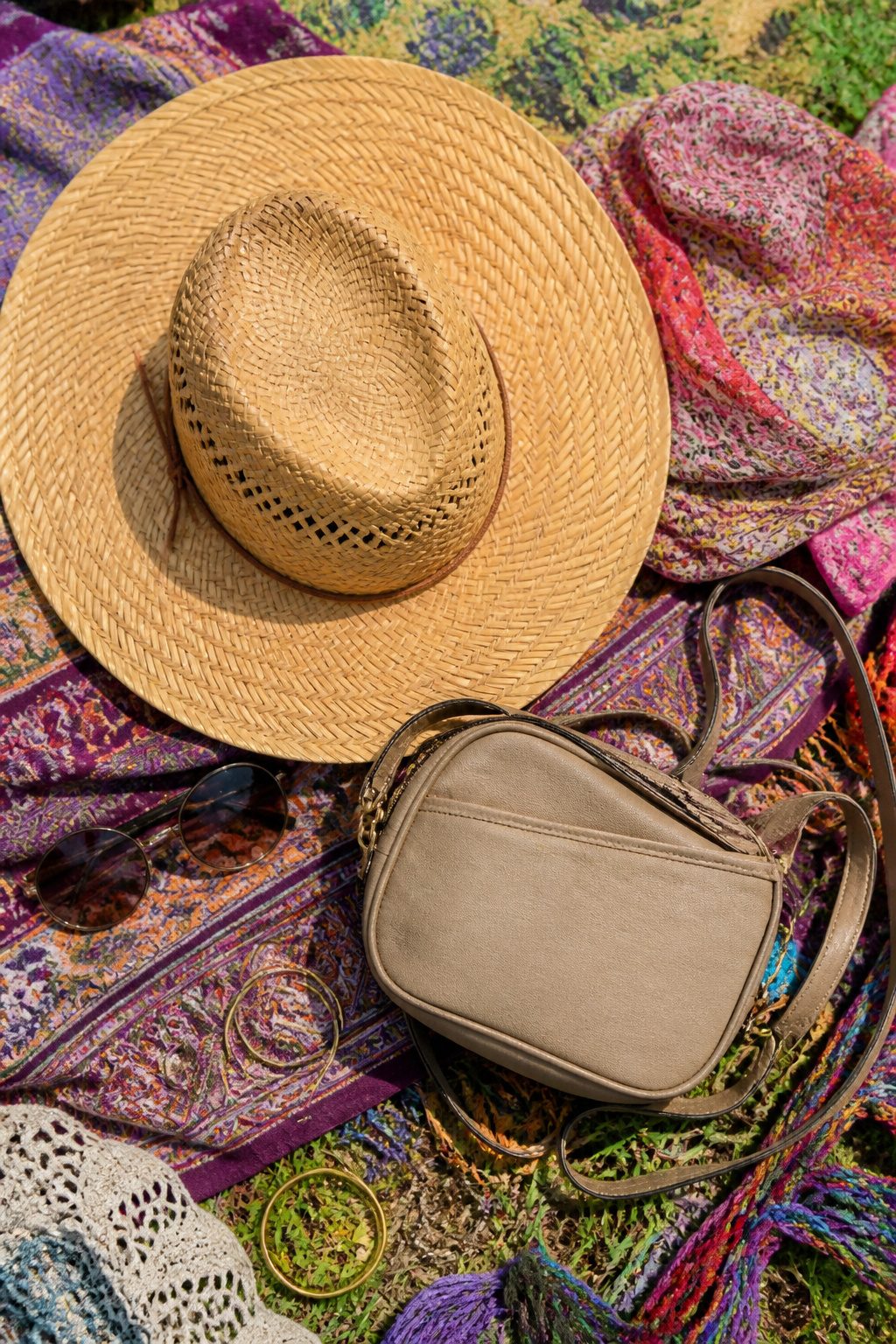
A crossbody or belt bag filled with essentials keeps festival day fun because your hands stay free for dancing, phone filming, or holding a drink.
Pick one that sits flat against your body so it does not swing into strangers when you move through a crowd.
Sunglasses and a wide-brimmed hat are not optional if you are out from noon to sunset. The hat covers ears and neck the sunscreen will sweat off; the sunglasses keep you from squinting through every set.
For jewelry, lightweight wins.
Petite gold hoops, ring stacks, and fine necklaces add something without the weight that turns heavy by hour four. Skip anything that catches on a stranger’s bag strap.
Hair upgrades serve the same purpose. Claw clips, scrunchies, or headbands keep sweat at bay, or you can braid or ponytail the whole situation off your neck before the first act.
What to pack inside that bag: phone, portable charger, ID, cash for vendors with spotty card readers, lip balm with SPF, and a foldable poncho you will not believe you needed until the sky opens.
That is it. Overpacking means you haul it; underpacking means you miss the set hunting sunscreen.
Comfort That Lasts All Day
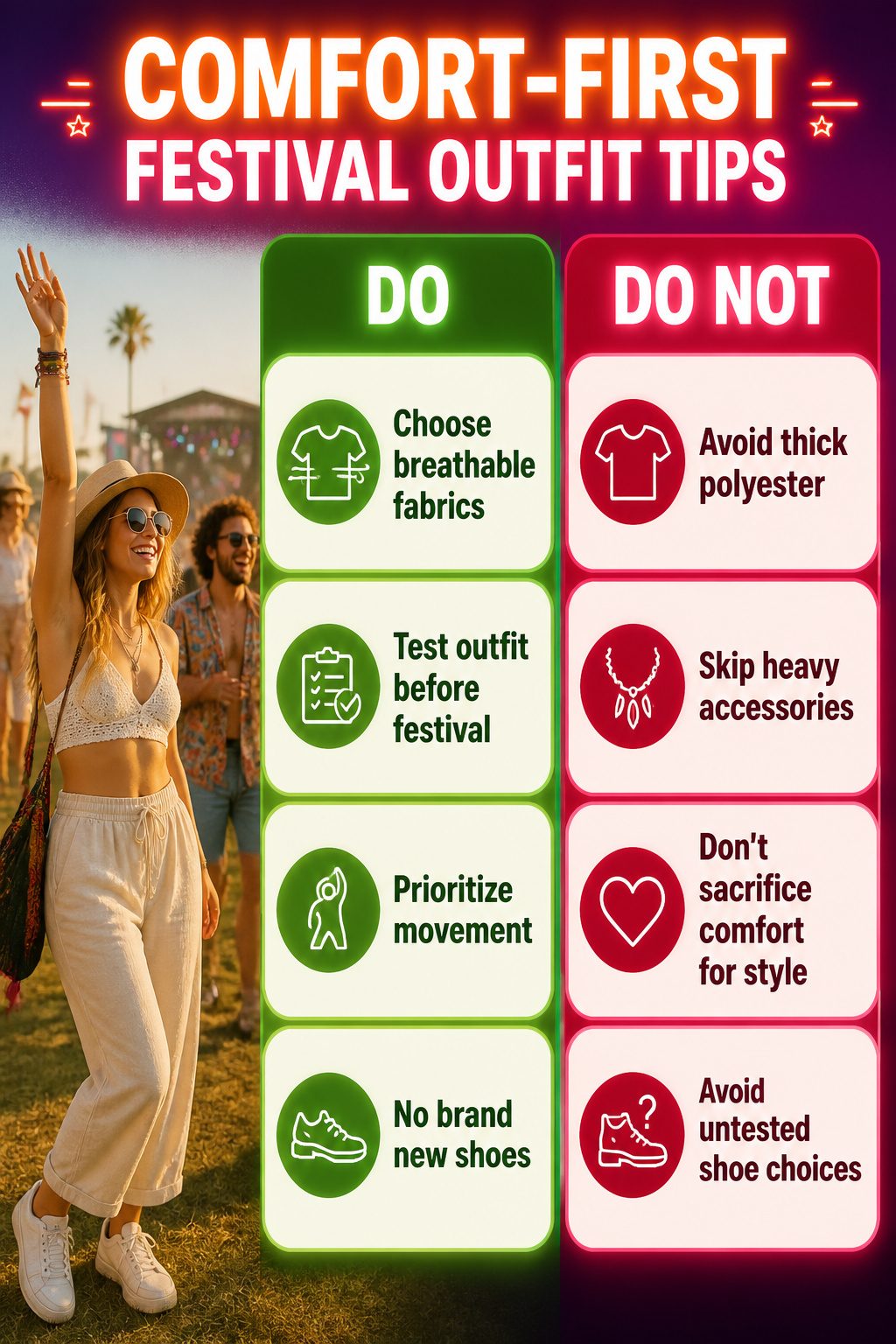
Breathable fabrics matter more than how a piece photographs.
Linen, lightweight cotton, and certain modal blends let air move against your skin when you are shoulder-to-shoulder in afternoon heat. Synthetic satins and thick polyester blends trap sweat; by hour three you will feel every wrong choice.
Test the outfit at home before you commit to it. Put it on, lace up the exact shoes you will wear, and spend two active hours in it.
Sit on the floor, reach overhead, walk up and down stairs. If a waistband rolls, a strap digs, or a hem rides up, it will do all of that multiplied across eight hours of dancing and walking between stages.
Movement is the test most people skip. A top that feels fine standing still will pinch when you lift your arms at a set.
Bottoms that look right in your mirror will chafe at the inner thigh by dusk if the inseam is wrong. You want pieces that pass the full range test without adjustment.
One limit worth accepting: no brand new shoes.
Festival terrain is unpredictable grass, gravel, and dust. Break in any footwear for at least a week beforehand, or you are managing blisters instead of watching the show you paid to see.
Personal Style Without the Costume
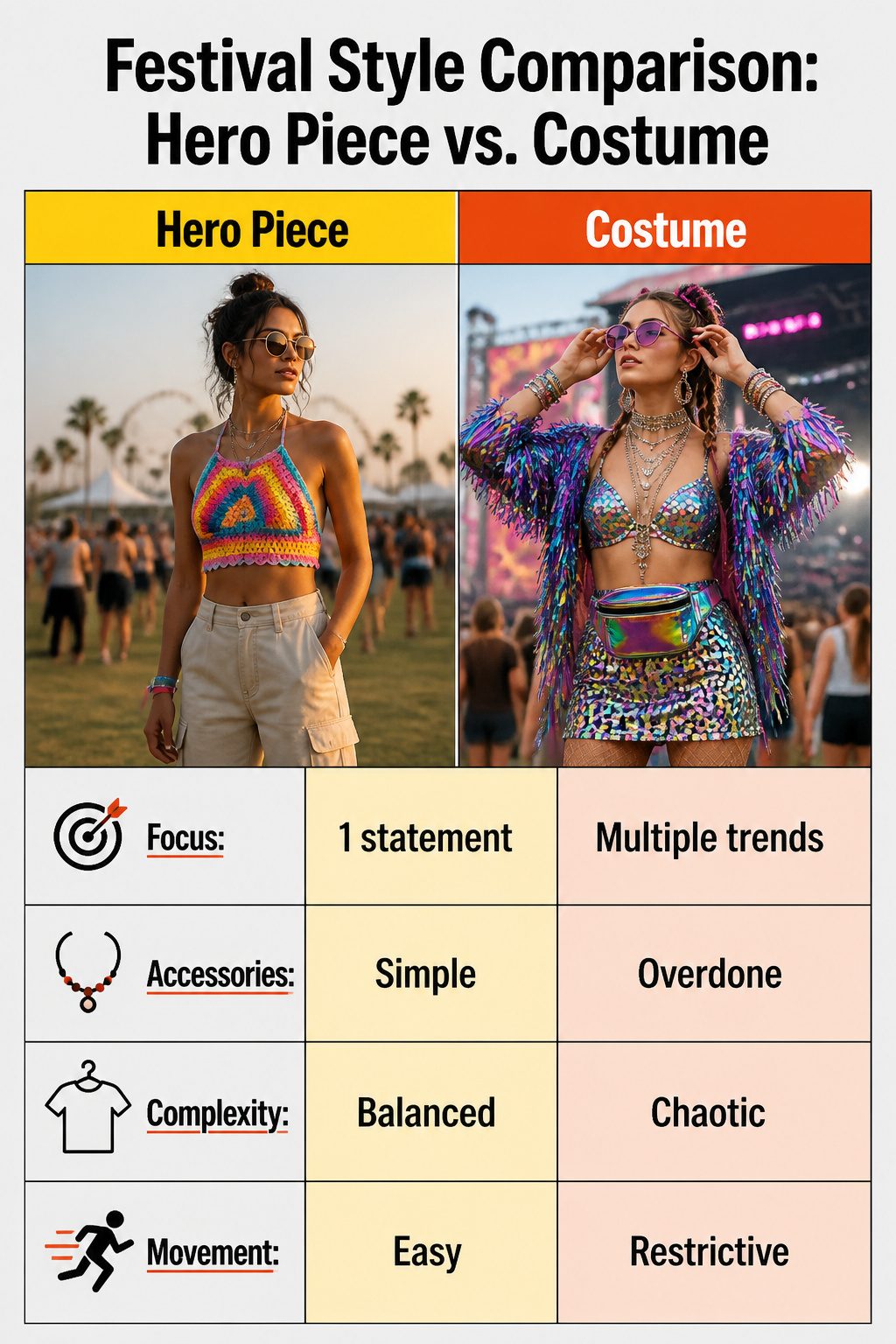
The fastest way to look costume-y at a festival is piling on every trend you packed.
One source puts it plainly: this happens when too many statements or trends get added together. The fix is choosing one hero piece and letting everything else stay simple.
That hero might be a colorful crochet top, a shiny metallic skirt, or one chunky accessory.
Balance it with modern basics: fitted top with relaxed cargo pants, or an oversize graphic tee with cutoff denim shorts. When proportions feel off, a matching set removes the guesswork.
The pieces should still move with you through a full day of swaying and jumping, and they should earn their place in your closet after the last set ends.
A single statement plus functional staples beats a head-to-toe theme every time.
Foot Care Most People Skip
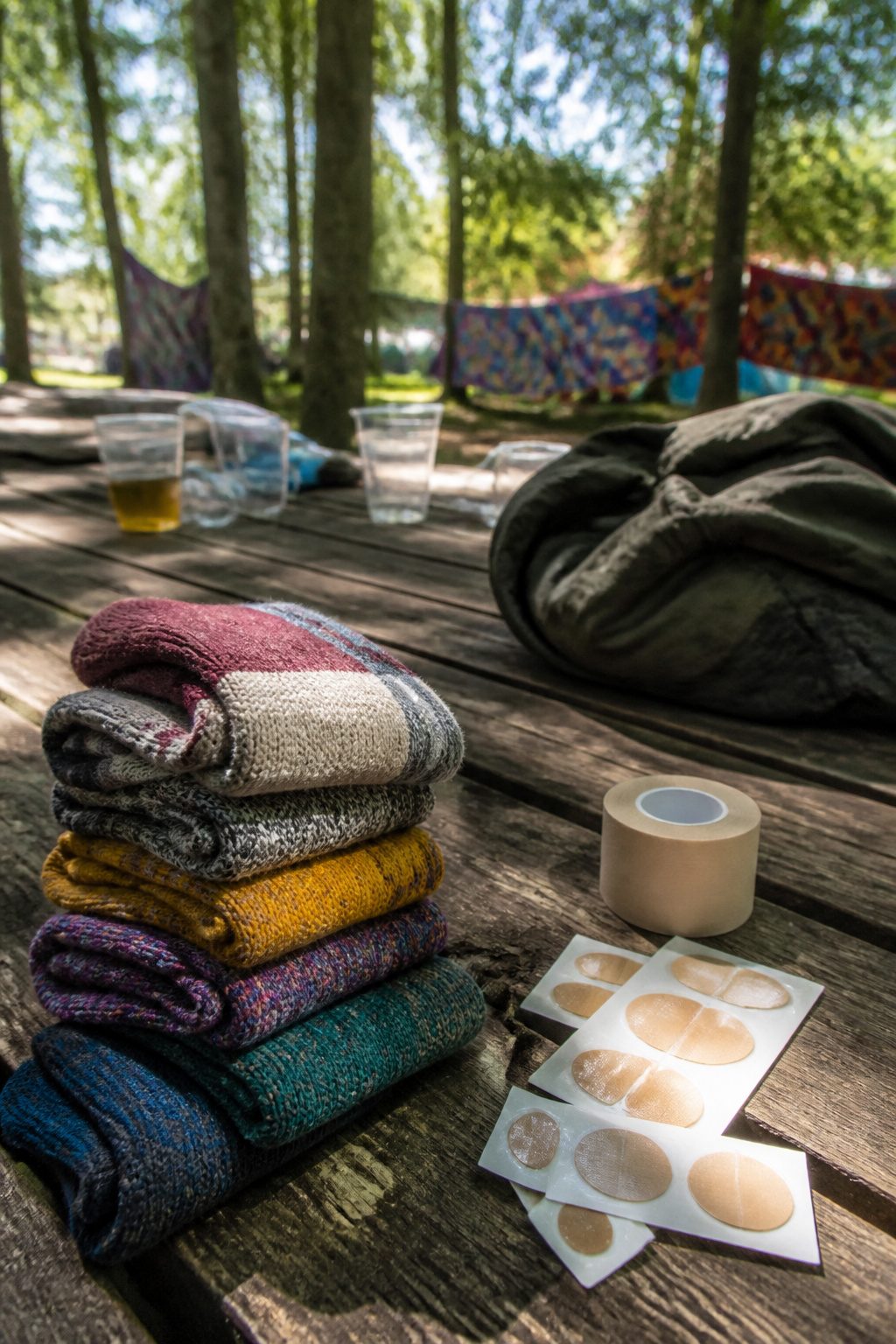
Your feet take the real punishment at a festival, and most people pack the boots then forget what goes between boot and skin.
Wool or synthetic sock blends pull moisture away instead of trapping it against your heel for eight hours of walking and standing. Cotton stays wet, and wet skin blisters faster than dry.
Blister patches work best before the blister forms. Tuck two or three in the pocket you reach for most, not buried at the bottom of your bag next to the sunscreen you used once.
The small fabric-backed ones stay put through dust and sweat better than the standard plastic circles.
A strip of cloth athletic tape works in a pinch if you feel a hot spot starting during a set and need to keep moving.
Bandages for the walk back to camp close out the night when prevention failed and you still have a mile of gravel ahead.
Frequently Asked Questions
What should I wear to a music festival?
Start with comfortable basics and add one or two hero pieces, like a corset top, crochet knit, or slip dress.
Prioritize breathable fabrics such as linen or lightweight cotton, and pair your statement item with simple, modern staples so the look stays personal rather than costume-y.
What shoes are best for a music festival?
Sneakers are the safest all-day pick because they handle miles of walking, hours of standing, and sudden dancing without blisters or rolled ankles.
Platform sandals or chunky boots can work too, but only if they are fully broken in; stiff boots will shred your heels by the third set.
How do I dress for a festival without looking costume-y?
Festival looks turn costume-like when too many trends or statements stack up. Choose one hero piece, whether that is a colorful crochet top, shiny metallic skirt, or chunky accessory, and keep everything else simple and modern.
What should I pack for a music festival?
A crossbody or belt bag keeps your hands free for dancing and filming. Inside it, carry your phone, portable charger, ID, cash for vendors with spotty card readers, lip balm with SPF, and a foldable poncho for surprise rain.