
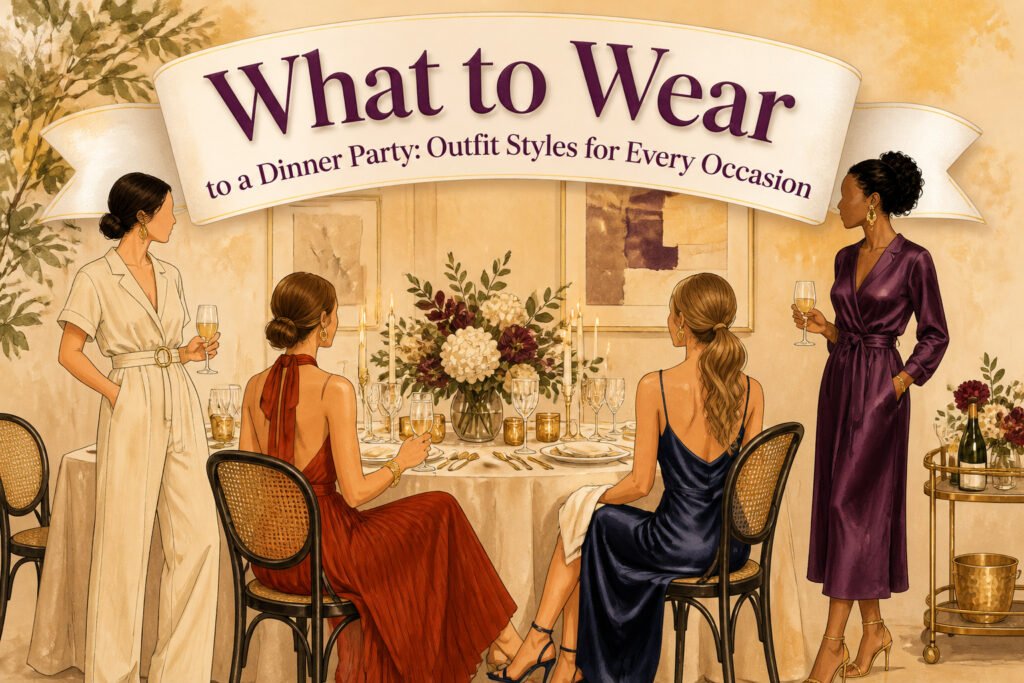
The right dinner party outfit depends on four things, and the host’s tendencies matter more than the invitation says.
Dress one level up from what you think is expected; you will not regret being the most pulled-together person at the table.
A satin midi in navy or a defined-waist linen jumpsuit handles almost any room once you read those signals correctly.
What to Wear to a Dinner Party
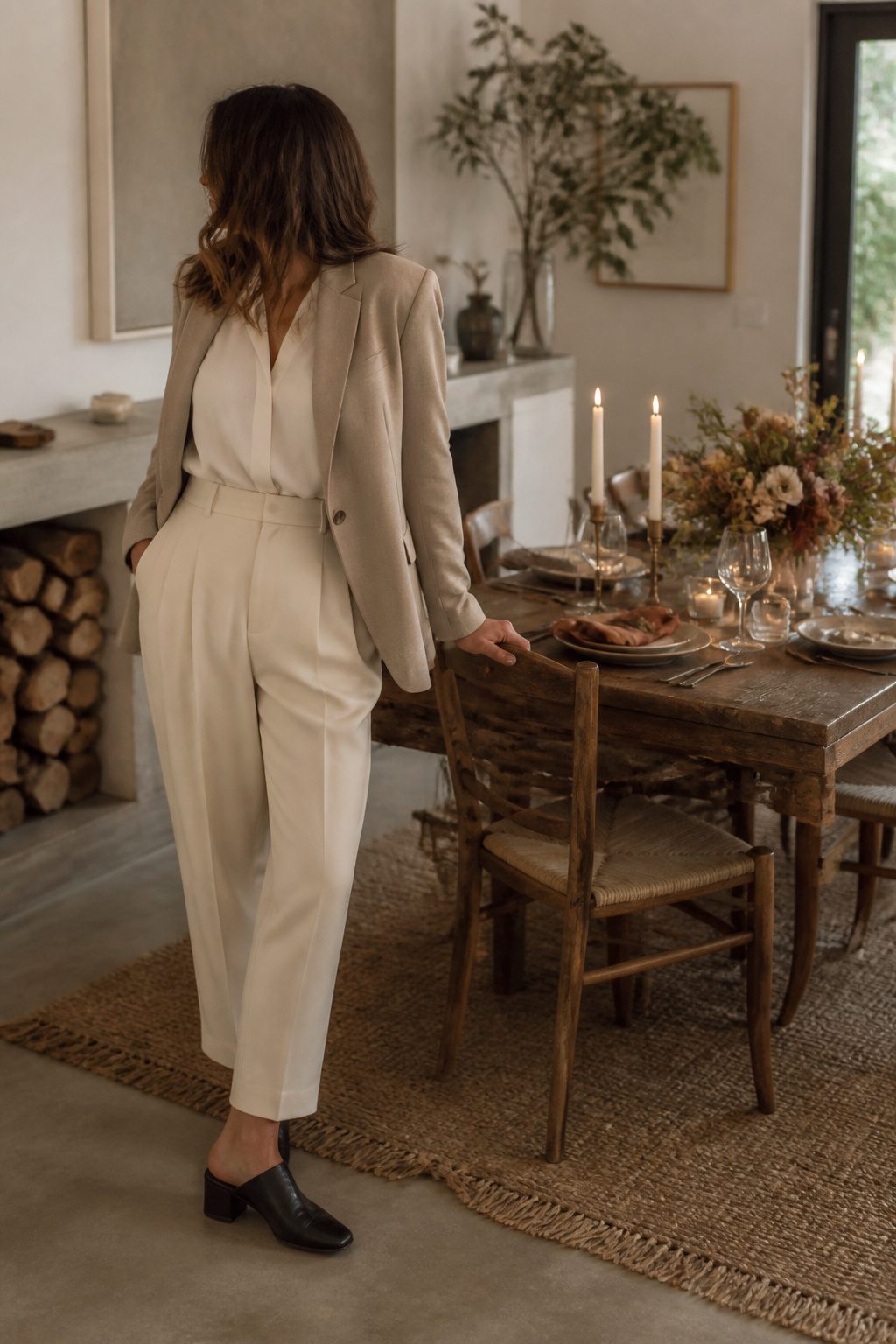
A dinner party outfit sits right between casual and dressy, pulling in pieces that feel polished but still let you breathe.
The balance is what matters: too relaxed and you look like you stopped by on the way to errands, too stiff and you’re fighting your clothes through dessert.
Four things decide where that balance lands for any given night.
Start with what kind of dinner party this actually is: a friend’s living room with takeout containers hidden in the kitchen calls for something different than a rented venue with plated courses.
The dress code, if there is one, is your second filter. "Casual-chic" still means you tried; "formal" means you commit.
Season shapes fabric and silhouette both. Breathable materials read right in July; richer textures carry fall and winter.
Finally, the host’s own tendencies matter more than people admit. Some hosts treat every gathering like an event, others genuinely mean it when they say "come as you are."
When you can’t tell, dress one level up from what you think is expected. You will not regret being the most pulled-together person at the table.
1. Casual Chic Attire

The hardest line to walk at a casual dinner party is the one between looking like you tried and looking like you tried too hard.
Jeans paired with a dressy top hits that mark when the denim is dark and the top does the lifting.
Think a shirred blouse or something with volume in the sleeve, the kind of piece that reads as intentional from across the room. Low heels or polished flats finish the look; sneakers or heavy boots tip it into errand territory.
This level works for weeknight gatherings at someone’s home, backyard dates where the host said "no big deal," and any situation where showing up in cocktail attire would make the host feel underdressed.
What pushes it too far is the opposite problem: distressed denim, casual tees, or anything that looks like you grabbed it off the floor. The test is whether you would feel comfortable standing up to help clear plates.
If you would rather stay seated to hide the outfit, you have gone too casual.
2. Summer Dinner Outfit Ideas
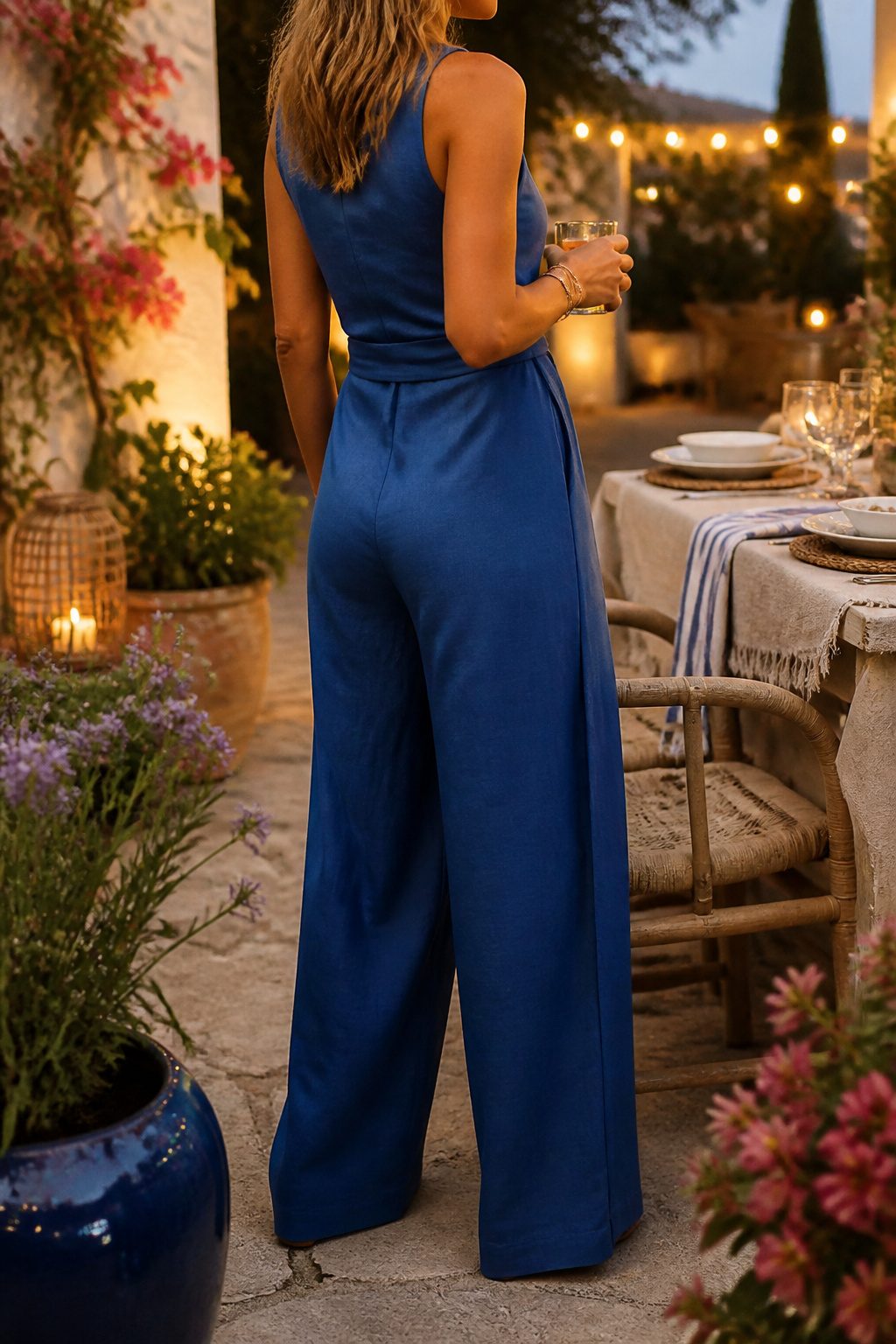
Summer dinner dressing is not the same as dressing for the midday heat. Once the sun drops, linen and cotton keep working for you, but the shape has to read as intentional, not beach-to-table.
A jumpsuit in a breathable fabric does this almost by itself.
Cotton or linen with a defined waist gives you structure without weight, and you can move it between settings with your shoe choice: wedge sandals for a backyard grill, or gold heels if the host set actual silver.
Wide-leg cuts work, but only when the waist is doing the work. Without that definition, the silhouette collapses.
Breezy dresses follow the same logic.
A linen swing dress in black, ivory, or cobalt handles the temperature, but the accessories shift it into evening territory: gold jewelry, a woven bag, and sandals that are not the pair you wore to the pool.
The fabric is identical to daytime, but the finishing is sharper.
What separates a summer dinner outfit from afternoon heat dressing is that shift in finishing: same fabrics, fewer prints, cleaner lines, and shoes that do not look like you stepped out of sand.
3. Formal Dinner Party Outfits
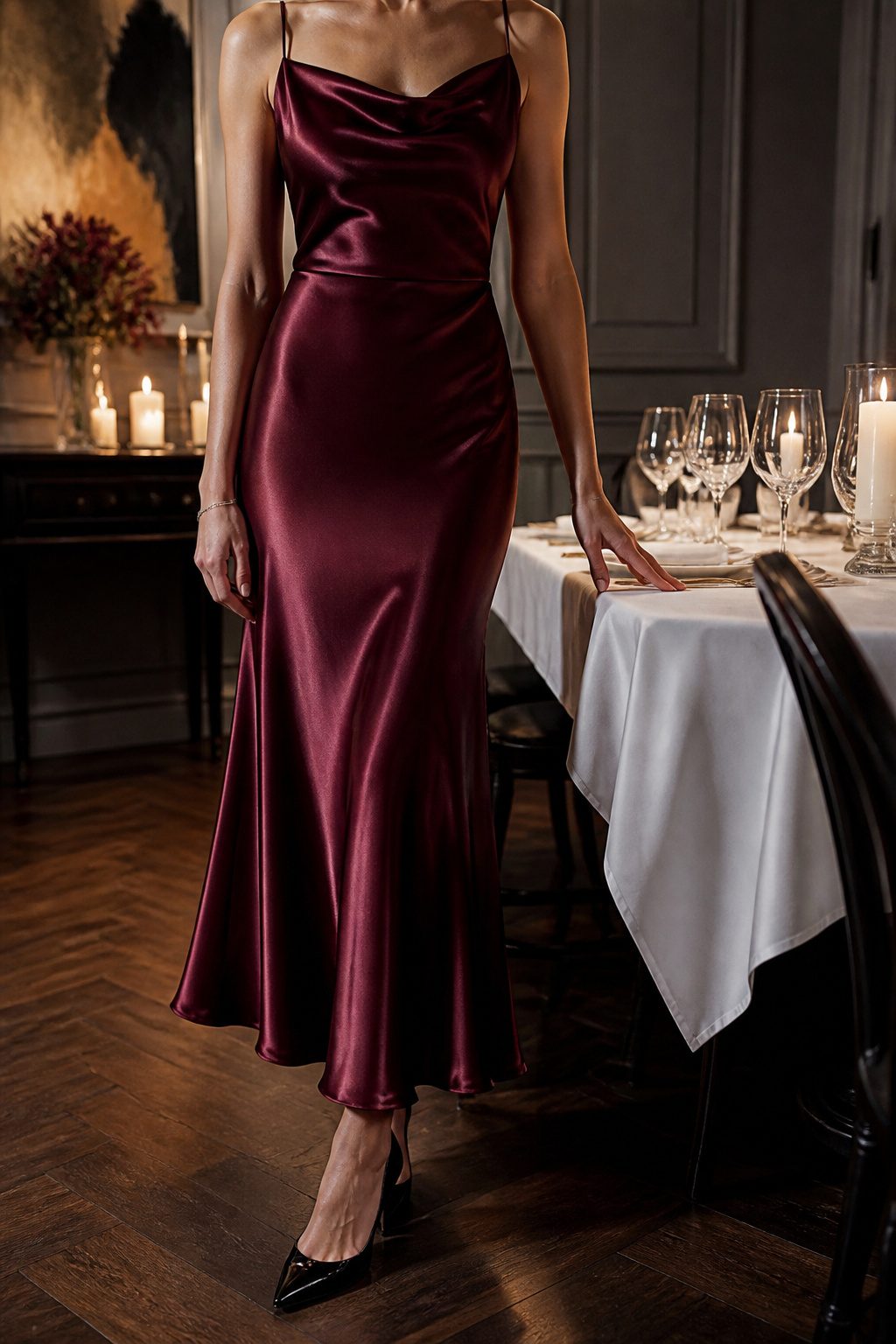
Formal dinner parties sit a full step above dressy ones, and the difference is usually in the hem and the fabric. A midi or full-length dress in satin or silk is the safest move, especially after dark.
Dark neutrals and deep jewel tones work here; black, navy, or a saturated emerald or burgundy read as evening-appropriate without trying too hard. Crepe works too, though it is more matte and slightly less expected.
Full-length becomes expected when the invitation says black tie, optional or not, and when the party starts after seven in a private home or a club with a dress code.
For everything else formal, midi is acceptable and often more practical.
If dresses are not your preference, a jumpsuit in a luxurious fabric, satin or silk, is the alternative that holds the same weight. Look for a defined waist and a clean leg, nothing too wide or too cropped.
The same rule applies on length: a full-length jumpsuit leans more formal than one that hits at the ankle.
The details that separate formal from merely dressy are subtle. Pleating, a soft sheen, gentle draping at the waist, these add interest without competing with the room.
Pair with classic heels and minimal jewelry. What you skip matters too: no busy prints, no short hems, no casual textures like jersey or denim, even in a dark wash.
4. Work Dinner Attire
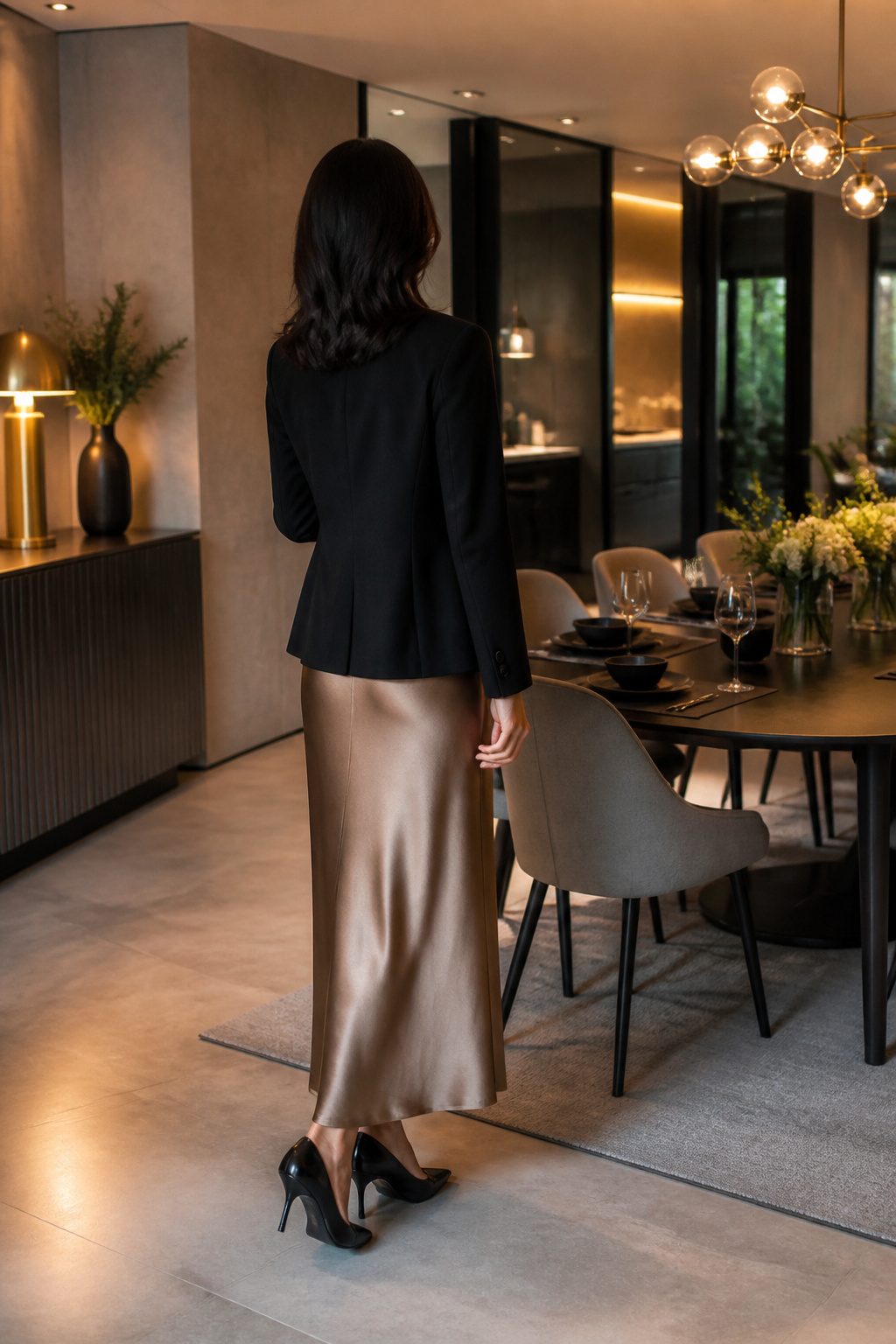
A work dinner is where you prove you know the difference between a 9 a.m. meeting and a 7 p.m. table.
The blazer-and-satin-skirt pairing gets this exactly right: the blazer carries your professional credibility, while the satin skirt signals you understood the invitation said dinner, not conference call. Closed-toe heels or heeled mules finish the look without drifting into office territory.
Clean lines and structured pieces are your safest bridge. A long-sleeve midi dress in black, navy, or beige reads competent without trying too hard for cocktail hour.
A solid jumpsuit with minimal detailing works the same way, and the tailored bodice with a defined waist keeps it from feeling like you forgot to change after work.
The mistake is treating this like a meeting with food served. Understated accessories, intentional but quiet, show you made the shift.
Skip anything that would look right under fluorescent lights.
If you would wear it to present quarterly numbers, it needs one element that softens the edge: texture, a slight sheen, or a wrap shape that moves differently than your weekday uniform.
5. Outdoor Dinner Party Looks
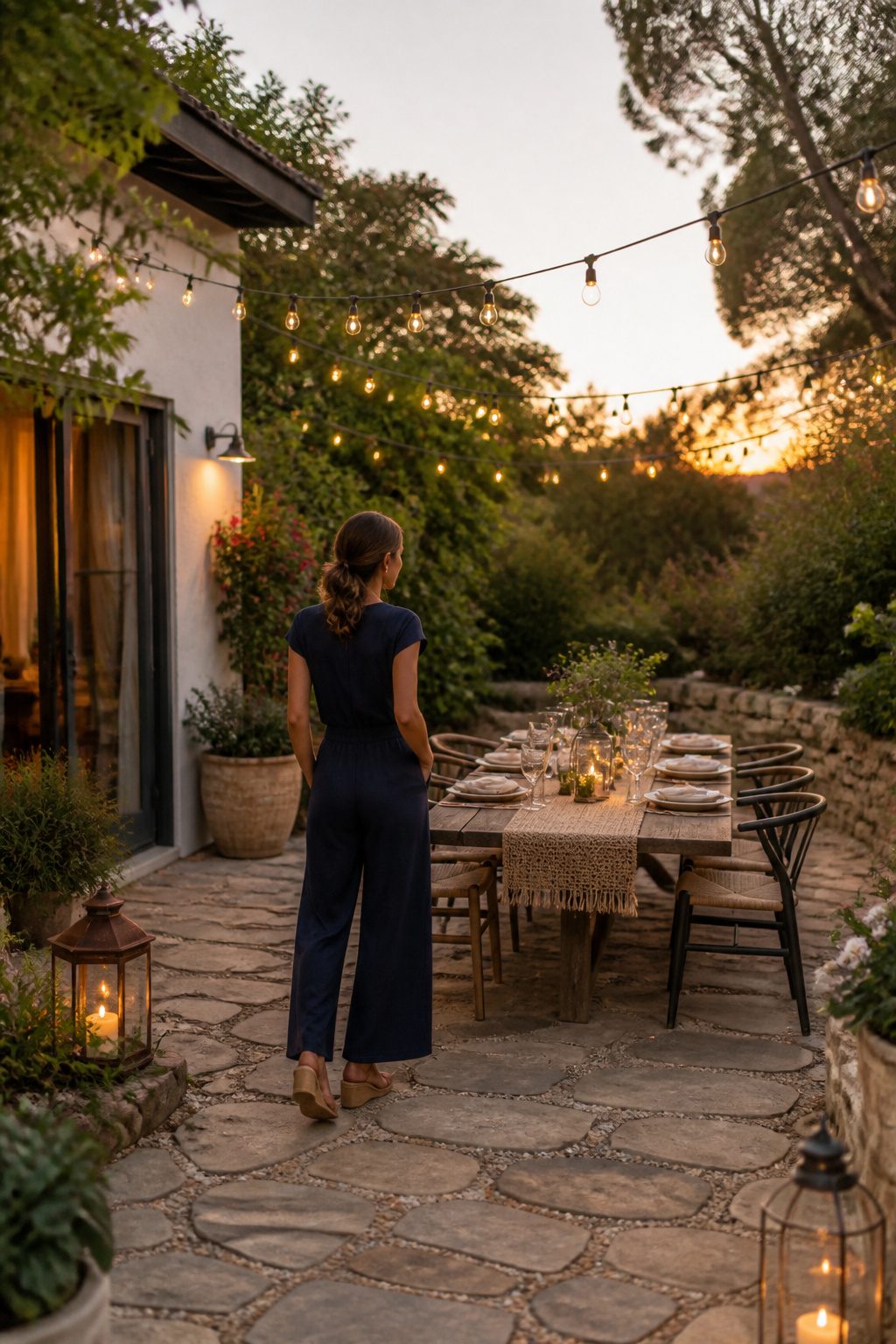
Outdoor dinner parties look effortless on the invitation, but the ground underneath you is the first thing to betray a bad outfit choice.
Grass and uneven stone will swallow a stiletto whole, so wedges or block heels are the only heel that works out here.
Flats are safer still, and no one at a backyard table is judging you for them once the sun goes down.
Chiffon and cotton blends are your best fabrics for this shift. They move when you move, and they do not trap heat while you are still in direct sun.
Temperatures drop fast after sunset, though, so a cotton or linen jumpsuit with a defined waist gives you shape without leaving you bare when the breeze picks up.
The same chiffon dress that felt perfect at 6:00 PM can feel like a mistake by 8:30 if you did not plan for that swing.
Skip the pale colors that show every grass stain; soft prints or deeper neutrals hide the wear of an actual evening outside.
6. Seasonal Dinner Outfits
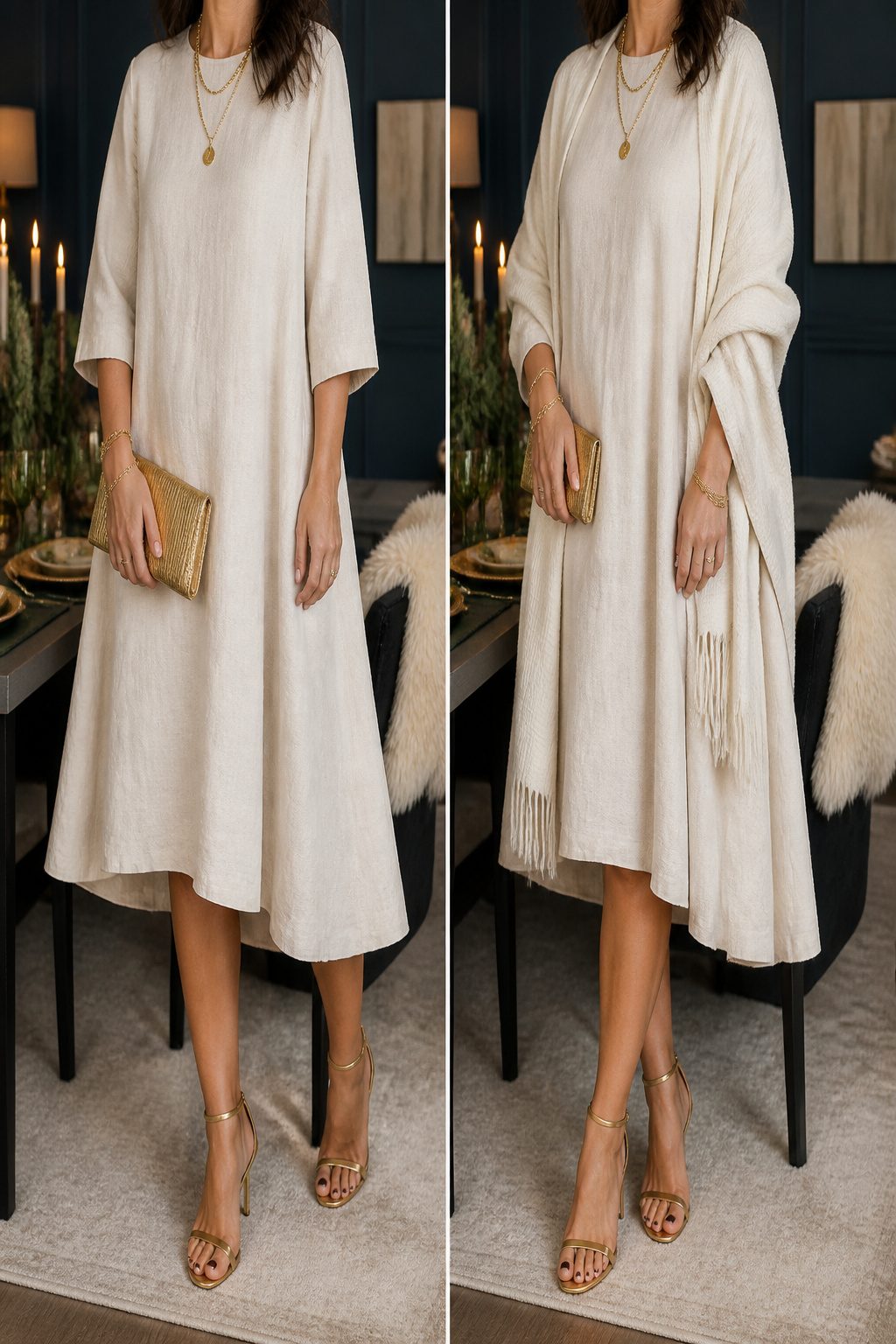
Summer dinner outfits start with a linen swing dress in black, ivory, or cobalt, finished with gold-colored jewelry and a woven bag.
Linen breathes; it is the fabric that lets you sit through a three-course meal without sticking to the chair. Sandals keep the line simple and let the dress do the work.
Winter asks for the opposite approach. A crew-neck jumper in air-yarn layers under a trench coat or a clean-cut blazer, and the weight of the fabric does the dressing up for you.
The color shift matters as much as the cloth: where summer lives in bright cobalt and ivory, fall and winter sink into deeper territory.
Holiday dinners are where both seasons meet their exception. A metallic midi dress with sequins or beadwork, a silver or gold cocktail dress, or even dress slacks with a cashmere sweater and boots.
The rule is richer fabric or a touch of shimmer, never both at full volume. Metallic accessories or a statement clutch finish it without competing.
7. Accessory Tips for Dinner Parties
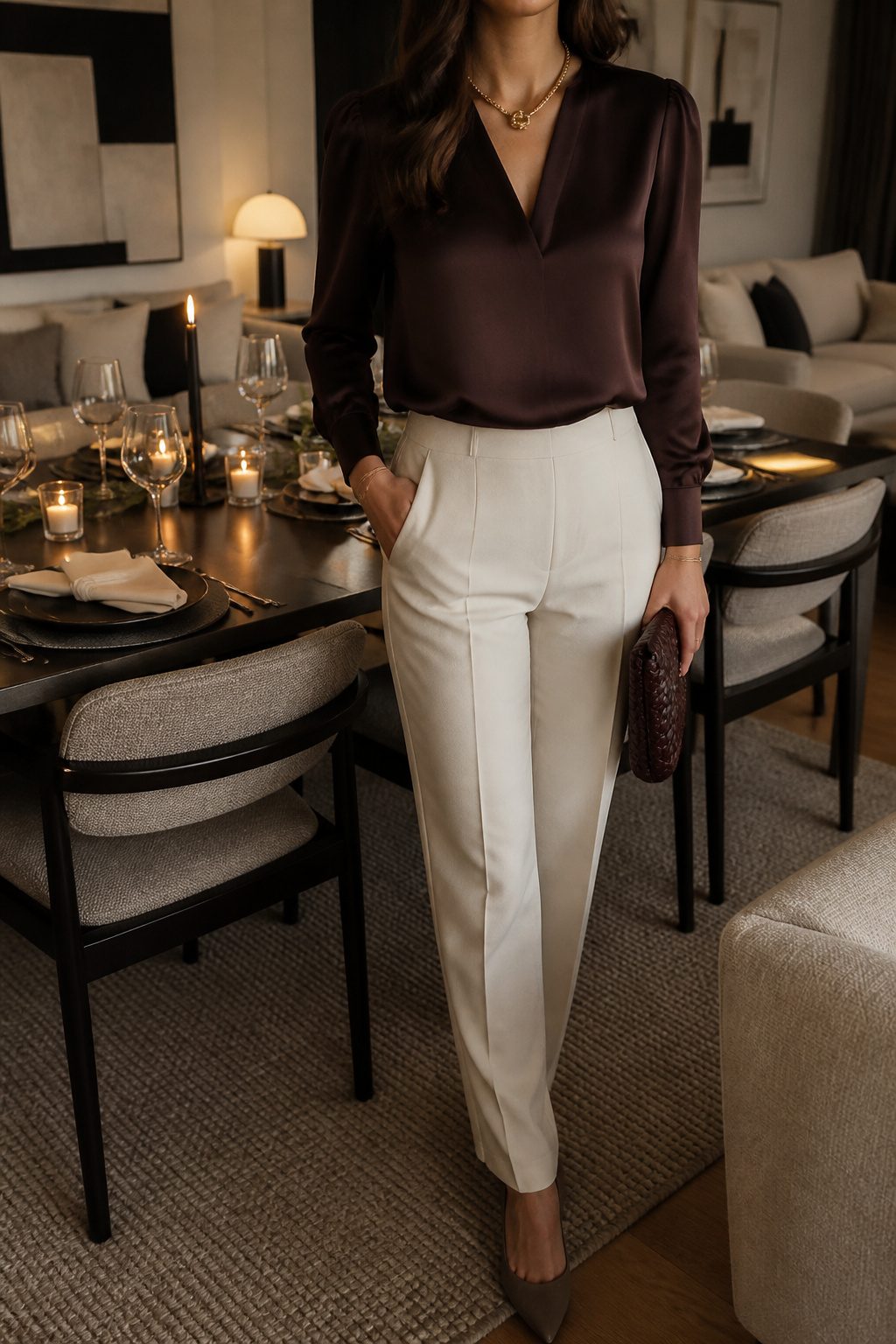
Accessories are the first place people trip up when building a dinner party outfit.
Stylist Hannah Jaskot noticed it first: men and women both skip this step entirely, or they pile on so much that the look collapses under its own weight.
The mistake that reads as trying too hard is mismatching formality levels, like dropping a statement necklace over a rumpled knit or carrying a daytime tote to a seated dinner where a structured clutch belongs.
A single bold earring or necklace can shift a simple top into dressy territory, but the piece has to be intentional. Earrings frame the face in photos; a clean, tailored coat sets the mood before you even walk inside.
Shoes should match the outfit’s level without becoming unwearable, so a sleek boot or refined flat usually wins over anything you have to think about while standing.
For gatherings at someone’s home, the move is slightly different. Skip the jacket and mix one tailored piece with something comfortable, like a great knit.
This keeps the outfit feeling easy while still showing you made an effort. The balance matters more than any single item.
Colors and Fabrics That Work
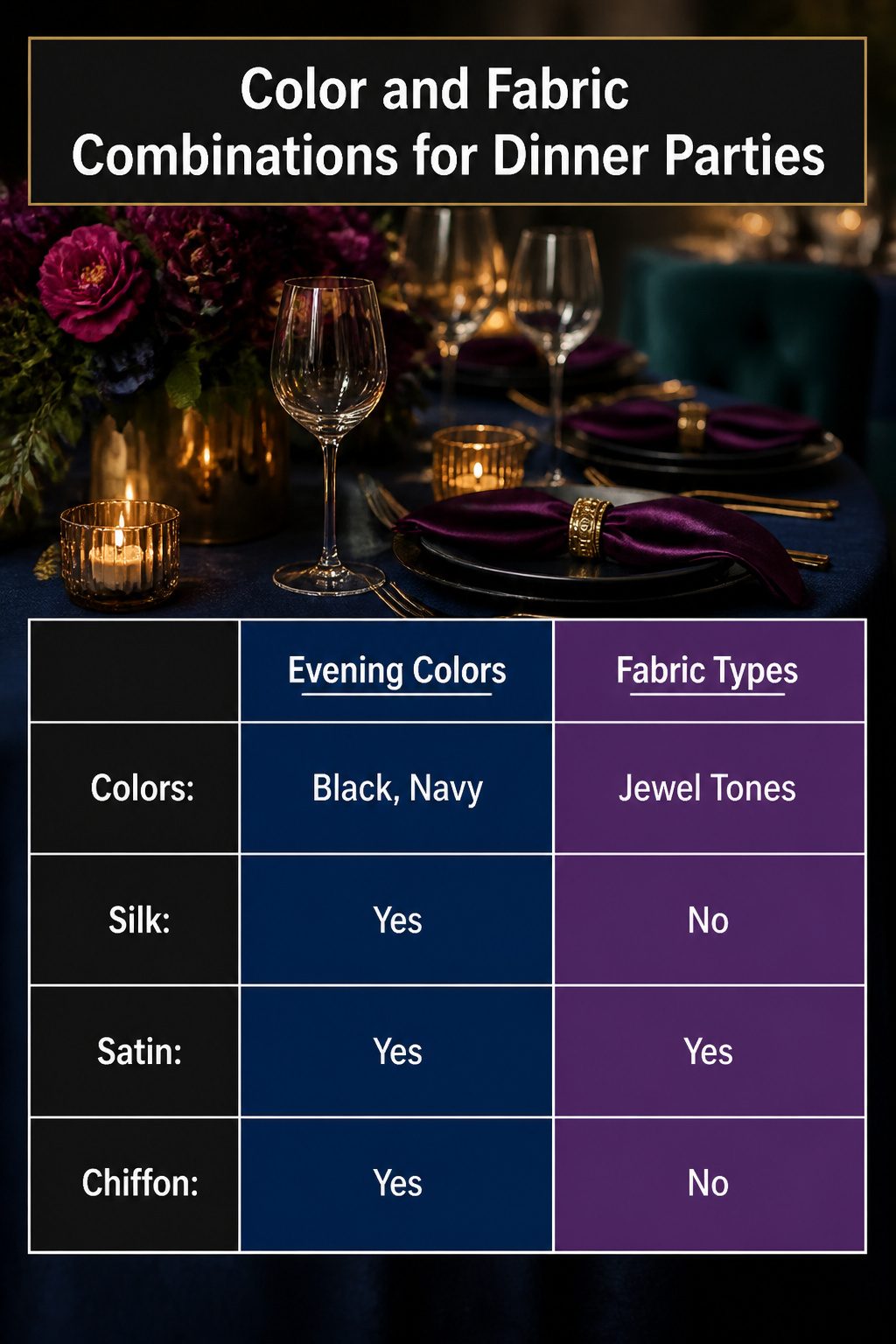
Black, navy, and deep jewel tones show up again and again for evening dinner parties because they absorb light rather than reflect it, which softens edges and reads as expensive under low lamps.
Silk, satin, and chiffon do the same work for fabric: they catch movement, not glare, so a sleeve or a hemline shifts with you across a room.
Crepe and Ponte hold structure if you want something architectural against your body instead of flowing away from it.
The reason these combinations recur is that they solve the same problem repeatedly. A satin dress in black or navy carries enough formality that you stop worrying whether you are underdressed.
Chiffon layers add depth without bulk, which matters in rooms where the thermostat runs warm and coats stay checked.
Breaking this works when the occasion calls for it. A white dinner party outfit reads correctly for summer or coastal settings, where the light is natural and the hour is earlier.
Knit blends and sleek leather pants shift the tone toward casual, but only if you pair them with two refined elements: the leather needs a satin top and heels, the knit needs tailored trousers and polished jewelry.
One casual piece is a choice. Two starts to look like you misread the invitation.
How to Read the Room
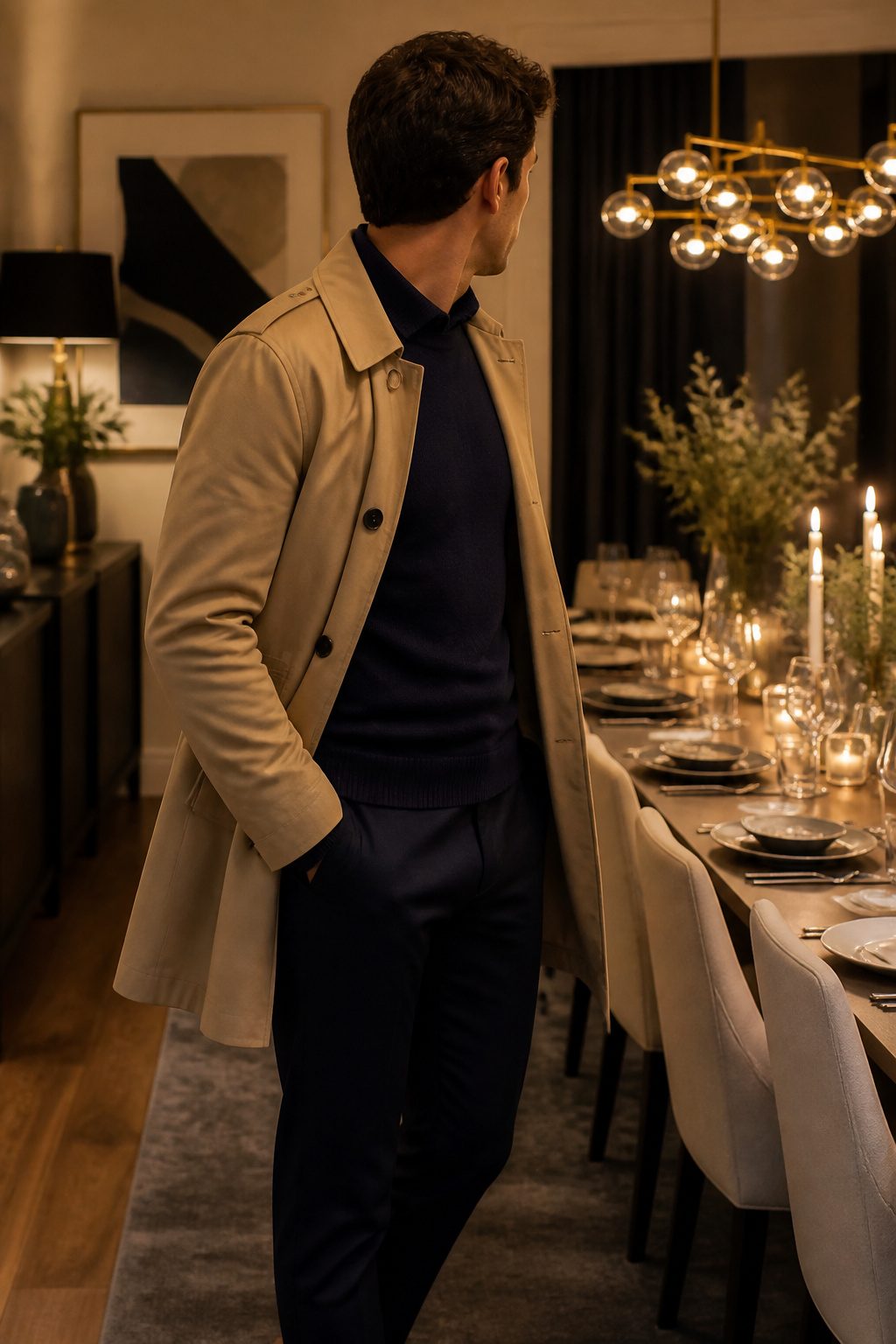
An at-home dinner calls for relaxed elegance, while a restaurant or rooftop setting usually demands something more elevated. The host’s own style is the clearest signal you have, and you have already gathered the data.
Notice what they wore the last time you saw them, whether their home runs minimalist or layered, whether they serve on pottery or rented glassware.
A host who cooks in a pressed apron and sets the table with cloth napkins is not expecting you in jeans, even if the invitation says casual.
Time of day shifts the expectation too. Evening gatherings read dressier; late afternoon or early-evening events stay lighter and more casual.
Comfort should override polish in one specific case: fit that fights you through a seated meal. You will be in that chair for hours.
Breathable fabrics and ease of movement win over anything restrictive, no matter how right it looks in the mirror. The best dinner party outfit is the one you stop thinking about once the first course arrives.
What the Dress Code Actually Means
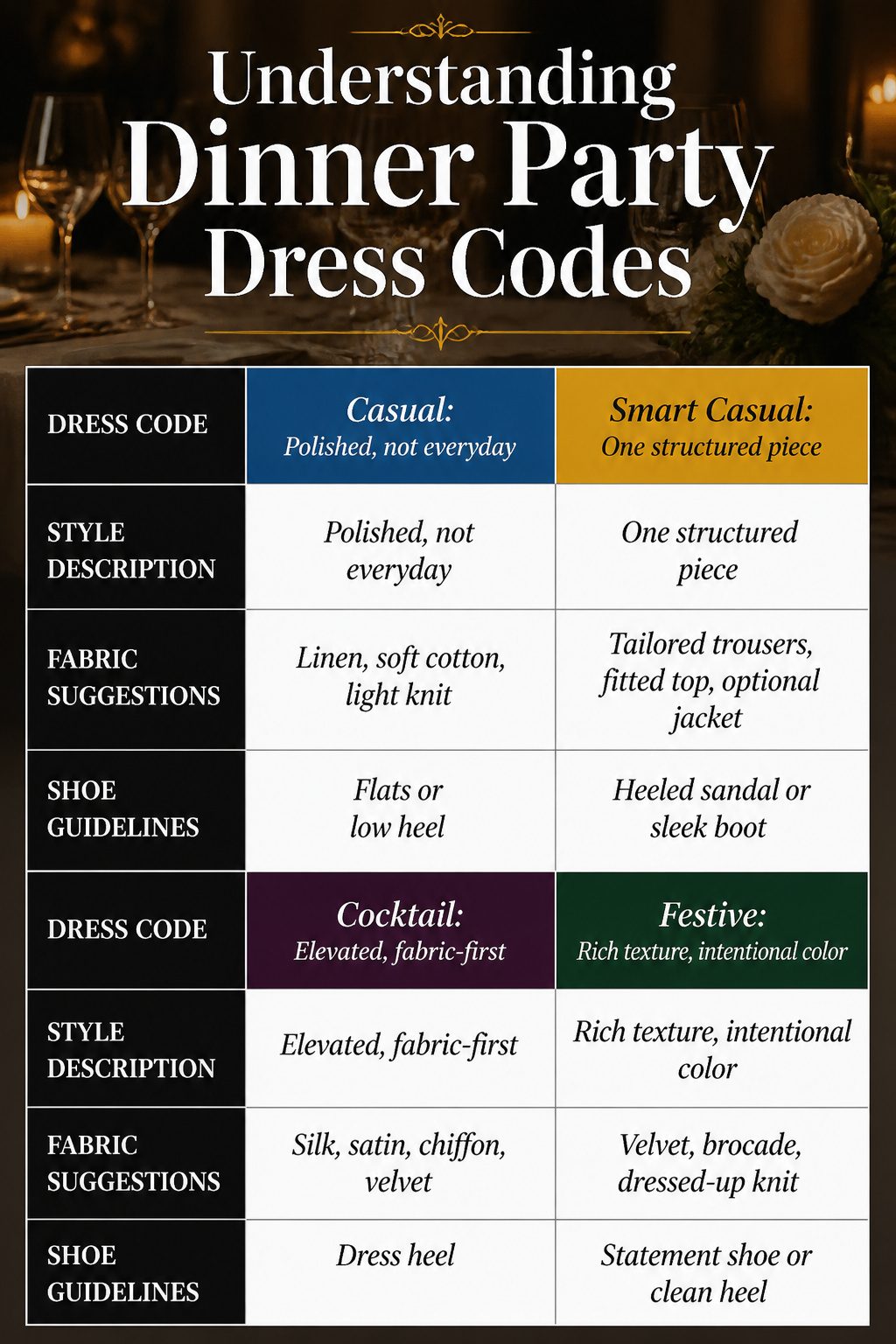
The gap between what an invitation says and what actually shows up at the table is where most dinner party outfit mistakes start.
"Casual" on paper rarely means jeans and a tee; it means polished pieces that still let you sit through a three-course meal without adjusting.
Smart casual adds structure, think tailored trousers with a fitted knit rather than anything that reads office. Cocktail demands the fabrics that do the heavy lifting: silk, velvet, satin, or chiffon in a silhouette you can move in.
Festive is where you bring in heavier textures and color, but stop short of anything that competes with the host’s table.
| Term | What It Actually Means | Fabric Cue | Shoe Rule |
|---|---|---|---|
| Casual | Polished, not everyday | Linen, soft cotton, light knit | Flats or low heel |
| Smart Casual | One structured piece minimum | Tailored trousers, fitted top, optional jacket | Heeled sandal or sleek boot |
| Cocktail | Elevated, fabric-first | Silk, satin, chiffon, velvet | Dress heel |
| Festive | Rich texture, intentional color | Velvet, brocade, dressed-up knit | Statement shoe or clean heel |
When the code is missing, read the setting and the time. An at-home evening gathering leans toward relaxed elegance; a restaurant or rooftop calls for one step up from what you think is expected.
Daylight events stay lighter in fabric and silhouette. The rule that saves most outfits: if one piece is casual, pair it with two elements that add refinement.
A simple dress becomes dinner-appropriate with polished hair, clean shoes, and one standout accessory.
Frequently Asked Questions
What should I wear to a dinner party?
A dinner party outfit sits between casual and dressy, built from polished pieces that still let you move and breathe.
The exact balance depends on the setting: a friend’s living room calls for something different than a rented venue with plated courses.
When you cannot tell what is expected, dress one level up; you will not regret being the most pulled-together person at the table.
How do I dress for a formal dinner party?
Choose a midi or full-length dress in satin or silk, or a jumpsuit in a luxurious fabric with a defined waist and clean leg. Dark neutrals and deep jewel tones read as evening-appropriate.
The details that separate formal from merely dressy are subtle: pleating, a soft sheen, or gentle draping at the waist. Pair with classic heels and minimal jewelry, and skip busy prints, short hems, and casual textures.
What are good outfit ideas for a casual dinner party?
Pair dark jeans with a dressy top that does the lifting, such as a shirred blouse or something with volume in the sleeve. Low heels or polished flats finish the look; sneakers or heavy boots tip it into errand territory.
This level works for weeknight gatherings at someone’s home and any situation where cocktail attire would make the host feel underdressed. Avoid distressed denim, casual tees, or anything that looks like you grabbed it off the floor.
What colors should I wear to a dinner party?
Black, navy, and deep jewel tones are the safest choice for evening events because they absorb light rather than reflect it, softening edges and reading as expensive under low lamps.
For summer or coastal settings where the light is natural and the hour is earlier, white reads correctly. Summer also works in bright cobalt and ivory, while fall and winter sink into deeper territory.
Can I wear jeans to a dinner party?
Yes, when the denim is dark and paired with a top that reads as intentional from across the room, such as a shirred blouse or something with volume in the sleeve.
Low heels or polished flats keep it out of errand territory. What pushes it too far is distressed denim, casual tees, or anything that looks like you grabbed it off the floor.
The test is whether you would feel comfortable standing up to help clear plates.