
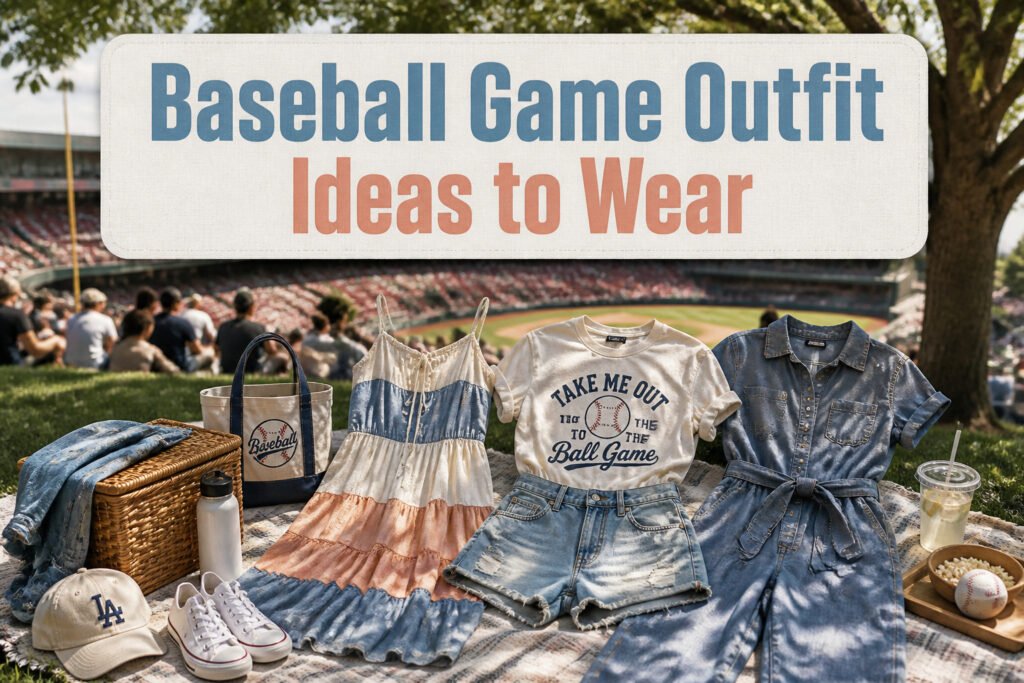
The right baseball game outfit depends on how long you’ll sit on plastic that traps heat and how far you’ll walk across concrete and grass lots. What separates the looks that work from the ones that don’t is usually fabric weight and whether your shoes are already broken in. A mid-thigh jersey dress with rolled sleeves reads deliberate; the same dress caught at an awkward hem length turns costume fast.
1. Classic baseball jersey with high-waisted jeans
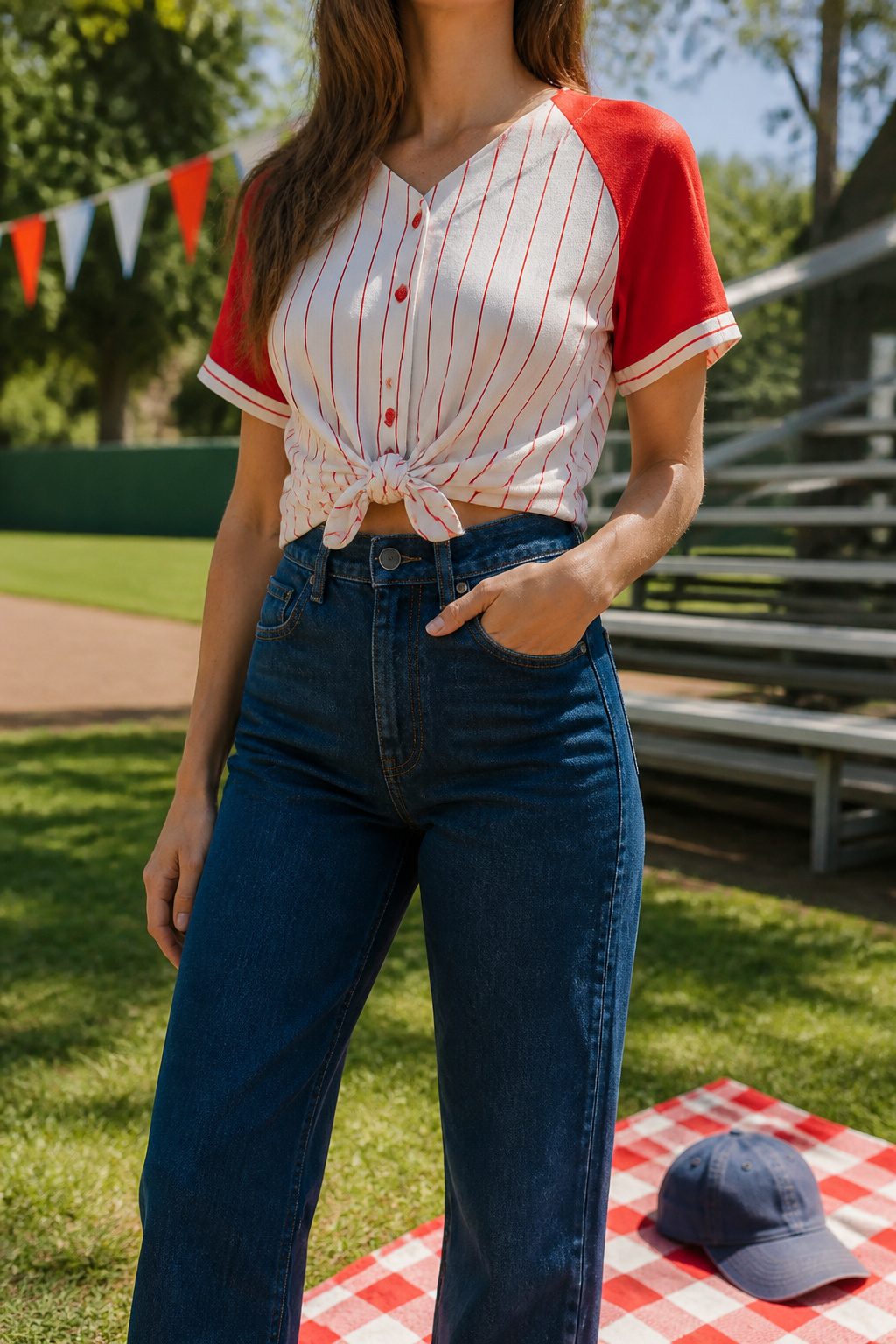
A baseball jersey with high-waisted jeans is the combination that came up most often as the place to start, and the reason is structural. The waistband hits at the natural waist and gives you a defined line, which balances the boxy, straight cut of a jersey so the whole thing reads as outfit rather than costume. The denim grounds it; you look like you dressed for a Saturday, not a theme party.
If your torso runs short, crop the jersey or tuck it to keep the proportions from swallowing you. A longer jersey left untucked works better when your waist sits lower and you need the length to avoid looking cropped in the wrong place. Light or medium wash keeps the feel casual and clean, though dark denim will read more polished if that is the direction you want.
A front knot just above the waistband is the usual fix for shape. Add a slim gold chain and a cap in team colors, and swap standard sneakers for a chunky platform trainer if you want a little more deliberate heft. Skip anything stiff, skip heels, skip a bag that fights the seat. You will be sitting for hours, walking more than you planned, and dodging the beer that spills when the home run happens.
2. Knotted graphic tee with denim shorts
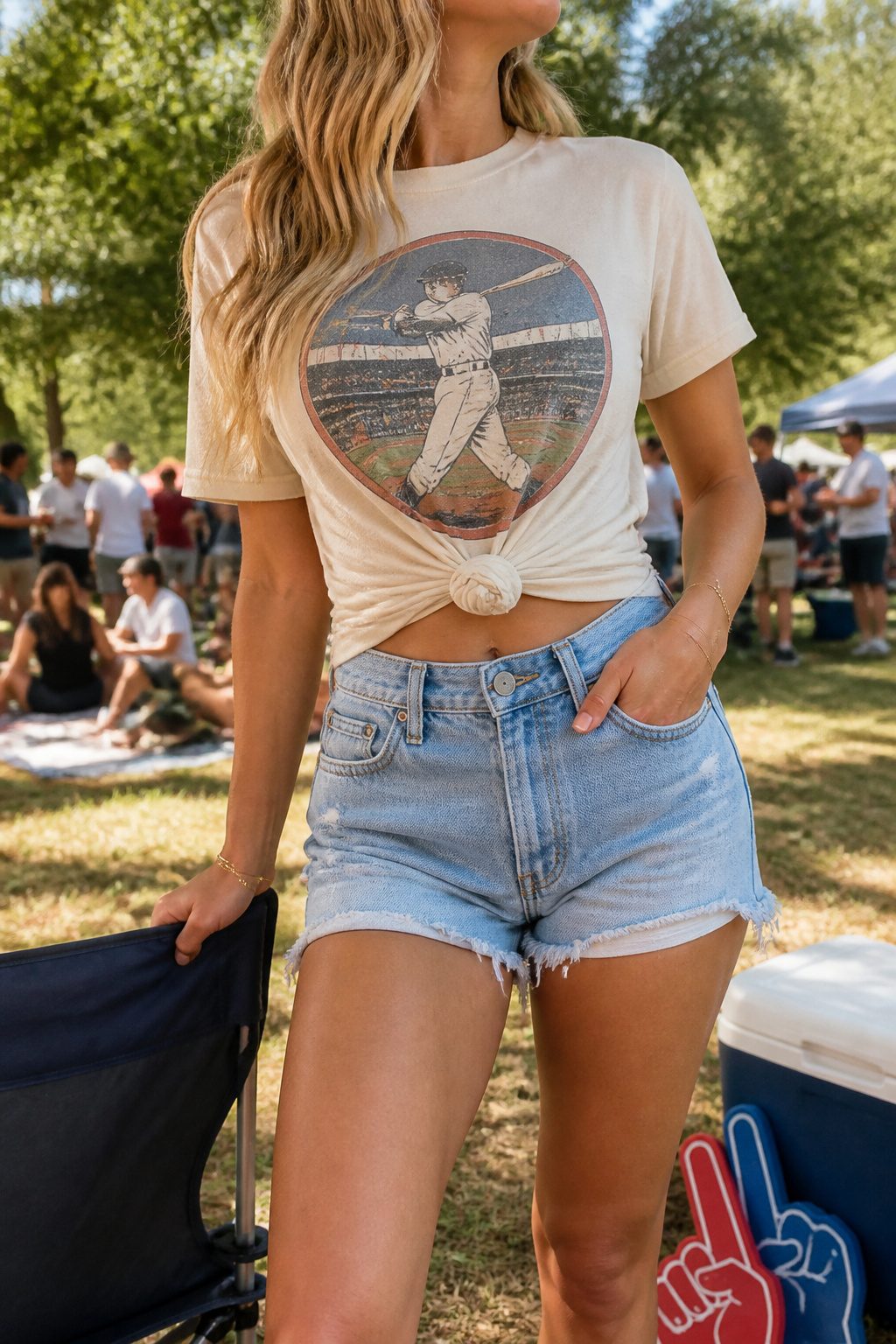
Where you put the knot changes the whole proportion. Right at your natural waist keeps an hourglass shape looking balanced, since the eye stays at the narrowest point. If your hips run straighter, shift the knot slightly to one side; the asymmetry creates a curve where there is not much of one. For shorter legs, a high knot will cut your torso in half the wrong way, so drop it lower on the hip and let the tee hang a little longer above.
The graphic itself does not have to be official team merchandise. A vintage-washed or band-style team graphic reads more intentional than a shiny logo straight from the stadium shop. It looks like you found something, not like you stopped on the way.
3. Oversized jersey dress
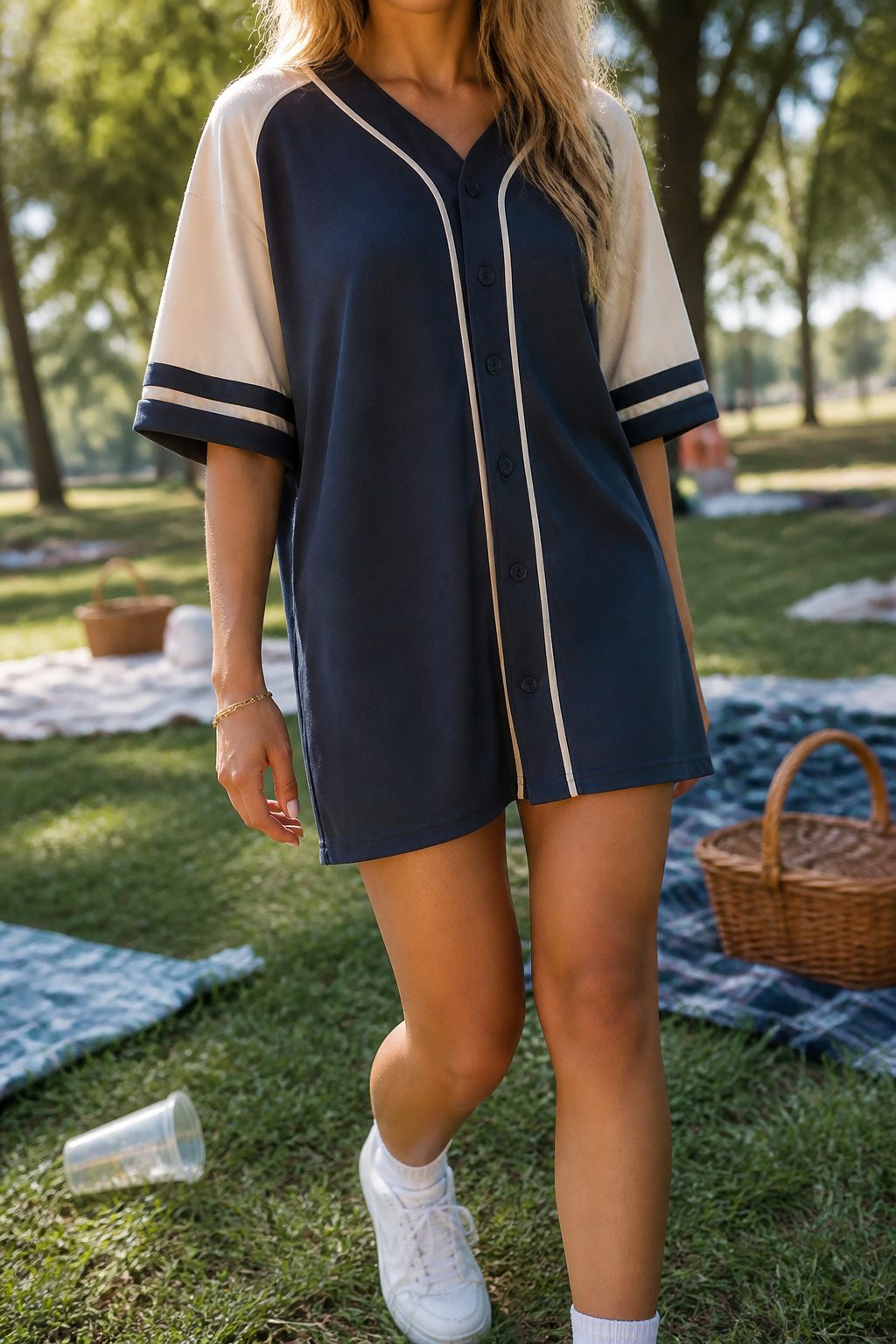
The hem has to hit mid-thigh or true knee. Anything caught between, and the proportions turn awkward fast. Same with the sleeves: you need enough length to roll them once and show wrist bone, which keeps the silhouette from swallowing you whole.
Belted, this reads as a deliberate outfit for a date or a planned afternoon. Worn loose, it is a Saturday thing, easy and anonymous. Both work, but they are not interchangeable.
This shape favors frames where shoulders and hips sit roughly in balance. If your shoulders run significantly narrower than your hips, the cut can exaggerate the gap and the whole piece starts to look like a tent you are standing under rather than wearing. A defined shoulder line or a heavier fabric weight can compensate some, but the straight drape is doing you no favors there.
4. Sporty sundress with a team cap
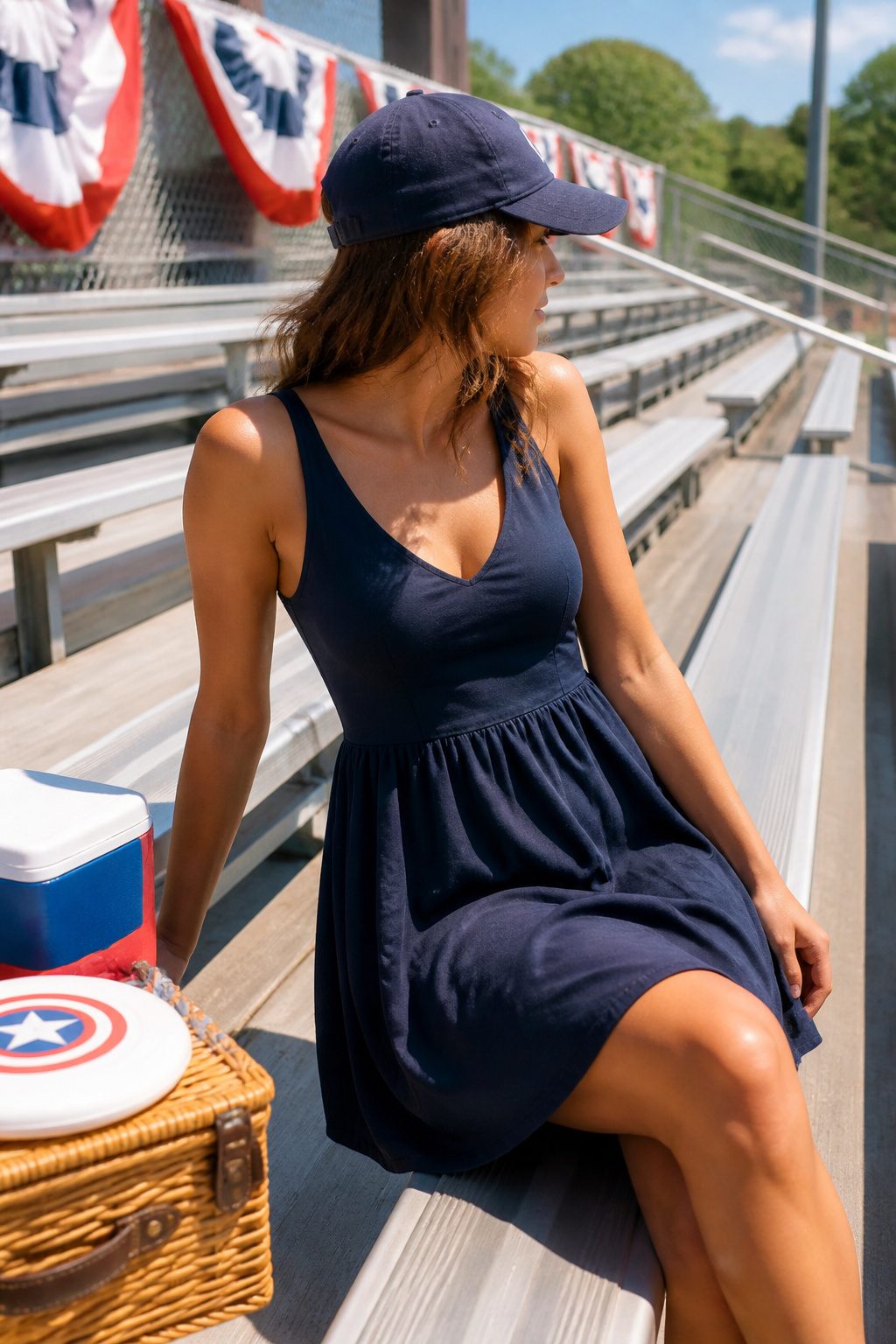
A sundress at the ballpark only works if the fabric weight is right. Too light and the stadium breeze turns a cute moment into a wardrobe malfunction; too heavy and you are sweating through the third inning wondering why you did not just wear shorts. Look for a mid-weight cotton or a cotton blend that holds its shape when you stand up but still lets air move through.
The cap is where you signal team color without looking like you grabbed a giveaway at the gate. A plain navy or red cap reads as more expensive than a cheap printed logo, and it works with your other clothes after the season ends. White sneakers and a small crossbody bag finish it, though you will want to check your stadium’s bag rules before you leave. Some still require clear material, and running back to the car is not how anyone wants to start the afternoon.
5. Biker shorts with a cropped jacket
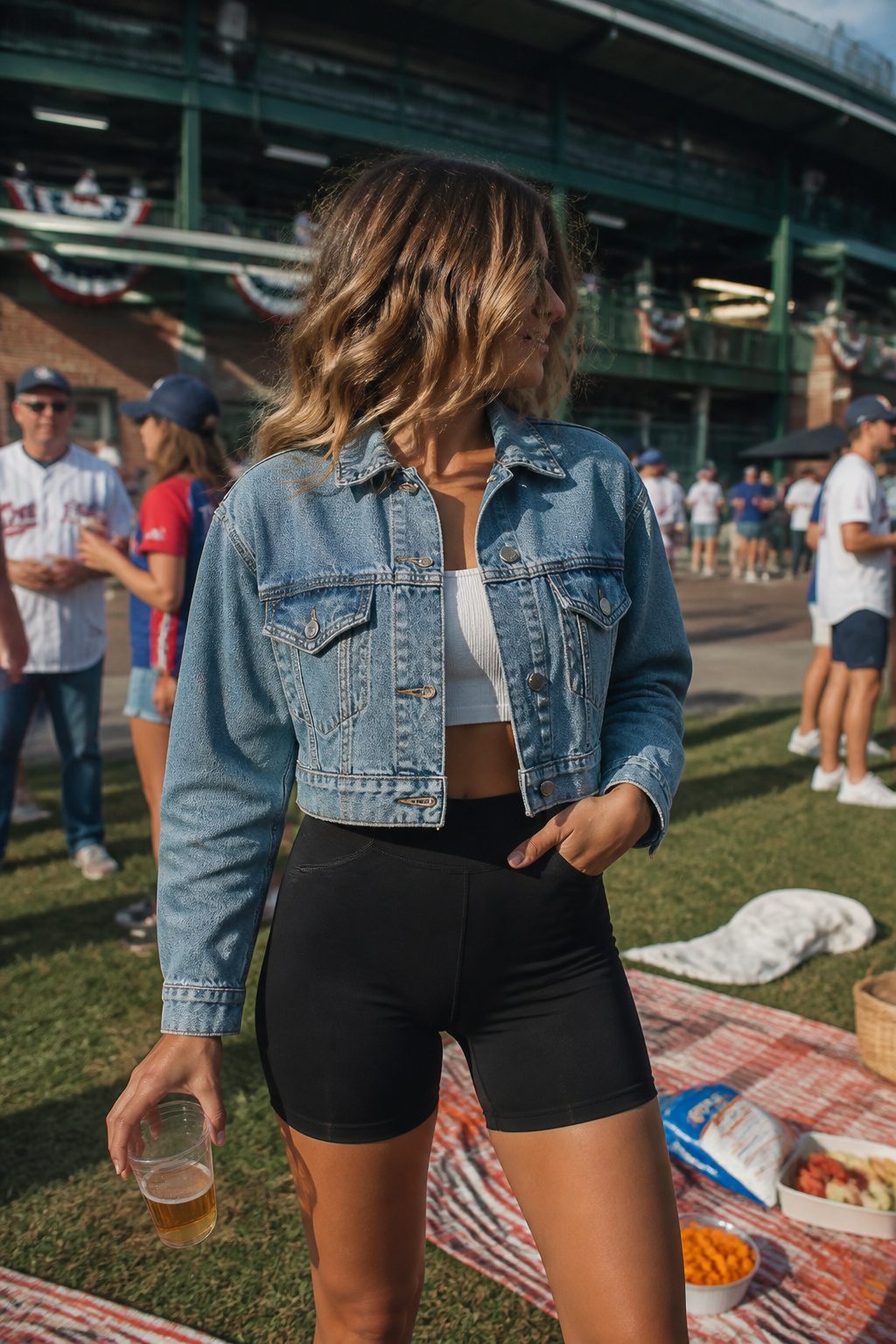
Biker shorts with a cropped jacket only holds together if the jacket has real structure. Denim, leather, or a stiff twill gives the outfit a frame; a soft, flimsy cropped layer over tight shorts reads like you forgot the rest of your clothes. The shorts themselves should hit mid-thigh, not shorter, or the proportion tips from sporty to exposed. Jacket length matters just as much: it should meet the waistband of the shorts or fall just below it. Any higher and you create an awkward gap that breaks the line; any longer and the shorts disappear entirely. This is one of the looks that showed up repeatedly, and the difference between the versions that worked and the ones that didn’t was almost always the stiffness of that top layer.
6. Floral top with white jeans
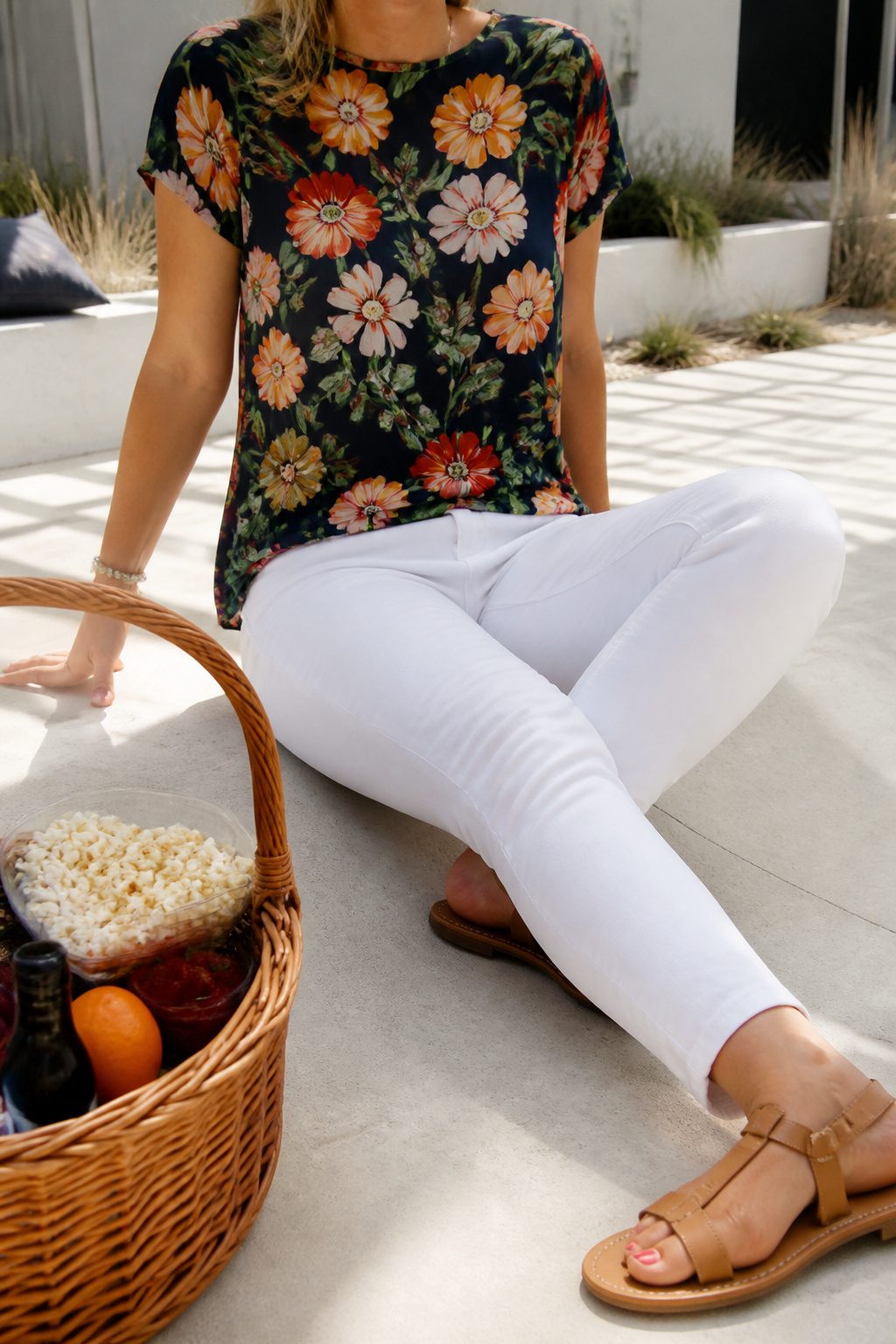
White jeans at a stadium ask for a backup plan in your bag, not optimism. A dark floral on a light background hides mustard and nacho cheese better than pastels do, and the contrast reads richer under afternoon sun. The print scale matters: larger than a fist keeps the top casual rather than office-bound, or pick a loose cut that moves away from tailoring. Tuck it loosely into the jeans so the silhouette stays relaxed, and add clean white sneakers or flat sandals you can walk concrete stairs in. A baseball cap pulls the look back to sport without trying hard. This pairing works for afternoon games that stretch into dinner after, when you want something pretty but not overdressed.
7. Matching linen set
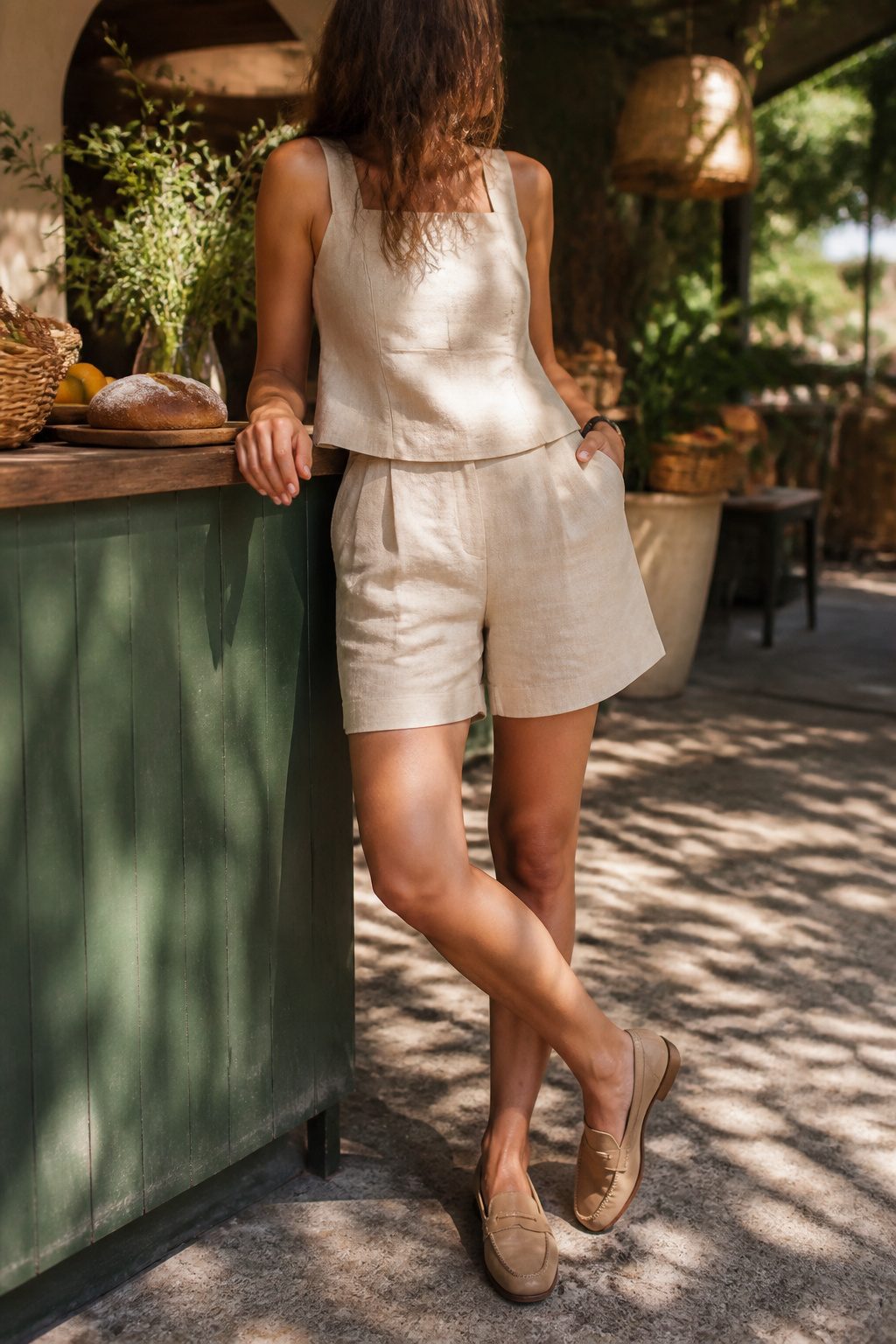
Linen will wrinkle. That is not a flaw you fix; it is a texture you decide whether you accept. If you cannot stand looking rumpled by the seventh inning, this fabric is not your teammate for a day game.
The matching element only works when the top and bottom are clearly cut from the same cloth, same dye lot, same intent. Two beige pieces that merely happen to be beige read as pajamas. A proper set has structure: a defined waist, a collar or lapel, pockets that sit level. Without that architecture, you are in sleepwear territory.
A structured shoe saves the look. Two separate recommendations converged on this point. A loafer, an oxford, even a clean white tennis shoe with a real sole and lacing, gives the linen set a destination. A strappy sandal lets the whole thing collapse into resort wear. The shoe is the anchor. Choose one with enough weight to hold its ground against the breeze and the bleacher steps, and the wrinkles become part of the story rather than the whole of it.
8. Hoodie and joggers for cooler weather
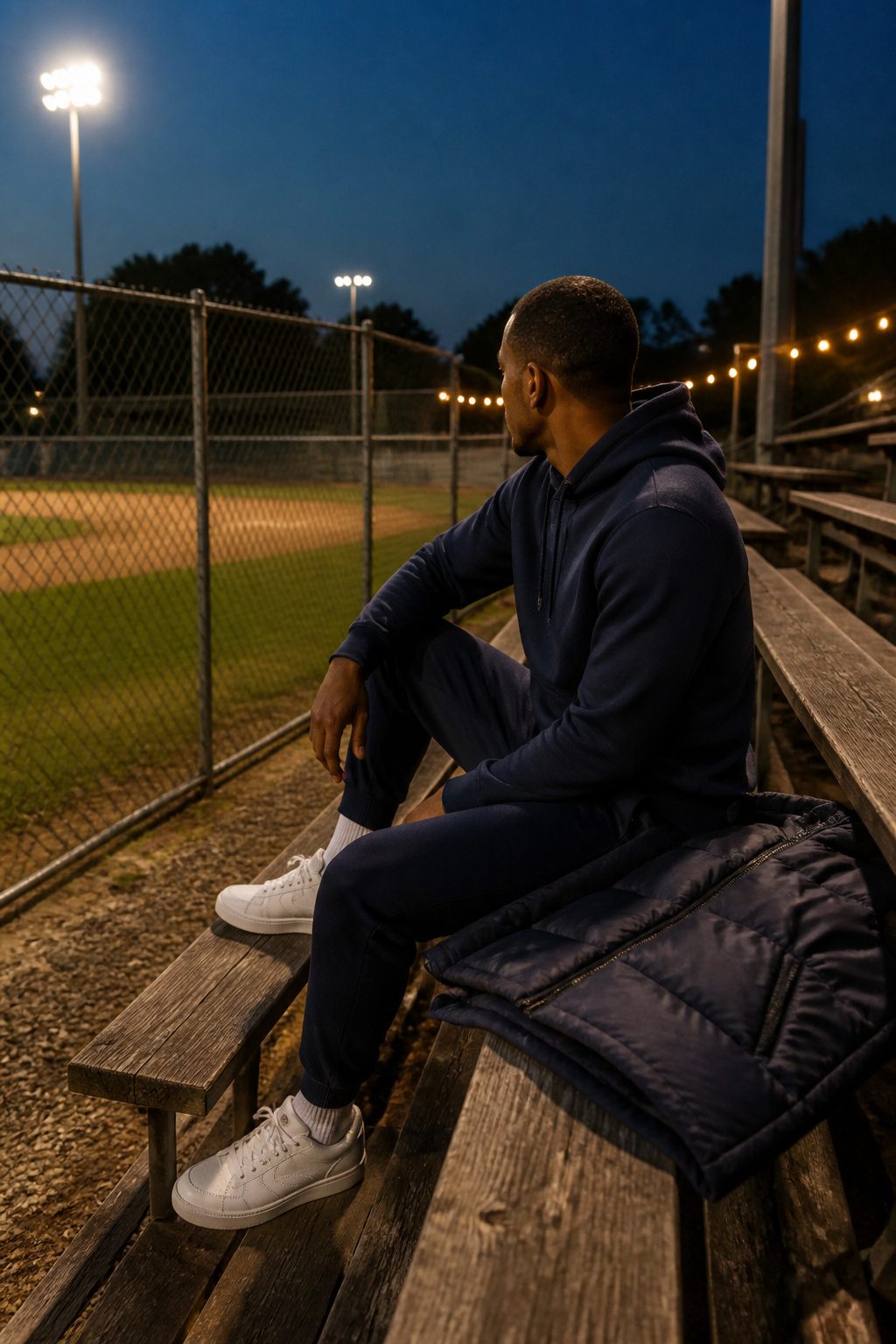
Evening games in spring or fall drop fast, and the fabric weight is what saves this look or kills it. Thin jersey joggers cling and read as pajamas; the pair you want is heavier cotton or fleece that holds its own shape. The hoodie needs intentional structure too. A cropped cut or a front tuck keeps your waist visible, or go deliberately oversized up top but only with joggers that taper sharply at the ankle. That contrast between volume and a clean line is what makes it styled rather than sloppy.
Layer a long puffer vest over the hoodie when temperatures really drop, and swap the cap for a team beanie. Chunky sneakers or clean white athletic shoes finish it. Three cold-weather roundups flagged this exact combination, which tells you it works in practice, not just theory.
9. Layered look with a baseball jersey over a long-sleeve tee
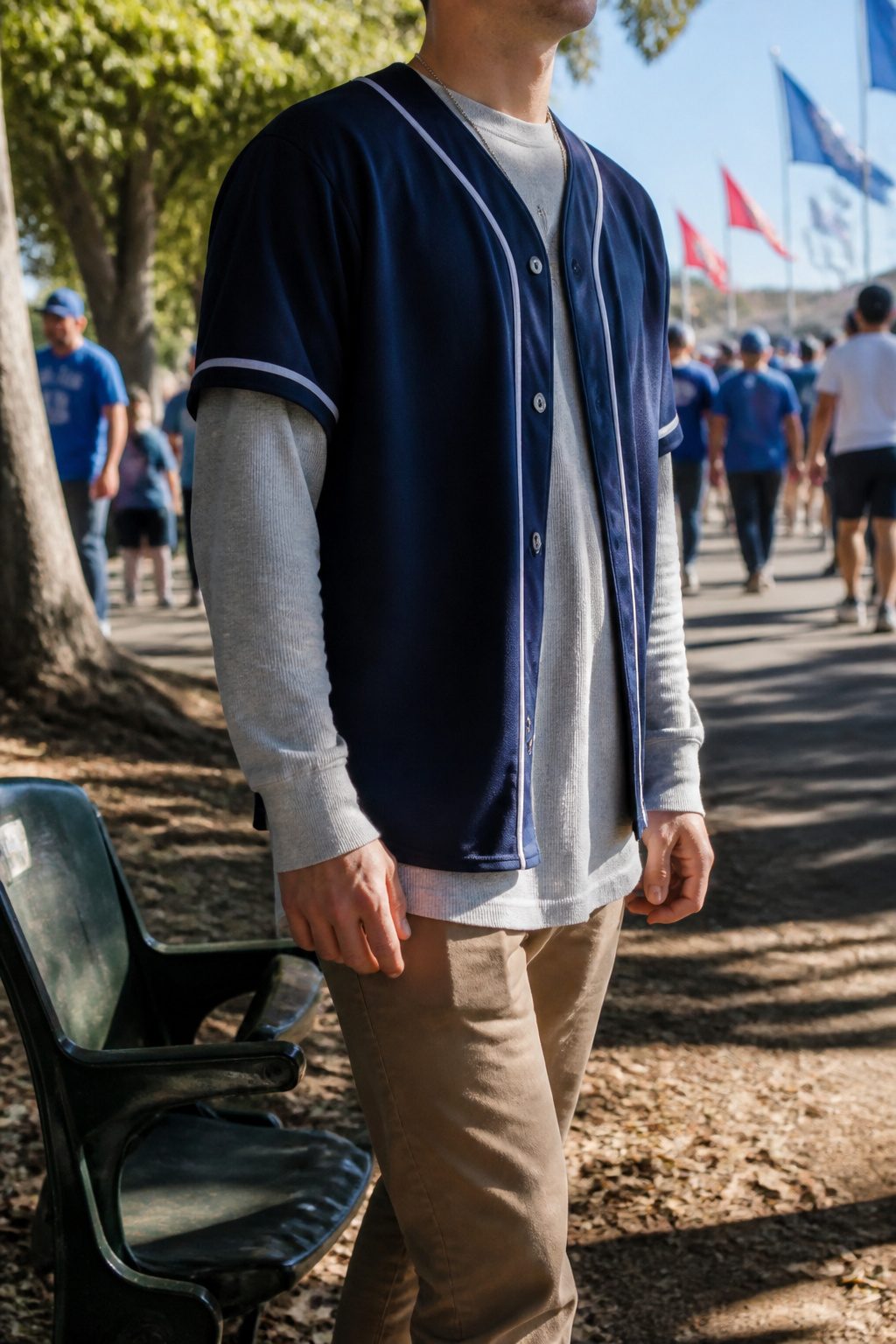
The jersey-over-tee look only works if you get the sleeve length right. The tee should extend two to four inches past the jersey sleeve. Any shorter and the layers blur together; any longer and you look like you borrowed your little brother’s jersey. What convinced me, reading through a dozen of these breakdowns, is that the neckline pairing matters just as much as the hem. A crew neck tee under a v-neck jersey creates a harsh horizontal line that breaks up the chest wrong. Flip it: a v-neck or scoop tee under a crew jersey lets the underlayer peek naturally and keeps the eye moving up and down. Two approaches back this, both insisting the tee’s collar should sit visible but not shouting. For fabric weight, a midweight cotton tee holds its shape through innings without adding bulk where the jersey already has structure. Skip thermal waffle knits here; they fight the jersey’s drape and overheat by the seventh inning stretch.
10. High-waisted pleated skirt with a team jersey
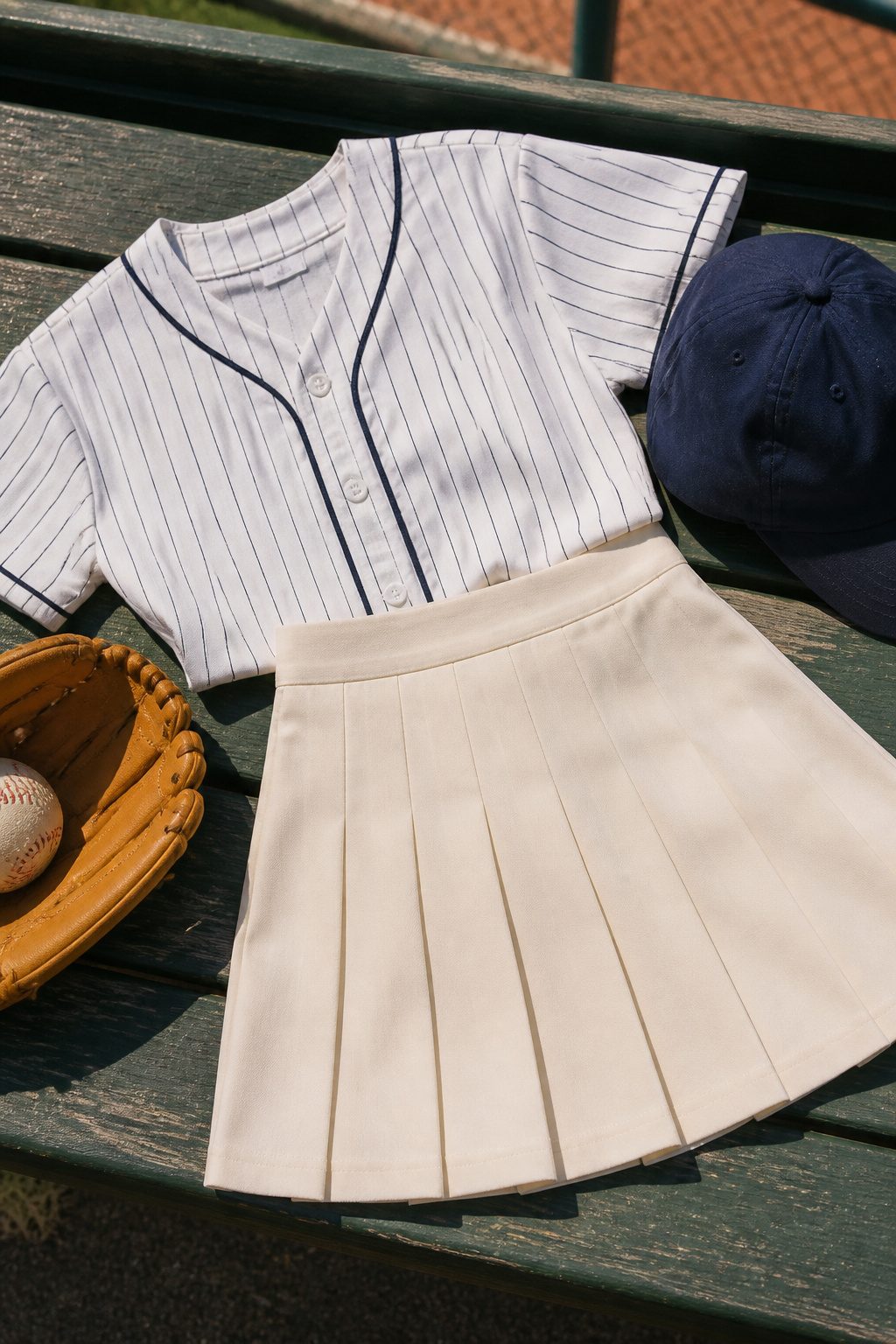
A pleated skirt and team jersey only works if you get the volume balance right. Pleats add fullness at the hip, so the jersey needs to be cropped or fully tucked to keep the silhouette from going tent-shaped on you. The skirt itself matters too: look for structure in the fabric, not soft draping that collapses under the tuck. As for the jersey, skip the standard stiff mesh and choose something softer that actually compresses when you tuck it in. Two versions of this pairing show up in the wild: one goes midi-length in white, cream, or a team-matching color with small hoops and a cap; the other shortens the skirt to mini length and adds knee-high boots for night games. Both keep the jersey controlled and the waist defined. Your call on length, but the waist definition is non-negotiable.
11. Trendy cargo pants with a cropped team tee
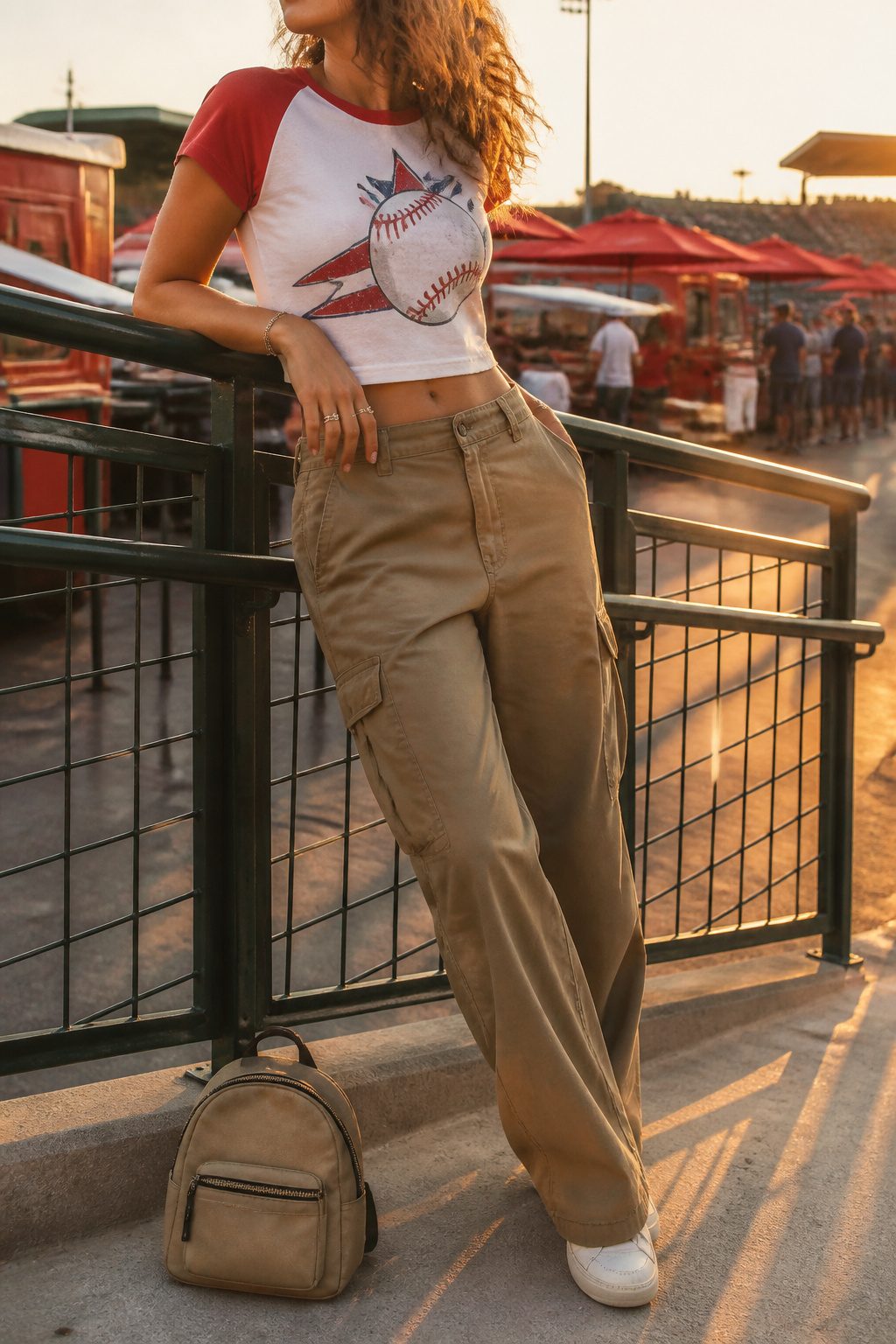
Thigh pockets on cargo pants add width right where the hip is widest, so this pairing works best if you carry your weight higher or have a straighter hip line. If you are pear-shaped, the fix is simple: crop the tee high enough that the hem clears the top of the pocket line, which keeps the leg line long and the silhouette balanced. The fabric matters more than the label. Crisp cotton or a light twill holds the shape without bulk; heavy canvas reads workwear and fights the relaxed, game-day energy you are after. I have seen this combination recommended enough times to trust it, and the logic holds: structured bottom, soft cropped top, nothing competing for attention.
12. Cozy cardigan and leggings for night games
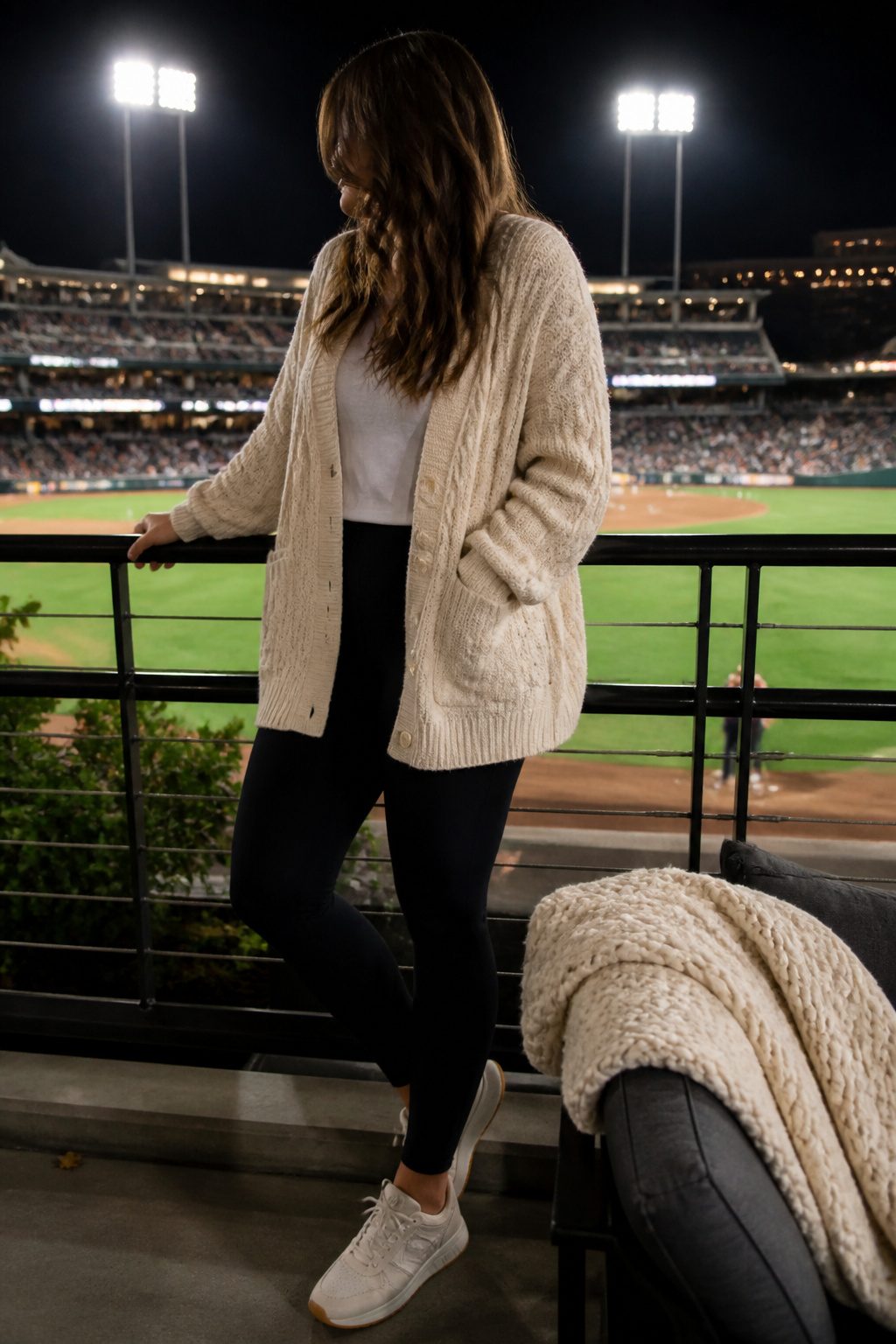
A cardigan over leggings works for night games only if you get the length right. The hem should either cover your seat completely or stop right at the high hip. Anything in between, that awkward mid-hip zone, visually cuts your leg and throws off your proportions.
Your leggings need to be opaque and substantial. Thin, shiny leggings read as loungewear and will not hold up under stadium lights or against stadium seats. Look for a weight that feels more like pants than tights.
The cardigan itself needs some texture or pattern to keep the outfit from looking like you grabbed your weekend Netflix clothes. A chunky rib, a subtle stripe, or a soft marled knit adds enough interest that the combination feels intentional. Solid black on black on black only works if you are deliberately going for that look, and even then the stadium setting tends to flatten it into something sloppy.
This is an outfit that lives or dies on these details. Get the length and the fabric weight right, and you are comfortable through extra innings without looking like you dressed for your couch.
13. Denim jacket over a graphic team tee
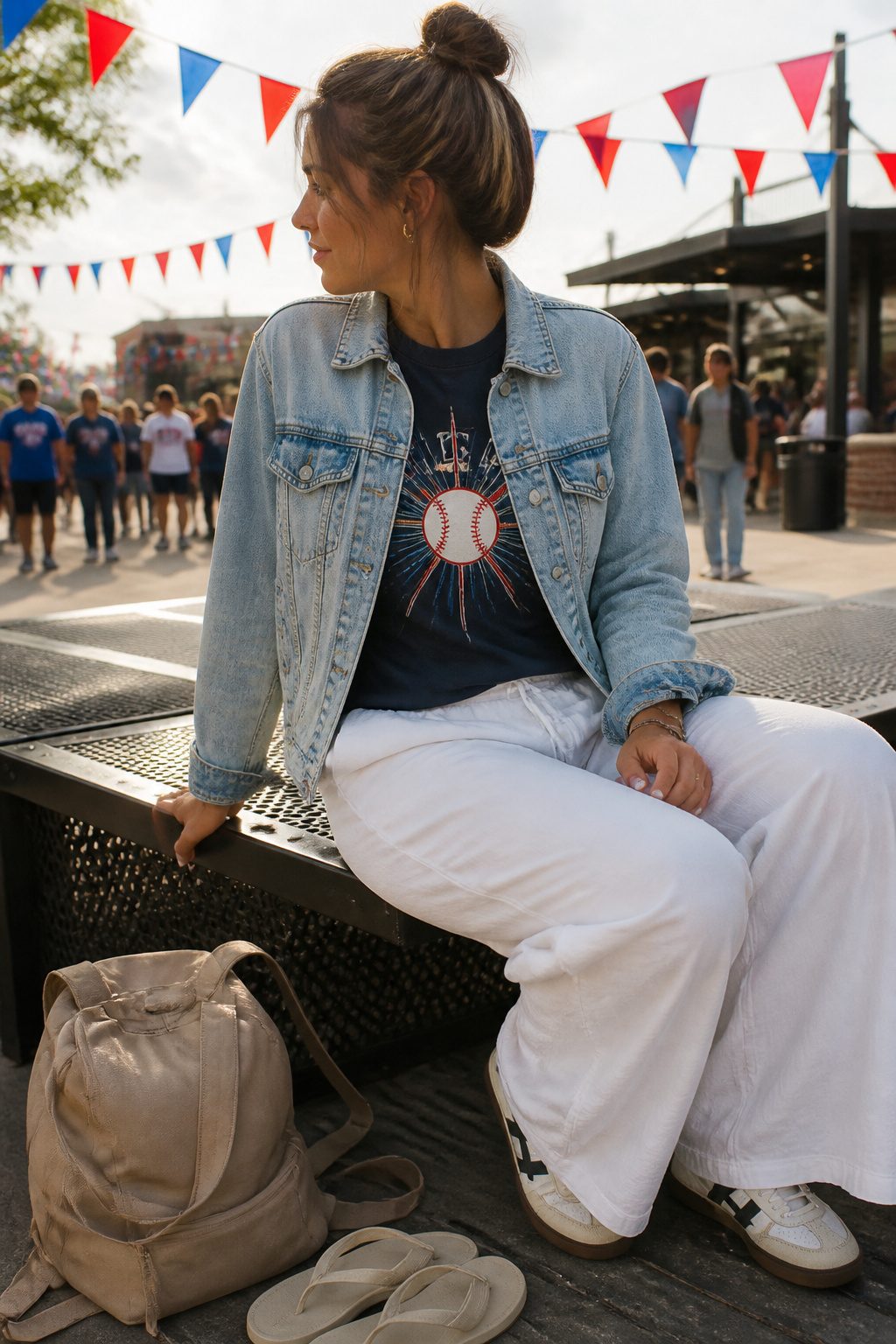
The wash of your denim jacket against your tee is what makes or breaks this look. Pair a dark jacket with a dark graphic and you end up with one flat block of color; the eye has nowhere to land. Light or medium wash denim against a darker team tee creates the definition that lets the layering read as intentional.
The jacket itself should hit at the hip, not above it. A cropped cut kills the whole point of this outfit, which is that horizontal line where jacket ends and tee continues. Fitted or slightly oversized both work, as long as the hem sits low enough to frame the graphic rather than chop it.
Roll the sleeves two folds. It reads relaxed but deliberate, not like you shoved them up to wash your hands. White sneakers and a cap finish it, but the jacket-to-tee contrast is the move that carries the look.
14. Classic baseball tee with chinos or shorts
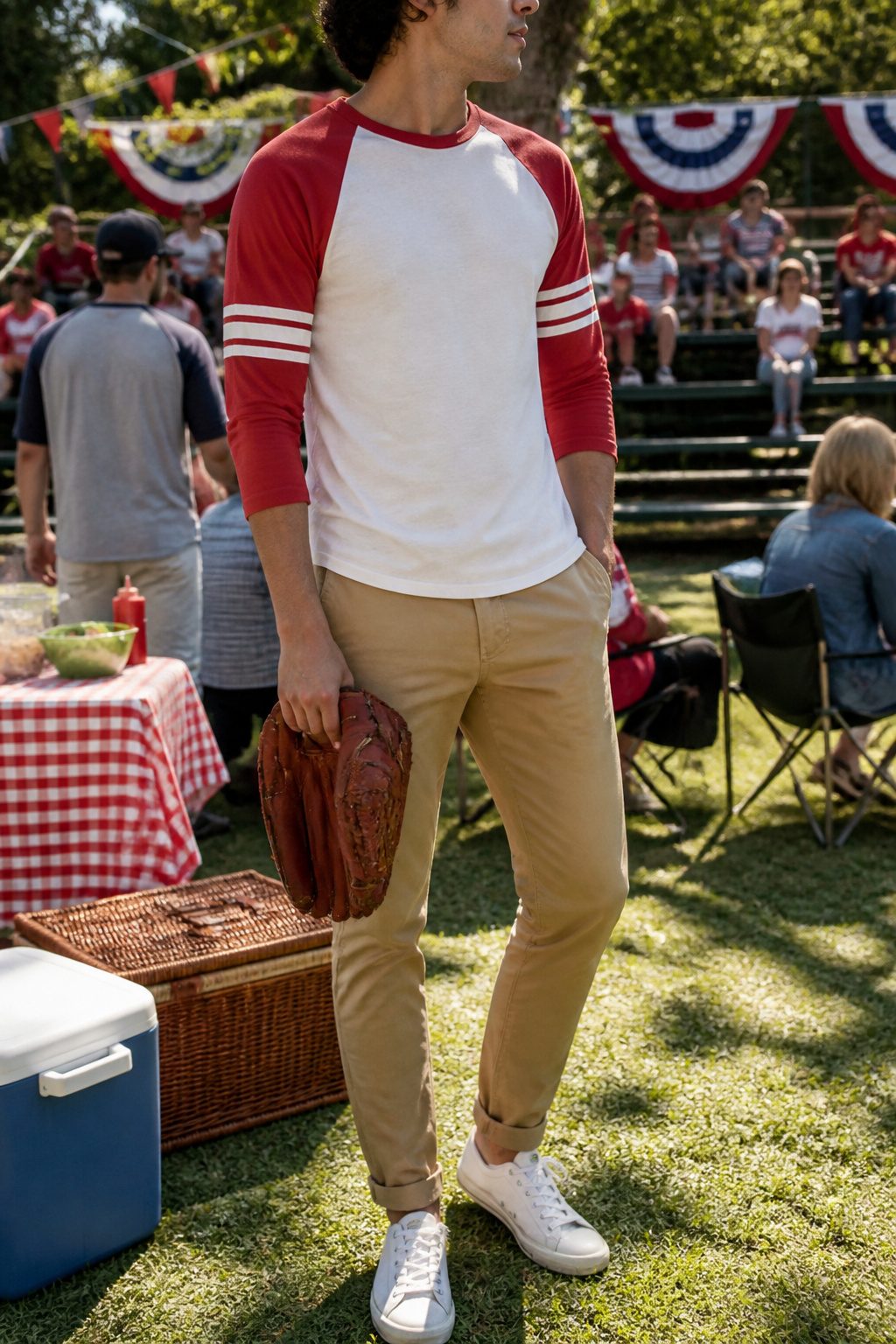
A true baseball tee lives in the sleeve stripe. That contrast band where the raglan seam meets the shoulder is what separates it from any plain tee you already own, and it reads retro in a way that feels intentional rather than lazy. The stripe width varies, but the effect is the same: it draws the eye upward and breaks up your silhouette, which is why this combination keeps showing up as the default recommendation across so many style roundups.
Pair it with slim chinos, not wide-leg, so the proportions stay clean. The taper matters more than the color here; navy, khaki, or olive all work, but a baggy cut turns the whole thing into pajamas. If you are wearing shorts instead, aim for mid-thigh or just above the knee. Anything longer starts looking like cargo gear, and shorter risks too much leg for a stadium seat that climbs to 90 degrees by the third inning.
What convinced me, reading through a dozen of these outfit breakdowns, is how rarely anyone disqualifies this combination for body type. The raglan sleeve softens a broader shoulder, the contrast stripe adds structure if you are narrower, and the bottom half adjusts to whatever you are comfortable showing. It is the one option that does not ask you to be a particular shape first.
15. Sneakers or comfortable footwear options
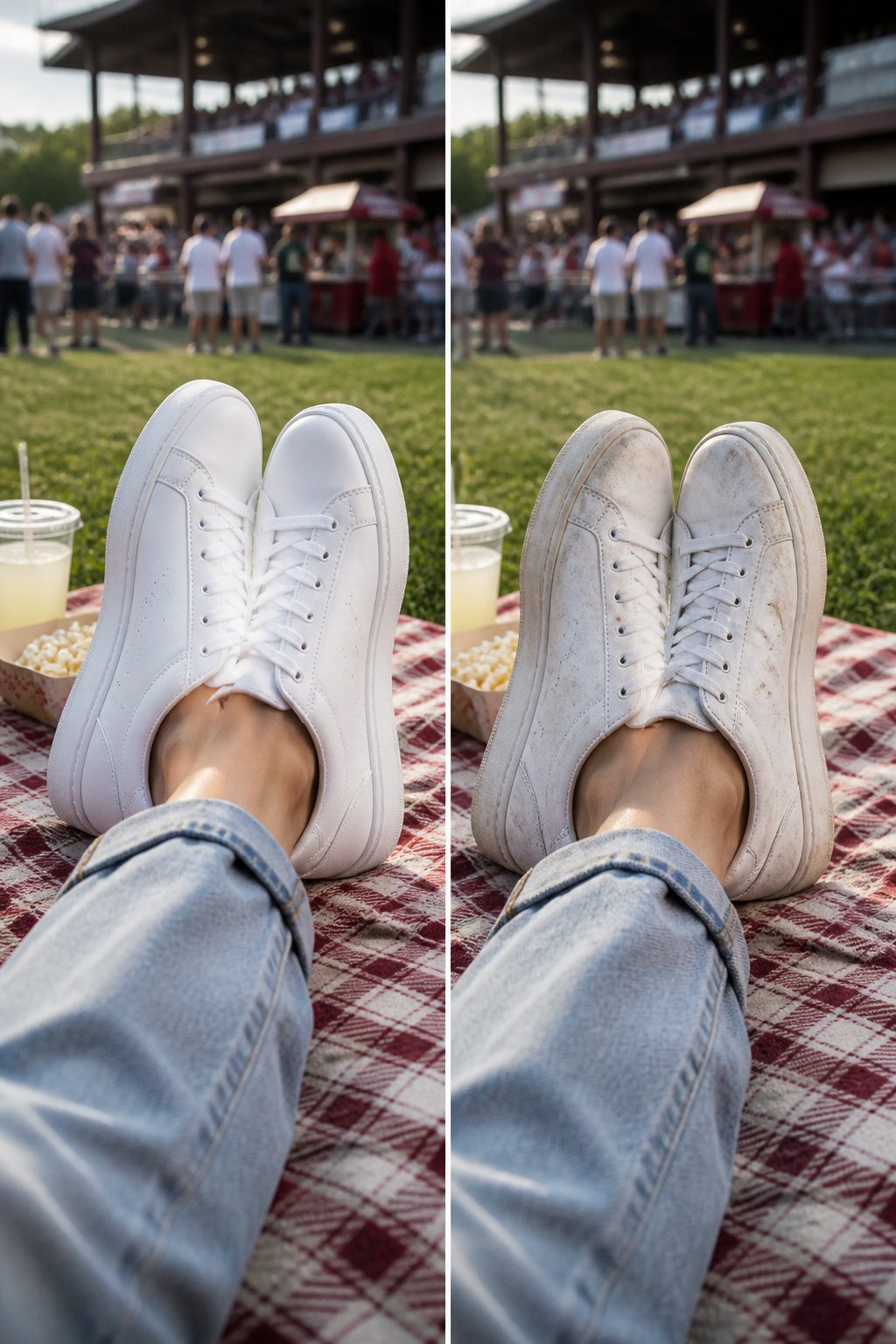
Sneakers are the default for baseball game outfits, and for solid reason. Stadiums are built from concrete stairs, grass lots, and uneven surfaces that punish anything with a heel or a slick sole. What convinced me, reading through a dozen of these guides, was how often the same warning showed up: the shoe must already be broken in. New sneakers, platform soles, or anything stiff enough to blister will ruin the night before the first inning ends.
Loafers work if the leather has softened and the sole grips. Flat boots do too, though you’ll want to check the tread before committing to a grass parking lot. Clean white leather sneakers hit the sweet spot between polished and practical, but only if you’ve already worn them enough to know where they rub. The mistake people make is treating the game like a city sidewalk. It is not. You’re standing in lines, climbing rows, and walking distances the stadium map underestimates. A flat heel and a sole that bites are non-negotiable.
Comfort and practicality
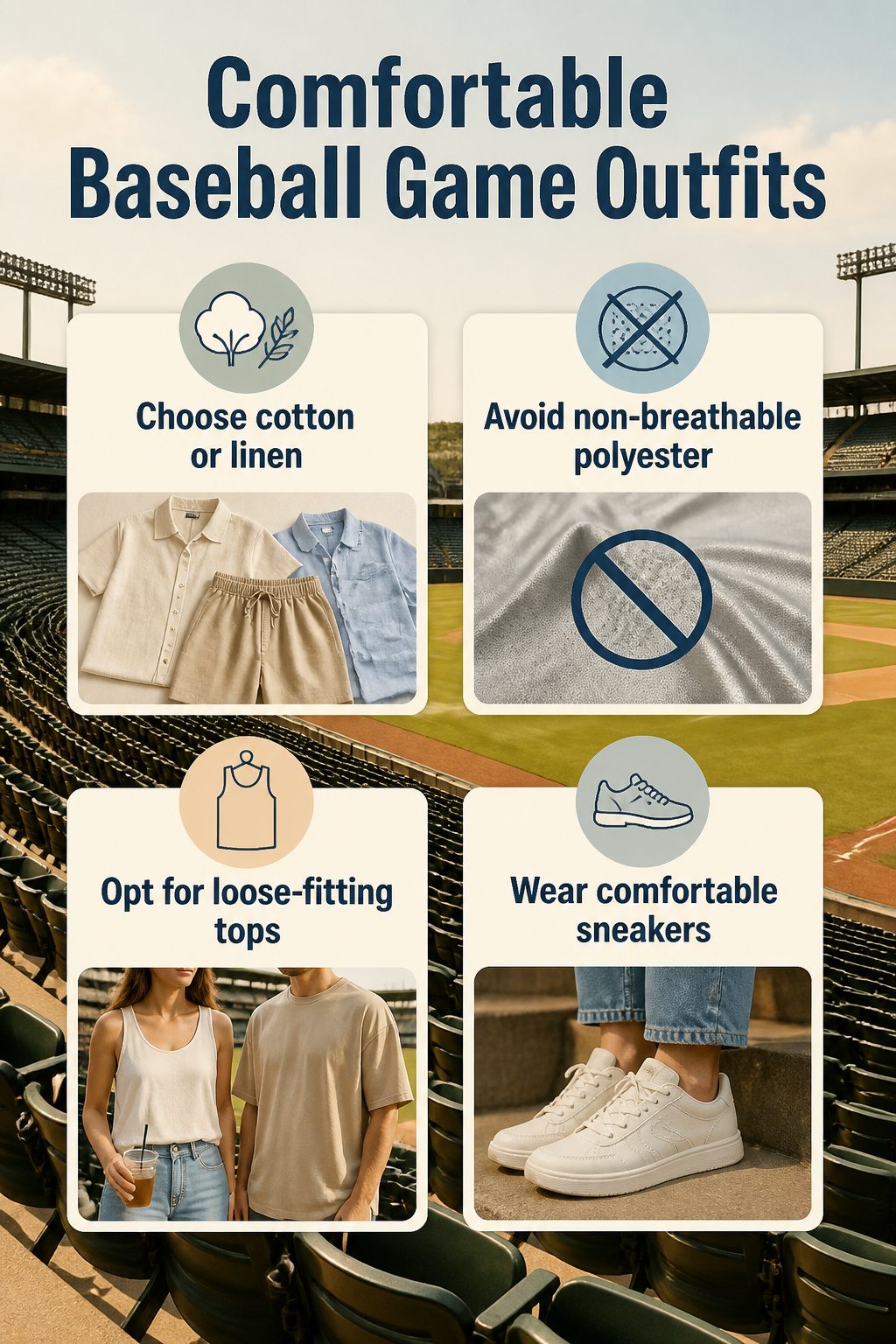
Cotton, linen, and certain rayons are the right call for day games because they actually let heat escape while you sit through nine innings on plastic seats that do not breathe. Polyester blends that do not breathe will leave you stuck to the seat by the seventh-inning stretch, especially when the sun is hitting your section directly and there is no shade to move into. A linen matching set in cream, beige, or light blue works here: it looks put-together without trying, and the fabric loosens up rather than clinging as you sweat. For cuts, look for shorts that do not ride up when you slide along the row to let someone pass, and tops with enough length that you are not tugging them down every time you stand to cheer. Tank tops and loose tees leave your back and underarms open to moving air, which matters when the temperature peaks in the afternoon and the stadium walls hold heat. Sneakers you can climb stairs in are non-negotiable; leave anything that digs at the waist or the shoulder at home, because you will feel it by the third inning and there is nowhere to change.
Layering for weather
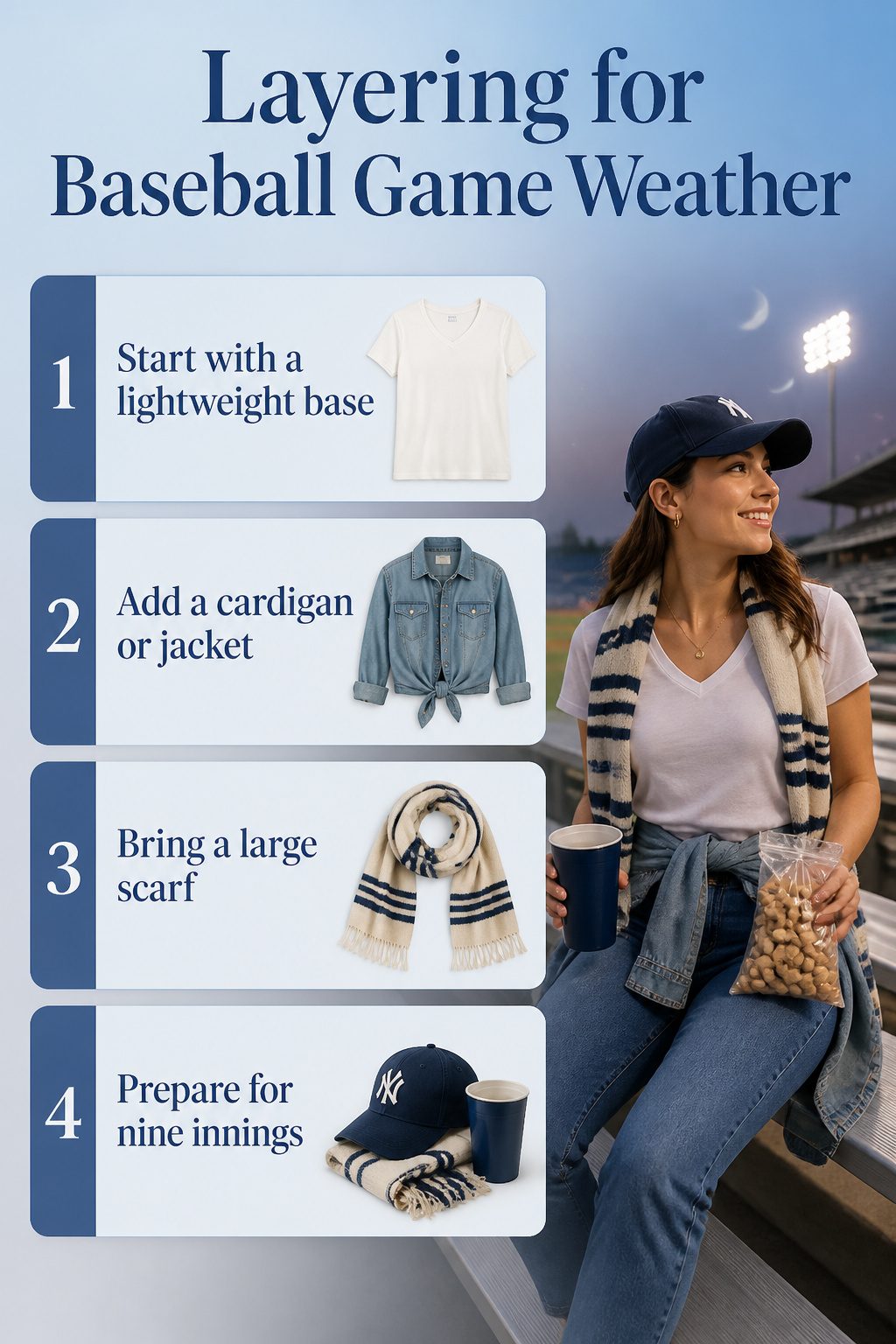
Temperatures at night games tend to drop hard after the fifth inning, and day games can start at sixty degrees and end pushing ninety. You want layers you can strip or add without blocking the aisle.
A light cardigan or denim jacket tied at the waist works well; it leaves your hands free for a drink and a bag of peanuts, and you do not have to cram it under your seat when the sun is still out. A scarf large enough to double as a seat cushion buys you comfort on cold metal bleachers and warmth later when the breeze picks up.
Most stadiums will not let you leave and re-enter, which means whatever you carry in, you carry for nine innings. Plan for the full swing rather than counting on a sweater run to the car. The advice to layer shows up across every guide for a reason: it is the move that saves the night when the temperature falls faster than the closer’s ERA.
Accessories
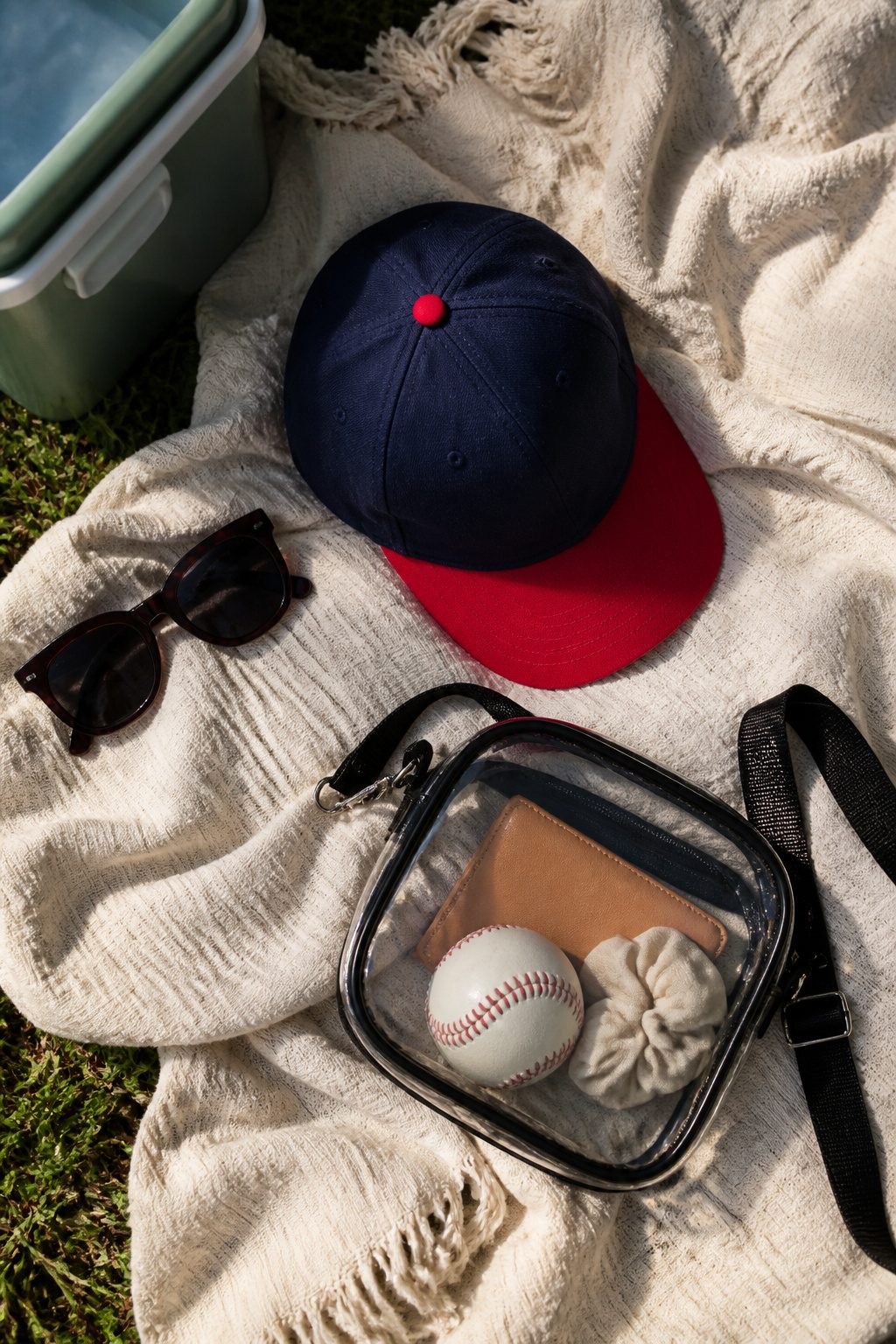
A baseball cap is the single item most sources return to, and for good reason. It blocks sun, shields your eyes, and signals your team without wearing full licensed gear. Wear the brim forward; most stadiums ask this so you do not block the view of fans seated behind you.
Sunglasses need to do more than tint. Look for lenses that actually block UV rays, or you are squinting through dark plastic that does nothing for protection.
For bags, stadium rules are strict and inconsistent. Many require clear bags under a certain size, and showing up with the wrong one means a trip back to the car or paying for a locker outside the gate. A small clear crossbody bag keeps your hands free for drinks, tickets, and the occasional fly ball. The classic clear bag from Thirty Years is a reliable go-to, and some women rotate in something luxe like the Bottega Veneta Concert Bag for a season.
The most damning (and common) mistake made in dressing for game day is bringing a bag they won’t let you into the stadium with!
Check your stadium’s policy before you leave, not at the gate.
Team spirit without costume
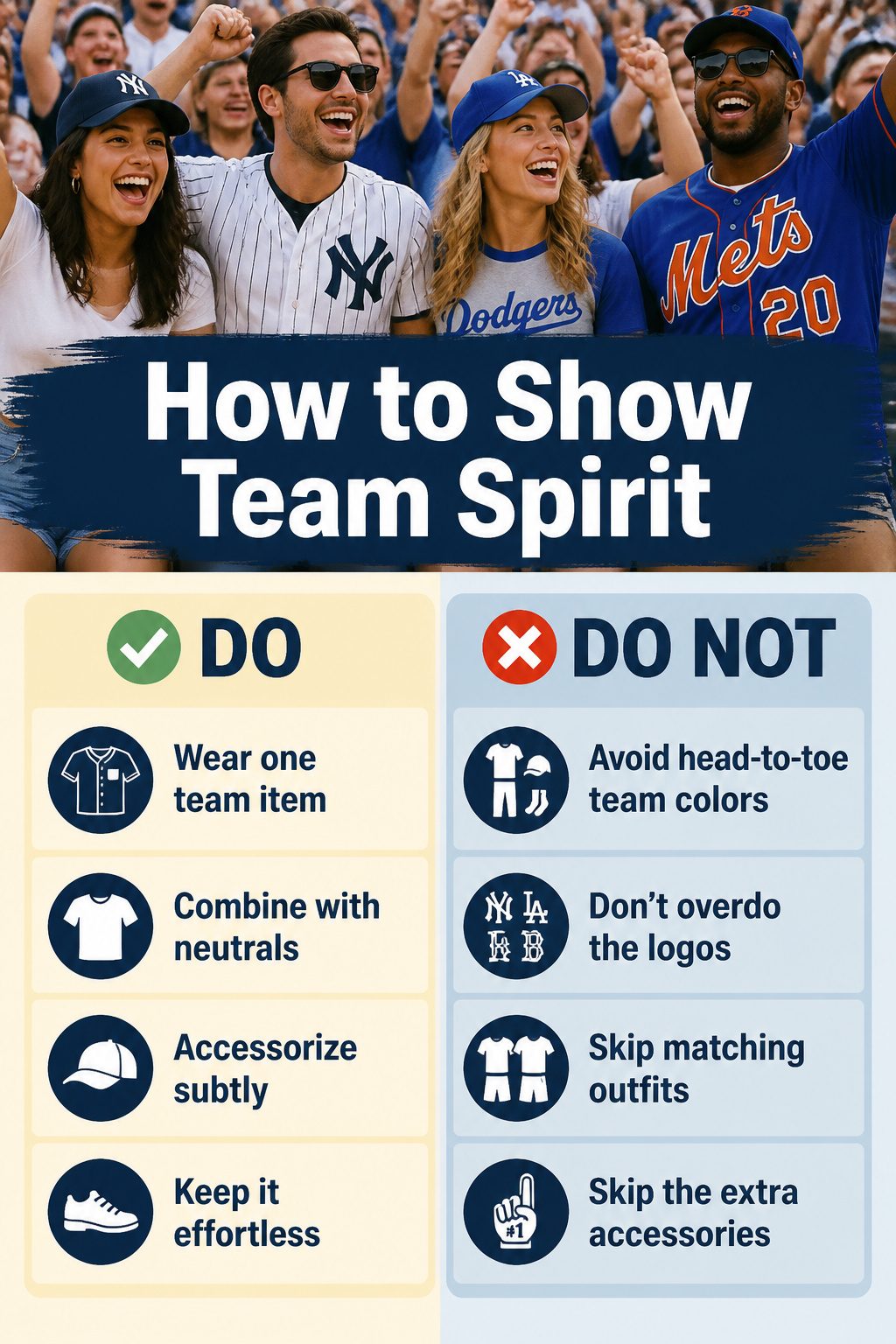
Head-to-toe team color reads costume, not outfit, on anyone over twenty. The fix is one clear team element, then stop. Pick the jersey, the cap, or the graphic tee, and let everything else stay neutral or quietly complementary.
A jersey with dark jeans and white sneakers looks intentional. A jersey plus matching pants plus team hat plus logo socks looks like you are trying out for the squad. The same rule holds for a cap: wear it with a white tee and denim shorts, not with a team shirt that repeats the logo.
If you do not own official gear, build team colors through a top or accessory rather than forcing the match. A raglan tee in the right tones nods to classic baseball style without going full uniform. Graphic tees work the same way, and they layer easily under an open button-up if the evening cools.
For dates or groups, one of you in team gear and the other in neutrals keeps you coordinated without the matching-jersey effect. The goal is looking like you belong at the park, not like you are getting paid to be there.
Frequently Asked Questions
What should I wear to a baseball game?
Focus on comfort, sun protection, and easy, casual style. Breathable pieces like T-shirts, tanks, or jerseys paired with jeans, shorts, or overalls work well, while sneakers or sandals keep you comfortable for walking around the stadium. A hat and sunglasses handle sun coverage, and a light layer tied at the waist covers you when temperatures drop after the fifth inning.
What shoes should I wear to a baseball game?
Wear comfortable shoes that are already broken in and will not leave you with blisters or aches. Athletic sneakers, running shoes, or everyday walking styles are the safest call; clean white leather sneakers hit the sweet spot between polished and practical. Avoid high heels and anything with a stiff sole or slick bottom, since you will be climbing concrete stairs, standing in lines, and walking distances the stadium map underestimates.
What should you not wear to a baseball game?
Avoid high heels, formal dresses, suits, waist-cinching belts, oversize bags, and anything too stiff. Polyester blends that do not breathe will leave you stuck to the seat by the seventh-inning stretch, and anything that digs at the waist or shoulder will annoy you by the third inning with nowhere to change. Skip head-to-toe team color too; it reads costume on anyone over twenty.